Air watts (AW) represent the effective output power of a vacuum cleaner, measuring the actual cleaning energy delivered at the nozzle rather than the electrical power consumed by the motor. Calculated by combining airflow (cubic feet per minute) and sealed suction (inches of water lift), air watts provide the most accurate benchmark for comparing real-world vacuum cleaning performance across different motor designs and product categories.
What Are Air Watts and Why Do They Matter?
For decades, appliance manufacturers marketed vacuum cleaners primarily by motor wattage or amperage. A vacuum labeled as a "12-amp" or "1,400-watt" unit led consumers to assume that higher electrical input automatically guaranteed superior cleaning capability. However, electrical wattage measures energy consumption, not cleaning efficiency. A poorly designed fan impeller, restricted airway, or inefficient motor can consume significant electricity while generating minimal actual suction.
To establish a standardized, objective metric for cleaning capability, the engineering community developed air watts. Air watts measure true pneumatic output power—the physical work the machine performs by moving air and lifting dirt against gravity. Defined under standardized testing conditions, air watts reflect the balance between how hard a vacuum pulls (suction pressure) and how much air it moves (airflow volume).
Understanding air watts is essential when selecting a vacuum cleaner because input power ratings can be misleading. A high-efficiency motor operating at 800 electrical watts might produce 250 air watts, whereas a poorly engineered 1,400-watt motor might yield only 150 air watts due to heat loss, air leakage, and internal friction. By evaluating air watts, buyers can compare the true working capacity of cordless stick vacuums, upright units, canister systems, and central vacuum networks on an equal technical footing.
The Physics Behind Air Watts: Airflow vs. Sealed Suction
To understand how air watts are derived, it is necessary to examine the two distinct physical forces that create vacuum power: airflow and sealed suction (often referred to as water lift). Neither metric alone determines how effectively a vacuum cleaner removes dirt; rather, cleaning performance relies on their dynamic interaction.
Airflow (Cubic Feet per Minute / CFM)
Airflow measures the volume of air passing through the vacuum system over a specific period, typically expressed in cubic feet per minute (CFM) or liters per second (L/s). Airflow is the primary vehicle for transporting dirt, dust, and debris from the floor surface into the dustbin or filter bag. High airflow is especially critical for cleaning hard floors, tile, and surface debris, where deep carpet penetration is not required. If a vacuum has strong suction pressure but low airflow, debris will not move efficiently through the wand and hose.
Sealed Suction (Inches of Water Lift)
Sealed suction measures the maximum static pressure differential the vacuum motor can generate when the airway is completely blocked. It is traditionally measured in inches of water lift (in. $\text{H}_2\text{O}$) or pressure units such as Pascals (Pa) and kilopascals (kPa). Water lift indicates how high the vacuum motor can pull a column of water up a sealed tube. This metric determines the vacuum's ability to dislodge heavy particles, pull embedded dirt out of dense carpet piles, and overcome resistance caused by clogged filters or narrow attachments.
Airflow (CFM) × Sealed Suction (Inches of Water) Air Watts = ---------------------------------------------------- 8.5
Air watts synthesize these two opposing forces. At complete seal (zero airflow), air watts equal zero because no air moves to transport dirt. Conversely, with an entirely unrestricted opening (zero suction resistance), air watts also equal zero because there is no pressure differential to pull debris out of surfaces. Maximum air watts occur at a sweet spot along the motor's performance curve—typically at an intermediate orifice size where airflow and suction pressure multiply to their highest peak product.
Comparing Vacuum Power Metrics: Air Watts, Input Watts, and Pascals
Because appliance manufacturers utilize various specifications on product packaging, buyers frequently encounter competing measurements. Comparing these metrics clarifies what each number actually measures.
| Specification Metric | Primary Unit of Measurement | What It Measures | Impact on Cleaning | Standard Testing Method |
|---|---|---|---|---|
| Air Watts (AW) | Air Watts (AW) | Total pneumatic output power | Directly determines overall vacuum performance under working load | ASTM F558 standard testing |
| Input Electrical Power | Electrical Watts (W) or Amps (A) | Electricity consumed by the motor | Indicates energy usage, electrical circuit draw, and heat generation | Standard electrical meter load |
| Airflow | CFM or Liters/Second (L/s) | Volume of air moved per minute | Determines speed of dirt transport and surface debris collection | Orifice plate flow measurement |
| Sealed Suction | Inches of Water (in. $\text{H}_2\text{O}$) or Pascals (Pa) | Maximum static pressure capability | Pulls heavy debris and extracts dirt from deep carpet fibers | Sealed manometer test |
Air Watts vs. Input Electrical Watts
Input watts measure how much power a vacuum draws from an electrical wall outlet or battery pack. A vacuum drawing 1,200 electrical watts converts a portion of that energy into mechanical rotation, but substantial energy is lost as heat, sound, and aerodynamic turbulence within the housing. Air watts measure only the residual energy converted into usable suction movement. Consequently, there is no fixed conversion ratio between electrical watts and air watts; motor efficiency varies widely between manufacturers.
Air Watts vs. Pascals (Pa)
Many modern cordless and robot vacuum manufacturers report suction power in Pascals (Pa) or kilopascals (kPa). Pascals measure static pressure (suction lift) under sealed conditions. While a high Pascal rating (e.g., 4,000 Pa to 10,000 Pa) sounds impressive, it represents static suction at zero airflow. A vacuum with high Pascals but narrow ductwork may lack sufficient CFM to carry large particles into the bin. Air watts provide a more balanced indicator because they account for both pressure (Pascals/Water Lift) and movement (CFM) simultaneously.
Benchmark Air Watt Ranges Across Vacuum Categories
Required air watt capacity depends on the physical environment, carpet thickness, floor surface, and equipment form factor. Below are standard air watt benchmarks across primary vacuum cleaner categories:
Central Vacuums: [====================================] 450 - 800+ AW Corded Upright/Canister: [======================] 200 - 450 AW Cordless Stick Vacuums: [===========] 100 - 280 AW Robot Vacuums: [====] 30 - 90 AW (Equiv.)
Cordless Stick Vacuums (100 – 280 AW)
Compact battery-powered vacuums rely on high-efficiency digital brushless motors. Premium cordless models typically offer maximum ratings between 150 AW and 280 AW in "Boost" or "Turbo" mode, while standard operating modes run between 30 AW and 70 AW to conserve battery life. Higher air watt ratings in cordless units allow effective cleaning on medium-to-high pile rugs without requiring a heavy corded unit.
Corded Upright and Canister Vacuums (200 – 450 AW)
Traditional plug-in upright and canister vacuums deliver steady power without battery runtime constraints. Quality residential corded canisters and uprights generally deliver between 200 AW and 450 AW. Because corded units do not need to throttle power to preserve battery life, they maintain peak air watt performance continuously throughout cleaning sessions.
Central Vacuum Systems (450 – 800+ AW)
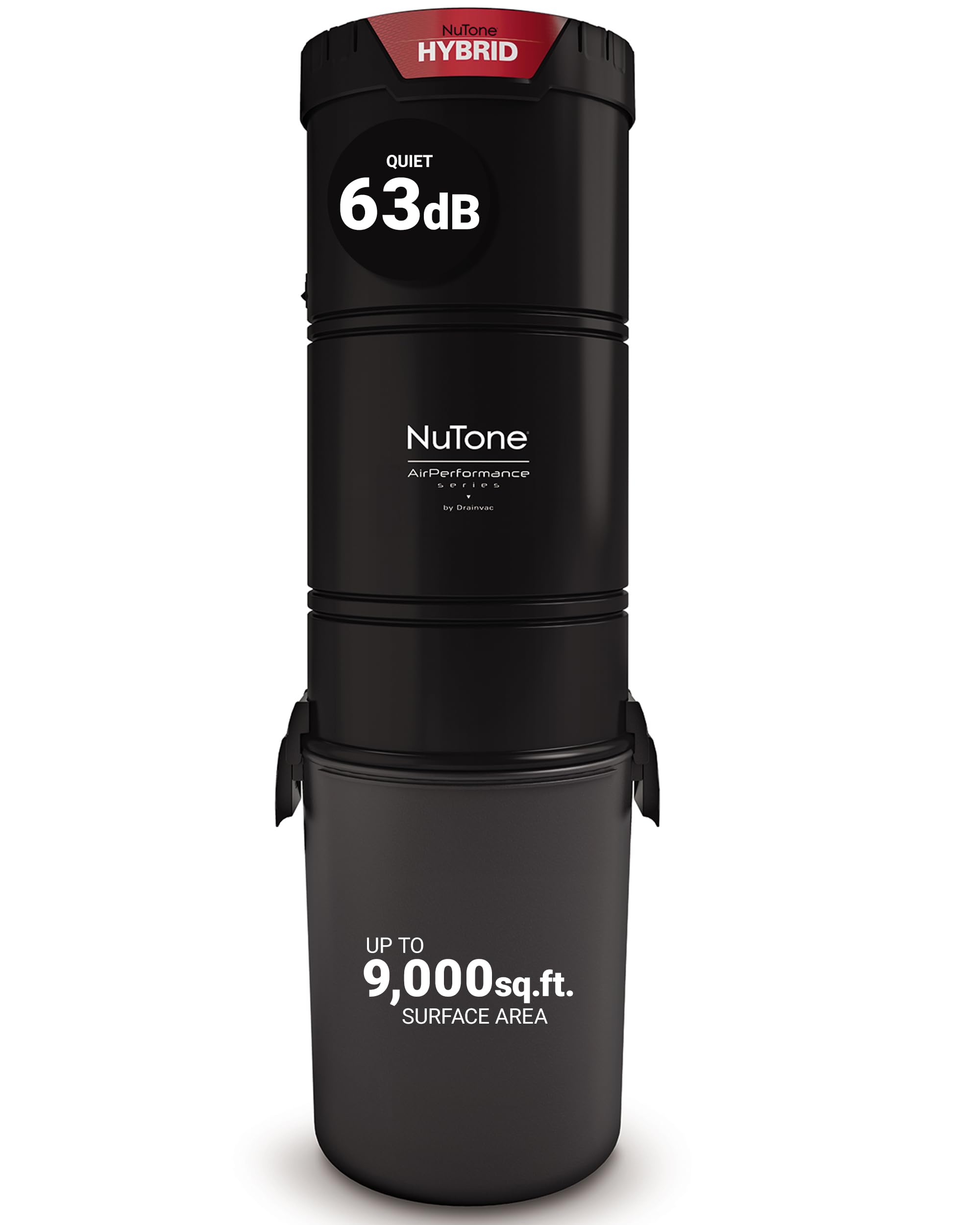
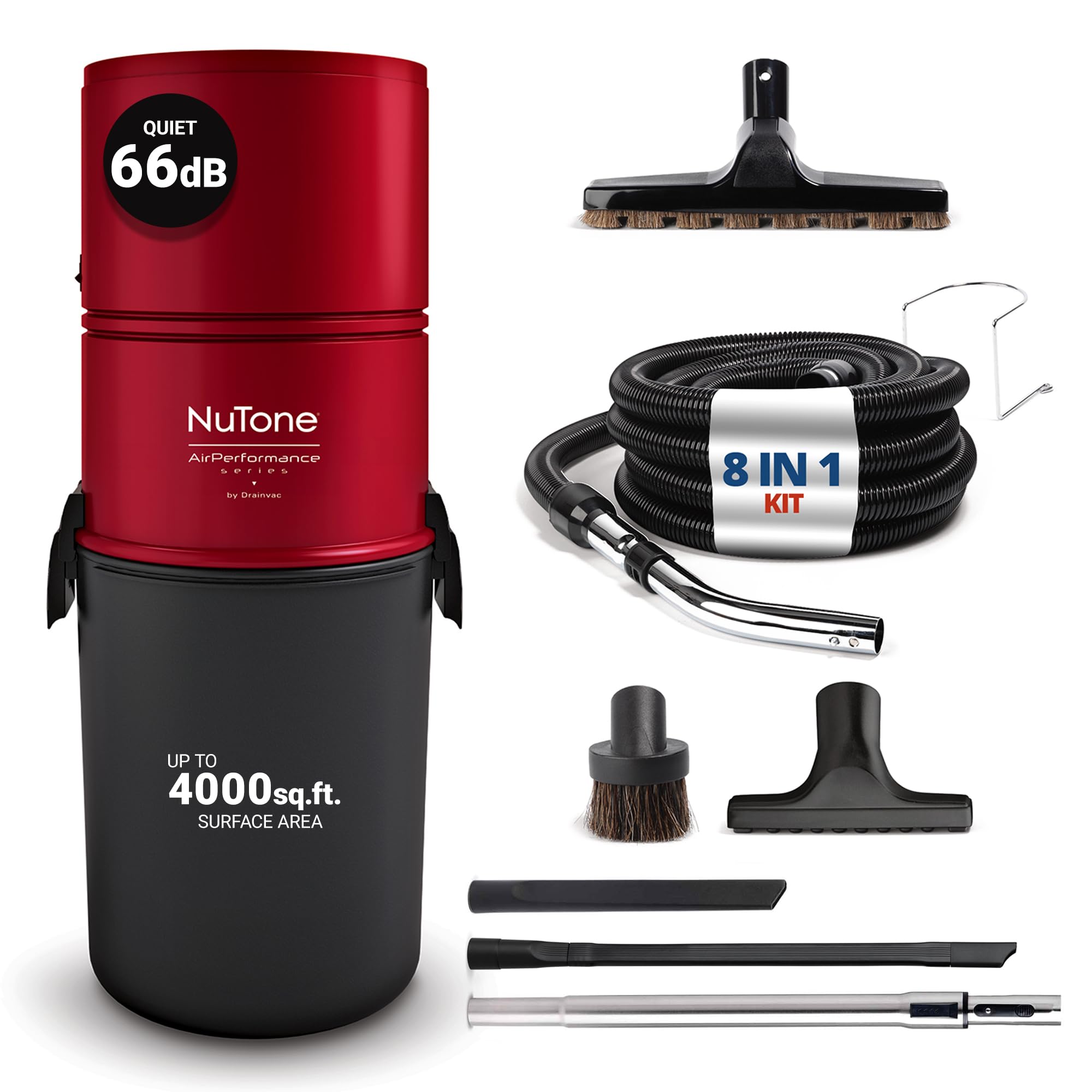
Central vacuum power units are mounted in garages, basements, or utility rooms, allowing them to utilize larger, more powerful industrial motors. Central vacuum systems typically range from 450 AW to over 800 AW. This elevated power rating is necessary to overcome friction losses and static drag caused by running airflow through 30 to 100 feet of in-wall PVC tubing and long flexible hoses.
Robot Vacuums (30 – 90 AW Equivalent)
Robot vacuums operate on compact low-voltage batteries designed for extended runtimes. Most robot vacuum manufacturers publish suction in Pascals (ranging from 2,000 Pa to 12,000 Pa) rather than air watts. When evaluated on standard orifice testing, most robot vacuums produce between 15 AW and 90 AW. They compensate for lower air watt figures by utilizing mechanical agitator brushes, slow travel speeds, and frequent automated cleaning passes.
How Air Watts Are Calculated: The ASTM F558 Formula
The standardized methodology for measuring air performance in vacuum cleaners is defined by ASTM International through the ASTM F558 Standard Test Method for Measuring Air Performance Characteristics of Vacuum Cleaners.
Under the ASTM F558 framework, the vacuum is connected to a standardized test chamber fitted with adjustable orifice plates ranging from fully open to completely closed. At each orifice size, technicians measure two variables: corrected airflow in CFM ($Q$) and corrected vacuum pressure in inches of water ($P$).
The fundamental mathematical equation used to calculate air watts ($AW$) is:
$$AW = \frac{P \times Q}{8.5}$$
Where:
- $P$ = Sealed Suction / Vacuum Pressure, measured in inches of water (in. $\text{H}_2\text{O}$).
- $Q$ = Airflow volume, measured in cubic feet per minute (CFM).
- $8.5$ = An empirical conversion constant that aligns units of fluid pressure and volumetric flow rate into standard physical watts of output power.
Practical Worked Example
Suppose a vacuum motor tested at a 3/4-inch orifice plate generates an airflow ($Q$) of 68 CFM and a vacuum pressure ($P$) of 35 inches of water.
Applying the ASTM formula:
$$AW = \frac{35 \times 68}{8.5} = \frac{2,380}{8.5} = 280\text{ Air Watts}$$
When manufacturers state a single air watt specification for a product, they are reporting the peak air watts recorded across the full range of orifice plate tests. This peak represents the maximum theoretical power output of the motor and airflow system working in unison.
Real-World Factors That Impact Suction Beyond Air Watts
While air watts provide a useful baseline rating, real-world vacuum performance depends on several secondary engineering design factors. High peak air watts at the motor inlet do not guarantee effective dirt pickup if the rest of the machine restricts airflow or lacks mechanical agitation.
- Floor Nozzle and Brush Roll Engineering: A vacuum with high air watts can perform poorly on carpets if the floor nozzle lacks proper sealing or active brush roll agitation. Mechanical sweeping lifts fibers and dislodges dirt, allowing the airflow generated by the air watts to carry particles away.
- Filter Maintenance and Airway Resistance: As HEPA filters, foam pre-filters, and dustbags collect debris, resistance within the airway increases. This static pressure drop reduces effective CFM, lowering operational air watts during use. Sealed cyclone systems help maintain stable air watts by separating fine dust before it reaches the filter media.
- Hose Diameter and Length: Air moving through a narrow or ribbed flexible hose encounters internal wall friction, causing a pressure drop. A central vacuum system with 600 air watts at the main wall unit may deliver significantly fewer air watts at the end of a 35-foot flexible hose due to friction and air friction losses.
- Battery Degradation in Cordless Units: In battery-powered vacuums, voltage drops as the lithium-ion cells discharge during operation. Unless the motor controller features active voltage regulation, the motor's RPM will drop during use, causing a linear decrease in air watt output over the course of a discharge cycle.
Frequently Asked Questions About Air Watts
Are higher air watts always better for every floor type?
Not necessarily. While higher air watts provide more raw suction capability for thick carpets, excessive suction can make vacuuming high-pile rugs difficult by sealing the nozzle to the floor and stopping airflow completely. For delicate area rugs and hard floors, moderate air watts combined with soft roller heads yield superior cleaning without damaging fabrics or scattering hard particles.
What is the difference between air watts and suction power in Pascals?
Air watts measure total pneumatic power by combining airflow volume (CFM) and static pressure (water lift). Pascals (Pa) measure only static suction pressure under sealed conditions with zero air movement. A high Pascal rating indicates strong pulling force against a seal, but air watts offer a complete picture of real-world cleaning by incorporating airflow velocity.
How many air watts do I need to clean pet hair from carpets?
To remove stubborn pet hair from medium-to-deep pile carpets effectively, look for a vacuum that delivers at least 150 to 200 air watts at peak setting, paired with a motorized brush roll featuring anti-tangle stiff bristles. The high air watts ensure deep airflow pull, while the motorized brush mechanically dislodges dander and intertwined hair from carpet fibers.
Why do some vacuum brands refuse to publish air watt ratings?
Some manufacturers omit air watt specifications because their products are optimized for high electrical efficiency or quiet operation rather than peak suction numbers. Others prefer publishing alternative metrics like Pascals, motor RPM, or simple electrical wattage because high raw numbers look attractive in retail marketing, even if they do not reflect true cleaning output.
How do cordless vacuum air watts compare to corded vacuums?
Modern high-end cordless vacuums can match or exceed entry-level corded vacuums in short bursts, reaching peak outputs of 200 to 280 air watts in "Boost" mode. However, cordless units can typically sustain these maximum air watt levels for only 5 to 15 minutes before depleting the battery. Corded vacuums maintain continuous air watt output (typically 200 to 450 AW) indefinitely without power throttling.
How to Evaluate Air Watts When Shopping for a Vacuum
When selecting a new vacuum cleaner, use air watt specifications as an objective baseline alongside your specific flooring environment and household needs:
- For Hardwood, Tile, and Laminate Floors: Target 100 to 150 air watts. Prioritize machines with high CFM ratings and soft roller floor heads rather than max water lift pressure.
- For Wall-to-Wall Carpeting and Pet Owners: Look for 180 to 300 air watts in portable units, or 500+ air watts in central vacuum power units, combined with a motorized agitator brush roll.
- For Multi-Level Homes and Stairs: Balance air watt ratings against total machine weight. A light cordless unit supplying 150 AW in boost mode may prove far more practical than a heavy 300 AW canister vacuum.
- Verify Test Conditions: Check whether published air watt specs follow recognized standard benchmarks like ASTM F558. Be cautious of unverified suction claims that report high electrical input watts or sealed Pascals without specifying airflow volume.
By evaluating both the air watt specification and the physical design of the brush roll, filtration, and nozzle airflow, you can select a vacuum cleaner that delivers long-term cleaning performance tailored to your living space.