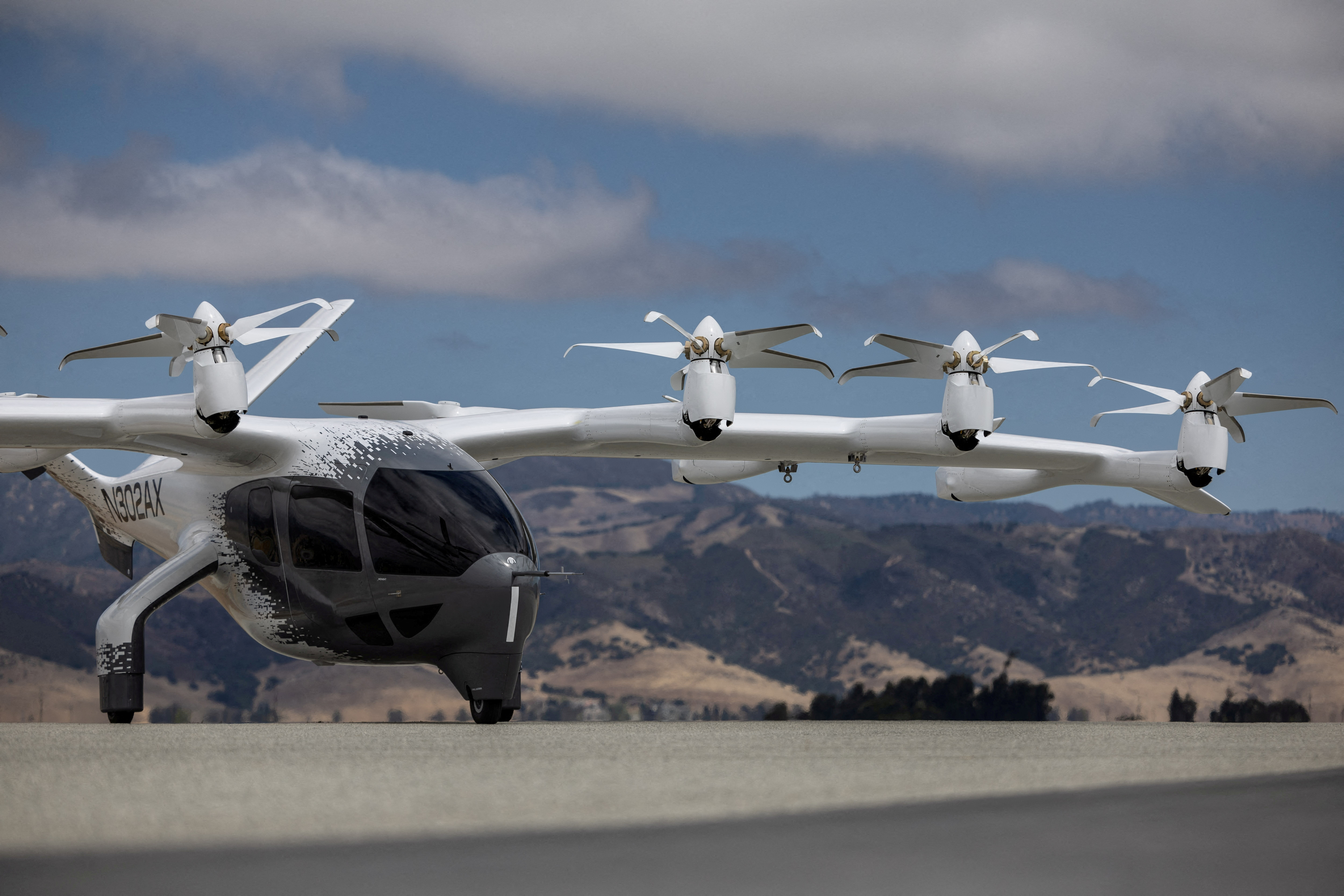
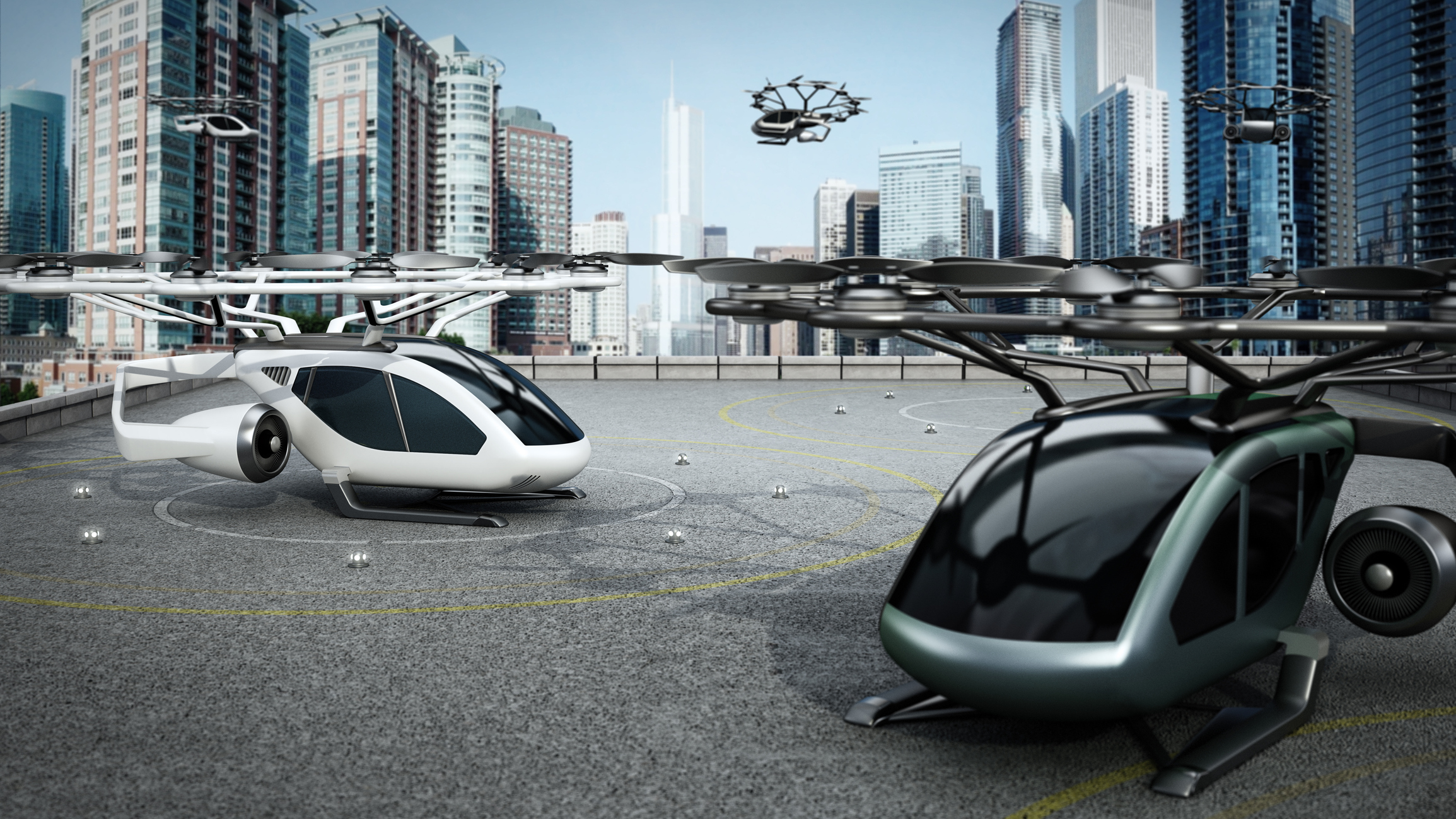
Air taxis are electric vertical takeoff and landing (eVTOL) aircraft designed to transport small groups of passengers across short-to-medium urban and regional routes. Powered by distributed electric propulsion, these aircraft combine the vertical flexibility of traditional helicopters with the higher efficiency, reduced acoustic footprint, and lower operational costs of fixed-wing passenger planes.
- Air Taxi Architecture:
- Propulsion: Distributed Electric Motors (DEP)
- Energy: High-Density Lithium-Ion Battery Packs
- Flight Control: Triple-Redundant Fly-by-Wire Avionics
- Operations: FAA Part 135 Air Carrier Operations
- Ground Base: High-Voltage Vertiports & Grid Infrastructure
Defining Air Taxis: Aircraft Configurations and Core Propulsion Systems
The emerging air taxi sector relies heavily on electric vertical takeoff and landing (eVTOL) configurations engineered specifically to overcome the physical and economical limits of traditional rotorcraft. Traditional single-rotor helicopters rely on complex mechanical gearboxes, swashplates, and fossil-fuel turbine engines that incur heavy maintenance overhead and generate high noise levels. Air taxis replace these single points of failure with distributed electric propulsion (DEP), utilizing multiple small electric motors and rotors positioned across the airframe.
Engineers categorize air taxi airframe architectures into three primary structural design categories:
- Vectored-Thrust Aircraft: These platforms utilize tilting rotors or ducted fans attached to wings. The propulsion system points upward during vertical takeoff and hover phases, then pivots horizontally to provide forward thrust during cruise flight. This configuration offers high aerodynamic efficiency and longer mission ranges, making it suitable for regional inter-city routes.
- Lift-plus-Cruise Aircraft: This design features independent propulsive subsystems: dedicated vertical rotors that generate hover lift and separate horizontal propellers that provide forward propulsion during wing-borne cruise flight. While mechanically simpler than vectored-thrust designs due to fewer tilting mechanisms, lift-plus-cruise models incur aerodynamic drag from stationary hover rotors during cruise.
- Multirotors: These aircraft utilize fixed-pitch overhead rotors without wings, relying solely on dynamic motor speed adjustments for pitch, roll, yaw, and translational movement. Multirotor designs offer structural simplicity, but their lack of fixed wings limits overall payload capacity, speed, and flight range, restricting their utility to ultra-short intra-city hops.
At the core of all three configurations are high-voltage direct current (HVDC) electrical systems, high-torque permanent-magnet synchronous motors (PMSMs), and digital fly-by-wire (FBW) flight control architectures. Because electric motors can adjust torque and RPM almost instantaneously, central flight computers manage hover stability by issuing real-time commands to individual motor controllers. This dynamic stabilization reduces pilot workload and enables autonomous flight software integration.
Regulatory Compliance: FAA and EASA Pathways to Commercial Air Taxi Operation
Bringing air taxis into public air transport service requires meeting stringent airworthiness standards established by civil aviation authorities. Regulatory agencies evaluate air taxis under novel rules created specifically for powered-lift aircraft, which transition between vertical lift and conventional wing-borne flight.
In the United States, the Federal Aviation Administration (FAA) governs air taxi certification through a dual-track framework:
FAA Regulatory Framework:
- 14 CFR Part 21.17(b): Type Certification for Powered-Lift
- Special Federal Aviation Regulation (SFAR): Pilot Training & Operational Rules
- 14 CFR Part 135: Air Carrier Operating Certificate
Type Certification (14 CFR Part 21.17(b)): The FAA evaluates powered-lift aircraft using tailored airworthiness standards that combine elements of fixed-wing airplane rules (Part 23) and rotorcraft rules (Part 27). Manufacturers must demonstrate structural integrity, system redundancy, rotor loss containment, and thermal runaway mitigation for onboard battery enclosures.
Operational Integration & Pilot Certification: The FAA published its final Special Federal Aviation Regulation (SFAR) for Powered-Lift operations to establish pilot training requirements, operational rules, and minimum fuel/energy reserve standards tailored to eVTOL performance profiles.
Air Carrier Operations (14 CFR Part 135): Commercial air taxi fleet operators must secure a Part 135 Air Carrier and Operator Certificate. This regulation governs operational safety management systems (SMS), pilot flight-time limitations, continuous airworthiness maintenance programs (CAMP), and dispatch procedures.
In Europe, the European Union Aviation Safety Agency (EASA) established the Special Condition for VTOL (SC-VTOL) regulations under document CS-23. EASA categorizes commercial air taxi operations under the strict "Category Enhanced" standard. This standard mandates a structural safety probability of less than one catastrophic failure per billion flight hours ($10^{-9}$ failures per flight hour), equivalent to commercial transport category airliners (Part 25). Achieving this level of reliability requires multi-layer system redundancy across power distribution buses, avionics channels, and flight control actuators.
Vertiport Infrastructure and Air Traffic Management Architecture
Commercial air taxi networks depend on dedicated ground infrastructure called vertiports. Unlike traditional heliports, vertiports are optimized for continuous, high-throughput electric passenger operations, incorporating specialized ground support equipment, automated passenger security screening, and high-capacity electrical charging systems.
- Vertiport Architecture:
- FATO Zone (Approach)
- TLOF Pad (Touchdown)
- Megawatt Charging (MCS) (High-Voltage Liquid-Cooled)
- UATM / Provider of Services for UAM (PSU) Flight Data Integration
High-Voltage Ground Charging Systems
Rapid turnaround times are critical to air taxi fleet economics. Vertiport facilities install high-power charging infrastructure utilizing liquid-cooled charging cables capable of delivering direct current (DC) at power ratings from 350 kW to over 1 megawatt (MW). These systems connect directly to medium-voltage utility distribution networks or onsite energy storage systems (BESS) to buffer grid demands during simultaneous aircraft recharges.
Physical Airspace Layout and Safety Standards
The FAA's Engineering Brief 105 (Vertiport Design) defines physical dimensions, safety clearances, and structural loading requirements for vertiport construction:
- Final Approach and Takeoff (FATO) Area: Clear airspace designated for final approach maneuvers and initial climb-out paths.
- Touchdown and Lift-off (TLOF) Area: A structurally reinforced load-bearing surface built to absorb maximum dynamic impact loads during landings.
- Obstacle Free Zones (OFZ): Defined three-dimensional corridors extending away from the TLOF to prevent interference with surrounding structures.
Unmanned Air Traffic Management (UTM) and UATM
Integrating high-density air taxi operations into low-altitude urban airspace requires Urban Air Traffic Management (UATM) protocols. UATM relies on automated flight management networks, digital telemetry, and third-party Providers of Services for UAM (PSU). Rather than relying entirely on voice communications between human air traffic controllers and pilots, air taxis transmit real-time flight telemetry, dynamic route changes, and micro-weather data over secure digital datalinks. This automated coordination ensures safe separation distances in dense urban environments.
Technical Comparison of Leading Air Taxi Platforms
The following matrix compares key engineering specifications, power architectures, and design metrics across major air taxi platforms designed for passenger service.
| Aircraft Model | Airframe Configuration | Seating Capacity | Targeted Range | Max Cruise Speed | Energy Storage Architecture | Operational Status |
|---|---|---|---|---|---|---|
| Joby Aviation S4 | Vectored-Thrust (6 Tilting Rotors) | 1 Pilot + 4 Passengers | ~100 miles (160 km) | 205 mph (330 km/h) | Dual-bus lithium-ion (NMC chemistry) | Type Certification Testing & Part 135 Certified |
| Archer Aviation Midnight | Vectored-Thrust (6 Tilting, 6 Fixed Rotors) | 1 Pilot + 4 Passengers | ~100 miles (160 km) | 150 mph (241 km/h) | Distributed 800V high-voltage battery architecture | FAA Flight Testing & Pre-production Manufacturing |
| Wisk Aero Generation 6 | Vectored-Thrust (Autonomous) | 4 Passengers (Pilotless) | ~90 miles (144 km) | 138 mph (222 km/h) | Redundant high-density pack assemblies | Autonomous FAA Certification Pathway |
| Volocopter VoloCity | Multirotor (18 Fixed Rotors) | 1 Pilot + 1 Passenger | ~22 miles (35 km) | 68 mph (110 km/h) | Swappable lithium-ion battery modules | EASA Certification Testing Phase |
| EHang EH216-S | Multirotor (16 Rotors, Autonomous) | 2 Passengers (Pilotless) | ~20 miles (30 km) | 80 mph (130 km/h) | High-voltage integrated battery packs | CAAC Type & Airworthiness Certified |
Economic Models, Operating Costs, and Infrastructure Scalability
The business model for commercial air taxis balances high initial capital expenditures against reduced per-mile operating expenses compared to traditional rotary-wing aviation.
- Typical Air Taxi Cost Directory (Per Passenger-Mile):
- Early Operations Phase: $6.00 – $9.00 / mile
- (Low fleet volume, onboard pilot labor, specialized vertiports)
- Scaled Operations Phase: $2.50 – $4.00 / mile
- (High asset utilization, automated fleet routing, grid optimization)
- Early Operations Phase: $6.00 – $9.00 / mile
Direct Operating Cost Drivers
- Energy Consumption Costs: Electricity costs per passenger-mile are significantly lower than aviation turbine fuel costs. High-efficiency electric powertrains convert over 80% of stored electrical energy into mechanical propulsion, compared to roughly 25–30% thermal efficiency for traditional combustion engines.
- Maintenance and Overhaul Overhead: Electric motors contain fewer moving parts than internal combustion engines or turboshaft turbines. Eliminating high-temperature turbines, oil systems, and complex mechanical transmissions lowers maintenance costs per flight hour.
- Pilot Labor & Autonomy Roadmap: Initial air taxi operations rely on certificated commercial pilots. As flight autonomy technologies mature and secure regulatory approval, transitioning to autonomous pilotless architectures eliminates flight crew weight and payroll costs, significantly improving long-term margins.
Operational Challenges: Battery Lifecycles, Grid Constraints, and Public Safety
Despite major technical progress, deploying air taxis at commercial scale faces several physical, regulatory, and infrastructural challenges.
Battery Energy Density and Thermal Management
Current lithium-ion battery packs achieve gravimetric energy densities between 250 Wh/kg and 300 Wh/kg at the cell level. By comparison, jet fuel offers roughly 12,000 Wh/kg. Because batteries remain heavy throughout the flight—unlike liquid fuel, which burns off and lightens the aircraft—air taxis face strict payload and range constraints. High charge and discharge rates also generate substantial thermal heat, requiring active liquid-cooling systems within the battery enclosure to prevent thermal runaway.
- Battery Pack Thermal & Safety Limits:
- Energy Density Limits: (250–300 Wh/kg Cell Limit) Limits Payload & Range Capacity
- Thermal Runaway Risks: (Requires Active Liquid Cooling & Cell Isolation Barriers)
Electrical Grid Capacity and Utility Integration
Charging dozens of high-voltage air taxi batteries simultaneously at vertiport hubs creates peak electrical loads of multiple megawatts. Local distribution grids often lack the capacity to supply these localized surge loads without dedicated infrastructure upgrades. Vertiport operators must install stationary battery energy storage systems (BESS) and high-capacity transformer substations to buffer local utility grids from extreme demand spikes.
Acoustic Profiles and Community Acceptance
Achieving broad public acceptance depends heavily on reducing acoustic noise in low-altitude urban flights. Traditional helicopters generate loud, low-frequency blade-slap noise that often exceeds 85 to 90 A-weighted decibels (dBA) measured from the ground. Air taxis lower noise levels by utilizing slower tip speeds across multiple smaller rotors. During cruise operations, most eVTOL configurations register acoustic signatures between 55 and 65 dBA at ground level—blending cleanly into ambient urban background noise.
Implementation Checklist: Preparing Regional Ecosystems for Air Taxi Integration
Municipalities, transport agencies, and private developers preparing for air taxi service should follow a structured readiness checklist:
- Zoning & Land Use Compliance: Identify suitable municipal locations for vertiport zoning, ensuring clear approach/departure paths free of tall structures, power lines, and sensitive noise zones.
- Electrical Grid Interconnection Audits: Coordinate with local electric utility companies to assess feeder-line capacity, transformer availability, and substation upgrades required for multi-megawatt rapid-charging hubs.
- Intermodal Infrastructure Integration: Position vertiports adjacent to major ground transport hubs—such as regional passenger train stations, bus rapid transit corridors, and international airports—to simplify passenger connections.
- Acoustic and Environmental Assessments: Conduct localized baseline acoustic measurements and environmental impact studies to set clear noise limits and operating hours.
- Community & Emergency Responder Protocols: Train local fire and rescue services on high-voltage electrical safety, aircraft battery isolation, structural fire suppression, and emergency vertiport response protocols.
Frequently Asked Questions
How do air taxis differ from traditional helicopters?
Air taxis utilize distributed electric propulsion (DEP) with multiple electric motors instead of a single fossil-fuel engine and mechanical gearbox. This architecture makes them significantly quieter, less expensive to maintain, safer due to system redundancy, and free of direct operational emissions.
Are air taxis safe if a motor or rotor fails in flight?
Yes. Air taxis are designed with structural and propulsion redundancy. Because they rely on multiple independent rotors and isolated electrical buses, the loss of a single motor, rotor blade, or battery pack can be dynamically offset by remaining propulsion units, allowing the aircraft to maintain controlled flight and land safely.
How far and fast can an air taxi fly on a single charge?
Most winged, vectored-thrust air taxis deliver operational flight ranges of 70 to 100 miles (110 to 160 km) on a single charge, with top cruise speeds ranging from 130 to 205 mph (210 to 330 km/h). Range limits depend on payload weight, ambient temperature, headwind conditions, and mandated FAA emergency energy reserve requirements.
Will air taxis initially operate with a pilot on board?
Yes. Initial commercial operations in major jurisdictions like the U.S. and Europe will utilize a single fully certified pilot on board. As flight-control autonomy platforms mature, secure regulatory approval, and gain public trust, operators plan to transition toward remotely piloted or fully autonomous passenger flights.
How much will a ride in an air taxi cost passengers?
During initial commercial operations, fares are projected to mirror premium ride-share or luxury ground transportation services ($6.00 to $9.00 per passenger-mile). As manufacturing scales, vertiport networks expand, and autonomous operations are introduced, operators aim to reduce costs down to roughly $2.50 to $4.00 per passenger-mile.
Strategic Next Steps for Urban Aviation Planning
Municipal planners, transportation directors, and infrastructure investors preparing for urban air mobility should evaluate local travel corridors, energy access, and regulatory requirements.
Begin by analyzing regional origin-destination data to map out primary travel corridors where ground congestion causes severe delays, such as route links connecting city centers to international airports. Concurrent utility assessments should be conducted with power companies to identify sub-stations capable of supporting high-voltage rapid charging.
Early coordination between local transit authorities, aviation regulators, and community stakeholders ensures that vertiport zoning, noise mitigation, and ground connectivity align smoothly prior to launch.