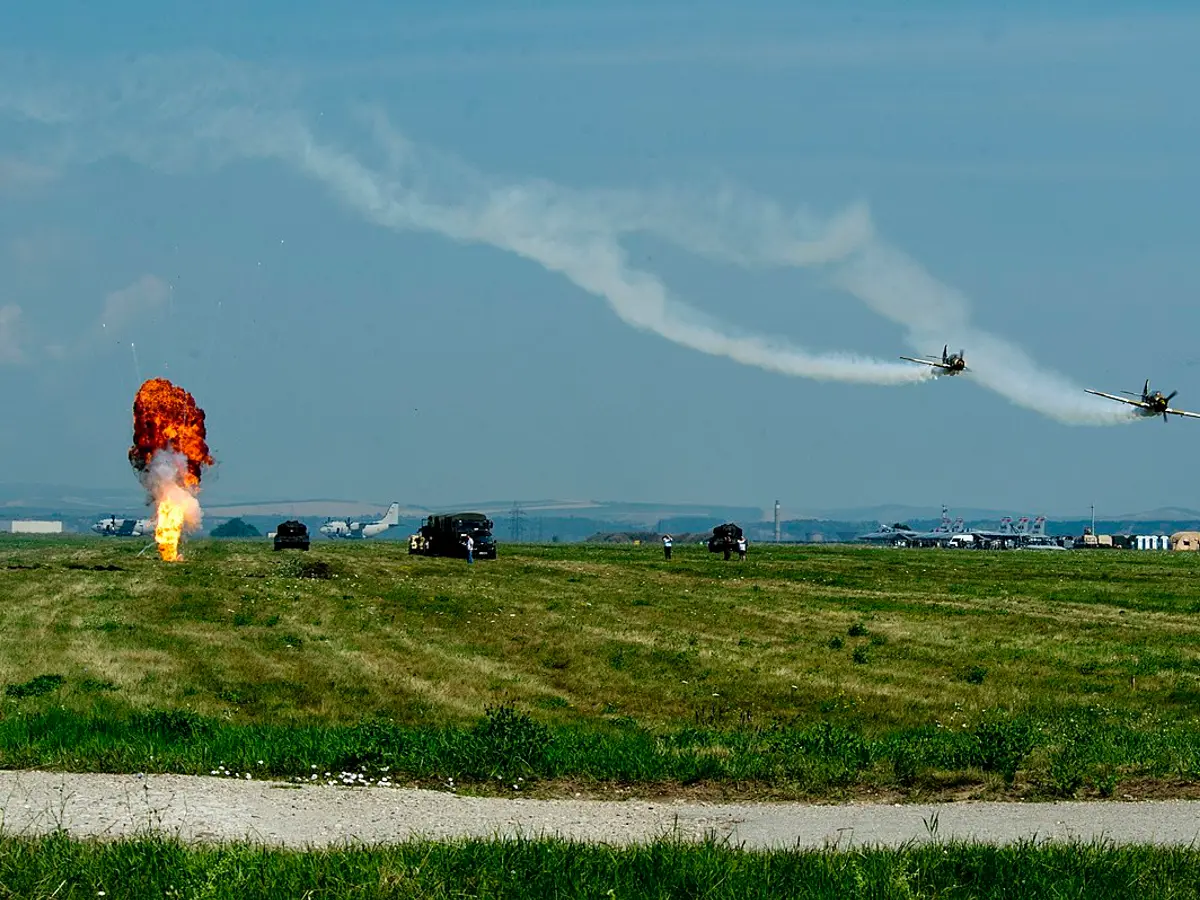
Air show disasters represent critical intersection points between public entertainment, high-performance aerobatics, and aviation safety engineering. Investigations into major historical accidents—such as the Ramstein, Sknyliv, and Shoreham crashes—have systematically reshaped international display regulations. These reforms pushed display lines further from spectator areas, modernized pilot qualification standards, and established strict energy management rules that prevent aircraft from maneuvering directly toward crowd lines.
Technical Anatomy of Air Show Accidents
Demonstration flying operates at the physical limits of both aircraft performance and human physiology. Unlike commercial aviation, where high flight altitudes provide generous margins for error and recovery, display pilots perform complex maneuvers at low altitudes with minimal safety buffers. When an anomaly occurs during an air show, the timeframe available for corrective action is measured in seconds or fractions of a second.
AIR SHOW DISPLAY SAFETY ARCHITECTURE
- REGULATORY FRAMEWORK (FAA Order 8900.1 / UK CAA CAP 403 / ICAO Standards)
- DISPLAY SURFACE DESIGN (Aerobatic Box | Show Line | Crowd Buffer Zones)
- OPERATIONAL CONTROLS (Energy Vector Control | Dynamic G-Force Limits)
- REAL-TIME MONITORING (Air Boss Supervision | On-Site Crash/Fire/Rescue)
Root causes of air display accidents generally fall into four interconnected categories:
- Controlled Flight Into Terrain (CFIT): CFIT occurs when a fully airworthy aircraft under pilot control is unintentionally flown into the ground, water, or an obstacle. At air shows, CFIT frequently happens during vertical recovery maneuvers, such as loops or split-S maneuvers, where the pilot misjudges the initial altitude, entry speed, or local air density.
- Aerodynamic Stalls and Energy Management Failures: Maneuvering at high angles of attack at low speeds can cause unexpected airflow separation over the wings. If an aircraft stalls at low altitude, the altitude loss required to break the stall and recover flying speed may exceed the available clearance.
- Mechanical and Structural Failures: High G-load displays put severe stress on airframes, flight control linkages, engine components, and trim systems. In vintage or heavily modified aircraft, material fatigue, flutter, or component failure under load can render the aircraft uncontrollable.
- Human Factors and Spatial Disorientation: High acceleration forces ($+G_z$) can induce Loss of Consciousness (G-LOC), tunnel vision, or spatial disorientation. In formation displays, loss of visual contact or miscommunication between team members can precipitate mid-air collisions.
Landmark Air Show Disasters and Their Safety Impact
Every major public air display accident has resulted in formal forensic investigations by national transport safety boards. The findings from these investigations have directly informed modern civil aviation policies and military flight demonstration standards globally.
| Event & Date | Location | Primary Root Causes Identified | Key Regulatory & Operational Changes |
|---|---|---|---|
| Farnborough Airshow(Sept 6, 1952) | Hampshire, United Kingdom | Structural failure of the DH.110 prototype during a high-speed pass; debris hit spectator areas. | Introduced mandatory physical separation buffers between display lines and spectators, ending low passes directly over crowd areas. |
| Ramstein Air Display(Aug 28, 1988) | Ramstein Air Base, West Germany | Mid-air collision during a multi-aircraft "pierced heart" maneuver; aircraft crashed into the spectator crowd line. | Banned maneuvers directed vectorially toward the audience; established minimum display distances and unified NATO air display safety guidelines. |
| Sknyliv Air Show(July 27, 2002) | Lviv, Ukraine | Pilot error, energy miscalculation during a low-altitude roll, and improper positioning of crowd sectors relative to the flight path. | Overhauled Ukrainian military flight display guidelines; instituted rigid crowd perimeter enforcement and prohibited aerobatics over spectator sectors globally. |
| Reno Air Races(Sept 16, 2011) | Reno, Nevada, United States | Structural failure of the elevator trim tab on a modified P-51D Mustang leading to high-G pitch-up and pilot incapacitation. | Required enhanced structural modification tracking, mandatory engineering evaluations for experimental race aircraft, and expanded safety buffer distances from grandstands. |
| Shoreham Airshow(Aug 22, 2015) | West Sussex, United Kingdom | Pilot misjudged entry altitude and speed for a loop in a Hawker Hunter jet, initiating recovery too low over a public highway. | The UK Civil Aviation Authority (CAA) enhanced restrictions on vintage jet aerobatics over land and overhauled display pilot authorization requirements. |
The Ramstein Tragedy and Vector Separation
The August 1988 Ramstein disaster remains one of the most pivotal moments in air show history. During a display by the Italian Air Force display team, Frecce Tricolori, a solo aircraft collided with two formation groups at the intersection point of a complex maneuver. The solo aircraft crashed directly into the dense crowd area, causing 70 fatalities and hundreds of injuries.
Prior to Ramstein, air display regulations in many jurisdictions permitted aircraft to perform maneuvers pointed toward or directly above spectator lines, provided minimum altitude thresholds were maintained. The incident demonstrated that altitude minimums alone offer zero protection if an aircraft loses control while traveling on a vector pointing toward the crowd. Post-incident investigations by Western aviation authorities established the "show line" concept, mandating that the flight path vector of high-energy maneuvers must remain parallel to or pointing away from the audience at all times.
The Sknyliv Crash and Crowd Line Placement
In July 2002, a Ukrainian Air Force Su-27 performing a low-altitude demonstration stalled while completing a rolling maneuver. The aircraft touched the ground with its wingtip, slid along the airfield surface, and sheared into a densely populated spectator area, resulting in 77 deaths.
The subsequent investigation revealed severe systemic planning oversights, including placing the audience directly inside the operational display boundary rather than behind a distinct, protected perimeter line. Sknyliv led regulatory authorities worldwide to enforce strict spatial separation criteria: spectators must be kept entirely outside the aerobatic box, with buffer zones sized appropriately for the maximum speed and weight of participating aircraft.
Evolution of Air Display Regulations and Safety Zones
Modern air show oversight relies on prescriptive standards enforced by national aviation authorities, such as the Federal Aviation Administration (FAA) in the United States and the Civil Aviation Authority (CAA) in the United Kingdom.
TYPICAL AIR SHOW DISPLAY LAYOUT & SAFETY BUFFER ZONES
- PRIMARY AEROBATIC BOX
- High-speed passes, loops, vertical maneuvers
- Flight vector parallel to Show Line
- Primary Show Line
- PRIMARY BUFFER ZONE
- No spectator access; emergency vehicle transit corridor
- Crowd Line (Barrier)
- SPECTATOR DISPLAY AREA
- Seating, concessions, grandstands, static displays
The Aerobatic Box and Show Line Geometry
Regulations define precise three-dimensional airspace volumes—known as the aerobatic box—within which display routines must be contained.
- Primary Show Line: An imaginary, clearly marked ground reference line parallel to the spectator seating area. Aircraft must perform their maneuvers along or beyond this line.
- Minimum Distance Minimums: The minimum lateral distance between the crowd line and the show line varies by aircraft category, speed, and maneuver type. Under standard FAA Order 8900.1 and UK CAA publication CAP 403:
- Slow-speed, light aircraft (under 156 knots): Minimum separation of 500 feet (150 meters).
- High-performance piston and jet aircraft (156–300 knots): Minimum separation of 1,000 feet (300 meters).
- High-speed military jets and heavy aircraft (over 300 knots): Minimum separation of 1,500 feet (450 meters) or more.
- Altitude Minimums: Absolute floor altitudes (e.g., 100 feet, 200 feet, or 500 feet above ground level) are assigned based on the pilot's specific display rating, experience level, and airframe category.
Energy Vector Control
A core principle of modern flight display management is energy vector control. Regulations prohibit any maneuver where the linear momentum or kinetic trajectory of the aircraft points directly at the primary spectator area while within a designated hazard zone. If an engine fails, a control linkage snaps, or a pilot becomes incapacitated while executing a loop or turn, the aircraft's ballistic path must carry it into empty airfield zones, safety run-off areas, or designated unpopulated impact zones—never toward the crowd.
Human Factors: Physiological Limitations and Decision-Making
High-performance flight exposes pilots to rapid acceleration changes, intense cognitive workloads, and tight physical margins. Understanding human physiological limits has been essential to reducing pilot-error accidents during air displays.
G-Induced Loss of Consciousness (G-LOC)
During aggressive upward pulling maneuvers, positive acceleration ($+G_z$) forces blood away from the brain toward the lower extremities. If the acceleration rate exceeds the body's natural cardiovascular compensation mechanisms, the pilot experiences progressive visual degradation (greyout, blackout) followed by complete loss of consciousness (G-LOC).
INCREASING G-FORCE ACCELERATION (+Gz)
- Normal Vision
- Peripheral Vision Loss (Tunnel Vision)
- Complete Loss of Vision (Blackout)
- Loss of Consciousness (G-LOC): Aircraft enters uncontrolled ballistic trajectory
Because G-LOC occurs rapidly, a pilot performing a low-altitude vertical turn may lose control while the aircraft is in a descending attitude. Modern safety programs address this through mandatory anti-G suit usage, targeted physical conditioning, centrifuge training, and strict G-force operational limits programmed into digital display routines.
Spatial Disorientation and Target Fixation
At low altitudes, pilots relying on visual flight rules (VFR) can experience spatial disorientation, particularly when maneuvering against featureless skies, over water, or amidst smoke effects from other display aircraft.
Target fixation occurs when a pilot becomes excessively focused on achieving a precise ground marker or finishing a maneuver smoothly, ignoring deteriorating flight parameters such as declining airspeed or loss of clearance altitude. Modern display pilot evaluation protocols emphasize the strict execution of hard abort criteria: predefined altitude, speed, or attitude gates that, if crossed, require immediate disengagement from the routine.
Emergency Preparedness and Operational Risk Assessment
Safety at an air show relies on a integrated network of ground personnel, air traffic control, and specialized emergency services.
The Role of the Air Boss
The Air Boss exercises operational control over the active display airspace. Operating from a central tower or elevated platform with an unobstructed view of the entire flight display area, the Air Boss maintains direct, continuous radio contact with participating pilots.
The Air Boss enforces flight display permits, monitors weather conditions (such as cloud base ceilings, crosswinds, and visibility), and possesses absolute authority to halt a performance or issue an immediate abort command if an aircraft strays outside the aerobatic box or violates minimum altitude constraints.
Safety Management Systems (SMS) and Pre-Event Planning
Contemporary air display management requires a comprehensive Safety Management System (SMS) prior to issuing event permits. Key elements include:
- Hazard Identification and Risk Assessment (HIRA): Mapping potential failure points, including engine failure during takeoff, off-airport forced landings, structural breakups, and bird strikes.
- Emergency Service Staging: Pre-positioning Airport Rescue and Firefighting (ARFF) units, industrial foam trucks, structural rescue vehicles, and medical evacuation teams along dedicated, unobstructed transit corridors.
- Dynamic Weather Minima: Establishing distinct display profiles (Flat, Rolling, or Full routines) based on real-time cloud ceiling heights and forward visibility. If the ceiling drops below required minimums, pilots must switch to a reduced routine that eliminates vertical maneuvers.
Frequently Asked Questions
What is the safest distance for spectators at an air show?
Spectator safety zones are dictated by strict regulatory requirements based on aircraft speed and maneuver type. For high-performance jet displays, audience areas must be separated from the primary show line by at least 1,500 feet (approximately 450 meters). Furthermore, spectators are positioned outside the flight trajectory box so that high-energy aircraft vectors do not point toward the crowd.
How are air show pilots certified to perform low-altitude aerobatics?
Display pilots undergo specialized evaluation processes beyond standard commercial or military pilot licensing. In the United States, pilots must earn an FAA Aerobatic Practice Statement (Form 8710-7) or an International Council of Air Shows (ICAS) evaluation card. In the UK, pilots must hold a Display Authorisation (DA) issued by the CAA. These credentials require regular peer evaluations, proof of aerobatic competency, and step-down altitude evaluations starting at high altitudes before low-altitude waivers are granted.
Why do some vintage military aircraft still experience accidents at air displays?
Vintage aircraft (often referred to as warbirds) were engineered decades ago under different structural and maintenance paradigms. They lack modern safety features such as digital fly-by-wire flight envelope protection, automatic ground collision avoidance systems (Auto-GCAS), and modern ejection seats. Maintaining these airframes requires specialized non-destructive testing (NDT) to check for metal fatigue, strict component life tracking, and rigorous pilot familiarization with historic handling characteristics under high load forces.
What happens if a pilot experiences an emergency during a display?
Display pilots are trained to follow immediate emergency protocols: climb to gain altitude and potential energy, turn away from the crowd line toward designated unpopulated ejection or forced-landing zones, and announce the emergency to the Air Boss. If the aircraft is equipped with an ejection seat and control is lost below safe recovery altitudes, pilots are trained to eject immediately once the aircraft trajectory is confirmed to be clear of spectator sectors.
Essential Frameworks for Modern Air Show Safety
Enhancing aviation safety while preserving public air displays requires continuous integration of engineering standards, pilot training, and ground management protocols. Air show organizers, display pilots, and regulatory oversight authorities must maintain a unified safety framework built on non-negotiable operational principles:
- Strict Trajectory Isolation: No maneuver may be designed, rehearsed, or performed such that an unexpected mechanical failure or pilot incapacitation places the aircraft's momentum vector on a collision path with spectator infrastructure.
- Standardized Flight Envelope Boundaries: Every performance must feature hard numerical gates for altitude, entry speed, and G-loads. Display pilots must automatically abort maneuvers when parameters fall outside prescribed windows.
- Continuous Airworthiness Integrity: Maintaining strict non-destructive testing routines, thorough fatigue monitoring, and rigorous engineering compliance for all participating civilian and historic airframes.
- Coordinated Emergency Response: Maintaining real-time communications between the Air Boss, local air traffic control, and dedicated ground rescue teams to guarantee rapid, coordinated response in the event of an off-field landing or on-site mishap.
By applying lessons learned from historical tragedies, the international aviation community ensures that air displays continue to showcase flight performance while prioritizing spectator and crew safety above all else.