Air safety encompasses the structured protocols, regulatory oversight, technological systems, and human factor management designed to minimize risks in civil and military aviation. Governed globally by the International Civil Aviation Organization (ICAO) and enforced nationally through bodies like the Federal Aviation Administration (FAA) and the European Union Aviation Safety Agency (EASA), air safety relies on data-driven Safety Management Systems (SMS), continuous maintenance, rigorous crew training, and transparent accident investigation protocols to safeguard passengers, crew, and ground populations.
The Core Pillars of Aviation Safety Architecture
Modern aviation achieves high safety metrics not through a single defensive layer, but through continuous, overlapping operational safeguards. This approach—often conceptualized using Reason’s "Swiss Cheese Model" of accident causation—ensures that if one system fails, adjacent controls prevent an operational hazard from escalating into an accident.
- Operational Defense Layers:
- Layer 1: Regulatory Design Standards
- Layer 2: Continuous Maintenance
- Layer 3: Flight Crew Qualifications
- Layer 4: Air Traffic Management (Prevent Incident)
Technical Airworthiness and Structural Design
Aircraft airworthiness begins during the design phase. Manufacturers must demonstrate compliance with strict airworthiness codes, such as Title 14 of the Code of Federal Regulations (14 CFR) Part 25 in the United States or CS-25 in Europe. These regulations cover structural integrity, redundant flight control systems, fire protection, engine reliability, and avionics fault tolerance. Systems critical to safety must incorporate physical or operational redundancy—such as dual or triple hydraulic circuits and independent electrical busses—to ensure uninterrupted operation during equipment failure.
Flight Crew Qualification and Training
Human operators remain a central component of aviation safety. Flight crews undergo initial certification and mandatory recurrent training, typically every six to twelve months. Training relies heavily on Full Flight Simulators (FFS) qualified to Level D standards, allowing pilots to practice low-probability, high-consequence events including engine failures, severe weather encounters, system de-activations, and unexpected control upsets. Crew licensing standards require periodic medical re-certification and strict adherence to Flight Duty Period (FDP) limits to prevent performance degradation caused by fatigue.
Air Traffic Management and Airspace Control
Safe aircraft separation depends on integrated Air Traffic Management (ATM) networks. Air traffic controllers use primary and secondary surveillance radar systems, alongside Automatic Dependent Surveillance-Broadcast (ADS-B), to monitor flight paths and prevent mid-air collisions. Modern airspace management incorporates automated conflict detection tools, standardized route structures, and clear handoff protocols between oceanic, en-route, approach, and tower control sectors.
Independent Incident and Accident Investigation
When safety breaches occur, independent state agencies conduct investigations to establish root causes without assigning civil or criminal liability. Institutions like the National Transportation Safety Board (NTSB) in the United States and the Bureau d'Enquêtes et d’Analyses (BEA) in France issue safety recommendations designed to correct systemic deficiencies in aircraft design, operational procedures, or regulatory oversight.
Regulatory Bodies and International Safety Standards
Aviation operates within a global ecosystem requiring international harmonization. The table below outlines the primary organizations responsible for establishing and maintaining global air safety standards.
| Organization | Jurisdiction | Primary Focus & Regulatory Role | Key Mandates & Frameworks |
|---|---|---|---|
| ICAO (International Civil Aviation Organization) | Global (193 Member States) | International standards and recommended practices (SARPs) for international aviation. | Chicago Convention Annexes (e.g., Annex 19 for Safety Management, Annex 6 for Aircraft Operations). |
| FAA (Federal Aviation Administration) | United States | Civil aviation regulation, certification, airworthiness directives, and airspace oversight. | 14 CFR (Federal Aviation Regulations), NextGen air traffic modernization. |
| EASA (European Union Aviation Safety Agency) | European Union & EFTA States | Aviation safety regulation, aircraft type certification, environmental protection standards. | Regulation (EU) 2018/1139, standardized European Rules of the Air (SERA). |
| IATA (International Air Transport Association) | Global Commercial Airlines | Commercial airline operational standards, safety audits, and trade representation. | IATA Operational Safety Audit (IOSA), ISAGO for ground handling. |
The foundation of international harmonization rests on the 1944 Chicago Convention, administered by ICAO. Annex 19 to the convention mandates that member states establish a State Safety Programme (SSP) to manage safety at the national level, while requiring air operators, maintenance organizations, and airport operators to implement verified Safety Management Systems.
Safety Management Systems (SMS) in Modern Aviation
A Safety Management System (SMS) is an organized, business-like approach to managing safety risks. Rather than relying solely on reactive responses to accidents, SMS establishes proactive processes to identify hazards and manage risks before they lead to incidents.
- Safety Management System (SMS):
- Safety Policy
- Leadership
- Objectives
- Accountability
- Safety Risk Management
- Hazard ID
- Risk Mitigation
- Safety Assurance
- Auditing
- Data Monitoring
- Corrective Action
- Safety Promotion
- Training
- Open Communication
- Safety Policy
Component 1: Safety Policy and Objectives
Safety policy establishes senior management’s commitment to safety objectives. It defines clear lines of safety accountability across the organization, designates key safety personnel, and documents emergency response plans. A safety policy establishes the organizational framework necessary to allocate resources to risk mitigation.
Component 2: Safety Risk Management (SRM)
Safety Risk Management involves a formal, structured process for identifying operational hazards, assessing potential risks, and executing control measures:
- Hazard Identification: Tracking vulnerabilities across operations through employee reporting, flight data, and system audits.
- Risk Assessment: Evaluating hazards using a risk matrix that measures the severity of a potential outcome against the likelihood of occurrence.
- Risk Mitigation: Applying operational controls, engineering changes, or procedural updates to lower risk to an As Low As Reasonably Practicable (ALARP) level.
Component 3: Safety Assurance
Safety Assurance continuously monitors organizational performance to verify that safety controls remain effective. This component includes internal and external safety audits, continuous flight monitoring, and systematic reviews of operational changes. If continuous monitoring identifies ineffective controls, the organization implements formal corrective action plans (CAPs).
Component 4: Safety Promotion
Safety Promotion fosters a positive safety culture throughout the organization. It requires regular safety training, open communication of safety lessons learned, and the maintenance of a non-punitive (or "Just") reporting environment. In a Just Culture, personnel are encouraged to report honest errors and safety hazards without fear of reprisal, while clear boundaries remain for deliberate non-compliance or willful negligence.
Data-Driven Safety Innovations and Technological Integration
The transition from reactive accident investigation to proactive risk management relies heavily on advanced flight telemetry, automated warning systems, and predictive data analysis.
Flight Data Monitoring (FDM) and Analysis
Modern commercial aircraft continuously record thousands of flight parameters per second. Under Flight Data Monitoring (FDM) programs—also known as Flight Data Analysis (FDA) or Operational Quality Assurance (FOQA)—airlines automatically aggregate and evaluate telemetry from routinely completed flights. Software algorithms screen flight data for deviations from standard operating procedures (SOPs), such as unstable approaches, hard landings, or un-commanded altitude deviations. Identifying these trends early enables operators to adjust training curricula and operational procedures before safety margins are compromised.
Predictive Maintenance and Systems Health Management
Aircraft operators use real-time telemetry transmitted via Aircraft Communications Addressing and Reporting System (ACARS) to monitor engine health, hydraulic pressure trends, and electrical system diagnostics during flight. Advanced algorithms analyze these parameters to predict component failures before they occur, allowing maintenance crews to replace worn components during scheduled turnarounds rather than experiencing inflight system degradations.
Advanced Avionics and Collision Avoidance
Ground-based and airborne technology updates have substantially reduced major flight risks, including Controlled Flight Into Terrain (CFIT) and mid-air collisions:
- Airborne Collision Avoidance System (ACAS / TCAS II): Interrogates transponders of nearby aircraft to calculate collision risk. If aircraft trajectories converge, TCAS delivers independent Resolution Advises (RAs) to flight crews, instructing mandatory climb or descent maneuvers.
- Enhanced Ground Proximity Warning System (EGPWS): Combines radar altimeter data, GPS positioning, and internal terrain/obstacle databases to alert pilots of insufficient terrain clearance well before potential impact.
- Synthetic Vision Systems (SVS): Displays computer-generated 3D terrain and runway imagery on primary flight displays, maintaining spatial awareness during zero-visibility instrument approaches.
Human Factors and Crew Resource Management (CRM)
Despite advanced automation, human performance remains critical to aviation safety. Historical data indicates that human error contributes to a significant portion of aviation incidents, prompting the industry to systematically address cognitive limitations, communication barriers, and situational awareness.
- Threat and Error Management (TEM):
- External Threat (Weather, ATC)
- Anticipate/Mitigate
- Human Error (Mistake, Omission)
- Detect/Correct
- Undesired State (Unstable Approach)
- Recover/Go-Around
- External Threat (Weather, ATC)
Threat and Error Management (TEM)
Threat and Error Management provides a practical framework for analyzing pilot performance during flight operations. TEM divides operational challenges into three main categories:
- Threats: Events outside the flight crew's direct control (e.g., adverse weather, air traffic control delays, system malfunctions) that increase operational complexity.
- Errors: Crew actions or omissions that lead to deviations from organizational expectations or flight plans.
- Undesired Aircraft States: Situations where an aircraft is improperly configured, off-altitude, or on an unstable glide path, requiring immediate recovery maneuvers.
CRM training equips crews to identify threats early, catch errors before they propagate, and promptly execute corrective procedures to prevent undesired aircraft states.
Non-Hierarchical Cockpit Dynamics and Standardized Briefings
Crew Resource Management (CRM) encourages open communication among all crew members, regardless of rank. Captains actively seek input from first officers, flight attendants, and dispatchers during complex operations. Standardized briefings (such as pre-departure, approach, and emergency briefings) align the crew's mental model, defining expected actions, assigned duties, and specific decision points for mandatory go-arounds.
Fatigue Risk Management Systems (FRMS)
Fatigue degrades reaction time, situational awareness, and decision-making capacity. Regulatory bodies mandate maximum flight duty periods based on report times, flight sector counts, and circadian rhythms. Modern air operators implement scientific Fatigue Risk Management Systems (FRMS) to monitor crew rosters, analyze sleep-wake schedules, and provide bio-mathematical risk modeling to maintain safe alertness levels across long-haul flight operations.
Evaluating Airline Safety Records and Operational Guidance
Evaluating aviation safety requires an understanding of official safety metrics rather than relying on unverified reporting or isolated incidents.
Operational Safety Audits and Certification
When assessing operator safety compliance, independent global audits offer reliable baselines:
- IATA Operational Safety Audit (IOSA): An internationally recognized evaluation system designed to assess the operational management and control systems of an airline. Participation in IOSA is mandatory for IATA member airlines.
- ICAO Universal Safety Oversight Audit Programme (USOAP): Evaluates a nation's capability to provide effective safety oversight of its aviation infrastructure, personnel licensing, aircraft operations, and airworthiness certifications.
- FAA International Aviation Safety Assessment (IASA): Determines whether a foreign nation's civil aviation authority complies with ICAO safety standards, assigning a Category 1 (compliant) or Category 2 (non-compliant) rating.
Key Safety Guidance for Air Travelers
While commercial aviation remains statistically safe, passenger compliance with safety protocols directly impacts cabin safety outcomes during unexpected events:
- Review Cabin Briefings: Pay attention to safety briefings and study the passenger safety card located in the seat pocket, noting the specific locations of the nearest operational emergency exits.
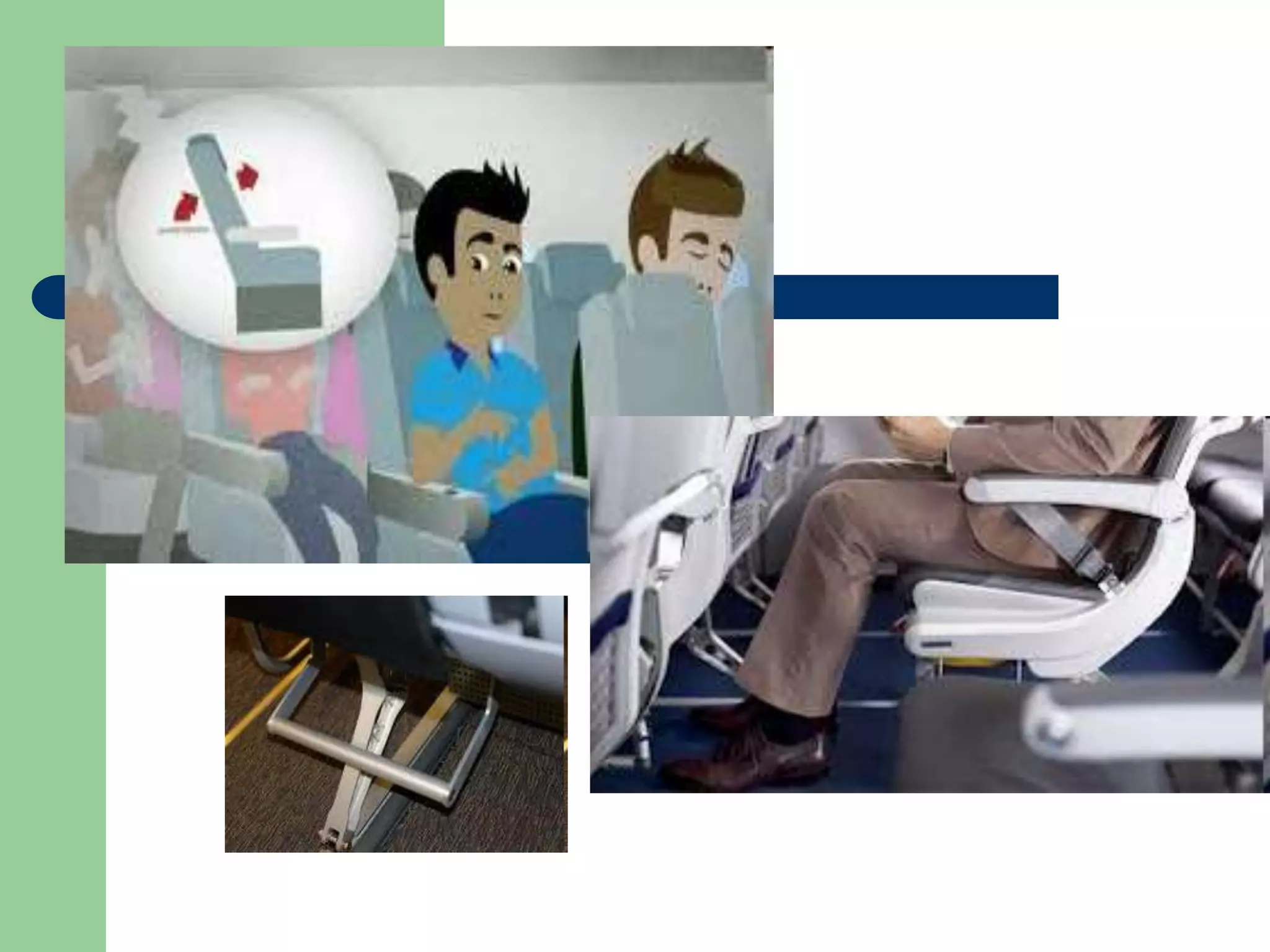
- Maintain Seatbelt Compliance: Keep seatbelts fastened whenever seated, even when the seatbelt sign is illuminated off, to prevent injuries caused by sudden, un-forecasted Clear Air Turbulence (CAT).
- Understand Emergency Evacuation Protocols: In the event of an evacuation, leave all personal carry-on luggage behind. Attempting to retrieve luggage slows evacuation progress, blocks aisles, and risks damaging inflatable evacuation slides.
- Follow Dangerous Goods Regulations: Safely stow lithium-ion battery packs and electronic devices in carry-on baggage rather than checked luggage to ensure flight crews can quickly manage potential thermal runaway events using cabin fire-suppression equipment.
Frequently Asked Questions About Air Safety
What is the primary metric used to evaluate commercial air safety globally?
Air safety is primarily measured using the rate of fatal accidents per million flights or sector departures, as well as fatalities per passenger-kilometer flown. Regulators and safety analysts rely on these normalized rates—rather than total raw incident counts—to track long-term safety trends while accounting for changes in total global flight volume.
How do aviation authorities maintain a non-punitive reporting culture?
Aviation authorities foster non-punitive reporting through formal safety reporting systems, such as the Aviation Safety Reporting System (ASRS) operated by NASA for the FAA. These programs offer confidentiality and protect individuals from administrative penalties for inadvertent errors, provided the report is submitted promptly, does not involve criminal activity or deliberate misconduct, and demonstrates no intent to violate regulations.
What role does ICAO play in establishing international air safety standards?
ICAO establishes global Standards and Recommended Practices (SARPs) contained within the 19 Annexes to the Chicago Convention. While ICAO does not directly enforce regulations or issue penalties within individual sovereign states, member countries adopt these SARPs into their domestic laws to maintain internationally harmonized airworthiness, licensing, and operational standards.
How are aircraft software and hardware modifications certified for safety?
Hardware and software modifications undergo continuous airworthiness evaluations through Supplemental Type Certificate (STC) or major alteration approval processes managed by regulatory authorities (such as the FAA or EASA). Modifications require extensive engineering analyses, failure mode effect evaluations (FMEA), ground testing, and flight test validations to prove that the changes meet established certification safety margins.
How is cabin air quality managed to ensure passenger safety?
Commercial aircraft cabin air is managed using environmental control systems (ECS) that blend outside fresh air compressed by the engines (or generated via electric compressors) with recirculated cabin air passed through High-Efficiency Particulate Air (HEPA) filters. These industrial-grade HEPA filters capture over 99.9% of airborne microbes, bacteria, and particulate matter, refreshing total cabin air volume every two to three minutes.
Implementing Safety Assurance: Recommendations for Aviation Stakeholders
Maintaining high safety standards requires active engagement from regulators, airline managers, maintenance personnel, and traveling passengers.
For Airline Operators and Flight Crews
- Prioritize Continuous Data Integration: Continuously feeding flight data monitoring (FDM) metrics directly back into Crew Resource Management (CRM) curricula ensures training targets actual operational risks observed in everyday flight operations.
- Reinforce Safety Reporting Channels: Senior management should systematically publish safety action reports, demonstrating to employees that submitted hazard reports lead to concrete procedural corrections.
- Standardize Fatigue Monitoring: Integrate real-time roster assessment tools and biometric feedback models to refine duty assignments, reducing fatigue risk across complex flight networks.
For Air Travelers
- Verify Operator Audit Status: Review operator compliance using public databases such as the IATA IOSA registry or official civil aviation authority safety ratings before booking flights with unfamiliar regional carriers.
- Adhere Strict Electronic and Hazardous Item Controls: Always check cabin baggage restrictions regarding spare lithium batteries, power banks, and regulated items to reduce fire hazards inside aircraft compartments.
- Follow Crew Directives: Obey all posted cabin signs, crew announcements, and illuminated indicators, recognizing that inflight cabin safety protocols are designed to minimize risks during severe weather or unforeseen operational events.