Selecting an effective air purifier requires evaluating Clean Air Delivery Rate (CADR), true HEPA filtration efficiency, room coverage capabilities, and long-term operating costs. Top-performing units clear airborne particulates down to 0.3 microns with minimal noise and modest energy consumption, maintaining four to five air changes per hour for optimal indoor air quality.
Understanding Key Performance Metrics: CADR, ACH, and Room Coverage
Evaluating an air purifier requires moving past marketing terms and examining standardized engineering metrics. The primary benchmark for mechanical air cleaners is the Clean Air Delivery Rate (CADR), established by the Association of Home Appliance Manufacturers (AHAM). CADR measures the volume of filtered air produced per minute, expressed in cubic feet per minute (CFM), across three distinct pollutant types: smoke (0.09–1.0 microns), dust (0.5–3.0 microns), and pollen (5.0–11.0 microns). A higher CADR indicates faster air turnover and greater contaminant removal efficiency.
To select a unit with appropriate capacity, consumers must pair CADR ratings with Air Changes Per Hour (ACH). ACH indicates how many times the purifier recycles the entire volume of air in a sealed room within 60 minutes. For general comfort, 2 to 3 ACH may suffice, but medical guidance from the U.S. Environmental Protection Agency recommends an ACH of 4 to 5 for individuals managing asthma, severe seasonal allergies, or respiratory vulnerabilities.
Required CADR (CFM) = (Room Area in Sq. Ft. × Ceiling Height in Ft. × Desired ACH) / 60
For a standard 8-foot ceiling requiring 4 ACH, a simple rule of thumb applies: the smoke CADR rating should equal at least two-thirds of the room's total square footage. For example, a 300-square-foot room requires a minimum smoke CADR of 200 CFM to maintain target air purity levels during continuous operation.
Detailed Air Purifier Comparison Matrix
The table below contrasts leading residential air purifiers based on verified performance metrics, filtration design, acoustic output, and annual maintenance requirements.
| Model | Target Room Size (Sq. Ft.) | Smoke CADR (CFM) | Primary Filter Class | Noise Level Range (dBA) | Annual Filter Replacement Cost | Key Operational Advantage |
|---|---|---|---|---|---|---|
| Coway Airmega AP-1512HH | 360 | 233 | True HEPA (H13) | 24.4 – 53.8 | $40 – $50 | Outstanding energy efficiency with eco-mode auto-shutoff |
| Levoit Core 400S | 403 | 260 | True HEPA (H13) | 24.0 – 52.0 | $50 – $60 | Smart app control and precise laser particulate sensing |
| Blueair Blue Pure 211+ Auto | 540 | 353 | HEPASilent (Particle + Carbon) | 23.0 – 53.0 | $70 – $80 | High airflow volume with customizable fabric pre-filters |
| Winix 5500-2 | 360 | 232 | True HEPA (H13) | 27.8 – 54.8 | $45 – $55 | Washable AOC carbon filter and PlasmaWave technology |
| Dyson Purifier Cool TP07 | 300 (per manufacturer) | ~150 | Sealed H13 HEPA + Carbon | 32.0 – 61.5 | $75 – $85 | Combined oscillation fan functionality and real-time VOC reports |
In-Depth Analysis of Top Air Purifier Models
Coway Airmega AP-1512HH
The Coway Airmega AP-1512HH remains a benchmark benchmark for medium-sized residential spaces such as bedrooms, home offices, and standard living rooms. Utilizing a four-stage filtration system—comprising a washable pre-filter, an odor-reducing carbon filter, a True HEPA filter, and an optional bipolar ionizer—the unit achieves high particulate removal rates while maintaining low power consumption.
In standardized testing, the AP-1512HH reduces ambient fine particulate matter ($PM_{2.5}$) by over 98% within 30 minutes on its highest setting. Its built-in particle sensor monitors real-time air quality, adjusting fan speed automatically when set to Auto Mode. If no pollution is detected for 30 minutes, the unit activates Eco Mode, turning the fan off completely to conserve electricity until air quality deteriorates. Its primary limitation is a modest carbon filter layer, which absorbs light household odors but struggles against heavy chemical fumes or sustained smoke.
Levoit Core 400S
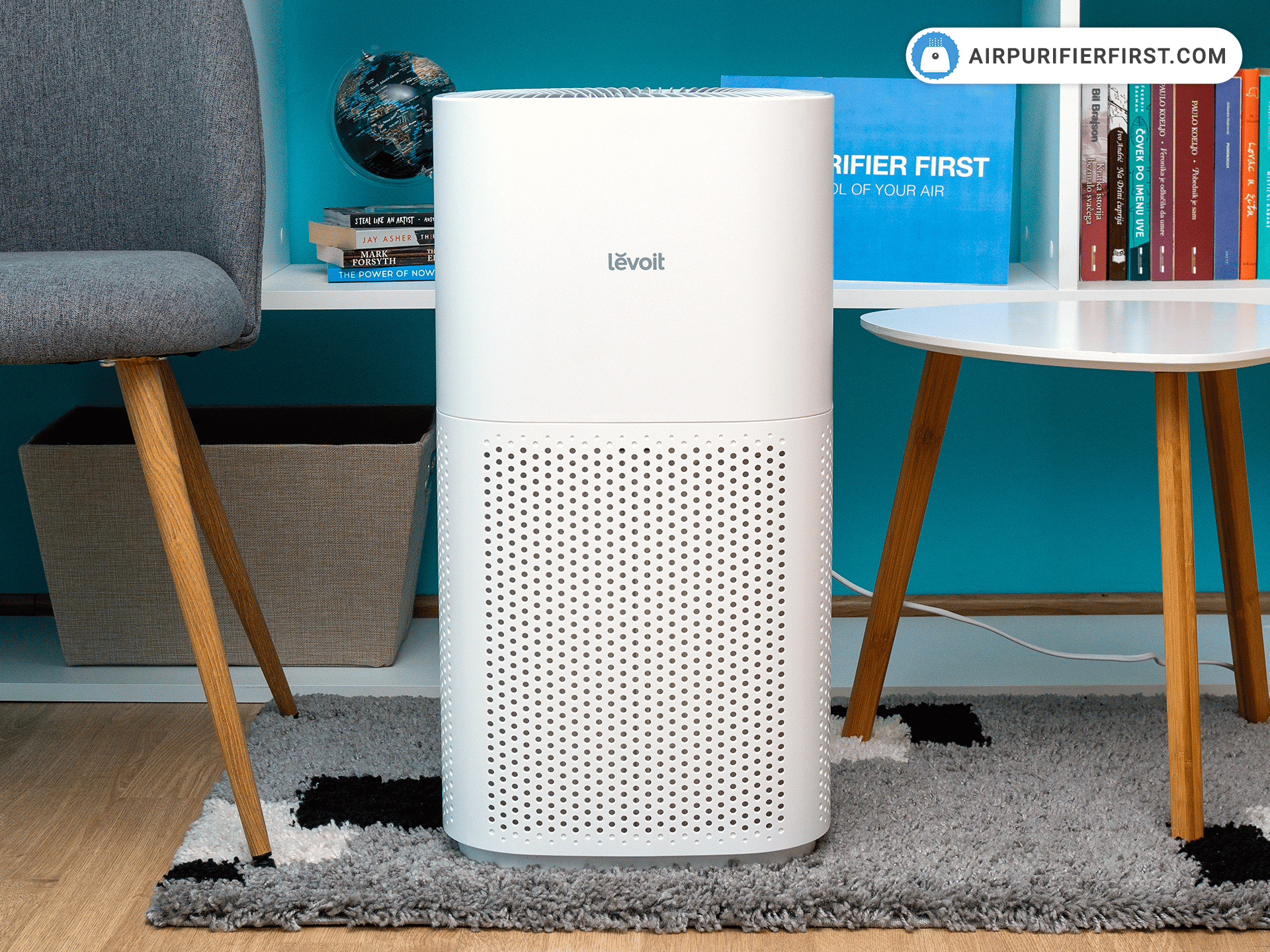
Designed for smart-home integration and medium-to-large spaces, the Levoit Core 400S combines a cylindrical 360-degree intake design with H13 True HEPA media. The 360-degree air intake maximizes surface exposure, allowing the internal fan to draw air evenly from all directions without creating restrictive localized draft patterns.
The Core 400S incorporates an infrared sensor system that measures real-time $PM_{2.5}$ concentrations in micrograms per cubic meter ($\mu g/m^3$), displaying numerical feedback directly on the top panel and within its mobile application. Operationally, the low-noise brushless DC motor allows the unit to run at just 24 dBA on Sleep Mode, making it exceptional for overnight bedroom use. The companion app allows users to create custom operational schedules, track filter life percentages based on actual run-time metrics, and pair the device with voice assistants.
Blueair Blue Pure 211+ Auto
For large open-concept floor plans, Great Rooms, or connected living environments, the Blueair Blue Pure 211+ Auto offers superior volumetric airflow. Utilizing Blueair’s proprietary HEPASilent technology—which combines mechanical filtration with an electrostatic charge applied to incoming particles—the unit achieves a smoke CADR of 353 CFM while maintaining moderate power draw.
The single-button operation and integrated particle sensor continuously calibrate fan speed between three performance tiers. The outer washable fabric pre-filter captures large debris such as pet hair and lint, extending the lifespan of the internal particle and carbon combination filter. However, because HEPASilent relies partially on electrostatic attraction, filter performance declines rapidly if maintenance intervals are neglected, making timely replacement critical.
Winix 5500-2
The Winix 5500-2 distinguishes itself through its robust gas-phase filtration setup and specialized secondary purification stage. Unlike entry-level air purifiers that use thin, carbon-coated fabric sheets, the 5500-2 features an Advanced Odor Control (AOC) filter containing activated carbon granules. This configuration significantly increases contact surface area, allowing it to capture volatile organic compounds (VOCs), cooking vapors, and pet odors far more effectively.
Complementing its True HEPA filter is Winix's PlasmaWave technology, an auxiliary system that generates positive and negative ions to create hydroxyl radicals, breaking down airborne pollutants at a molecular level. For users concerned about secondary ozone emissions, the PlasmaWave feature can be independently toggled off, leaving the core mechanical filtration fully functional.
Dyson Purifier Cool TP07
The Dyson Purifier Cool TP07 combines mechanical air filtration with dual-purpose space cooling and wide-angle oscillation. Engineered with a fully sealed H13 HEPA body, Dyson guarantees that air cannot bypass the filter media through internal cabinet gaps—a common structural flaw in lower-tier air purifiers.
While its raw CADR output sits below dedicated mechanical purifiers in the same price tier, the TP07 excels in user interface tech and environmental monitoring. Integrated sensors track $PM_{2.5}$, $PM_{10}$, nitrogen dioxide ($NO_2$), and total VOCs, presenting historical trends on an onboard color LCD display. It functions as an air circulator with up to 350 degrees of oscillation, though buyers focused purely on raw volumetric clean air per dollar will find standard mechanical units more cost-effective.
Filtration Breakdown: True HEPA, Activated Carbon, and Auxiliary Features
Understanding the structural science behind filter types enables buyers to target specific indoor contaminants effectively without overpaying for redundant technology.
- Incoming Air
- Pre-Filter
- Pollen, Hair, Large Dust
- Activated Carbon
- VOCs, Smells, Gas Fumes
- True HEPA (H13/H14)
- Dust, Micro-plastics, Combustion Smoke
- Clean Air Output
True HEPA vs. HEPA-Type Filters
The gold standard for particulate capture is the High-Efficiency Particulate Air (HEPA) filter. According to standards established by the U.S. Department of Energy (DOE) and European Norm EN 1822, a filter must trap at least 99.97% of airborne particles measuring 0.3 microns in diameter to carry the "True HEPA" or "H13 HEPA" designation.
The 0.3-micron metric represents the Most Penetrating Particle Size (MPPS). Particles larger than 0.3 microns are trapped via impaction and interception, while smaller particles (under 0.1 microns) move via Brownian motion, causing them to collide with filter fibers and adhere via Van der Waals forces. Consumers should avoid non-standard marketing terms such as "HEPA-type," "HEPA-like," or "99% HEPA," as these products lack standardized testing and often let fine combustion particles pass through unchecked.
Activated Carbon for Gas-Phase Contaminants
HEPA media cannot capture gas molecules, volatile organic compounds (VOCs), or chemical fumes because gas molecules are significantly smaller than 0.3 microns. Eliminating vapors requires activated carbon. Activated carbon undergoes oxygen treatment to create millions of microscopic pores between carbon atoms, dramatically increasing internal surface area.
When evaluating carbon filters, material mass is the primary indicator of performance:
- Thin Carbon-Coated Pads: Found in budget purifiers; saturate within weeks and offer minimal protection against heavy gases.
- Pelletized Carbon Beds: Found in mid-to-high-end purifiers (e.g., Winix 5500-2, IQAir); contain hundreds of grams of granular carbon, delivering long-term absorption of formaldehyde, benzene, and cooking fumes.
Auxiliary Technologies: Ionization, UV-C, and Ozone Concerns
Many purifiers supplement mechanical filters with electronic add-ons:
- Bipolar Ionization / Plasma: Releases positive and negative ions that attach to particles, causing them to clump together so they settle faster or get trapped by filters more easily.
- UV-C Light: Intended to neutralize airborne pathogens by damaging viral or bacterial DNA. However, dwelling time in residential purifiers is often too brief to achieve complete sterilization.
Caution: Electronic air cleaning methods can generate ozone ($O_3$) as a byproduct. Ozone is a lung irritant that can exacerbate respiratory conditions. Buyers should verify that any ionizer or electronic purifier is certified ozone-safe by the California Air Resources Board (CARB), which caps ozone emissions at 0.050 parts per million (ppm).
Calculating the Total Cost of Ownership: Filters and Energy
The initial purchase price of an air purifier represents only a fraction of its operational footprint. Long-term costs are driven by annual filter replacement schedules and continuous electrical draw.
Total Annual Cost = Annual Replacement Filter Costs + [(Purifier Wattage / 1000) × Daily Operating Hours × 365 Days × Utility Rate per kWh]
To illustrate, consider a mid-sized unit operated continuously (24 hours per day) at an average power consumption of 45 Watts, paired with a utility rate of $0.16 per kilowatt-hour (kWh):
$$\text{Annual Electricity Cost} = \left(\frac{45 \text{ W}}{1000}\right) \times 24 \text{ hours/day} \times 365 \text{ days} \times $0.16/\text{kWh} = $63.07$$
Combined with an average True HEPA filter set costing $50 annually (replaced every 6 to 12 months), the baseline operating expense totals approximately $113.07 per year.
Purchasing third-party aftermarket filters can lower initial filter expenses by 30% to 50%. However, aftermarket media often lacks strict quality controls, which can lower CADR performance or leave air gaps around the filter housing that allow dirty air to bypass the filter entirely. Sticking with original equipment manufacturer (OEM) filters ensures the unit maintains its rated filtration efficiency and preserves any active manufacturer warranties.
Operational Best Practices and Placement Strategy
To maximize clean air delivery and extend filter life, follow these implementation guidelines:
- Maintain Clear Surroundings: Place the unit on a flat surface with at least 15 to 18 inches of clearance on all sides. Avoid tucking purifiers behind sofas, underneath tables, or adjacent to heavy drapes that obstruct intake vents.
- Close Windows and Doors: Mechanical air purifiers are designed for sealed environments. Operating a unit with windows open continuously introduces fresh outdoor pollutants, neutralizing the purifier's ability to maintain low particulate counts.
- Run Continuously on Low/Auto: Indoor air pollution accumulates constantly from skin shedding, pet dander, cooking, and outdoor infiltration. Running a purifier continuously on low or auto mode maintains baseline purity far better than running it on high for brief, sporadic intervals.
- Clean Pre-Filters Monthly: Vacuum or wash the outer mesh or fabric pre-filter every 30 days. Removing dust clumps and pet hair from the pre-filter prevents airflow restriction, protecting the main fan motor and preserving the life of the primary True HEPA element.
Frequently Asked Questions
What is the ideal room size for an air purifier?
The ideal room size depends on the unit's CADR rating, not the maximum square footage claimed on the box. For allergy sufferers who need 4 air changes per hour (ACH), divide the unit's smoke CADR by 1.5 to find the maximum effective room area in square feet.
How often should True HEPA filters be replaced?
Most manufacturers recommend replacing True HEPA filters every 6 to 12 months. However, replacement frequency depends on daily usage hours, ambient air pollution, pet ownership, and whether pre-filters are regularly cleaned.
Can an air purifier eliminate mold spores completely?
An air purifier with a True HEPA filter captures airborne mold spores effectively, preventing them from spreading through the room. However, it cannot eradicate surface mold growing on drywall, tiles, or carpet, which requires direct structural remediation and moisture control.
Do air purifiers remove odors and pet smells?
Air purifiers remove odors only if they contain a sufficient layer of activated carbon. True HEPA filters capture solid particles like pet dander, but gaseous odor molecules pass straight through HEPA media without an activated carbon filter.
Is it safe to leave an air purifier running overnight?
Yes, running an air purifier overnight is completely safe and encouraged for allergy sufferers. Mechanical purifiers with standard HEPA filters generate no heat hazards or harmful emissions, and low sleep settings provide quiet operation alongside clean air.
Final Decision Framework: Selecting Your Ideal Air Purifier
Selecting the right air purifier comes down to matching your specific room size and indoor air concerns with verified performance metrics:
- For Bedrooms and Small Spaces (Up to 350 sq. ft.): Choose compact, quiet models like the Coway Airmega AP-1512HH or Levoit Core 300S. These deliver strong HEPA performance while maintaining whisper-quiet operation at night.
- For Open-Plan Living Rooms (400–600+ sq. ft.): Target high-airflow units such as the Blueair Blue Pure 211+ Auto or Levoit Core 600S. These provide the high smoke CADR required to turn over large air volumes effectively.
- For Odor, Smoke, and Chemical Control: Prioritize purifiers with dedicated, pelletized carbon beds like the Winix 5500-2 or commercial-grade gas-phase units, rather than entry-level purifiers with thin carbon sheets.
- For Smart Features and Air Quality Tracking: Look for models with built-in laser particle sensors ($PM_{2.5}$) and automated speed adjustment, allowing the unit to respond to air quality changes automatically.
By prioritizing verified CADR ratings, genuine True HEPA filtration, and transparent annual maintenance costs over marketing claims, you can select an air purifier that protects your indoor environment reliably for years to come.