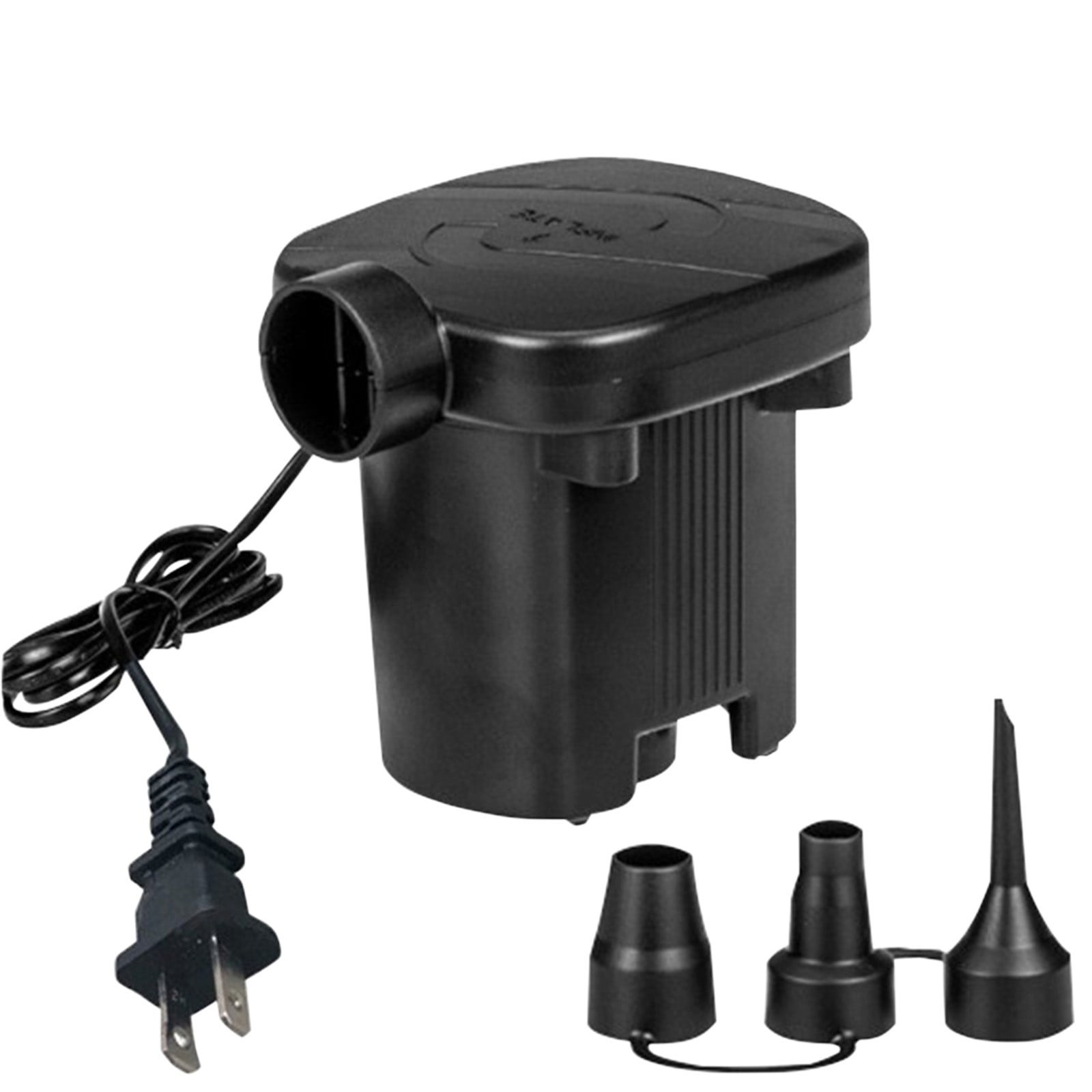
Choosing the ideal air pump for inflatables requires matching the pump's airflow rate and pressure capacity to your specific gear, whether inflating high-pressure stand-up paddleboards or high-volume air mattresses. Modern dual-stage electric pumps, rechargeable cordless models, and multi-valve adapters eliminate manual strain, delivering rapid, hassle-free inflation across recreational, outdoor, and home applications.
Understanding Air Pump Dynamics: High Volume vs. High Pressure
To achieve fast and easy inflation, you must understand the mechanical distinction between airflow volume and air pressure. Inflatable products fall into two primary mechanical categories, and using the wrong style of pump results in frustratingly slow setup times or incomplete inflation.
| High-Volume / Low-Pressure (HVLP) | Low-Volume / High-Pressure (LVHP) |
|---|---|
| - Focus: Moving air fast (L/min)- Target: 0.3 to 2.0 PSI- Gear: Air beds, towables, floats | - Focus: Building force (PSI)- Target: 10 to 25+ PSI- Gear: SUPs, inflatable kayaks |
High-Volume, Low-Pressure (HVLP)
High-volume inflatables include air mattresses, pool floats, inflatable boats, camp pads, and party island loungers. These items hold a large cubic footprint of air but operate under low internal pressure, typically between 0.3 and 2.0 pounds per square inch (PSI). The primary metric for fast HVLP inflation is Liters per Minute (L/min) or Cubic Feet per Minute (CFM). An effective HVLP pump moves between 300 and 700 L/min, filling large chambers in under two minutes without needing high pressure.
Low-Volume, High-Pressure (LVHP)
High-pressure inflatables include drop-stitch stand-up paddleboards (SUPs), inflatable kayaks, high-end dinghies, and kitesurfing wings. These items require structural rigidity, demanding working pressures from 10 to 25 PSI (and up to 30 PSI for competitive gear). Standard high-volume pumps stall completely when encountering resistance above 1.5 PSI. Conversely, high-pressure piston pumps generate high PSI but move air slowly (often 40 to 100 L/min).
Attempting to inflate a stand-up paddleboard with a standard pool float pump will fail because the pump lacks the mechanical force to push past 1 PSI. Conversely, using a small car tire compressor (which operates at high PSI but extremely low L/min, typically 15 to 30 L/min) to fill a large air bed takes a long time and risks overheating the pump motor.
Types of Air Pumps for Inflatables
Selecting the right power delivery and internal mechanism determines how quickly and conveniently your gear inflates. Modern air pumps use distinct motor configurations tailored to different environments.
- AIR PUMP CHOICES
- Mains AC Direct
- 12V DC Vehicle
- Cordless Lithium
1. Dual-Stage Electric Pumps
Dual-stage electric pumps represent the pinnacle of fast and easy inflation technology for high-pressure gear. They integrate two separate internal motors into a single unit:
- Stage 1 (High-Volume Turbine): Moves massive quantities of air (typically 350 to 500 L/min) to rapidly expand the inflatable structure up to roughly 1 PSI.
- Stage 2 (High-Pressure Piston/Compressor): Automatically engages once resistance is detected, reducing airflow (around 70 to 100 L/min) while ramping up pressure to your pre-set PSI target (up to 20 PSI or higher).
Most dual-stage models feature digital pressure displays, real-time PSI tracking, and auto-shutoff functionality to prevent over-inflation.
2. Cordless Rechargeable Lithium-Ion Pumps
Lithium-ion battery technology has revolutionized portable pumps. Modern rechargeable pumps deliver total freedom from vehicle sockets and power cords.
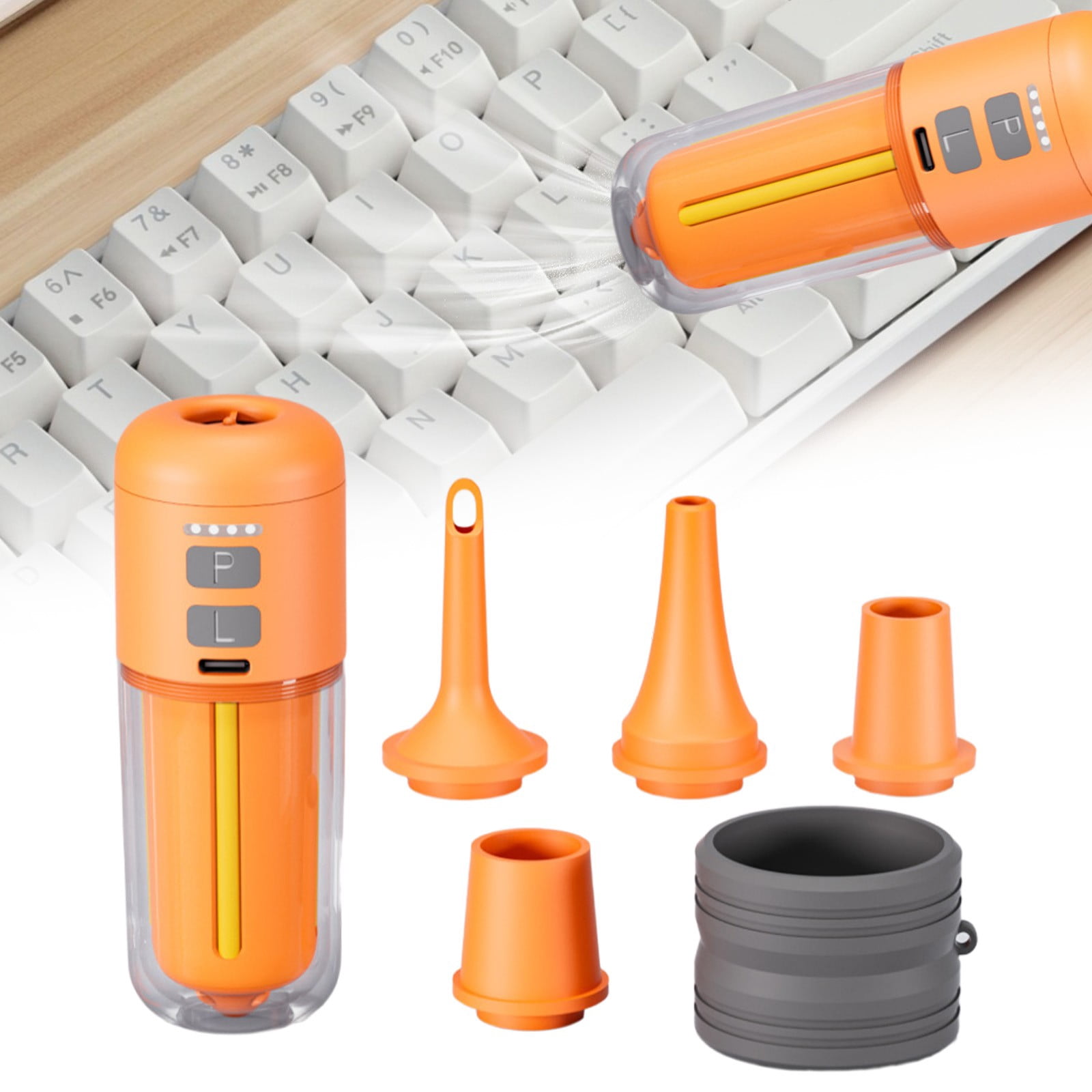
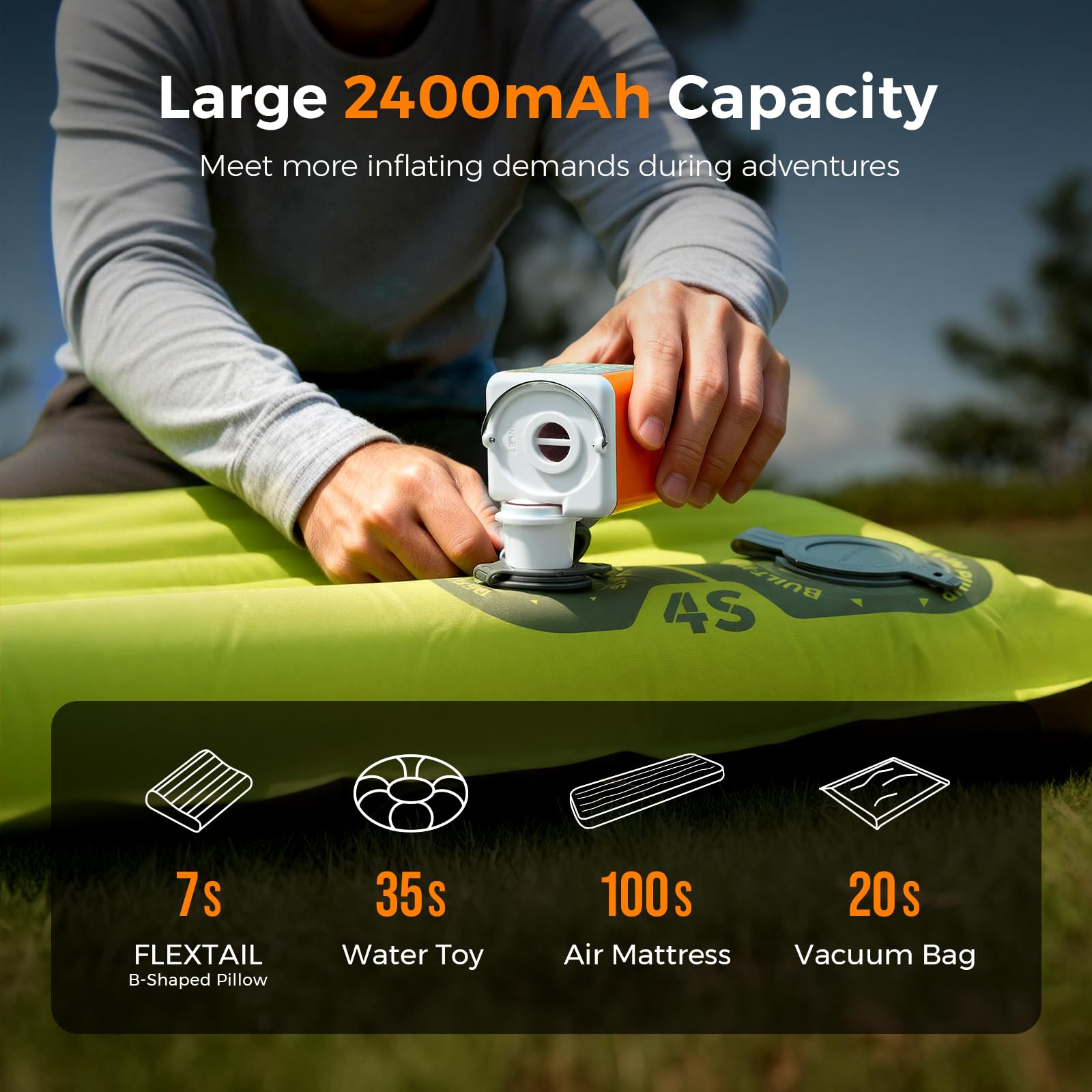
- Compact Micro-Pumps: Weighing under 10 ounces, these pocket-sized units output 150 to 300 L/min at low pressure. They are ideal for backpackers inflating sleeping pads and camp pillows.
- Heavy-Duty Battery Stations: Larger integrated lithium battery pumps can inflate three to four SUPs to 15 PSI on a single charge. They often double as power banks and LED camp lanterns.
3. 12V DC Vehicle Powered Pumps
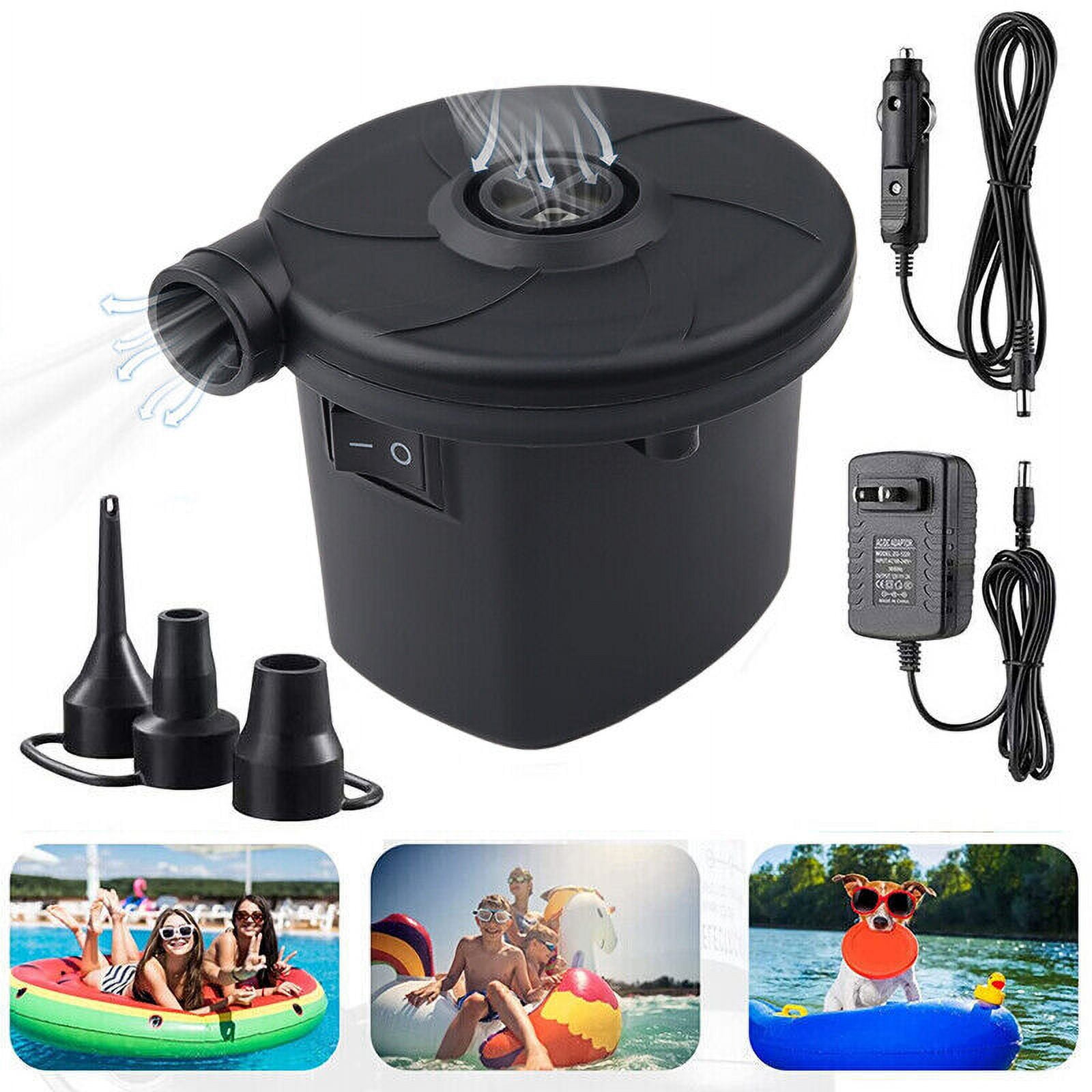
12V DC pumps plug directly into a vehicle's auxiliary power outlet (cigarette lighter socket) or attach directly to a 12-volt car battery using alligator clips. When utilizing high-draw 12V dual-stage pumps (which can draw 12 to 15 Amps), connect directly to the battery or run the vehicle engine to avoid blowing fuses or draining the car battery.
4. High-Efficiency Manual Pumps (Double and Triple-Action)
While electric pumps provide automated ease, modern manual pumps offer reliable speed without electrical power:
- Double-Action Pumps: Push air into the inflatable on both the downstroke and the upstroke, effectively doubling inflation speed compared to traditional single-action hand pumps.
- Triple-Action Pumps: Feature twin chambers and a switching valve. Phase 1 uses both chambers on the up and down strokes for maximum volume; Phase 2 cuts the upstroke; Phase 3 reduces operation to a single small chamber for easy pushing at high pressures (above 12 PSI).
Valve Types and Adapter Selection
A secure, airtight connection between the pump hose and the inflatable's valve is essential for fast inflation. Air leaks at the coupling lower efficiency and prevent accurate pressure readings.
| Valve Type | Typical Application | Key Feature |
|---|---|---|
| Halkey-Roberts | SUPs, Kayaks, Rafts | Push-turn internal pin |
| Boston Valve | Towables, Boats, Beds | Dual-thread 1-way cap |
| Pinch Valve | Pool Floats, Beach Balls | Squeeze-open soft stem |
| Leafield (C7/D7) | Professional Commercial | Heavy-duty screw thread |
- Halkey-Roberts (HR) Valve: Standard on drop-stitch SUPs and inflatable kayaks. Features a central push-pin. Crucial Step: Ensure the central pin is in the up/closed position before connecting the pump hose. If inflated with the pin locked in the down/open position, air will escape the moment you disconnect the pump.
- Boston Valve: A two-way threaded valve common on air beds and river tubes. Screwing off the top cap reveals a one-way valve for inflation; unscrewing the base ring opens a wide aperture for instant deflation.
- Pinch/Stem Valve: Found on low-cost pool toys and light beach gear. Requires a tapered nozzle adapter with a molded tip to push open the internal flat flap.
Comparison Matrix: Inflation Solutions
The table below outlines operational parameters across pump categories to help you select the ideal solution for your equipment.
| Pump Category | Primary Use Case | Max Pressure (PSI) | Average Airflow (L/min) | Primary Power Source | Typical Inflation Time (10'6" SUP or Queen Air Bed) |
|---|---|---|---|---|---|
| Dual-Stage Electric | SUPs, Kayaks, High-Pressure Gear | 20 – 25 PSI | Stage 1: 350-500Stage 2: 70-100 | 12V DC Car Socket / Battery Clamps | 6 to 10 minutes (SUP to 15 PSI) |
| High-Volume Mains (AC) | Air Beds, Large Pool Islands, Tents | 0.5 – 3.0 PSI | 400 – 800 L/min | 110V/230V Standard Wall Outlet | 1 to 3 minutes (Queen Mattress) |
| Cordless Lithium Micro | Camp Pads, Pillows, Pool Toys | 0.3 – 1.0 PSI | 150 – 300 L/min | Internal Rechargeable Battery (USB-C) | 1 to 2 minutes (Camp Pad) |
| Cordless Lithium Heavy-Duty | SUPs, Boats, Air Beds | 15 – 20 PSI | Stage 1: 350Stage 2: 80 | Internal High-Capacity Battery Pack | 8 to 11 minutes (SUP to 15 PSI) |
| Triple-Action Manual | High-Pressure Gear (Off-Grid) | 25+ PSI | Variable (Human Powered) | Manual Effort | 4 to 7 minutes (Vigorous Effort) |
| 12V Low-Pressure Electric | Floats, Towables, Air Mattresses | 0.5 – 1.5 PSI | 250 – 450 L/min | 12V DC Plug | 3 to 5 minutes (Large Towable) |
Step-by-Step Guide for Rapid, Effortless Inflation
Follow this standard procedure to streamline setup, protect internal pump motors, and preserve your gear's seam longevity.
OPERATIONAL WORKFLOW:
- Inspect Valve & Gasket
- Lock Hose Connection
- Set Target Pressure
- Run Pump & Monitor Heat
- Disconnect & Seal Valve
- Deflate & Dry After Use
Step 1: Inspect and Prepare the Valve
Unroll your inflatable on a smooth surface free of sharp stones, sticks, or hot asphalt. Clean debris out of the valve housing. For Halkey-Roberts valves, press and twist the center pin to verify it springs up into the sealed position.
Step 2: Match and Lock the Hose Adapter
Select the nozzle adapter that fits your valve snugly. Use the correct rubber O-ring thickness (often supplied in varying gauges with multi-adapter pumps) to ensure an airtight seal. Twist-lock the hose firmly into both the pump outlet port and the inflatable valve.
Step 3: Configure Target Pressure (For Electric Pumps)
If using an electric pump with auto-shutoff, set the manufacturer's recommended working pressure.
- Standard Drop-Stitch SUPs: 12 to 15 PSI.
- High-Performance Boards: 18 to 20 PSI.
- Air Mattresses: 0.5 to 1.2 PSI (or fill until firm to the touch).
Caution: Over-inflation under hot sunlight causes air expansion, which can rupture welded or glued seams. When inflating gear during peak heat, inflate to 1–2 PSI below maximum rated capacity.
Step 4: Monitor the Thermal Duty Cycle
Electric air pump motors—especially high-pressure piston compressors—generate significant heat. Respect the manufacturer’s duty cycle (commonly 15 to 20 minutes of continuous running followed by a 10-minute cooling period). Running a pump continuously across multiple large inflatables without cooling can melt internal seals or trip thermal overload switches.
Step 5: Rapid Deflation and Packing
To pack up efficiently, attach your pump hose to the Deflate/Inlet port on your pump. Active vacuum deflation removes every pocket of trapped air, allowing your inflatable to fold down flat to its original factory dimensions for compact storage.
Troubleshooting Common Inflation Delays and Issues
Air Escapes Immediately Upon Disconnecting the Hose
- Root Cause: The valve center pin was locked in the downward "open/deflate" position before inflation started.
- Solution: Disconnect the pump, press and turn the valve pin so it pops up, and re-inflate. The air pressure from the pump will push the internal seal open during filling, and it will spring shut the moment pumping stops.
The Pump Shut Down Before Reaching Target PSI
- Root Cause: The pump's thermal overload protection tripped due to overheating, or the vehicle socket fuse blew from excessive amperage draw.
- Solution: Allow the pump to cool for 15 minutes in the shade. If powered by a 12V car outlet, confirm the socket supports 15A output. If it continues blowing fuses, switch to direct 12V battery alligator clips.
The Pump Switches to Stage 2 Piston Mode Immediately
- Root Cause: Excessive friction or a kink in the hose creates high backpressure, triggering the pump to switch early from high-volume to high-pressure mode.
- Solution: Straighten the hose, clear any obstruction inside the adapter nozzle, and ensure the valve pin opens fully under pressure.
Frequently Asked Questions
Can I use a standard 12V car tire inflator for an inflatable stand-up paddleboard or pool float?
Car tire inflators move low volumes of air (typically under 30 L/min). While they can reach high PSI, filling a large inflatable with a tire pump will take 30 to 45 minutes and likely burn out the pump motor. Use a dedicated high-volume or dual-stage inflatable pump instead.
What is the fastest type of pump for large recreational inflatables?
A high-volume AC electric mains pump or a high-capacity 12V turbine pump moving between 500 and 700 L/min offers the fastest inflation for low-pressure gear, filling large air beds or multi-person floats in 1 to 2 minutes.
How do I prevent over-inflating my air bed or paddleboard?
Use an electric pump equipped with a digital pressure gauge and automatic shut-off. Set the exact PSI recommended by the inflatable gear manufacturer. For manual pumping, check pressure frequently using an inline pressure gauge.
Are cordless rechargeable battery air pumps powerful enough for SUPs?
Yes, modern cordless pumps equipped with high-discharge lithium-ion batteries and dual-stage motors can inflate two to four standard paddleboards to 15 PSI on a single charge. Check the battery capacity (measured in mAh or Wh) to ensure it meets your group's operational demands.
Why does my air pump get hot during operation?
High-pressure air compression generates friction and heat inside the piston chamber. This is normal, but you should adhere to duty cycle limits (usually stopping for 10 minutes after 15 minutes of continuous use) to prevent thermal wear on internal components.
Selecting the Right Pump Setup for Your Gear
To build a reliable setup for your gear, align your pump selection with your primary activity:
- For Casual Outdoor Recreation and Camping (Air Beds, Pool Floats, Towables): Choose a high-volume (HVLP) cordless rechargeable pump or a 110V/12V plug-in pump delivering at least 400 L/min. Prioritize multi-adapter nozzle sets that include Boston and pinch valve fittings.
- For Paddleboarding and High-Pressure Water Sports (SUPs, Kayaks): Invest in a dual-stage 12V DC or cordless electric pump rated up to 20 PSI with digital auto-shutoff. Keep a double-action manual hand pump in your gear bag as a backup for off-grid trips.
- For Ultra-Light Backpacking: Opt for an ultra-compact micro lithium pump weighing under 10 ounces with USB-C recharging capability, paired with a manual roll-up inflation sack to save battery power.
By pairing the correct airflow specifications and pressure capabilities with your gear's valves, you ensure reliable, fast, and easy inflation every time you head outdoors.