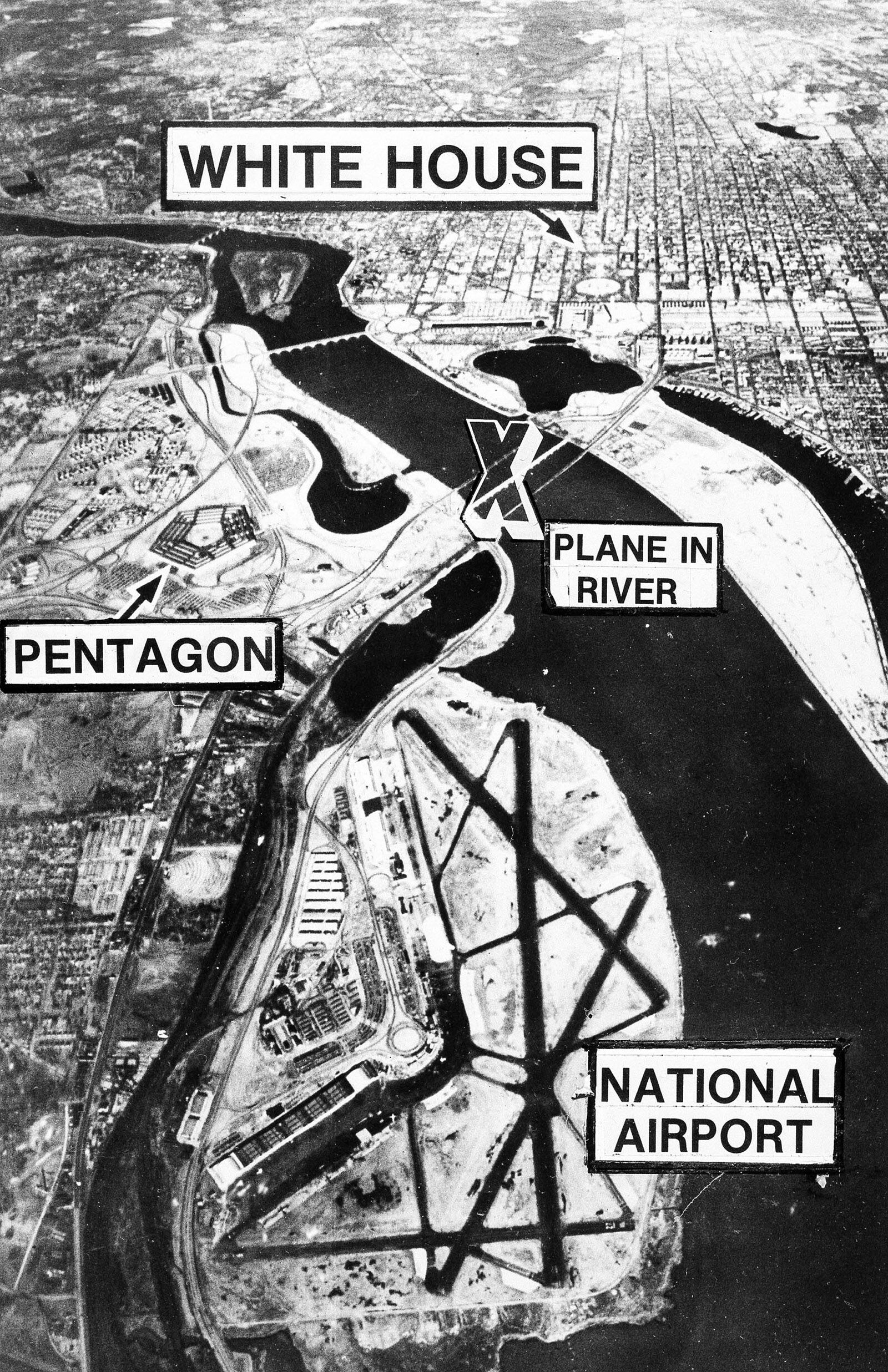
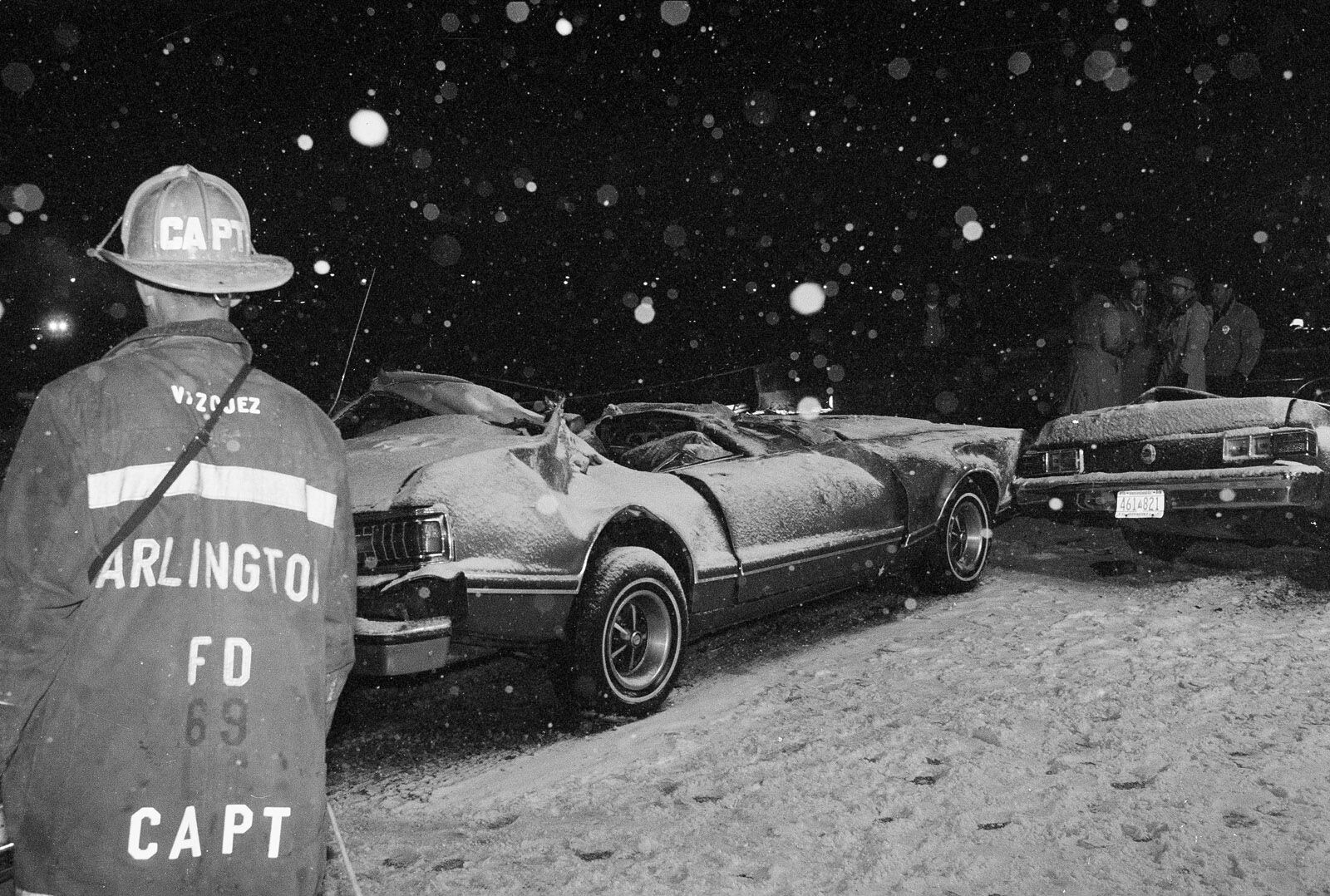
Air Florida Flight 90 was a scheduled domestic passenger flight that crashed into the 14th Street Bridge and the Potomac River in Washington, D.C., on January 13, 1982. The disaster was primarily caused by the flight crew's failure to activate the aircraft's engine anti-ice system, leading to erroneous engine pressure ratio (EPR) readings and a fatal loss of lift during takeoff in heavy snowfall.
The Context of the Disaster: Weather and Pre-flight Conditions
On the afternoon of January 13, 1982, Washington National Airport (now Ronald Reagan Washington National Airport) was gripped by a severe winter storm. The capital was buried under heavy snow, which led to the temporary closure of the airport. Air Florida Flight 90, a Boeing 737-222, was prepared for its journey to Fort Lauderdale, Florida, with 74 passengers and five crew members on board. The conditions were treacherous, with visibility significantly reduced and temperatures well below freezing.
The aircraft had been de-iced, but the process was marred by several factors. Because the airport was overwhelmed by the weather, the Boeing 737 sat on the tarmac for approximately 49 minutes after de-icing before it was cleared for takeoff. During this period, more snow accumulated on the wings. Furthermore, the flight crew attempted to use the reverse thrust of the engines to back out of the gate when the tug became stuck in the snow. This action was contrary to standard operating procedures in such conditions, as it likely blew slush and wet snow onto the leading edges of the wings and into the engine inlets.
The pilots, Captain Larry Wheaton and First Officer Roger Pettit, were relatively inexperienced with cold-weather operations. Air Florida was a carrier primarily serving warm-weather destinations, and the crew's lack of familiarity with the nuances of icing conditions proved to be a critical vulnerability. As they taxied toward Runway 36, they followed a New York Air DC-9 closely, mistakenly believing the heat from the preceding aircraft's engines would help melt the snow on their own wings. In reality, this likely caused the snow to melt and then refreeze as clear ice on the 737’s airfoils.
The Fatal Technical Oversight: EPR and Engine Anti-Ice
The technical core of the Air Florida Flight 90 disaster lies in the Engine Pressure Ratio (EPR) sensors. The EPR is a primary power setting indicator for the Boeing 737-200’s Pratt & Whitney JT8D engines. It measures the ratio between the pressure of the exhaust gases and the pressure of the air entering the engine. On that day, the flight crew failed to activate the engine anti-ice system, which provides heat to the engine inlets and the pressure probes.
As the aircraft sat in the snow, the inlet pressure probes became blocked with ice. When First Officer Pettit advanced the throttles for takeoff, the blocked probes caused the EPR gauges to provide a false high reading. The gauges indicated that the engines had reached the target takeoff power of 2.04 EPR, but because of the ice blockage, the engines were actually producing significantly less thrust—closer to a 1.70 EPR equivalent.
Crucially, the cockpit voice recorder (CVR) captured the First Officer expressing concern about the engine readings, noting that they didn't "seem right." However, the Captain dismissed these concerns, relying on the faulty EPR gauges rather than cross-checking other instruments like the N1 (fan speed) or N2 (compressor speed) gauges. This failure to abort the takeoff when the instruments showed anomalies was the final link in a chain of errors that made the crash inevitable.
The Sequence of Impact: From Runway 36 to the 14th Street Bridge
Air Florida Flight 90 took off at 3:59 PM EST. Because of the insufficient thrust and the accumulation of ice on the wings, the aircraft struggled to climb. The Boeing 737-222 reached a maximum altitude of only 352 feet. Almost immediately after liftoff, the aircraft began to experience aerodynamic buffeting and a stall warning (the "stick shaker").
The ice on the wings had disrupted the airflow, increasing the stall speed and reducing the lift necessary to sustain flight. Despite the crew's attempts to climb, the aircraft began to descend rapidly. Just 30 seconds after becoming airborne, the plane struck the 14th Street Bridge, which connects Washington, D.C., to Arlington, Virginia.
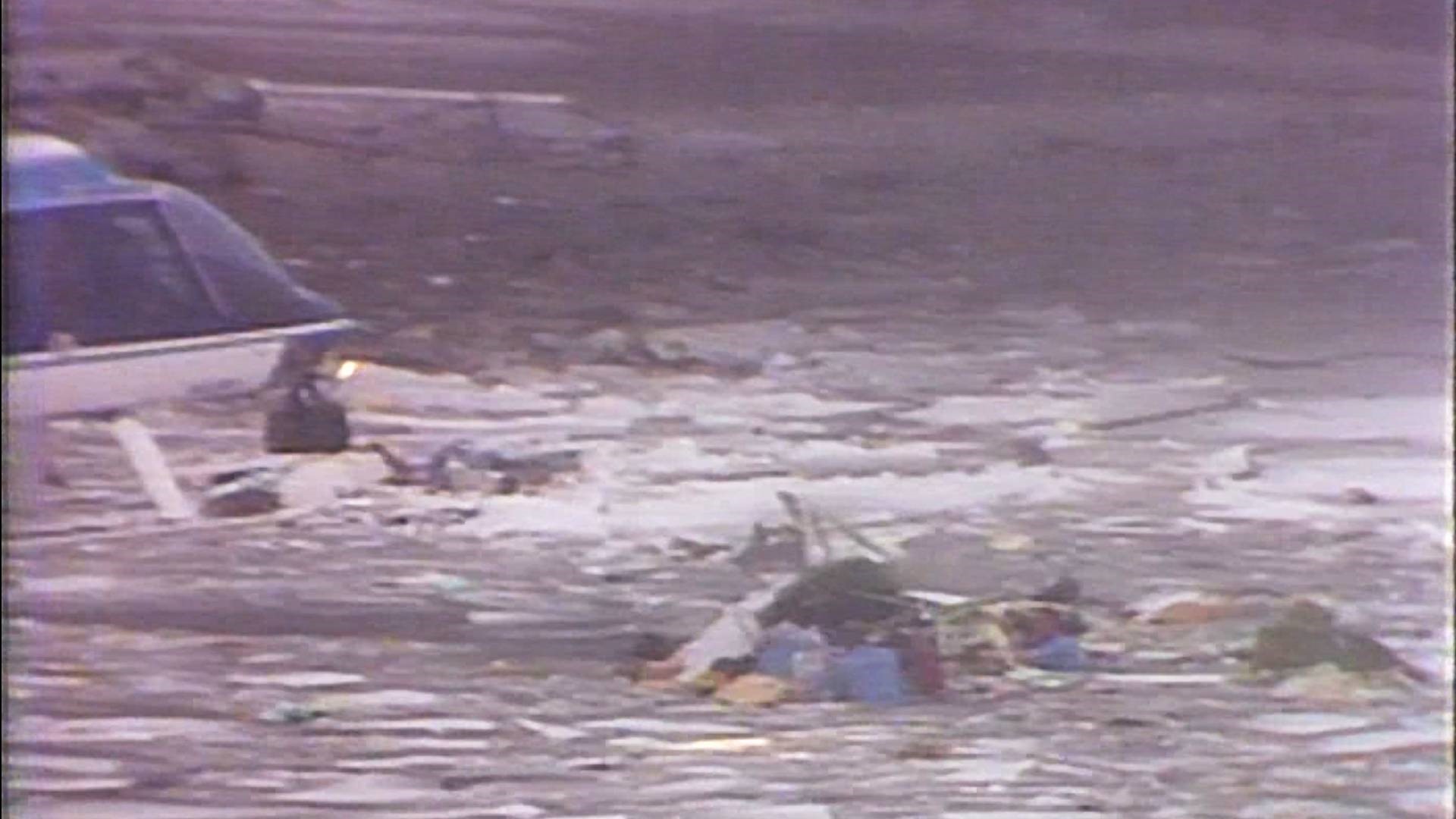
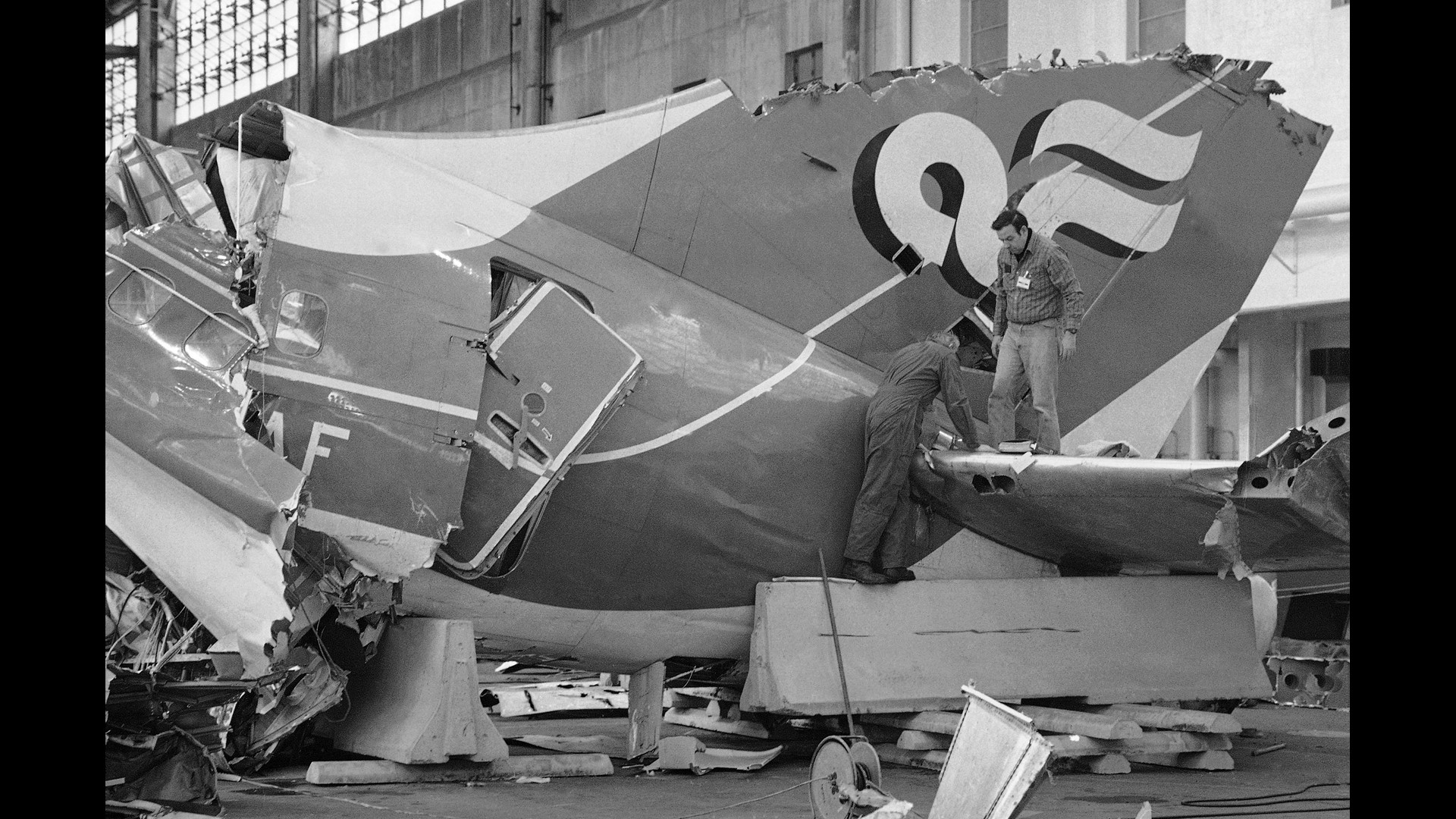
The impact was catastrophic. The aircraft’s fuselage struck seven occupied vehicles on the bridge and tore away a 41-foot section of the bridge railing and wall. Four people in vehicles on the bridge were killed instantly. The aircraft then plunged into the freezing, ice-choked waters of the Potomac River. Most of the aircraft sank quickly, leaving only the tail section floating and six survivors clinging to the wreckage in the water.
Heroism in the Icy Waters: The Rescue Operation
The rescue of the survivors of Flight 90 remains one of the most documented and emotional chapters in aviation history. The crash occurred during rush hour, and thousands of commuters witnessed the plane go down. The response was hampered by the same blizzard that caused the crash; emergency vehicles struggled to reach the bridge through the gridlocked, snow-covered streets.
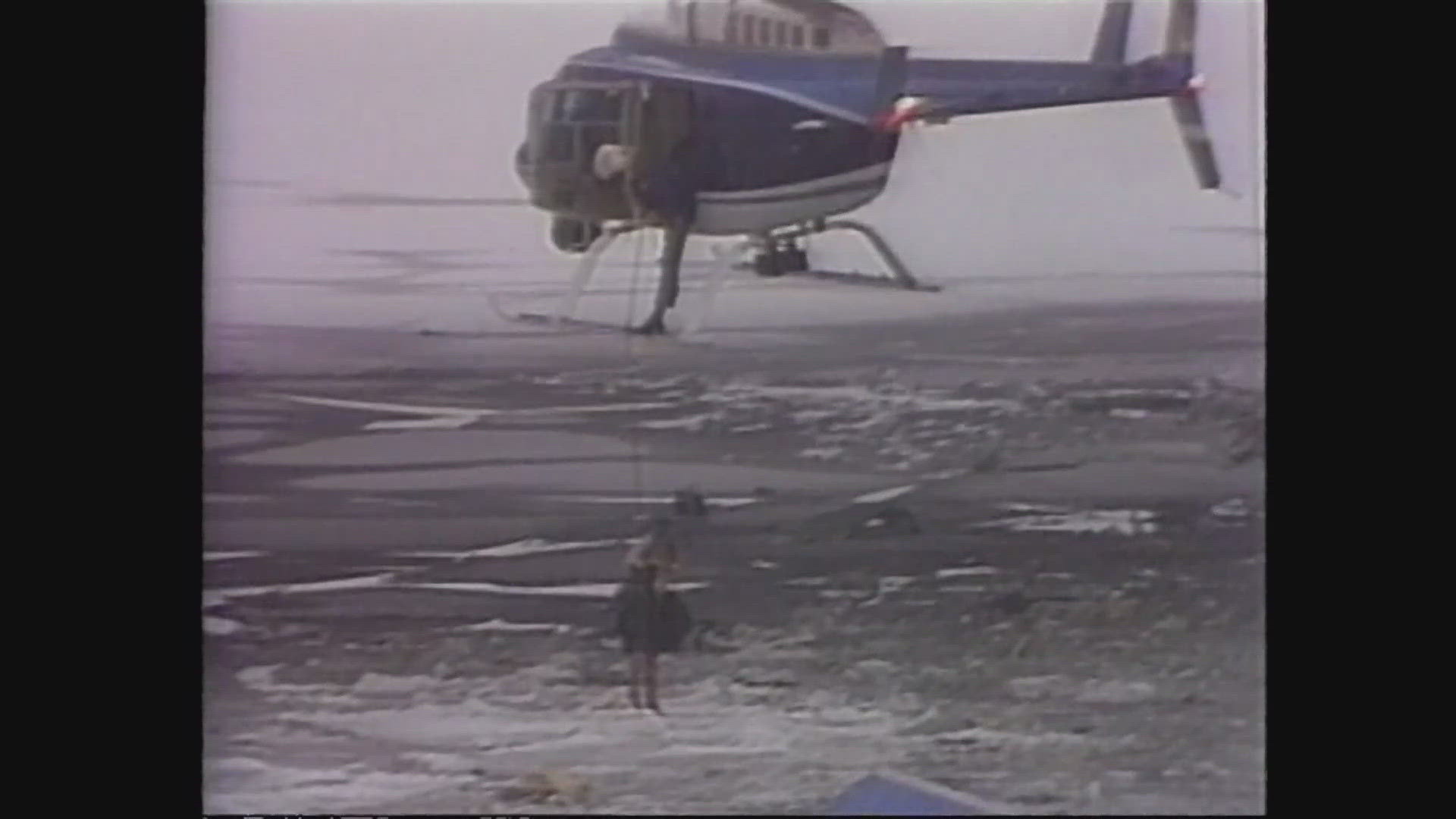
A United States Park Police helicopter, "Eagle 1," piloted by Donald Usher and Gene Windsor, arrived on the scene and performed a series of daring maneuvers. The crew lowered life rings and lines to the survivors, often dipping the helicopter’s skids into the freezing water.
The rescue efforts highlighted the profound bravery of ordinary citizens and professionals alike:
- Lenny Skutnik: A bystander and government employee who jumped into the icy river to save Priscilla Tirado, a survivor who was too weak to hold onto the helicopter's rescue line.
- Roger Olian: A sheet metal worker who was one of the first to plunge into the water with a makeshift rope to try to reach the survivors.
- Arland D. Williams Jr.: Known for years only as the "sixth man," Williams repeatedly passed the rescue lines to other survivors rather than saving himself. When the helicopter finally returned for him, the wreckage had moved, and he had succumbed to hypothermia and drowned. The bridge was later renamed the Arland D. Williams Jr. Memorial Bridge in his honor.
Ultimately, five people from the aircraft survived the crash and the freezing water. Seventy-four people on board and four people on the bridge lost their lives.
NTSB Findings and Technical Investigation
The National Transportation Safety Board (NTSB) conducted an exhaustive investigation into the crash of Air Florida Flight 90. The final report (NTSB-AAR-82-08) was definitive in its attribution of blame. The probable cause was determined to be the flight crew’s failure to use engine anti-ice during taxi and takeoff, their decision to take off with snow and ice on the airfoil surfaces, and their failure to abandon the takeoff when they noticed unusual engine instrument readings.
The NTSB highlighted several contributing factors:
- Prolonged Delay: The nearly hour-long gap between de-icing and takeoff allowed for critical ice re-accumulation.
- Improper Ground Maneuvers: Using reverse thrust in snow conditions contributed to engine probe icing.
- Lack of Experience: The crew’s limited exposure to winter flight operations led to a lack of situational awareness regarding the dangers of clear ice.
- CRM Deficiencies: This was a landmark case for Crew Resource Management (CRM). The Captain’s dismissal of the First Officer’s valid concerns showed a breakdown in cockpit communication and hierarchy.
Comparison of De-icing and Safety Protocols: 1982 vs. 2026
The legacy of Flight 90 is seen in the rigorous safety standards governing modern aviation in 2026. The following table compares the conditions and protocols at the time of the crash with contemporary standards.
| Feature | 1982 Protocol / Status | 2026 Protocol / Status |
|---|---|---|
| Engine Sensors | Reliance on EPR; vulnerable to icing | Redundant sensors (N1/N2/EGT) with automated cross-checks |
| Anti-Ice Systems | Manual activation by pilot memory | Automated sensors with "Anti-Ice On" warnings and logic-based prompts |
| De-icing Fluids | Basic Type I (un-thickened) fluids | Advanced Type II/IV thickened fluids with long "holdover times" |
| Holdover Times | Poorly defined or ignored | Strictly regulated based on temperature and precipitation type |
| CRM Training | Minimal; steep cockpit hierarchy | Mandated, rigorous training focusing on "challenge and response" |
| Ground Operations | Use of reverse thrust in snow common | Strictly prohibited at most airports due to re-contamination risk |
Legacy and Safety Evolution: How Aviation Changed
Air Florida Flight 90 changed the industry forever. It led to a total overhaul of how airlines handle winter operations. One of the most significant changes was the development of the "Clean Wing" concept, which mandates that an aircraft must be completely free of all frost, ice, or snow before takeoff. There is no longer an "acceptable" amount of contamination.
Furthermore, the disaster accelerated the implementation of Crew Resource Management. Airlines shifted from a "Captain is God" culture to one where first officers are encouraged and expected to speak up if they detect an anomaly. In modern 2026 flight decks, the dialogue recorded on Flight 90's CVR is used as a primary case study for what not to do.
The crash also influenced airport emergency response planning. The difficulty that rescuers had in reaching the Potomac River led many airports to invest in specialized water rescue equipment and to conduct regular drills involving multiple jurisdictions. National Airport now has dedicated rescue craft that can be deployed much faster than the resources available in 1982.
Frequently Asked Questions
What was the main cause of the Air Florida Flight 90 crash?
The primary cause was the pilot's failure to turn on the engine anti-ice system. This caused ice to block the engine pressure ratio (EPR) probes, which gave the pilots false readings that they had full power when the engines were actually at a much lower thrust level. This, combined with ice on the wings, prevented the plane from climbing.
How many people survived the crash?
There were five survivors from the aircraft. Originally, six people made it out of the sinking fuselage and into the river, but Arland D. Williams Jr. drowned after repeatedly giving the rescue line to other survivors. Four people on the 14th Street Bridge were also killed when the plane struck their vehicles.
What is the "Sixth Man" story?
The "Sixth Man" refers to Arland D. Williams Jr., a passenger who survived the initial impact and helped save others. During the helicopter rescue, he passed the life ring to five other passengers, ensuring their safety over his own. By the time the helicopter returned for him, he had succumbed to the cold and sank beneath the water. His heroism is a cornerstone of the Flight 90 narrative.
Why did the pilots not realize the engines weren't at full power?
The pilots relied solely on the EPR (Engine Pressure Ratio) gauge, which was showing a "normal" takeoff reading because the sensor was blocked by ice. They failed to cross-check this against the N1 (fan speed) or N2 (compressor speed) gauges, which would have shown that the engines were not spinning fast enough to produce the required thrust.
How did this crash change modern aviation?
It led to the "Clean Wing" policy, improved de-icing fluids with longer holdover times, and the mandatory implementation of Crew Resource Management (CRM). It also changed how pilots are trained to handle winter operations and communicate within the cockpit.
Recommendations for Further Study and Safety Compliance
For aviation professionals and enthusiasts in 2026, the study of Air Florida Flight 90 serves as a perpetual reminder of the dangers of complacency and the importance of adhering to de-icing holdover times. Pilots should prioritize cross-checking all engine instruments during the takeoff roll—if the EPR and N1 readings do not correlate, the takeoff must be aborted immediately.
Safety managers should ensure that current winter operations manuals (WOM) reflect the most recent NTSB and FAA (or relevant civil aviation authority) guidelines regarding Type IV fluid applications. Furthermore, the "challenge and response" culture must be reinforced during annual simulator checks to ensure that the communication breakdowns seen on Flight 90 are never repeated.