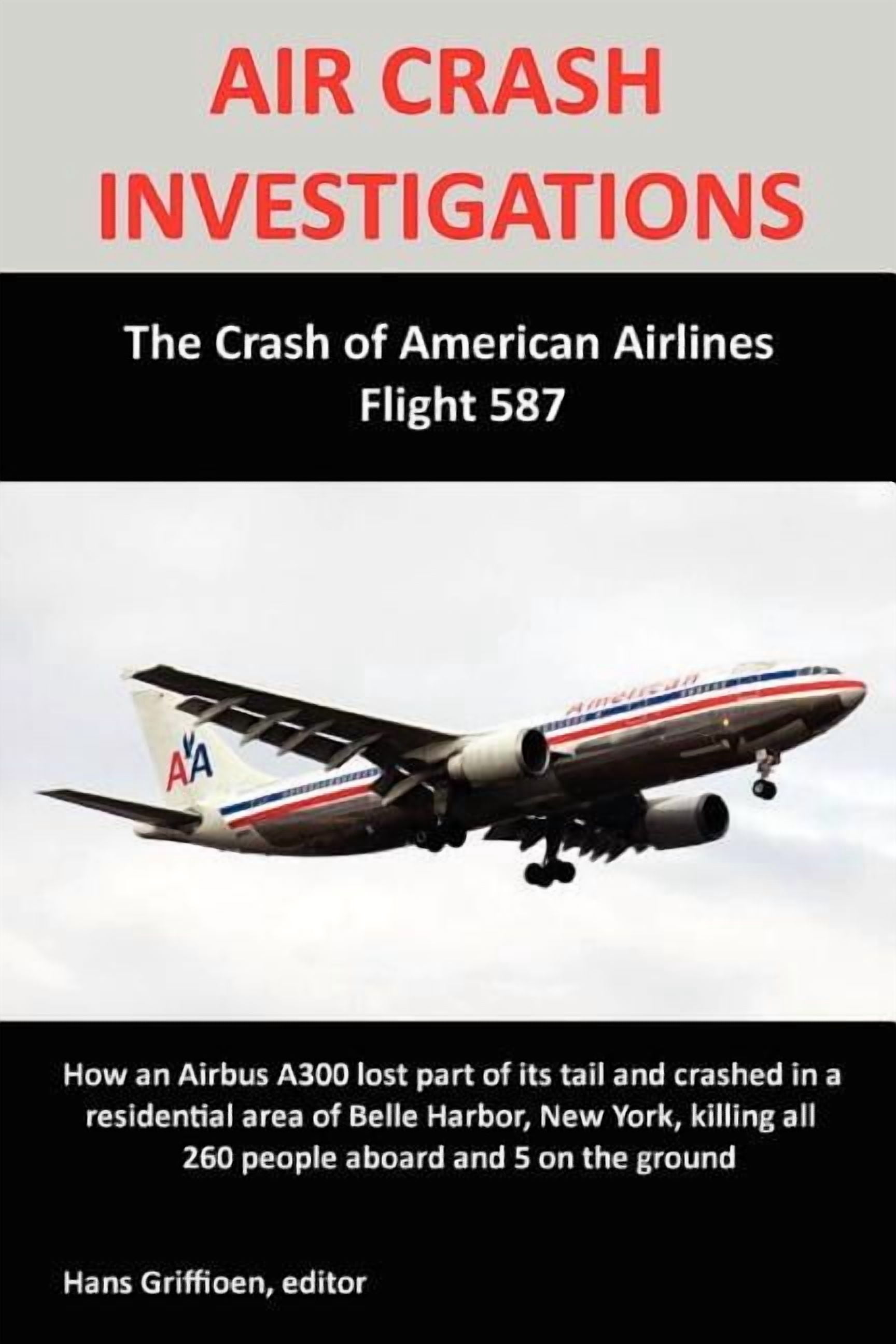
Air crash investigation is a highly specialized, multidisciplinary process conducted to determine the causes of aviation accidents and incidents to prevent their recurrence. Governed by international standards, the process involves the systematic collection of evidence, analysis of flight data, and examination of human factors to improve global aviation safety.
The field of air crash investigation has evolved from simple mechanical inspections to a complex forensic science involving metallurgy, aerodynamics, digital forensics, and behavioral psychology. As of 2026, the primary goal remains the "Safety Recommendation"—a directive aimed at closing the loopholes in the aviation system that allow accidents to happen. Unlike criminal investigations, safety investigations are specifically designed to find "how" and "why" an event occurred, rather than assigning blame or legal liability.
The International Regulatory Framework: ICAO Annex 13
The foundational document for all modern air crash investigations is Annex 13 to the Convention on International Civil Aviation, managed by the International Civil Aviation Organization (ICAO). This international treaty establishes the standards and recommended practices for how member states must conduct investigations.
The core principle of Annex 13 is that the sole objective of the investigation of an accident or incident shall be the prevention of accidents and incidents; it is not the purpose of this activity to apportion blame or liability. This distinction is critical because it encourages witnesses and organizations to provide information without the fear of immediate legal prosecution, which is essential for identifying deep-seated systemic flaws.
Under Annex 13, several parties have the right to participate in an investigation:
- The State of Occurrence: The country where the accident happened.
- The State of Registry: The country where the aircraft is registered.
- The State of the Operator: The country where the airline is based.
- The State of Design/Manufacture: The country where the aircraft or its engines were built.
These states often appoint "Accredited Representatives" from their respective national safety boards to assist the lead investigative agency.
Major Global Investigative Agencies
While many countries maintain their own investigative bodies, a few agencies are globally recognized for their technical expertise and frequently assist in international investigations. These agencies operate independently from national aviation regulators (like the FAA or EASA) to ensure there is no conflict of interest between those who set the rules and those who investigate when the rules fail.
| Agency Name | Acronym | Jurisdiction | Primary Focus |
|---|---|---|---|
| National Transportation Safety Board | NTSB | United States | Civil aviation, rail, marine, and highway accidents. |
| Bureau d'Enquêtes et d'Analyses | BEA | France | Civil aviation safety investigations in French territory and for French-made aircraft (e.g., Airbus). |
| Air Accidents Investigation Branch | AAIB | United Kingdom | Civil aircraft accidents and serious incidents within the UK and its overseas territories. |
| Transportation Safety Board | TSB | Canada | Multi-modal transportation safety, including high-latitude and remote operations. |
| Australian Transport Safety Bureau | ATSB | Australia | Aviation, rail, and maritime safety in the Asia-Pacific region. |
The Investigative Process: From Site to Lab
An investigation typically follows a structured timeline, beginning with the deployment of a "Go Team"—a group of specialists ready to travel at a moment's notice.
1. The On-Site Phase
Upon arriving at a crash site, investigators first ensure the area is secure and hazardous materials (such as jet fuel or composite dust) are mitigated. The site is treated as a crime scene until foul play can be ruled out. During this phase, investigators perform:
- Wreckage Mapping: Using drones and GPS, the debris field is mapped to determine the aircraft's trajectory and whether it broke up in mid-air or upon impact.
- Component Recovery: Engines, flight control surfaces, and the "Black Boxes" are prioritized for recovery.
- Initial Evidence Gathering: Perishable evidence, such as ice accumulation or specific switch positions in the cockpit, must be documented before environmental conditions change.
2. The Laboratory Phase
Once the physical evidence is moved to a secure hangar, the technical analysis begins. Engineers may partially reconstruct the aircraft to see how the structures failed. This often involves fractography, the study of the fracture surfaces of materials to determine if a part failed due to a single overstress event or long-term metal fatigue.
3. Data Recovery and Analysis
The recovery of the Flight Data Recorder (FDR) and the Cockpit Voice Recorder (CVR) is often the turning point in an investigation. Modern FDRs in 2026 can track thousands of parameters, including altitude, airspeed, heading, flap positions, and engine performance, multiple times per second. The CVR provides the "human" context, recording the ambient sounds of the cockpit and the communication between the crew.
The Role of Flight Recorders (Black Boxes)
Despite their name, flight recorders are bright orange to facilitate recovery. In the current 2026 landscape, the technology has advanced to include "Deployable Recorders" that eject from the aircraft upon impact and float, as well as real-time data streaming (Global Aeronautical Distress and Safety System - GADSS) for aircraft in distress.
- Flight Data Recorder (FDR): This device records the technical state of the aircraft. By synchronizing this data with air traffic control (ATC) tapes and radar data, investigators can create a high-fidelity 3D animation of the flight’s final moments.
- Cockpit Voice Recorder (CVR): This records radio transmissions and cockpit conversations. In recent years, acoustic analysis of CVR tapes has allowed investigators to identify the exact RPM of an engine or the sound of a structural failure based on the frequency of the background noise.
The NTSB's official overview of recorders provides further detail on how these devices are protected from extreme heat and pressure.
Human Factors and the Swiss Cheese Model
As mechanical reliability has increased, a greater percentage of accidents are attributed to "Human Factors." This does not simply mean "pilot error." Investigators look for systemic failures using the Swiss Cheese Model of Systemic Failure, developed by James Reason.
In this model, the aviation system is seen as a series of slices of cheese. The holes represent weaknesses in different layers:
- Organizational Influences: (e.g., poor safety culture or inadequate funding).
- Unsafe Supervision: (e.g., improper scheduling leading to fatigue).
- Preconditions for Unsafe Acts: (e.g., high stress or poor cockpit ergonomics).
- Unsafe Acts: (e.g., a pilot missing a checklist item).
An accident occurs only when the holes in all slices align, allowing a hazard to pass through the entire system. Investigators use the Human Factors Analysis and Classification System (HFACS) to categorize these holes and recommend changes to training or regulations.
Technical Analysis of Modern Aircraft Materials
In 2026, the increasing use of carbon-fiber composites and advanced alloys presents new challenges. Unlike traditional aluminum, which dents or tears in predictable ways, composites can suffer from "delamination"—internal layers separating—which may not be visible on the surface.
Investigators now utilize:
- Non-Destructive Testing (NDT): Ultrasonic and X-ray technologies to inspect components for internal cracks.
- Engine Performance Modeling: Utilizing digital twins (virtual models of the specific engine serial number) to simulate how an engine would react to specific environmental conditions or mechanical failures.
- Cyber-Forensics: With aircraft becoming "flying servers," investigators must rule out software glitches or cyber-interference as a causal factor in fly-by-wire systems.
The Final Report and Safety Recommendations
The culmination of the investigation is the Final Report. This document details the factual information, analysis, and conclusions. Most importantly, it contains Safety Recommendations.
These recommendations are sent to regulators (like the FAA) and manufacturers. While investigative boards usually lack the power to enforce these recommendations, the public nature of the reports creates significant pressure for change. Historical examples include the mandatory installation of Traffic Collision Avoidance Systems (TCAS) and improvements in fire-retardant materials for cabin interiors.
Standard Investigation Timeline
- Preliminary Report: Released within 30 days, containing only verified factual data.
- Interim Statement: Issued annually if the investigation is not completed within a year.
- Final Report: Usually published 12 to 24 months after the accident, containing the "Probable Cause."
FAQ: Common Questions About Air Crash Investigation
How do investigators find the black boxes at the bottom of the ocean?
Flight recorders are equipped with Underwater Locator Beacons (ULBs) or "pingers." When submerged in water, a sensor activates the beacon, which emits an ultrasonic pulse at 37.5 kHz once per second for at least 90 days. Specialized towed pinger locators (TPLs) or Autonomous Underwater Vehicles (AUVs) are used to detect these signals, even at depths of up to 20,000 feet.
Can pilots turn off the flight recorders?
No. Standard operating procedures and aircraft design ensure that flight recorders are powered automatically whenever the engines are running or the aircraft is in flight. While some older aircraft had switches that could isolate power, modern safety regulations have largely removed the ability for a crew to manually disable these systems to ensure data integrity.
What is the "Party System" in an investigation?
The "Party System" is a method used by agencies like the NTSB to bring in technical experts from the companies involved (e.g., Boeing, Rolls-Royce, or the pilot's union). Because these companies have the most in-depth knowledge of their products, they provide technical assistance. However, the lead agency maintains strict control over the investigation to prevent these "parties" from influencing the final conclusions to protect their interests.
Why do some investigations take years to complete?
A complex investigation involves thousands of parts and petabytes of data. If the wreckage is in deep water or a remote location, recovery alone can take months. Furthermore, if a new type of failure is suspected, investigators may need to conduct original research or destructive testing on similar aircraft parts to prove their theory, which is a time-consuming process.
Is "Air Crash Investigation" the same as the TV show?
The television series (known as Mayday in some regions) is a documentary-style dramatization of real-world cases. While generally praised for its technical accuracy, it simplifies complex multi-year investigations into 45-minute episodes. Real investigations involve much more paperwork, bureaucratic coordination, and meticulous laboratory work than is shown on screen.
Accessing Official Investigation Records
For those seeking to verify facts or read the technical details of a specific case, official repositories are the only reliable source. The NTSB maintains the CAROL (Case Analysis and Reporting Online) database, which allows the public to search for every civil aviation accident investigation in the United States since the 1960s. Similarly, the ICAO maintains a centralized portal for major international accident reports.
If you are a student or professional looking to enter the field, the next logical step is to review the training requirements for "Accident Investigation" offered by institutions like the Southern California Safety Institute (SCSI) or the Cranfield University Safety and Accident Investigation Centre.