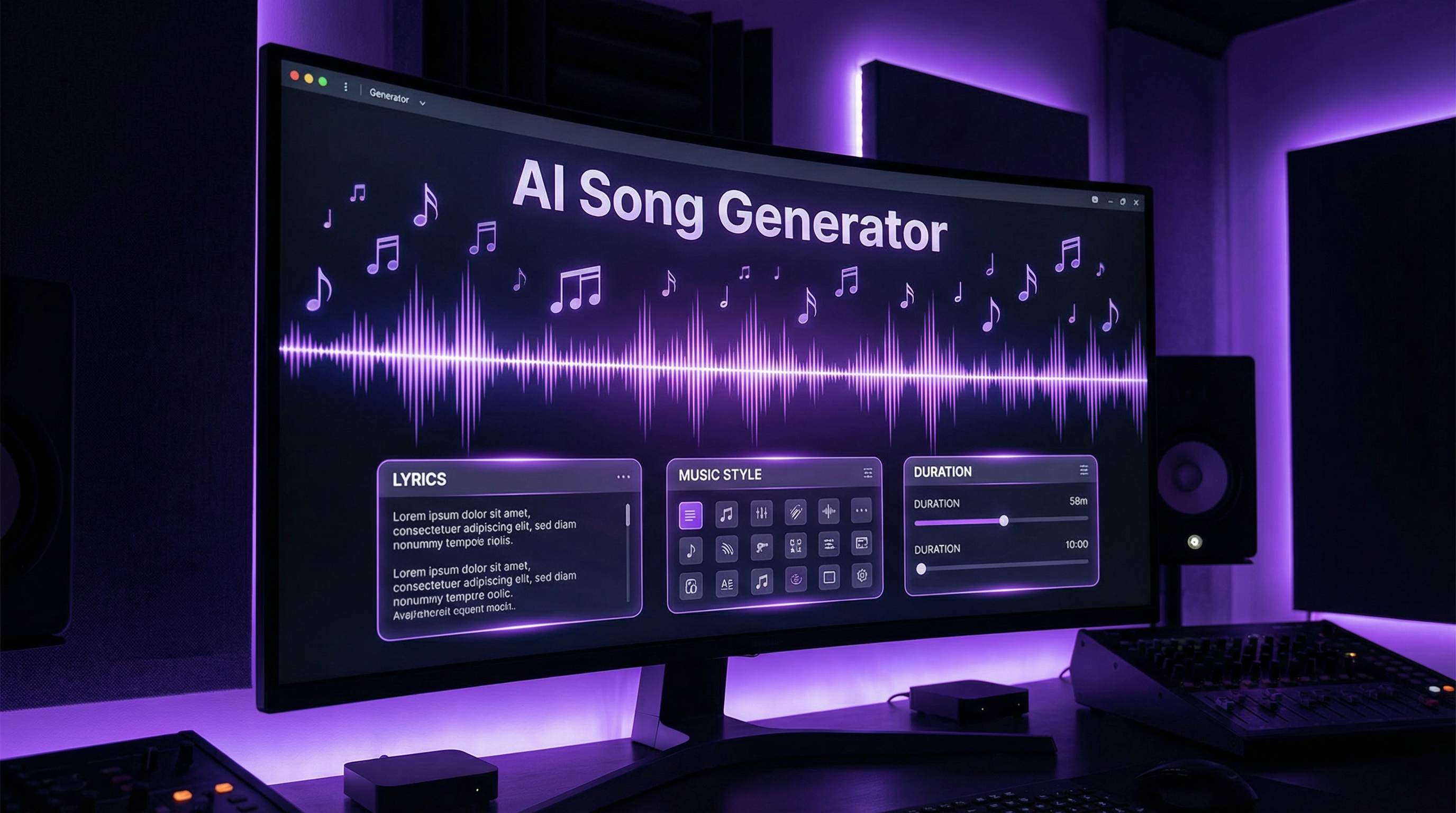
AI music encompasses the creation, arrangement, mastering, and manipulation of audio compositions using machine learning algorithms and neural networks. Modern systems process vast datasets of musical scores and audio recordings to generate novel melodies, harmonize vocals, and synthesize realistic instrumental performances for creators, developers, and enterprises.
Understanding the Fundamentals of Artificial Intelligence in Audio Generation
The integration of artificial intelligence into the audio domain represents a convergence of digital signal processing, computational linguistics, and deep learning architectures. At its core, AI music production relies on algorithms trained on thousands of hours of audio data. These models learn patterns in rhythm, harmony, timbre, and structure, allowing them to predict and synthesize sequential audio samples or symbolic representations like MIDI files.
Early computational composition relied on rule-based systems and Markov chains, which dictated strict mathematical probabilities for note transitions. Contemporary systems utilize deep neural networks, including transformer-based architectures and generative adversarial networks (GANs). These advanced frameworks capture long-range dependencies within a musical piece, ensuring that a generated track maintains structural coherence, emotional tone, and stylistic consistency from beginning to end.
Audio generation typically splits into two distinct methodologies: symbolic generation and direct audio synthesis. Symbolic generation focuses on creating sheet music equivalents—such as note sequences, velocities, and durations—which are then played back using virtual studio technology (VST) instruments. Direct audio synthesis, conversely, bypasses MIDI data entirely, generating raw waveforms or spectral representations directly from text prompts or acoustic references. This dual approach allows creators to choose between granular control over individual notes and rapid, text-driven audio generation.
Evolution of Underlying Technologies and Neural Architectures
The capability of modern generative audio models stems from rapid advancements in neural network design. Researchers continuously adapt architectures initially built for natural language processing and computer vision to handle the high temporal resolution and complex frequency spectra of sound.
Transformer models, renowned for their ability to manage contextual relationships in text, have revolutionized symbolic composition. By treating musical notes and chords as words in a language, transformers can compose complex multi-track arrangements that respect traditional music theory while introducing novel phrasing. Meanwhile, diffusion models—which generate data by iteratively removing noise from a randomized starting point—have emerged as a dominant force in direct audio synthesis. These models excel at producing high-fidelity instrumental and vocal tracks with impressive acoustic realism.
Training these systems requires immense computational power and carefully curated datasets. Developers train models on vast libraries of copyrighted or public-domain recordings, requiring sophisticated filtering pipelines to manage audio quality, balance genres, and remove artifacts. Furthermore, latent diffusion models compress high-dimensional audio into lower-dimensional spaces before generation, drastically reducing the processing time required to render a finished track.
Core Applications Across the Creative and Commercial Sectors
AI music tools serve diverse user groups, ranging from independent bedroom producers and filmmakers to large-scale video game developers and advertising agencies. Each sector leverages generative audio to solve specific logistical or creative challenges.
Independent content creators and podcasters frequently utilize AI platforms to generate royalty-free background tracks. Sourcing licensed music for online videos or streaming broadcasts often involves complex licensing fees and copyright strike risks. Generative tools allow creators to input specific mood parameters, tempos, and instrumentation requirements to produce custom, clearance-free soundtracks in minutes.
In the film and gaming industries, adaptive audio engines powered by machine learning dynamically adjust soundtracks based on player or narrative actions. Game developers employ procedural music generation to ensure that background scores evolve seamlessly during gameplay without looping repetitive audio files. Similarly, composers utilize AI assistants to overcome creative blocks, generating chord progressions or rhythmic variations that serve as structural foundations for final cinematic scores.
| Application Sector | Primary Tool Type | Main Benefit | Operational Limitation |
|---|---|---|---|
| Independent Content Creation | Text-to-audio generators | Cost-effective, royalty-free background tracks | Limited fine-grained structural control |
| Game Development | Adaptive procedural engines | Dynamic soundtracks responding to gameplay | High integration complexity |
| Commercial Advertising | Rapid prototyping platforms | Fast iteration of jingles and sonic branding | Generic stylistic output without human curation |
| Music Production Studios | Stem separation and mastering | Streamlined mixing workflows and vocal isolation | Potential artifacts in complex mixes |
Evaluating Technical Capabilities, Capabilities, and Workflow Integration
Integrating artificial intelligence into a digital audio workstation (DAW) requires an understanding of both software compatibility and workflow adjustments. Most modern AI audio tools function either as standalone web applications or as plugin formats—such as VST3, Audio Units (AU), and AAX—that operate natively within traditional recording environments.
Producers frequently utilize AI-driven stem separation tools to isolate individual tracks—such as vocals, bass, drums, and other instruments—from mixed stereo audio files. This capability facilitates remixing, sampling, and archival restoration. Additionally, AI mastering assistants analyze frequency balance, dynamic range, and stereo imaging, delivering automated masters that approximate the output of professional mixing engineers.
Despite these advancements, technical limitations remain. Complex polyphonic audio separation can introduce phase cancellation or bubbling artifacts. Generative text-to-music models occasionally produce erratic structural shifts, awkward lyrical phrasing, or unnatural vocal intonations. Successful deployment requires human oversight, combining machine-generated efficiency with traditional editing, mixing, and arrangement skills.
Legal, Copyright, and Ethical Considerations
The rapid advancement of generative audio has outpaced existing legal frameworks, sparking intense debate regarding copyright infringement, artist compensation, and data transparency. A central controversy involves the training data used by AI developers. When models ingest copyrighted recordings without explicit artist consent or compensation, legal questions arise regarding fair use, derivative works, and intellectual property ownership.
Jurisdictional bodies and copyright offices worldwide are actively evaluating whether purely AI-generated compositions qualify for copyright protection. In many regions, copyright law requires human authorship, meaning works created entirely by an algorithm without substantial human creative input may reside in the public domain. Conversely, when human creators use AI as an assistive tool—revising melodies, writing original lyrics, and executing final mixing—the resulting work typically qualifies for standard copyright protection.
Ethical concerns also extend to voice cloning and unauthorized stylistic imitation. The ability to synthesize hyper-realistic vocal performances modeled after specific recording artists has led to instances of deepfake music production. Industry organizations and legislative bodies continue to propose regulations requiring mandatory watermarking, transparent dataset disclosures, and strict protection for an individual's likeness and voice.
Future Outlook and Emerging Industry Standards
As computational efficiency improves and neural architectures mature, the role of artificial intelligence in the audio ecosystem will continue to shift from novelty to foundational infrastructure. Future developments will likely focus on enhanced real-time control, allowing musicians to direct generative systems dynamically during live performances.
Industry standards are gradually emerging to address ethical and legal challenges. Blockchain-based provenance tracking, cryptographic audio watermarking, and standardized licensing frameworks are being developed to ensure fair compensation for human artists whose work contributes to model training. Ultimately, AI music functions not as a replacement for human creativity, but as an advanced suite of tools designed to expand sonic exploration and streamline professional production workflows.
Frequently Asked Questions About Artificial Intelligence in Audio
Can I legally monetize music generated by artificial intelligence platforms?
Monetization legality depends on the specific terms of service of the AI platform used and regional copyright laws. Many subscription-based AI music generators grant commercial usage rights for tracks created on their platforms. However, because copyright offices in various jurisdictions require human authorship, works generated entirely through automated prompts may not be eligible for copyright registration, meaning others could potentially use the same generated tracks without legal recourse.
How do text-to-music models transform written prompts into audio files?
Text-to-music models utilize natural language processing to analyze the semantic meaning of a prompt, identifying keywords related to genre, mood, tempo, and instrumentation. This text embedding is then mapped to a latent space within a generative neural network—such as a diffusion model or transformer—which iteratively constructs the corresponding audio waveforms or symbolic note sequences.
Are AI-generated vocals indistinguishable from professional human singers?
While modern generative voice models achieve impressive levels of acoustic realism, discerning listeners can often identify subtle artifacts, particularly in complex emotional inflections, breath control, and multi-syllabic lyrical phrasing. High-end productions typically require human vocalists or extensive manual pitch and timing editing to achieve broadcast-ready quality.
What hardware requirements are necessary to run local AI music models?
Running large-scale generative audio models locally requires substantial computing resources, specifically a dedicated graphics processing unit (GPU) with high VRAM capacity (often 12GB to 24GB or more) to handle parallel tensor calculations. Consequently, many creators rely on cloud-hosted SaaS platforms that offload heavy computational workloads to remote server clusters.
How does stem separation technology isolate individual instruments from a mixed track?
Stem separation algorithms employ source separation neural networks trained on multi-track audio datasets. The model analyzes the frequency spectrum and temporal patterns of a stereo mix, predicting and masking out specific frequency ranges and harmonic components to reconstruct isolated stems for vocals, drums, bass, and other instrumentation.
Optimizing Your Production Workflow with AI Tools
To integrate generative audio effectively into your creative process, start by auditing your current production bottlenecks. Whether you struggle with mixing, require rapid sonic sketching, or need custom background soundscapes, select specialized tools that address those specific requirements while retaining manual control over final arrangements. Always verify the commercial licensing terms of your chosen platform to ensure seamless distribution across streaming networks and broadcast channels.