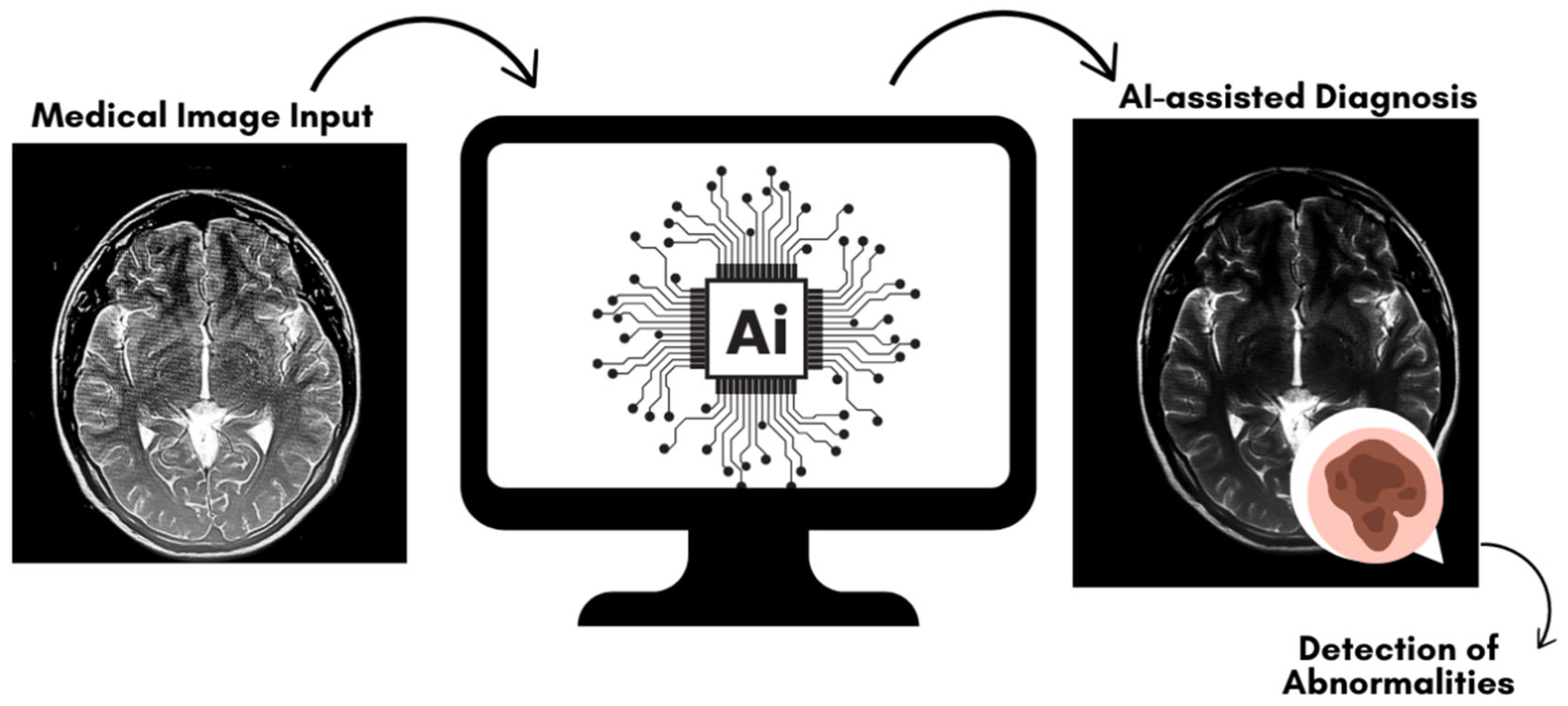
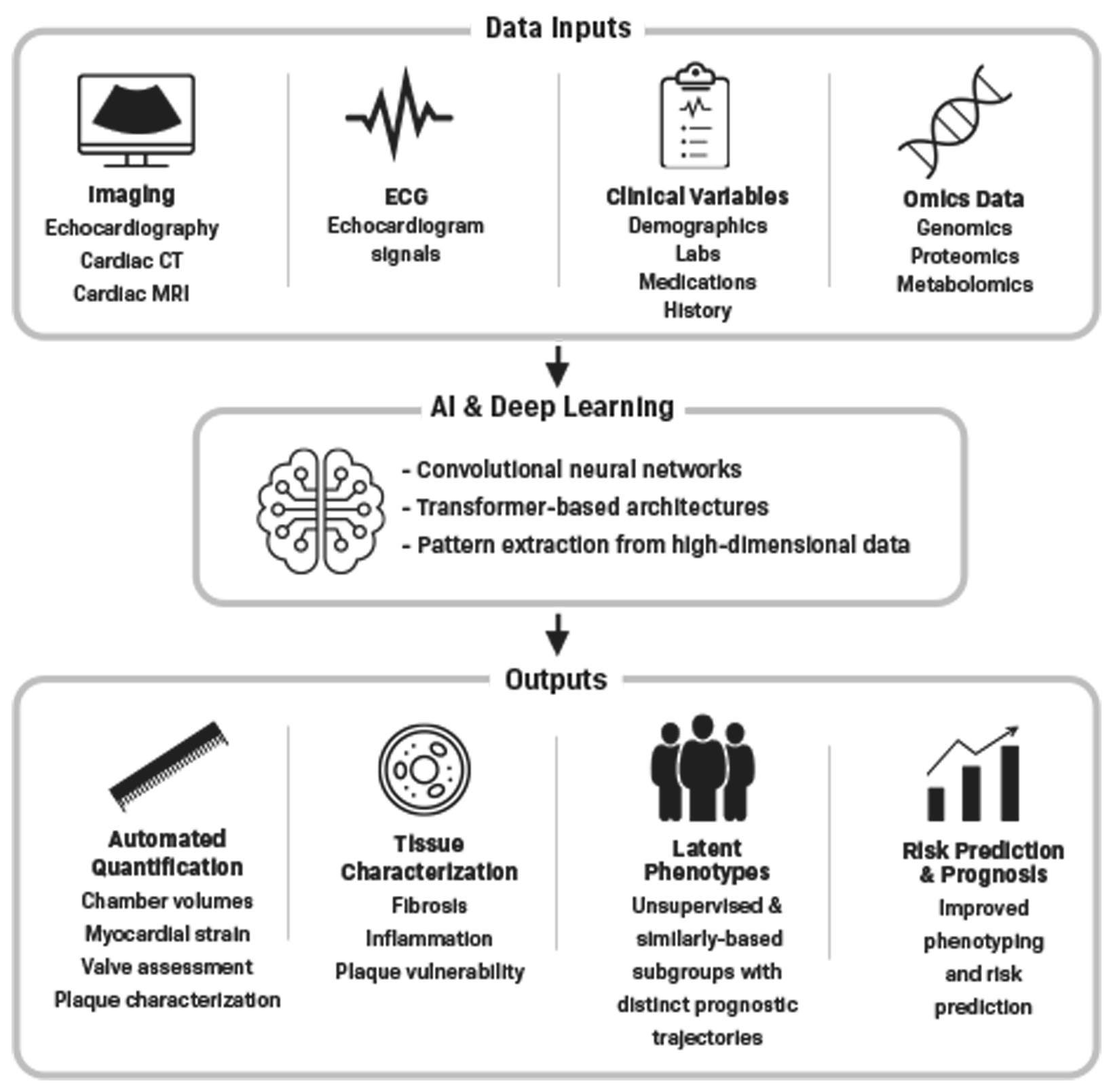
AI imaging encompasses sophisticated computational systems that generate, manipulate, enhance, and analyze visual media using artificial intelligence models. These systems transform textual descriptions into photorealistic photographs, restore historical artifacts, and automate complex graphic workflows across various professional sectors.
Understanding how artificial intelligence handles visual data requires moving past surface-level descriptions to examine underlying neural architectures, dataset curations, and operational parameters. Modern generative systems rely heavily on latent diffusion models, transformer backbones, and deep convolutional networks to translate human intent into high-resolution pixels. As these tools mature, professionals across creative industries, medical diagnostics, and digital asset management must evaluate not only their technical capabilities but also their operational constraints, licensing parameters, and ethical obligations.
Core Architectures and Technological Foundations
The architecture powering modern AI imaging has evolved rapidly, shifting from early Generative Adversarial Networks (GANs) to sophisticated diffusion-based models. Understanding these foundations clarifies why certain tools excel at photorealism while others specialize in abstract art or precise diagrammatic rendering.
Generative Adversarial Networks, introduced in 2014, pit two neural networks against each other: a generator that creates fake images and a discriminator that evaluates them against real training data. While GANs produced impressive results for constrained domains, they suffered from training instability and mode collapse. Modern AI imaging predominantly relies on diffusion models, which learn to reverse a gradual process of adding noise to training images. By starting with random static and progressively removing noise conditioned on text prompts or structural guides, these models generate coherent, highly detailed visual outputs.
Underpinning these diffusion frameworks are foundational components that manage data flow and semantic alignment:
- Text Encoders: Large language models, such as CLIP (Contrastive Language-Pretraining) or specialized T5 variants, convert natural language prompts into high-dimensional vector embeddings. These embeddings guide the denoising trajectory to match user intent.
- Latent Space Compression: To reduce computational overhead, models like Stable Diffusion operate in a compressed latent space rather than directly on pixel space. Autoencoders map images to this lower-dimensional latent representation during training and decode them back to high-resolution pixels upon completion.
- Attention Mechanisms: Transformer-based cross-attention layers allow the neural network to weigh different parts of the prompt against different regions of the image, ensuring that specific attributes appear in the correct spatial relationships.
Hardware requirements for training or locally running these models remain demanding. High-end Graphics Processing Units (GPUs) featuring substantial Video RAM (VRAM)—typically 12GB to 24GB or more—are necessary to process large tensors efficiently during local inference and fine-tuning procedures.
Verification, Licensing, and Intellectual Property Considerations
Integrating AI imaging into commercial and institutional workflows introduces complex legal and operational challenges. Organizations must navigate shifting frameworks regarding copyright ownership, data privacy, and the provenance of generated assets.
Copyright offices globally maintain that works generated entirely by artificial intelligence without significant human creative input do not qualify for copyright protection. This distinction makes the provenance of an asset a critical factor for enterprise adoption. When artists or developers use AI as an assistive tool—combining generative outputs with manual digital painting, vector tracing, or complex compositing—the resulting hybrid work may achieve copyright eligibility, depending on the jurisdiction and the proportion of human authorship involved.
| Stage | Key Verification Check |
|---|---|
| Model Sourcing | Verify training data licensing and opt-out registries. |
| Asset Generation | Document prompt chains and seed values for auditability. |
| Human Modification | Log extent of manual edits, vector tracing, or digital painting. |
| Commercial Deployment | Confirm platform terms of service permit intended enterprise use. |
Furthermore, organizations must examine the training data provenance of commercial models. Platforms that train exclusively on public-domain images, openly licensed repositories, or fully contracted datasets shield users from potential third-party intellectual property claims. Conversely, models trained on uncurated web scrapes carry inherent legal risks regarding copyright infringement and unauthorized likeness usage. Implementing robust metadata tagging and maintaining clear audit trails of prompt engineering sessions help organizations verify originality and defend asset lineage.
Comparative Analysis of Commercial and Open-Source Models
The AI imaging landscape is divided between closed, cloud-based proprietary platforms and open-source models that users can run locally. Selecting the appropriate ecosystem depends on budget, technical expertise, data privacy requirements, and creative control.
| Feature / Metric | Proprietary Cloud Services (e.g., Midjourney, DALL-E) | Open-Source Models (e.g., Stable Diffusion, FLUX) |
|---|---|---|
| Hardware Requirements | Minimal; browser or mobile app interface. | High; dedicated GPU with 12GB+ VRAM recommended. |
| Customization & Fine-Tuning | Limited to platform parameters and prompt weighting. | Extensive; supports LoRA, ControlNet, and custom checkpoints. |
| Data Privacy & Security | Data processed on third-party servers; corporate tiers vary. | Complete control; runs entirely offline on local infrastructure. |
| Cost Structure | Subscription-based tiering with token consumption limits. | Free software; initial hardware capital expenditure required. |
| Ease of Use | Immediate, beginner-friendly conversational or UI prompts. | Steeper learning curve; requires software installation and configuration. |
Proprietary solutions excel in out-of-the-box aesthetic quality and natural language comprehension. They abstract away technical complexities, allowing users to generate polished assets rapidly. However, they restrict deep parameter adjustments and require constant internet connectivity. Open-source ecosystems provide absolute ownership and granular control. Through techniques like Low-Rank Adaptation (LoRA) and ControlNet structural conditioning, practitioners can train models on proprietary brand assets or enforce strict spatial layouts, poses, and color palettes.
Practical Implementation and Workflow Integration
Deploying AI imaging effectively requires establishing structured pipelines that bridge traditional design software with generative engines. Blindly generating images without a methodical approach often results in inconsistent styles, anatomical distortions, and wasted computational resources.
The implementation workflow generally follows these sequential phases:
- Concept Ideation and Prompt Engineering: Define the subject, medium, lighting, color grading, and composition style. Effective prompts avoid vague adjectives and instead rely on descriptive nouns, specific artistic references, and technical camera parameters.
- Structural Guidance and Layout Control: Apply preprocessors such as depth maps, pose skeletons, or edge detection filters to constrain the generation process, ensuring subjects align with architectural or design blueprints.
- Initial Generation and Batching: Produce multiple variations at lower resolutions to evaluate composition, lighting, and thematic adherence.
- Upscaling and Detail Refinement: Use tile-based upscalers or latent diffusion refinement passes to add micro-textures, resolve artifacts, and increase output resolution for print or high-definition digital display.
- Post-Processing and Compositing: Import generated elements into traditional digital editing suites for color correction, object removal, and final compositing with human-created assets.
Common pitfalls during this process include ignoring scaling artifacts, relying on default parameter settings that lead to generic aesthetics, and failing to secure explicit commercial rights for specialized fine-tuning datasets. Establishing clear organizational style guides mitigates these risks and ensures brand consistency.
Frequently Asked Questions
What differentiates diffusion models from generative adversarial networks?
Diffusion models generate images by learning to reverse a stepwise noise-addition process, providing greater training stability and avoiding the mode collapse common in early generative adversarial networks. This iterative denoising approach yields superior fidelity and finer control over text-to-image alignment.
Can AI-generated images be copyrighted?
Copyright offices generally require human authorship for copyright registration. Works generated entirely by an artificial intelligence prompt without substantial subsequent human modification usually do not qualify for copyright protection in major jurisdictions.
What hardware is required to run AI image generators locally?
Running modern open-source models locally requires a dedicated graphics processing unit with a minimum of 12GB to 24GB of VRAM, a modern multi-core central processing unit, and at least 32GB of system RAM to ensure smooth tensor processing and inference speeds.
How do ControlNet extensions improve image generation?
ControlNet architectures add structural conditioning parameters to diffusion models, allowing users to guide generation using edge detection, human pose skeletons, depth maps, or semantic segmentations. This prevents the model from relying solely on text prompts and maintains precise spatial control over the output.
Are there privacy risks when using cloud-based AI image platforms?
Cloud platforms process prompts and images on remote servers, which may expose proprietary designs or sensitive data depending on the platform's enterprise data retention policies. Organizations requiring strict data confidentiality often deploy open-source models on private, air-gapped local hardware.
Strategic Asset Management and Future Outlook
Successfully managing AI imaging pipelines requires continuous education, adaptive workflow design, and rigorous adherence to ethical standards. As foundational models incorporate higher-resolution datasets, real-time rendering capabilities, and native 3D mesh generation, the boundary between traditional digital art and computational synthesis will continue to blur. Organizations that establish clear protocols for asset verification, legal compliance, and hybrid human-AI collaboration will maximize creative output while mitigating operational liabilities.