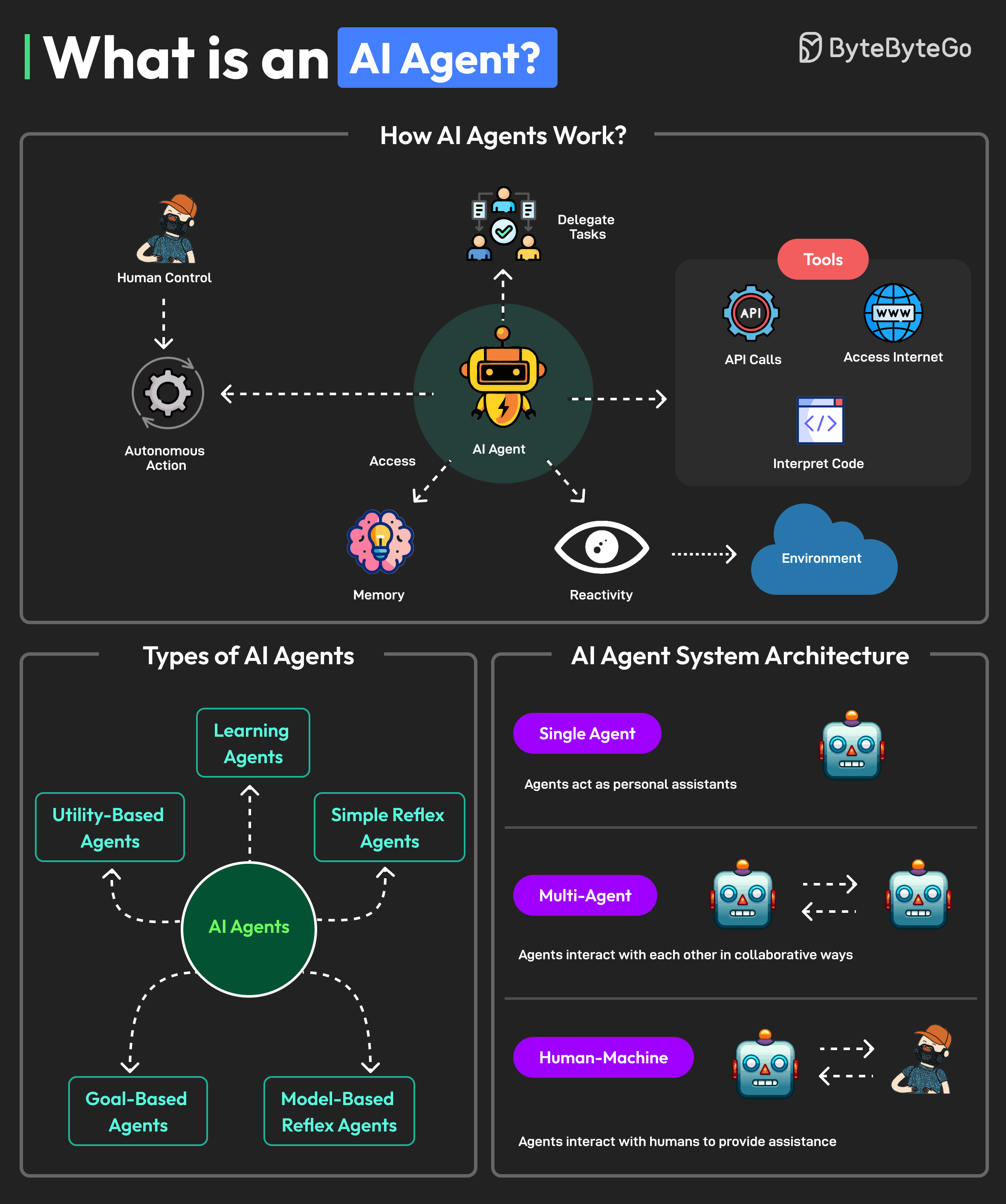
Effective artificial intelligence guides provide structured, step-by-step methodologies for planning, developing, deploying, and auditing machine learning models and generative applications. These resources help organizations and technical practitioners navigate complex technical frameworks, choose appropriate architectures, ensure data privacy compliance, and manage operational costs efficiently.
Understanding the Landscape of Modern Artificial Intelligence Documentation
The rapid evolution of machine learning frameworks, large language models, and automated reasoning tools has transformed how software engineers, data scientists, and enterprise architects approach system design. Navigating this ecosystem requires clear, authoritative documentation that separates theoretical capabilities from production realities. Modern artificial intelligence resources must address not only the mechanics of model training and fine-tuning but also the surrounding infrastructure, including vector databases, inference engines, orchestration layers, and monitoring dashboards.
Organizations adopting these technologies frequently face challenges regarding model selection, computational budgeting, and integration friction. Comprehensive documentation bridges the gap between academic research papers and enterprise-grade software engineering. By breaking down complex algorithmic concepts into actionable implementation steps, technical teams can avoid costly architectural missteps, reduce technical debt, and accelerate time-to-market for intelligent features.
Prerequisites and Core Concepts Before Implementation
Before diving into development, technical teams must establish a solid foundation in core machine learning concepts, data engineering pipelines, and hardware requirements. Skipping foundational assessments often leads to fragile systems that fail under production loads or produce biased outputs.
Data readiness represents the most critical prerequisite. High-performing models depend on clean, well-annotated, and representative datasets. Organizations must evaluate their data storage mechanisms, ensuring low-latency retrieval for real-time applications and secure partitioning for sensitive information. Additionally, practitioners should understand the distinction between pre-training, fine-tuning, retrieval-augmented generation (RAG), and prompt engineering to select the most cost-effective approach for their specific use case.
Hardware provisioning also requires careful planning. Whether utilizing on-premises graphical processing units (GPUs) or cloud-based tensor processing units (TPUs), understanding memory bandwidth, floating-point precision standards (such as FP16, BF16, and INT8), and quantization techniques ensures optimal performance without overspending on cloud infrastructure.
Selecting and Comparing Artificial Intelligence Frameworks
Choosing the right development stack dictates the long-term maintainability, scalability, and performance of an intelligent application. Developers can choose from a wide array of open-source frameworks, proprietary APIs, and hybrid orchestration platforms.
| Framework / Tool | Primary Use Case | Key Advantages | Operational Limitations |
|---|---|---|---|
| PyTorch | Research and production deep learning | Highly flexible, dynamic computational graph, massive community support | Steeper learning curve for production deployment compared to static alternatives |
| TensorFlow | Enterprise production and mobile deployment | Robust ecosystem (TFLite, TF Serving), excellent multi-device support | Verbose syntax and rigid graph structures for experimental research |
| Hugging Face Transformers | Natural language processing and multimodal tasks | Pre-built state-of-the-art models, seamless pipeline abstractions | High memory consumption; heavy reliance on third-party model weights |
| LangChain / LlamaIndex | Orchestrating LLMs and building RAG pipelines | Rapid prototyping of chained workflows and vector search integrations | Frequent API changes and abstraction overhead can complicate debugging |
Step-by-Step Implementation Methodology
Deploying an artificial intelligence solution requires a disciplined engineering lifecycle. Adhering to structured phases helps maintain code quality, security posture, and model reliability from prototype to production.
- Define the Objective and Success Metrics: Establish clear, measurable Key Performance Indicators (KPIs) such as inference latency, accuracy thresholds, hallucination rates, and maximum allowable cost per query.
- Data Collection and Preprocessing: Aggregate relevant data sources, clean noisy records, remove Personally Identifiable Information (PII), and structure datasets for training or vector embedding generation.
- Architecture and Model Selection: Evaluate whether to fine-tune an open-source open-weight model, utilize a commercial managed API, or build a custom architecture based on latency and privacy constraints.
- Integration and Pipeline Construction: Build data ingestion pipelines, connect vector databases, and implement orchestration logic to handle user requests and context retrieval.
- Rigorous Testing and Evaluation: Conduct automated testing for functional correctness, adversarial prompt injection resistance, and bias mitigation before releasing the system to end users.
- Deployment and Monitoring: Release the application into a staging or production environment, utilizing observability platforms to track token usage, response times, and error rates continuously.
Managing Security, Compliance, and Operational Risks
As artificial intelligence systems handle increasingly sensitive enterprise data and customer interactions, security and regulatory compliance cannot be treated as an afterthought. Organizations must implement robust guardrails to mitigate risks associated with data leakage, copyright infringement, and malicious attacks.
Data privacy regulations, such as the General Data Protection Regulation (GDPR) and the California Consumer Privacy Act (CCPA), impose strict rules on how personal data is processed and stored. When utilizing third-party commercial application programming interfaces (APIs), teams must verify data retention policies to ensure proprietary inputs are not used for public model training. For high-security environments, deploying open-weight models on private cloud infrastructure or air-gapped on-premises servers remains the preferred mitigation strategy.
Model drift and degradation also require ongoing vigilance. Unlike traditional software, which fails predictably, machine learning systems can exhibit subtle performance degradation as real-world data distributions shift over time. Establishing continuous evaluation pipelines ensures that anomalies are caught and models are retrained before impacting end-user trust.
Frequently Asked Questions
What are the primary differences between fine-tuning and retrieval-augmented generation?
Fine-tuning modifies the internal weights of a pre-trained model using a specialized dataset to teach it new domains, styles, or behaviors. Retrieval-augmented generation (RAG) leaves the base model untouched, instead dynamically searching an external knowledge base and injecting relevant documents into the prompt context at runtime. RAG is generally faster and cheaper to update, whereas fine-tuning is better suited for altering model tone, reasoning style, or formatting behavior.
How do I calculate the total cost of running a production AI application?
Calculating production costs involves factoring in API token pricing or cloud GPU hosting fees, data storage for vector embeddings, egress network bandwidth, and engineering hours required for maintenance. Open-source models eliminate per-token API fees but introduce substantial fixed infrastructure costs for dedicated GPU instances, making workload volume the primary variable in cost efficiency.
What is quantization and why is it important for deployment?
Quantization is the process of reducing the numerical precision of a model's weights and activations, such as converting from 32-bit floating-point numbers to 8-bit integers. This technique significantly decreases the memory footprint of the model and accelerates inference speeds on hardware accelerators, often with minimal loss in predictive accuracy.
How can organizations prevent hallucinations in generative text models?
Preventing hallucinations requires a multi-layered approach, including grounding model responses with verified external documents via RAG, implementing strict system prompts that instruct the model to state when it lacks information, and utilizing secondary verification models to cross-reference outputs against ground-truth data.
What compliance frameworks apply to enterprise AI deployments?
Depending on the industry and jurisdiction, relevant frameworks include the European Union Artificial Intelligence Act (EU AI Act), HIPAA for healthcare data, SOC 2 Type II for security controls, and ISO/IEC 42001 for artificial intelligence management systems. Compliance requires maintaining comprehensive audit logs of training data, model architectures, and decision pathways.
Optimizing Long-Term System Performance
Maintaining a competitive advantage with artificial intelligence requires treating implementation as an iterative, continuous improvement cycle rather than a one-time software deployment. Technical leads should regularly audit their model pipelines against emerging architectural patterns, hardware optimizations, and security protocols. By prioritizing modular system design, transparent evaluation metrics, and strict data governance, organizations can build resilient intelligent applications capable of scaling securely alongside technological advancements.