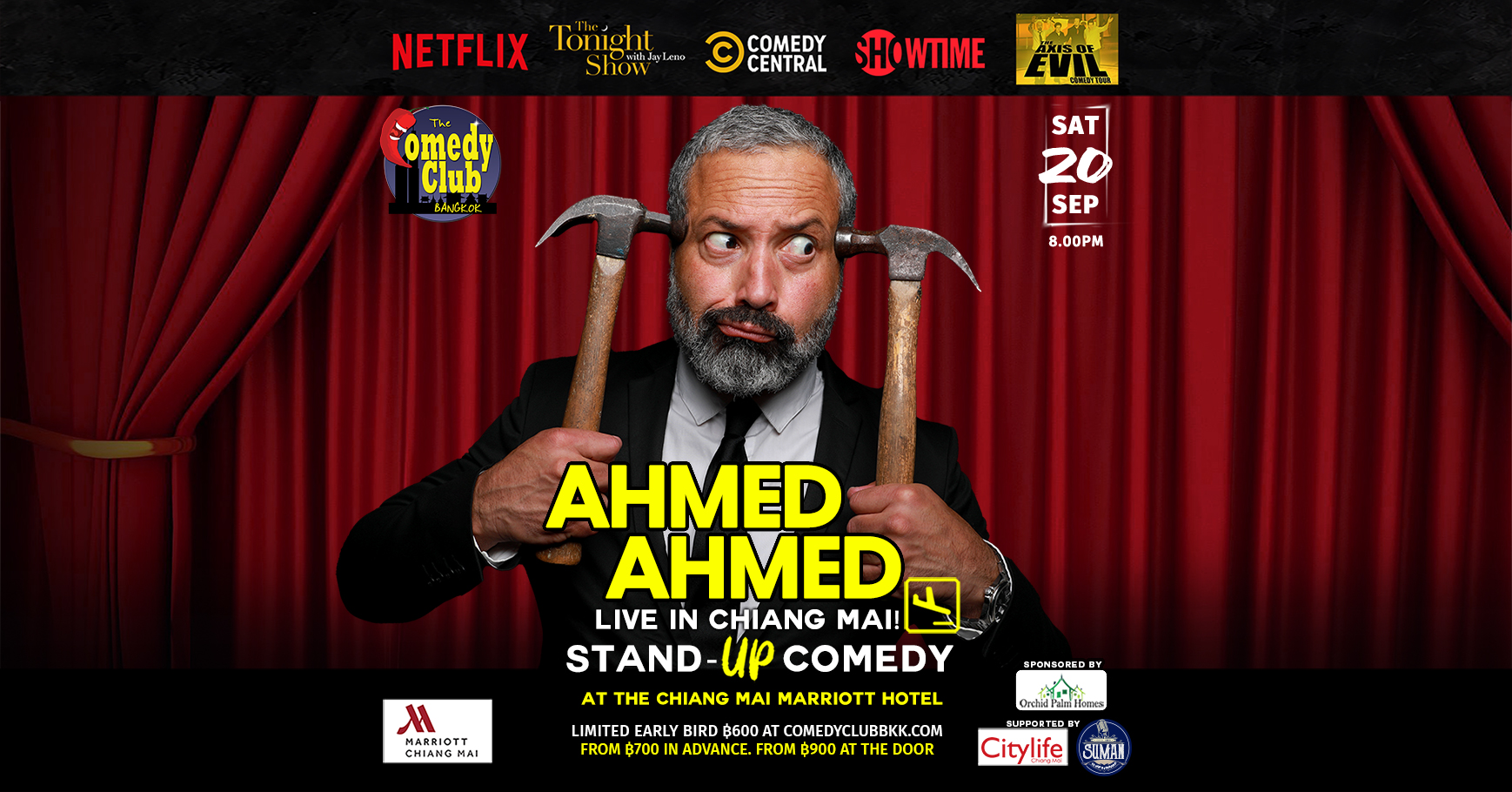
Egyptian-American comedian and actor Ahmed Ahmed has built a pioneering career by dismantling cultural stereotypes, integrating personal immigration experiences into stand-up, and co-founding the Axis of Evil Comedy Tour. His work bridges cultural divides through observational humor and satire, establishing a distinct voice in contemporary entertainment.
Foundations and Early Background in Comedy
Born in Helwan, Egypt, Ahmed Ahmed moved with his family to the United States as a young child, growing up in Riverside, California. This bicultural upbringing exposed him to the dual realities of traditional Middle Eastern domestic life and American pop culture. Navigating these two distinct worlds provided the raw material for his early creative expressions, eventually drawing him toward the performing arts. After completing his secondary education, he pursued formal training in theater, studying at San Diego State University before relocating to Hollywood to break into professional acting and stand-up.
Moving to Los Angeles in the early 1990s presented distinct hurdles for performers of Middle Eastern descent. The entertainment landscape of that era heavily relied on one-dimensional character tropes, frequently casting actors from the region as villains, terrorists, or background extras. Ahmed faced these industry limitations head-on, working standard day jobs while cutting his teeth in local comedy clubs like The Comedy Store and The Improv. These formative years on the stand-up circuit allowed him to hone a sharp, conversational delivery style that transformed frustration into incisive comedic commentary.
Defining Characteristics of Ahmed Ahmed Comedy Style
The core of Ahmed’s comedic approach relies on observational satire, cultural juxtaposition, and direct audience engagement. Rather than avoiding his heritage, he places his identity at the center of his routines, using self-deprecation and wit to disarm crowds. By addressing misconceptions about Arab-Americans and Muslims directly from the stage, he reframes ignorance as an opportunity for communal laughter.
A prominent technique in his style is the "defusal of tension." He frequently opens a set by acknowledging the visual or cultural elephant in the room—such as his appearance or name—thereby neutralizing any underlying anxiety in the room before pivoting to universal human experiences like dating, family dynamics, and the absurdities of air travel. His delivery balances high-energy storytelling with sharp punchlines, avoiding preachy sermonizing in favor of relatable, grounded humor.
| Comedic Element | Description | Primary Objective |
|---|---|---|
| Cultural Deconstruction | Addressing ethnic and religious stereotypes directly through humor. | Dismantling prejudice and replacing fear with familiarity. |
| Observational Satire | Drawing material from everyday bicultural misunderstandings. | Highlighting the commonalities in human behavior across backgrounds. |
| Audience Interaction | Engaging directly with crowd members to test assumptions. | Creating an immediate, shared communal experience in the venue. |
| Personal Narrative | Incorporating autobiographical migration stories into routines. | Establishing authenticity and relatability with diverse listeners. |
| Physical Comedy | Utilizing expressive facial movements and vocal modulation. | Enhancing comedic timing and emphasizing punchline delivery. |
Notable Work and the Axis of Evil Comedy Tour
Ahmed’s most significant contribution to the entertainment industry is his role as a co-creator and performer in the Axis of Evil Comedy Tour, which launched in the mid-2000s alongside fellow comedians Maz Jobrani, Aron Kader, and Dean Obeidallah. The tour’s name was a direct, satirical response to then-President George W. Bush’s infamous "axis of evil" political speech. By reclaiming the phrase, the troupe turned geopolitical rhetoric on its head, touring nationally and internationally to sold-out crowds.
The tour gained massive mainstream visibility in 2007 when Comedy Central broadcasted a one-hour special of the performance. This milestone marked the first time a television network dedicated a major comedy special to Middle Eastern-American comedians, introducing their unique perspectives to millions of households. The success of the Axis of Evil tour opened doors for subsequent generations of diverse comedians, proving that culturally specific humor possesses broad, universal commercial viability.
Beyond the landmark tour, Ahmed maintained a prolific acting career in both television and film. He appeared in notable Hollywood feature films such as Iron Man (2008), playing a reporter, and Adam Sandler’s You Don't Mess with the Zohan (2008), where his background allowed him to contribute authentically to a culturally themed satire. His television credits include guest appearances on popular series like The West Wing, JAG, Roseanne, and Sullivan & Son.
Directing, Documentaries, and Later Career Ventures
In addition to performing on stage and screen, Ahmed expanded his creative portfolio behind the camera by writing and directing. His directorial debut came with the award-winning feature documentary Just Like Us (2010). The film followed a group of American and Middle Eastern comedians as they traveled across the Middle East—performing in countries like Dubai, Lebanon, Egypt, Jordan, and Saudi Arabia—to explore how humor transcends political boundaries.
Just Like Us received critical praise for its balanced examination of cross-cultural exchange, screening at major film festivals and earning the Hilton Humanitarian Award at the Traverse City Film Festival. The project cemented Ahmed's status not only as a working comedian but as a cultural ambassador who leveraged his art to foster dialogue between the Western world and the Middle East. His continued involvement in international comedy festivals reflects an ongoing commitment to globalizing stand-up comedy and mentoring emerging talent from underrepresented backgrounds.
Frequently Asked Questions About Ahmed Ahmed
What inspired Ahmed Ahmed to start comedy?
Ahmed was inspired by a lifelong love for performing arts and a desire to challenge the narrow, stereotypical roles offered to Middle Eastern actors in Hollywood during the early 1990s. Stand-up provided an autonomous platform where he could control his own narrative and represent his bicultural identity on his own terms.
What was the Axis of Evil Comedy Tour?
The Axis of Evil Comedy Tour was a groundbreaking stand-up troupe featuring Middle Eastern-American comedians Ahmed Ahmed, Maz Jobrani, Aron Kader, and Dean Obeidallah. Launched in the mid-2000s, the tour satirized post-9/11 geopolitical rhetoric and culminated in a historic 2007 Comedy Central special.
Which movies and TV shows features Ahmed Ahmed?
He has appeared in numerous mainstream Hollywood films and television programs, including Iron Man, You Don't Mess with the Zohan, The West Wing, and Roseanne. His work spans both dramatic guest roles and comedic character performances.
What is the documentary Just Like Us about?
Released in 2010 and directed by Ahmed, Just Like Us is a feature-length documentary following several American and Middle Eastern stand-up comedians as they tour the Middle East. The film explores cultural differences, political tensions, and the unifying power of laughter across borders.
How did Ahmed Ahmed influence modern comedy?
He helped pave the way for diverse and multicultural comedians by proving that stories rooted in immigrant and minority experiences possess universal appeal. His work with the Axis of Evil tour directly challenged industry gatekeepers regarding who could headline major comedy specials.
Continuing the Exploration of Cross-Cultural Comedy
For those interested in studying the evolution of multicultural performance, examining Ahmed’s body of work offers a masterclass in turning socio-political friction into engaging entertainment. Aspiring writers and performers can analyze his transition from traditional acting hurdles to self-generated multi-platform projects as a blueprint for creative independence. Exploring his documentary Just Like Us or reviewing his stand-up specials provides further insight into how humor functions as a bridge across divided global landscapes.