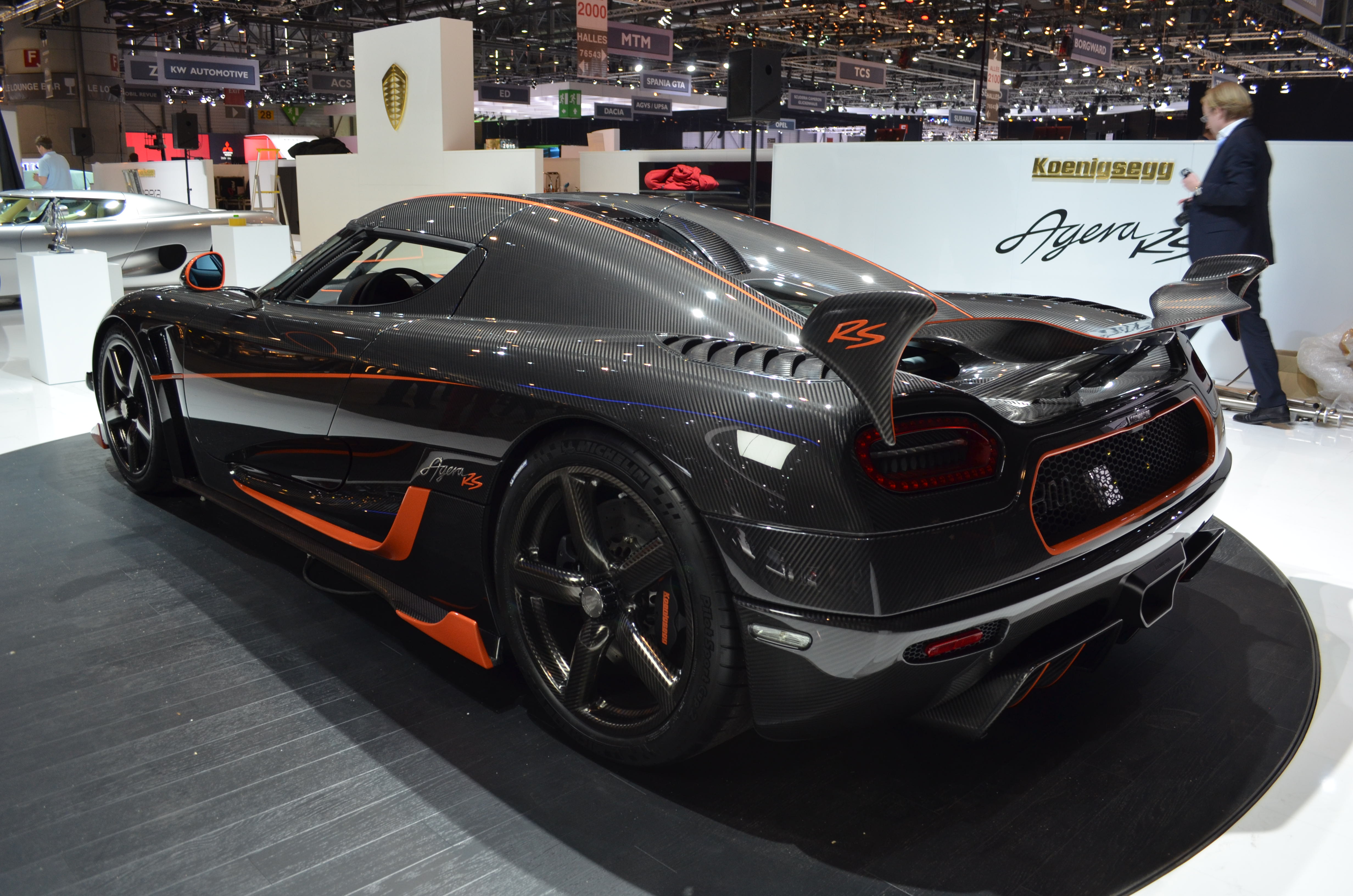
The Koenigsegg Agera RS represents a definitive high-water mark in the evolution of the hypercar, serving as the ultimate iteration of the Agera platform. Produced between 2015 and 2018, this limited-run vehicle gained global recognition by setting multiple speed records, most notably becoming the fastest production car in the world in 2017 with a verified two-way average speed of 277.87 mph.
The Genesis and Design Philosophy of the Agera RS
The Agera RS emerged as a masterclass in compromise-free engineering, bridging the gap between the track-focused Agera R and the extreme, record-shattering One:1. When Koenigsegg announced the model at the 2015 Geneva Motor Show, the goal was clear: to create an vehicle that functioned exceptionally well on both the road and the track while maintaining a weight-conscious, aerodynamic-focused architecture.
Unlike previous iterations that leaned heavily toward either comfort or pure track performance, the Agera RS utilized a "most track-focused" philosophy that prioritized downforce and chassis rigidity. The chassis itself is a carbon fiber monocoque that provides immense torsional stiffness, weighing in at only 70 kilograms. This structural foundation allows the car’s suspension to operate with surgical precision, minimizing body roll during high-speed cornering and allowing for a direct connection between the driver and the road surface.
Technical Specifications and Powertrain Dynamics
At the heart of the Agera RS lies a 5.0-liter twin-turbocharged V8 engine, an internal combustion powerhouse developed entirely in-house by Koenigsegg. In its standard configuration, this engine produces 1,160 horsepower (865 kW). However, the true technical brilliance of the unit is found in its torque delivery and weight-to-power ratio.
The engine utilizes proprietary ceramic-coated pistons and a unique tumble-flow intake system to optimize combustion efficiency. By varying turbocharger pressure and engine mapping, the Agera RS delivers a massive torque plateau, ensuring that acceleration remains linear and relentless even as the vehicle reaches triple-digit speeds.
Key technical attributes include:
- Engine Displacement: 5.0L Twin-Turbo V8
- Power Output: 1,160 hp (standard) / 1,360 hp (with optional 1MW upgrade)
- Dry Weight: 1,295 kg (2,855 lbs)
- Downforce: 450 kg at 250 km/h
- Transmission: 7-speed paddle-shift with CIMA sequential gearbox
The integration of the CIMA sequential gearbox allows for lightning-fast gear changes, minimizing the interruption of power delivery. This is complemented by the "Triplex" suspension system, a patented Koenigsegg technology that employs a third horizontal shock absorber to counteract squat during heavy acceleration and dive under hard braking.
Performance Verification: The 2017 Record Run
The reputation of the Agera RS was solidified on November 4, 2017, on an 11-mile stretch of closed public highway in Pahrump, Nevada. Professional driver Niklas Lilja piloted the vehicle to a world record, achieving a two-way average speed of 277.87 mph (447.19 km/h). This event was verified by Racelogic, utilizing VBOX telemetry equipment to ensure accuracy.
The significance of this record lies in the fact that it was not a one-off run; it was a two-way average, accounting for wind resistance and gradient changes. This record proved that the Agera RS was not just a theoretical engineering exercise but a functional, repeatable machine capable of extreme performance under real-world, non-laboratory conditions.
Aerodynamics and Active Management
The aerodynamic profile of the Agera RS is a testament to the brand's commitment to functional design. Every vent, wing, and duct serves a specific purpose in manipulating airflow. The active rear wing is the centerpiece of this system, automatically adjusting its angle based on speed, steering angle, and braking input.
At lower speeds, the wing remains tucked to reduce drag. As the speed increases, the wing deploys to generate downforce, effectively "pressing" the tires into the asphalt to maximize grip. The underbody of the car is also fully flat, terminating in a massive rear diffuser that creates a low-pressure zone, sucking the car to the road and providing the stability necessary for its record-breaking top speed.
Comparison of Agera Variants and Performance Metrics
Understanding the Agera RS requires placing it within the context of the broader Agera family. While the Agera S focused on high power without the extreme track aero, and the One:1 focused on power-to-weight perfection, the RS combined the most effective elements of each.
| Feature | Agera R | Agera S | Agera RS |
|---|---|---|---|
| Horsepower | 1,140 | 1,030 | 1,160 – 1,360 |
| Weight (Dry) | 1,330 kg | 1,330 kg | 1,295 kg |
| Focus | Versatility | Efficiency | Track & Road |
| Production | 2011–2014 | 2013–2014 | 2015–2018 |
Maintenance, Ownership, and Long-Term Value
As a vehicle of which only 25 units were produced, the Agera RS occupies an elite tier in the collector car market. Ownership in 2026 implies a significant commitment to specialized maintenance. Because the vehicle utilizes bespoke carbon fiber components and a highly specialized engine, servicing must be conducted by certified Koenigsegg technicians.
Prospective owners or those interested in the secondary market must account for the following:
- Component Scarcity: Many parts for the Agera RS are produced to order. The lead time for specialized bodywork or engine components can be extensive.
- Tire Requirements: The car uses ultra-high-performance tires specifically developed for its speed capabilities. These have a limited shelf life and must be replaced according to strict age and usage intervals, regardless of tread wear.
- Climate Control: For long-term preservation, the vehicle requires a climate-controlled environment to prevent the degradation of carbon fiber resins and delicate electronic control units (ECUs).
Frequently Asked Questions
What makes the Agera RS engine unique?
The Agera RS engine is unique due to its proprietary tumble-flow intake system and ceramic-coated pistons, which allow it to run on diverse fuel types while maintaining massive power output. Its ability to produce over 1,000 horsepower from a 5.0L displacement is achieved through highly efficient turbocharging management rather than mere brute force.
Can the Agera RS be driven on public roads?
Yes, the Agera RS is fully road-legal in most major jurisdictions, including the United States and the European Union. However, due to its low ground clearance and immense power, it requires a driver who is experienced with mid-engine, rear-wheel-drive dynamics and careful route planning to avoid uneven road surfaces.
How does the Agera RS differ from the Regera?
The primary difference is the drivetrain. The Agera RS uses a traditional 7-speed internal combustion gearbox, whereas the Regera utilizes the Koenigsegg Direct Drive (KDD) system, which eliminates the traditional transmission in favor of a hydraulic coupling and electric motor assistance. The Agera RS is lighter and more aggressive, while the Regera is oriented toward grand touring and luxury acceleration.
How many Agera RS units were built?
Koenigsegg produced exactly 25 units of the Agera RS, making it one of the rarest production hypercars in existence. Because each unit was highly customizable, finding two identical Agera RS models is virtually impossible, as owners frequently opted for unique carbon fiber finishes, interior materials, and aerodynamic packages.
Is the Agera RS still considered the fastest car?
While newer hypercars have surpassed the Agera RS in specific acceleration and top-speed metrics, the Agera RS remains a historically significant record holder. It was the fastest production car in the world from 2017 until it was eventually eclipsed by subsequent Koenigsegg models like the Jesko and competitors from manufacturers like Rimac and Bugatti.
Next Actions for Enthusiasts and Collectors
If you are evaluating an Agera RS for purchase or investment in 2026, the primary action is to perform a comprehensive provenance verification. Given the limited production run, documentation regarding the vehicle's specific history—including service records, software update logs, and accident history—is paramount. Contact authorized Koenigsegg service centers to verify the service history of the specific chassis number in question. Always prioritize vehicles that have undergone regular factory-authorized inspections, as "neglected" hypercars can incur six-figure restoration costs due to the specialized nature of the components involved.