Age estimation for birds of prey involves analyzing plumage progression, molt patterns, and physiological changes in soft parts like the eyes and cere. Most raptors transition from juvenile to adult plumage within one to five years, using specific molt cycles—such as the Humphrey-Parkes system—to replace feathers in predictable sequences that indicate chronological age.
Determining the age of a raptor is a fundamental skill for field biologists, rehabilitators, and dedicated birders. In 2026, while high-resolution digital imaging and AI-assisted plumage analysis have streamlined the process, the core biological markers remain the gold standard. Accurate aging allows researchers to understand population demographics, survival rates, and the reproductive health of various species. This guide explores the multi-faceted approach required to move beyond "juvenile" or "adult" labels toward precise year-class identification.
The Foundations of Raptor Plumage and Molt Cycles
To estimate the age of a bird of prey, one must first understand the terminology of plumage. Most ornithologists utilize the Humphrey-Parkes (H-P) system, which categorizes feathers based on the cycle in which they are grown rather than the calendar year. In this system, "Basic" plumages are the standard adult-like feathers, while "Formative" plumages represent the first significant transition from the downy nestling stage.
Raptors are unique because their survival depends entirely on flight efficiency. Consequently, their molt—the process of shedding and regenerating feathers—is often protracted. Larger species, such as eagles, may take several years to complete a full molt of their primary wing feathers. This creates "molt limits," which are visible boundaries between old, worn feathers and new, shiny feathers. By identifying these limits, an observer can determine if a bird is in its second, third, or fourth year of life.
In most species, the juvenal plumage is grown while the bird is in the nest. These feathers are often of lower structural quality than subsequent generations because the bird’s energy was split between growth and feather development. Juvenile feathers typically appear more pointed and show more uniform wear across the wing, whereas an adult wing will show a "mosaic" of feathers of different ages and wear levels.
Key Physiological Indicators for Age Determination
Beyond feathers, several physiological features provide clues to a bird's age. These "soft parts" include the eyes (irises), the cere (the fleshy area above the beak), and the tarsi (the legs).
Iris Color Transitions
Many raptors undergo dramatic changes in eye color as they mature. This is particularly prevalent in the Accipiter genus (such as Cooper's Hawks and Sharp-shinned Hawks).
- Juveniles: Often possess pale yellow or light gray-green irises.
- Sub-adults: The yellow deepens into orange over the first two to three years.
- Adults: Older adults frequently exhibit deep, blood-red irises.
While iris color is a reliable general indicator, it is subject to individual variation and diet. Therefore, it should always be used in conjunction with plumage data rather than as a standalone metric.
Cere and Tarsus Pigmentation
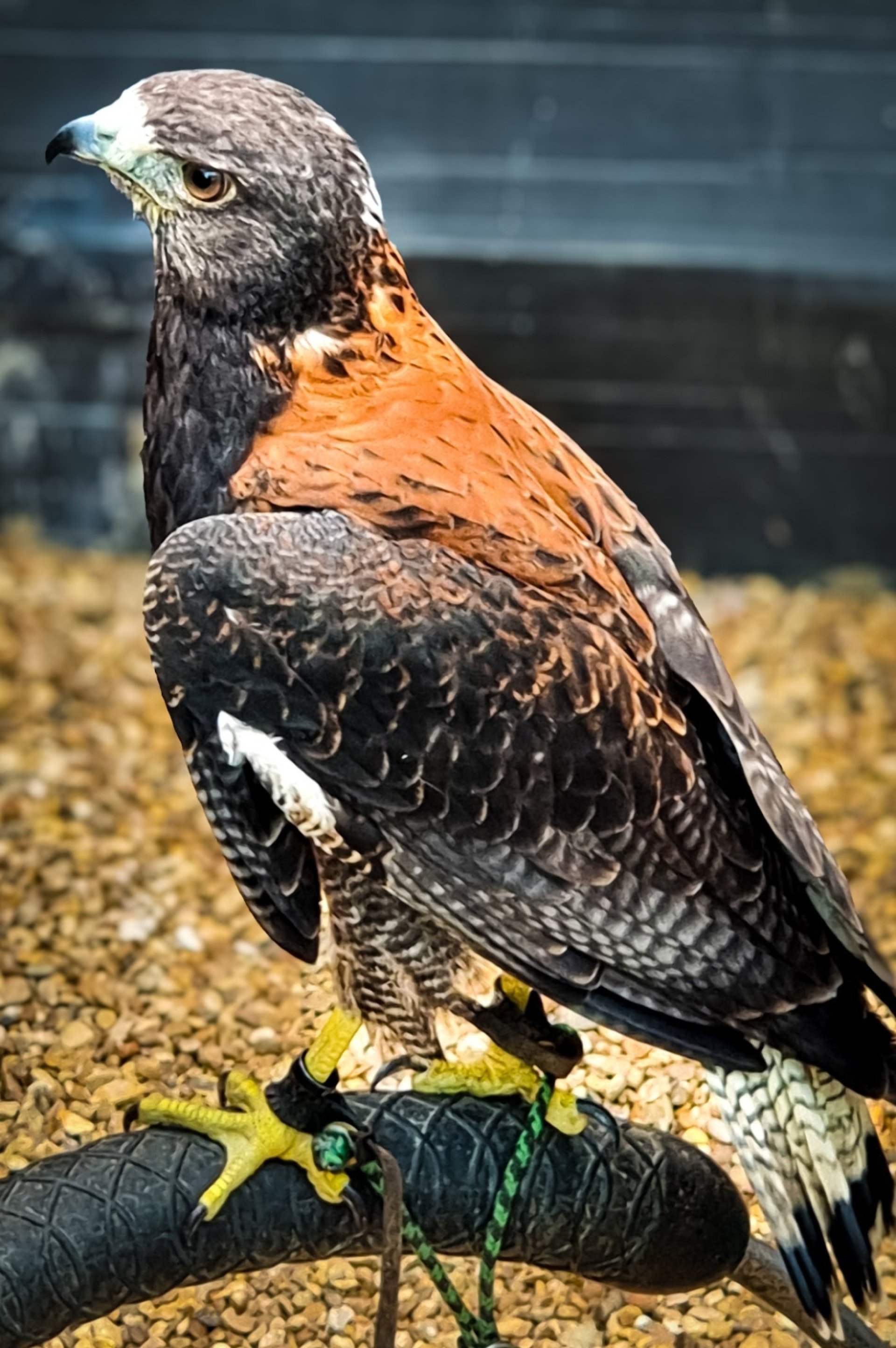
The skin on the face and legs of many raptors changes from a dull, pale hue to a vibrant yellow or orange as the bird ages. In many falcons and hawks, a fledgling will have a bluish or pale greenish cere and legs. As the bird reaches sexual maturity, the accumulation of carotenoids from their diet typically turns these areas a bright, healthy yellow. In species like the Osprey, the transition is even more specific, with the iris changing from blood-red in juveniles to bright yellow in adults, the inverse of the pattern seen in many hawks.
Specialized Techniques for Different Raptor Groups
Raptors are a diverse group, and the techniques used to age a kestrel do not necessarily apply to a Golden Eagle. Effective age estimation requires knowledge of taxon-specific development.
Accipiters and Buteos
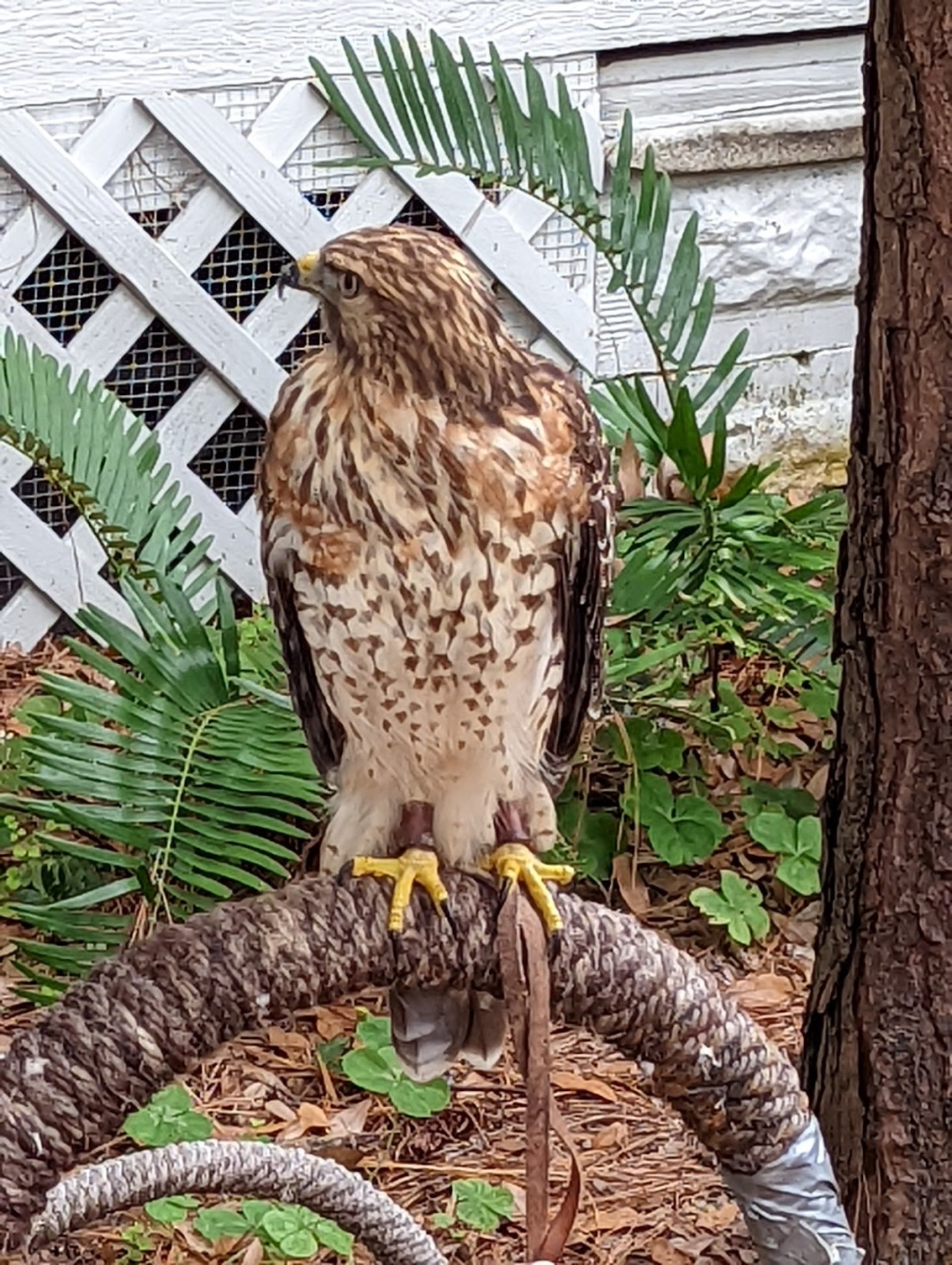
In North American and European hawks, the transition from vertical streaking to horizontal barring on the breast is a classic sign of aging. Juvenile Red-tailed Hawks (Buteo jamaicensis), for instance, lack the namesake red tail, possessing instead a brown tail with numerous thin dark bars. They typically acquire the red tail during their second year.
The Complex Aging of Large Eagles
Eagles are among the most difficult to age due to their long maturation periods. A Bald Eagle (Haliaeetus leucocephalus) does not achieve its iconic white head and tail until its fourth or fifth year.
- Year 1: Almost entirely dark brown, with dark eyes and a dark beak.
- Year 2: "Belly white" stage, with significant white mottling on the underparts and underwing coverts.
- Year 3: "Osprey-like" appearance with a dark line through the eye and a lightening beak.
- Year 4: Mostly white head with some brown flecking ("dirty" head) and a yellowing beak.
- Year 5+: Definite adult plumage.
Owls and UV Fluorescence
Owls present a unique challenge because their plumage often looks identical between juveniles and adults. However, researchers utilize porphyrins—pigments found in the feathers—to age them. New owl feathers fluoresce bright pink under ultraviolet (UV) light. As feathers age and are exposed to sunlight, the porphyrins break down. By shining a UV light on the underside of an owl's wing, researchers can see "new" pink feathers interspersed with "old" non-fluorescent feathers, revealing the bird's molt history.
Utilizing Molt Limits for Precise Aging
A "molt limit" occurs when a bird pauses its molt cycle, leaving a mix of old and new feathers. Identifying these is the most advanced form of age estimation. In the hand, this is done by examining the primary and secondary feathers of the wing.
When a hawk molts, it generally starts at a specific feather (often Primary 1) and moves outward. If the bird reaches the wintering grounds before finishing, the molt stops. The following year, the bird may start a new molt wave while the old one continues. This results in three distinct "generations" of feathers:
- Juvenal feathers: Extremely worn, bleached by the sun, and often narrower.
- Second-generation feathers: Moderately worn.
- New feathers: Dark, crisp, and fully intact.
By counting these generations and identifying the "break point" in the wing, specialists can distinguish between a "Second Year" (SY) and a "Third Year" (TY) bird with high confidence.
Raptor Age Estimation Matrix
The following table provides a comparison of common age indicators for major raptor groups in their first few years of life.
| Raptor Group | Juvenile (Year 1) | Sub-Adult (Year 2-3) | Adult (Year 4+) |
|---|---|---|---|
| Accipiters | Yellow eyes; vertical breast streaks | Orange eyes; transitional barring | Red eyes; crisp horizontal barring |
| Buteos (e.g. Red-tail) | Brown, barred tail; pale iris | Transitional tail; darkening iris | Solid red tail; dark brown iris |
| Falcons | Heavy vertical streaking; blue cere | Reduced streaking; yellowing cere | Clean "mustache" mark; bright yellow cere |
| Large Eagles | All dark; dark beak/eyes | Mottled white "belly"; light beak | White head/tail; bright yellow beak |
| Owls | Uniform UV fluorescence (wing) | Mixed UV fluorescence (molt limits) | Complex mosaic of UV fluorescence |
Challenges and Common Pitfalls
Even for experts, age estimation is not an exact science. Several factors can obscure the clues provided by plumage and soft parts.
Nutritional Stress: A bird experiencing "hunger streaks" or "stress bars" may produce feathers that look older or more worn than they actually are. Nutritional deficiencies can also delay the transition of eye color or cere pigmentation, leading to an underestimation of age.
Sexual Dimorphism: In some species, males and females molt at different rates or exhibit different plumage intensities. For example, female American Kestrels retain a more juvenile-like appearance (heavily barred) even into adulthood compared to the more distinct blue-grey wings of the males.
Individual Variation: Just as humans gray at different ages, some raptors retain juvenile characteristics longer than others. There are documented cases of "delayed plumage maturation," where a bird is physiologically capable of breeding but still sports sub-adult feathers. This is thought to be an evolutionary strategy to reduce aggression from older, dominant territorial adults.
Frequently Asked Questions
Can you tell the age of a bird of prey just by its size?
No, size is not an indicator of age in raptors. Once a bird leaves the nest (fledges), it is already at its full skeletal size. In many cases, juvenile raptors actually have longer tail and wing feathers than adults to provide extra stability and lift as they learn to hunt, making them appear slightly larger than their parents.
How does the "calendar year" system differ from the "plumage" system?
The calendar year system (HY for Hatch Year, SY for Second Year) resets every January 1st. The plumage system (Formative, Basic) follows the bird's biological molting schedule. Professionals often use both, but the plumage system is more accurate for biological studies because it tracks the actual physical development of the bird regardless of whether it was born in April or July.
Why do some owls glow under UV light?
Owls have high concentrations of porphyrins in their feathers, which are pigments that fluoresce pink under ultraviolet light. These pigments are unstable and degrade quickly when exposed to sunlight. Therefore, only the newest feathers glow brightly, allowing researchers to distinguish between feathers grown this year and those retained from previous years.
Is eye color a 100% reliable way to age a hawk?
No, eye color is a helpful indicator but not a definitive one. While most Accipiters follow the yellow-to-red progression, the exact timing can vary by several years based on the individual's genetics and diet. It should always be used as supporting evidence alongside molt patterns and feather wear.
At what age do most raptors start breeding?
Most smaller raptors, like kestrels and small hawks, can breed in their second year (as "Second Year" birds). Larger species, such as eagles and large vultures, typically do not reach sexual maturity until they are four to six years old, coinciding with the acquisition of their final adult plumage.
Recommendations for Accurate Field Aging
To improve your accuracy in aging birds of prey, start by focusing on a single common species, such as the Red-tailed Hawk or the Eurasian Sparrowhawk. Documenting sightings with high-quality photography is essential; a clear shot of the spread wing or tail often reveals molt limits that are invisible to the naked eye through binoculars.
For those seeking deeper technical knowledge, the following resources are considered the authorities in the field:
- The Pyle Guide (Identification Guide to North American Birds)
- Birds of the World (Cornell Lab of Ornithology)
- Raptor Research Foundation
- The British Trust for Ornithology (BTO) Aging and Sexing Guides
When in doubt, it is better to record a bird as "After Hatch Year" (AHY)—meaning it is at least an adult but of unknown exact age—than to assign a specific year-class without sufficient evidence. Consistent practice and the study of museum skins or high-resolution digital archives remain the best ways to master the intricate art of raptor age estimation.