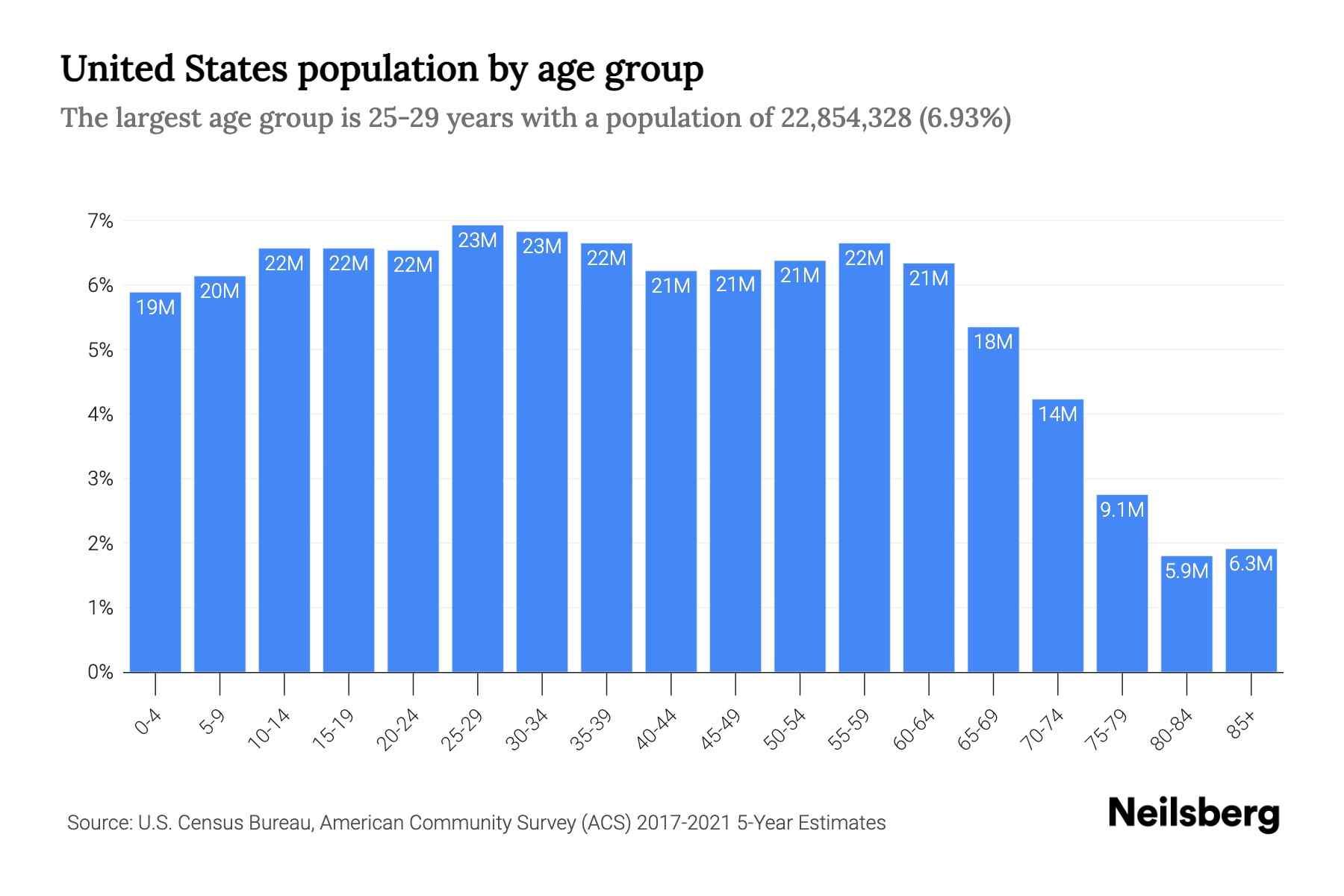
Age demographics provide a quantitative breakdown of a population based on age ranges, enabling organizations to tailor products, services, and policies to specific life stages. By categorizing individuals into cohorts—such as Generation Alpha, Gen Z, Millennials, or Baby Boomers—analysts can identify shifts in consumer behavior, labor market availability, and social service requirements. These data points are essential for predicting future trends in healthcare, retirement planning, and market demand, serving as the foundational metrics for both private sector strategy and public sector planning.
The Role of Cohort Analysis in Modern Planning
Age demographics are not merely static numbers; they are dynamic indicators of societal evolution. When researchers analyze population structure, they look for "age cohorts," which are groups of people who were born during the same timeframe and share specific historical, technological, and cultural experiences. By tracking these cohorts, organizations can anticipate how the needs of a population will evolve over decades.
For example, a business analyzing its customer base will look for the median age of its users. If the median age is trending upward, the firm may need to pivot its marketing strategy toward services related to long-term health or wealth preservation. Conversely, a demographic lean toward younger ages often signals a necessity for investment in digital-first platforms and entry-level accessibility. This type of segmentation allows for precise resource allocation, ensuring that neither capital nor effort is wasted on audiences that do not align with the product’s current value proposition.
Key Age-Based Segments and Their Characteristics
Demographic data is most effective when categorized into standard, recognizable age brackets. While these brackets can vary depending on the specific study or regional census requirements, the following table summarizes the widely accepted classifications used in contemporary socioeconomic analysis.
| Cohort Name | Approximate Age Range (as of 2026) | Defining Contextual Factors |
|---|---|---|
| Generation Alpha | 0–13 | Digital-native upbringing, AI integration |
| Generation Z | 14–29 | Digital transformation, social consciousness |
| Millennials | 30–45 | Internet transition, early career shifts |
| Gen X | 46–61 | Analog to digital bridge, career stability |
| Baby Boomers | 62–80 | Post-war prosperity, retirement transition |
| Silent Generation | 81+ | Traditional institutional loyalty |
These segments are helpful for broad analysis, but they must be applied with care. Relying solely on age as a proxy for behavior can lead to "stereotyping risk," where an individual's unique needs are overlooked due to their placement within an arbitrary age band. Therefore, effective demographic analysis often pairs age data with psychographic metrics to create a more holistic profile of the target audience.
Methodologies for Gathering Demographic Data
To ensure the accuracy of demographic reporting, researchers utilize several verified data collection methodologies. The most reliable sources are governmental census bureaus and national statistical agencies, which provide the most granular and legally verified population counts.
- Census Data: Official counts conducted periodically by national governments. These provide the baseline for almost all demographic research but are subject to reporting delays due to the massive scale of data processing.
- Surveys and Longitudinal Studies: Organizations often conduct proprietary surveys to fill the gaps between census years. Longitudinal studies are particularly valuable as they track the same group of people over several decades, providing insight into how age-related needs change as the group matures.
- Digital Footprint Analysis: With the rise of digital platforms, companies can estimate the age of their users through interaction data, account registration details, and engagement patterns. While faster to obtain, this data is often less representative of the total population and is subject to privacy regulations.
When utilizing these data sets, it is important to cross-reference multiple sources. Reliance on a single data source can introduce bias, particularly if the survey methodology excluded specific geographic or socioeconomic pockets of the population.
Legal and Ethical Considerations in Age Data Collection
The collection and usage of age data are subject to rigorous privacy standards. In many jurisdictions, age is considered sensitive information, particularly when linked to personally identifiable information (PII). Organizations must ensure compliance with frameworks such as the General Data Protection Regulation (GDPR) in Europe or the California Consumer Privacy Act (CCPA) in the United States.
When managing this data, developers and analysts should adopt a "privacy by design" approach. This includes:
- Data Minimization: Only collect age data if it is strictly necessary for the intended service.
- Anonymization: Strip data of PII whenever the goal is purely statistical or trend-oriented.
- Purpose Limitation: Use the data only for the explicit, disclosed purpose for which it was obtained.
Failure to adhere to these standards can result in significant legal penalties and a loss of public trust. Transparency regarding how an organization uses age demographics is not just a regulatory requirement but a component of ethical business practice.
Applications in Commercial and Public Strategy
Age demographics dictate the flow of capital and the allocation of public resources. In the private sector, companies use these metrics to determine product pricing and distribution. A company producing luxury medical devices, for instance, must prioritize marketing toward older age brackets with the disposable income and specific health requirements to justify the purchase.
In the public sector, age demographics are the lifeblood of urban planning and infrastructure development. When a city experiences a "youth bulge"—a disproportionate number of individuals in the 15–25 age range—the local government must prioritize education, recreational facilities, and entry-level housing. If the demographic is aging, the focus shifts toward healthcare capacity, accessibility modifications for public transport, and senior care services.
Common Pitfalls in Demographic Interpretation
A frequent error in analyzing age demographics is the assumption that age is the sole driver of behavior. This is often referred to as "demographic determinism." For example, assuming that all people over the age of 65 have identical financial literacy or technological capability is a mistake. Education level, socioeconomic background, and regional environment often have a greater impact on individual needs than age alone.
Another pitfall is the reliance on outdated data. In rapidly shifting environments, statistics from five years prior can be misleading. Always verify that your data reflects current 2026 conditions or at least the most recent available official release. If working with historical data, ensure you are adjusting for inflation or population growth trends to keep your comparisons accurate.
Implementing Age-Based Analysis for Your Project
To successfully integrate age demographics into your decision-making process, start by defining the specific scope of your inquiry. Are you looking to launch a product, influence public policy, or understand a market niche?
- Define the Scope: Identify the specific age range most relevant to your goal. Be narrow enough to be actionable but broad enough to have statistical significance.
- Identify Reliable Data: Access primary sources like national census portals or reputable industry reports. Avoid using secondary summaries that do not cite their methodology.
- Contextualize: Map the age data against environmental factors. How does the local economy affect this cohort? What are the specific technological barriers for this age group?
- Test and Refine: Use your data to build a strategy, but maintain a feedback loop. Observe real-world results and adjust your demographic assumptions based on actual user response.
By following this structured approach, you ensure that your strategies are grounded in reality rather than conjecture, minimizing risk and maximizing the potential impact of your decisions.
Frequently Asked Questions
Why is it important to distinguish between generation and age?
Generation refers to a cohort born within a specific historical timeframe, sharing unique cultural markers. Age refers to a life stage, which is a physiological and social state. While a generation moves through life stages together, their needs change significantly as they transition from young adulthood to retirement.
How does a declining birth rate impact demographic planning?
A declining birth rate often leads to an "aging population," where a smaller workforce must support a larger retired population. This creates immediate requirements for changes in pension policy, increased automation to maintain productivity, and shifts in healthcare focus toward chronic condition management.
Can demographic data predict future individual behavior?
No. Demographic data identifies trends within a population, not the specific behavior of an individual. It provides probability distributions for a group; using this data to predict an individual's choices is unreliable and often leads to ineffective targeting.
What should I do if my demographic data is incomplete?
If gaps exist, avoid filling them with speculation. Instead, look for proxy variables that correlate with age, such as purchasing history, location data, or survey data from comparable regions. Acknowledge the limitations of your data in your final report to maintain credibility.
How do I stay updated on shifting demographic trends?
Monitor official government statistics portals and major sociological research organizations. These entities release periodic updates that adjust for population growth, migration, and other variables that shift the demographic landscape over time.