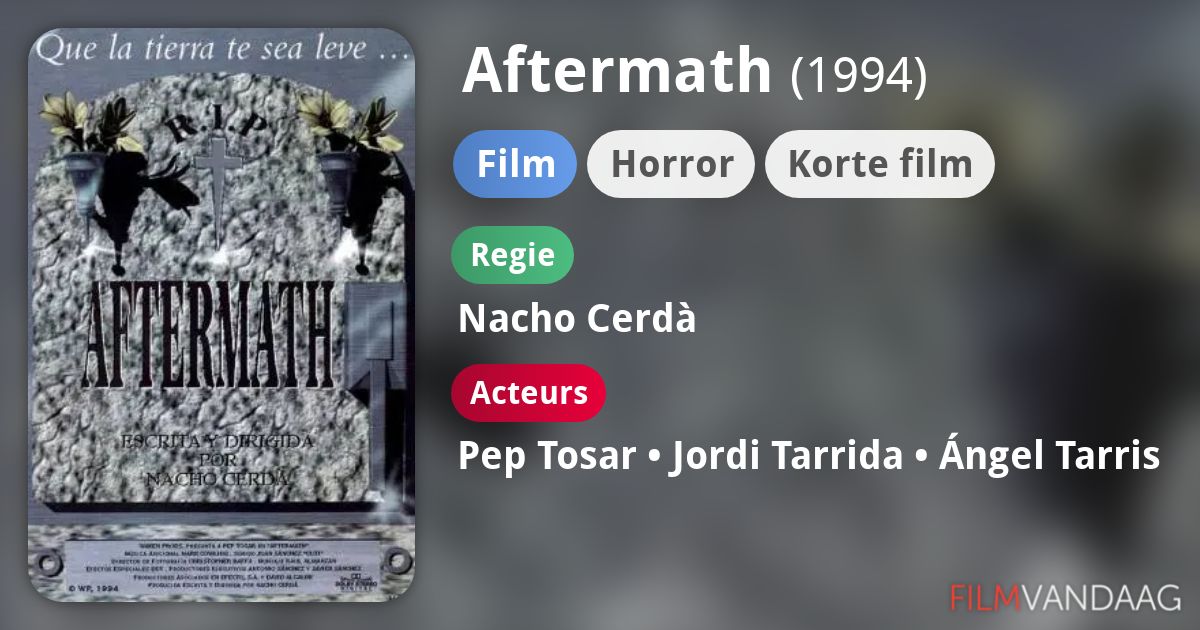
Directed by Nacho Cerdà, the 1994 Spanish short horror film Aftermath (Después de la muerte) is a deeply unsettling and uncompromising exploration of mortality, forensic pathology, and the taboo surrounding bodily desecration, cementing a dark and influential legacy in extreme underground cinema.
Understanding the Context and Origin of the 1994 Short Film
The 1994 short film Aftermath emerged from the Spanish independent cinema scene during a period when underground filmmakers were pushing the boundaries of what could be shown on screen. Written, directed, and edited by Nacho Cerdà, the film operates entirely without dialogue, relying on stark visuals, an oppressive sound design, and an uncompromising atmosphere to convey its subject matter. The narrative follows a forensic examiner who performs an unauthorized and deeply disturbing autopsy on a recently deceased young woman, played against the backdrop of a sterile, fluorescent-lit morgue.
Nacho Cerdà conceived the project as the first installment of an intended "Trilogía de la Muerte" (Trilogy of Death), which later included the short film Génesis (1998) and was intended to conclude with a feature-length project. Aftermath was not designed to be a traditional mainstream horror picture filled with jump scares or supernatural entities. Instead, it positioned itself within the realm of transgressive art and anatomical realism. By focusing intensely on the clinical, mechanical reality of post-mortem examination, Cerdà forced audiences to confront the physical finality of human existence. This uncompromising approach immediately drew both severe censorship and high praise from critics of underground cinema, establishing the film as a watershed moment for extreme filmmaking.
Technical Execution and Cinematic Language in Aftermath
The power of Aftermath lies heavily in its technical craftsmanship, particularly its cinematography, lighting, and sound design. Shot on 35mm film, Cerdà and cinematographer Joan Benet utilized a cold, desaturated color palette that emphasizes the clinical environment of the morgue. Every frame is meticulously composed, balancing the harsh, fluorescent overhead lighting with deep, impenetrable shadows. This visual style mirrors the emotional detachment required by the profession while heightening the spectator's sense of intrusion and discomfort.
Sound design functions as a critical narrative driver in the absence of spoken dialogue. The audio landscape is filled with amplified, hyper-realistic ambient noises: the hum of fluorescent lights, the metallic clink of surgical instruments, and the visceral, anatomical sounds associated with the forensic procedure. This deliberate auditory focus forces the audience into an intimate, suffocating proximity with the events on screen.
The editing pacing is deliberate and unhurried. Cerdà refuses to look away from procedures that standard commercial cinema typically obscures or glosses over with quick cuts. This deliberate withholding of cinematic escape routes compels viewers to process the material reality of death without narrative distraction. The technical precision of the production elevated Aftermath above standard shock cinema, earning it recognition from film festivals and critics who appreciated its formal discipline.
Reception, Censorship, and the Underground Distribution Network
Upon its release in 1994, Aftermath ignited immediate controversy and divided critical opinion across international film festivals. Due to its depiction of explicit necrophilic acts and graphic forensic procedures, the film faced severe censorship hurdles, bans, and classification restrictions in numerous jurisdictions. Authorities and mainstream distribution networks categorized the short as obscene or harmful, leading to difficulties in public exhibition and forcing the film into the underground circuit.
Despite official resistance, or perhaps because of it, Aftermath circulated rapidly through illicit VHS trading networks, specialized horror fanzines, and international alternative film festivals dedicated to transgressive cinema. This underground distribution model fostered a cult following among enthusiasts of extreme and boundary-pushing cinema.
| Feature Category | Aftermath (1994) Attributes | Mainstream Horror Equivalents |
|---|---|---|
| Dialogue | Completely silent (zero dialogue) | Heavy exposition and character banter |
| Pacing | Deliberate, clinical, and unhurried | Rapid editing, frequent jump scares |
| Tone | Objective, oppressive, anatomical | Narrative-driven, suspenseful, emotive |
| Distribution | Underground festivals, bootleg VHS | Wide theatrical release, streaming platforms |
| Censorship Status | Banned or heavily restricted globally | Standard age-rating classifications |
The film's notoriety grew as underground film critics and academic researchers analyzed its artistic merits and transgressive themes. Rather than fading into obscurity as a mere shock piece, Aftermath became a frequently cited reference point in discussions regarding censorship, freedom of artistic expression, and the boundaries of cinematic representation.
The Cultural Legacy and Influence on Extreme Cinema
The legacy of Aftermath extends far beyond its modest running time of approximately thirty minutes. It served as a foundational text for the "New French Extremity" movement and various extreme horror subgenres that emerged in the late 1990s and 2000s. Filmmakers seeking to evoke genuine dread through realism, lack of dialogue, and uncompromising visual honesty often pointed to Cerdà’s work as a primary inspiration.
Furthermore, the film's influence can be observed in the aesthetic choices of subsequent underground projects that rejected Hollywood conventions in favor of visceral, art-house brutality. By treating taboo subjects with technical seriousness rather than campy exploitation, Aftermath helped legitimize extreme horror as a valid arena for philosophical and existential exploration. Scholars of film theory continue to examine the short for how it confronts the ultimate human anxiety—mortality—by stripping away the comforting illusions of narrative closure and treating the human body as a transient physical object.
Navigating the Film Today: Preservation and Viewing Challenges
For contemporary film historians, archivists, and dedicated cinephiles, accessing Aftermath presents unique challenges due to its complex copyright history, explicit content, and limited official physical media releases. Unlike mainstream films that enjoy wide digital availability, Nacho Cerdà’s short remains a specialized artifact preserved primarily through rare DVD releases, retrospective festival screenings, and specialized academic archives.
Viewers approaching the film today must do so with an understanding of its historical context and explicit nature. It is not an entertainment product intended for casual viewing; rather, it functions as an uncompromising artistic statement on mortality and bodily vulnerability. Institutional film studies programs and archives often utilize the film to teach lessons regarding censorship laws, international film distribution in the pre-digital era, and the evolution of avant-garde horror aesthetics. Those seeking to study the work must frequently rely on curated retrospectives or specialized physical media collections that respect the director's original vision and framing.
Frequently Asked Questions
What is the plot of the 1994 short film Aftermath?
The film follows a forensic pathologist working in a quiet morgue who performs an unauthorized and deeply transgressive procedure on the body of a recently deceased young woman. It contains no dialogue and proceeds with a clinical, detached focus on the environment and the actions of the examiner.
Why did Aftermath face severe censorship upon release?
Authorities and classification boards restricted the film due to its graphic depiction of forensic procedures and implicit necrophilia. Its uncompromising visual honesty and refusal to sanitize or sensationalize taboo subject matter led to bans in multiple territories and relegated its distribution to underground circuits.
Is Aftermath available on mainstream streaming platforms?
No, the film is generally unavailable on mainstream subscription streaming services due to its explicit content, legal status in various regions, and underground distribution history. It is typically accessed via rare physical media editions, specialized film festivals, or academic archives.
Who directed Aftermath, and what are his other notable works?
The film was written, directed, and edited by Spanish filmmaker Nacho Cerdà. He is also known for his subsequent short film Génesis (1998) and his 2006 feature-length directorial debut, The Abandoned.
How did Aftermath influence modern horror cinema?
The film anticipated and influenced the "New French Extremity" movement and various extreme underground horror subgenres by proving that silence, high technical production value, and uncompromising realism could generate profound psychological unease.
Ensuring Proper Context for Research and Archival Study
Researchers, film students, and horror historians examining Aftermath must maintain a clear distinction between artistic provocation and narrative storytelling. To properly engage with the film's legacy, verify festival catalogs, academic papers on cinematic censorship, and interviews with Nacho Cerdà regarding his original artistic intentions. Avoid relying on unverified internet summaries that mischaracterize the film's structure or intent. Prioritize documented accounts of its production and reception to understand its genuine impact on extreme international cinema.