The landscape of ultra-high-net-worth individuals on the African continent is shaped by industrial conglomerates, telecommunications expansion, commodity extraction, and strategic financial investments. Tracking the wealth of African billionaires requires examining publicly traded equity values, private enterprise valuations, and fluctuating market capitalizations across major bourses such as the Johannesburg Stock Exchange, the Nigerian Exchange Group, and international markets. Understanding these fortunes offers crucial insight into broader macroeconomic trends, capital allocation patterns, and the shifting locus of economic power across the region.
The Economic Context of African Billionaire Wealth
Evaluating the fortunes of the wealthiest individuals in Africa demands an appreciation of the structural dynamics governing emerging and frontier markets. Unlike ultra-high-net-worth brackets in North America or Western Europe, where wealth is heavily diversified across mature technology ecosystems and expansive venture capital networks, African billionaire wealth is frequently concentrated in foundational infrastructure sectors. Cement manufacturing, food processing, oil refining, sugar production, and mobile telephony form the bedrock of these massive enterprise valuations.
Currency volatility plays a decisive role in net worth fluctuations across the continent. Because global financial trackers measure fortunes in United States dollars, sharp devaluations in regional currencies—such as the Nigerian Naira, the Egyptian Pound, or the South African Rand—can significantly alter an individual's reported dollar-denominated wealth even when domestic market capitalization remains stable. Furthermore, regulatory environments, capital controls, and cross-border trade agreements heavily influence how these industrial empires expand, consolidate, and generate liquidity.
Methodology Behind Net Worth Valuations
Determining the net worth of top billionaires involves rigorous financial analysis, public filings examination, and asset verification. Financial journalists and wealth intelligence organizations, most notably Forbes and Bloomberg, employ standardized methodologies to estimate these fortunes. Publicly traded shares are valued using real-time stock exchange data and specific share-count registries. Privately held companies are assessed by applying prevailing price-to-earnings or price-to-sales ratios of comparable publicly traded peers, adjusted for liquidity discounts and operational scale.
Estimating these vast fortunes also requires accounting for liabilities, debt obligations, and complex holding structures. Many African billionaires operate through multi-layered corporate vehicles, family trusts, and cross-holding arrangements that shield operational assets while facilitating regional expansion. Analysts deduct estimated debt burdens, pledge arrangements, and personal expenditures from gross asset values to arrive at conservative net worth figures. Real estate holdings, private art collections, and luxury assets are factored in where verifiable public records or credible appraisals exist.
Comparative Overview of Top African Billionaires
The following table summarizes the primary metrics, primary wealth sources, and geographic bases of the leading billionaires on the African continent, reflecting historical data benchmarks.
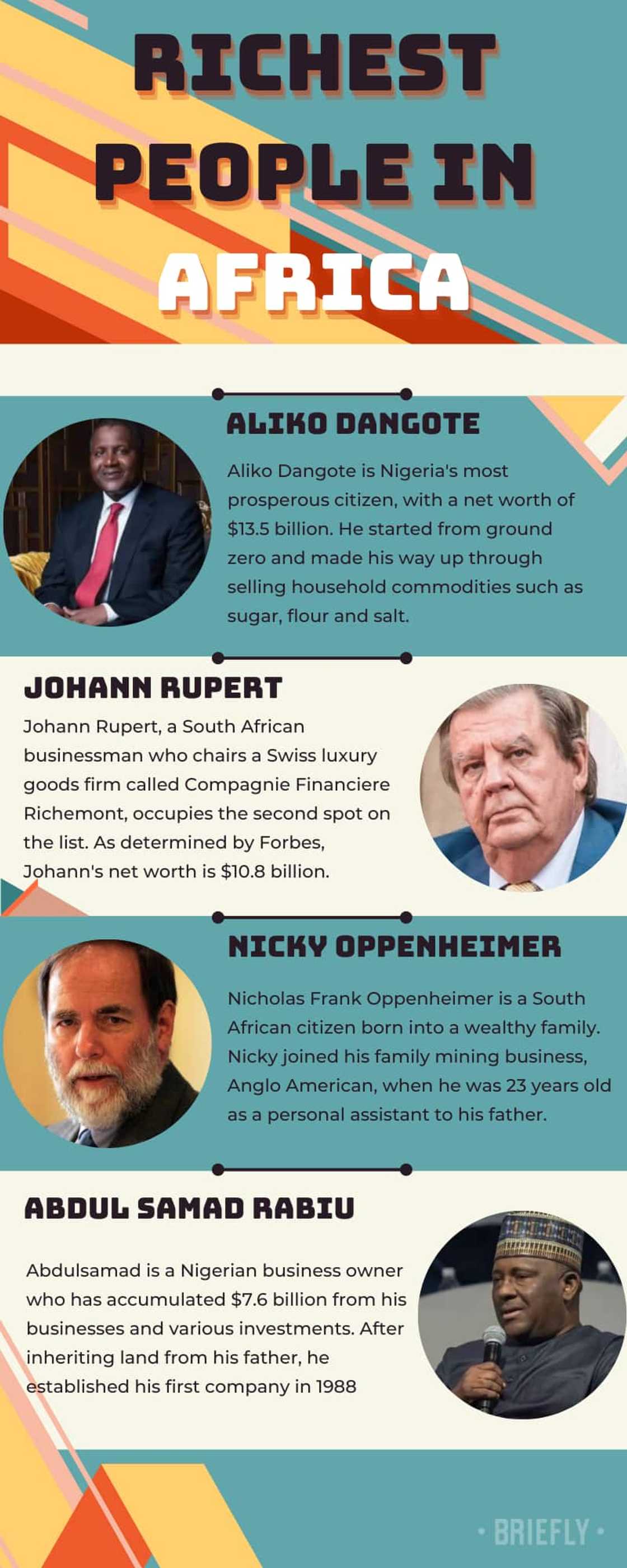
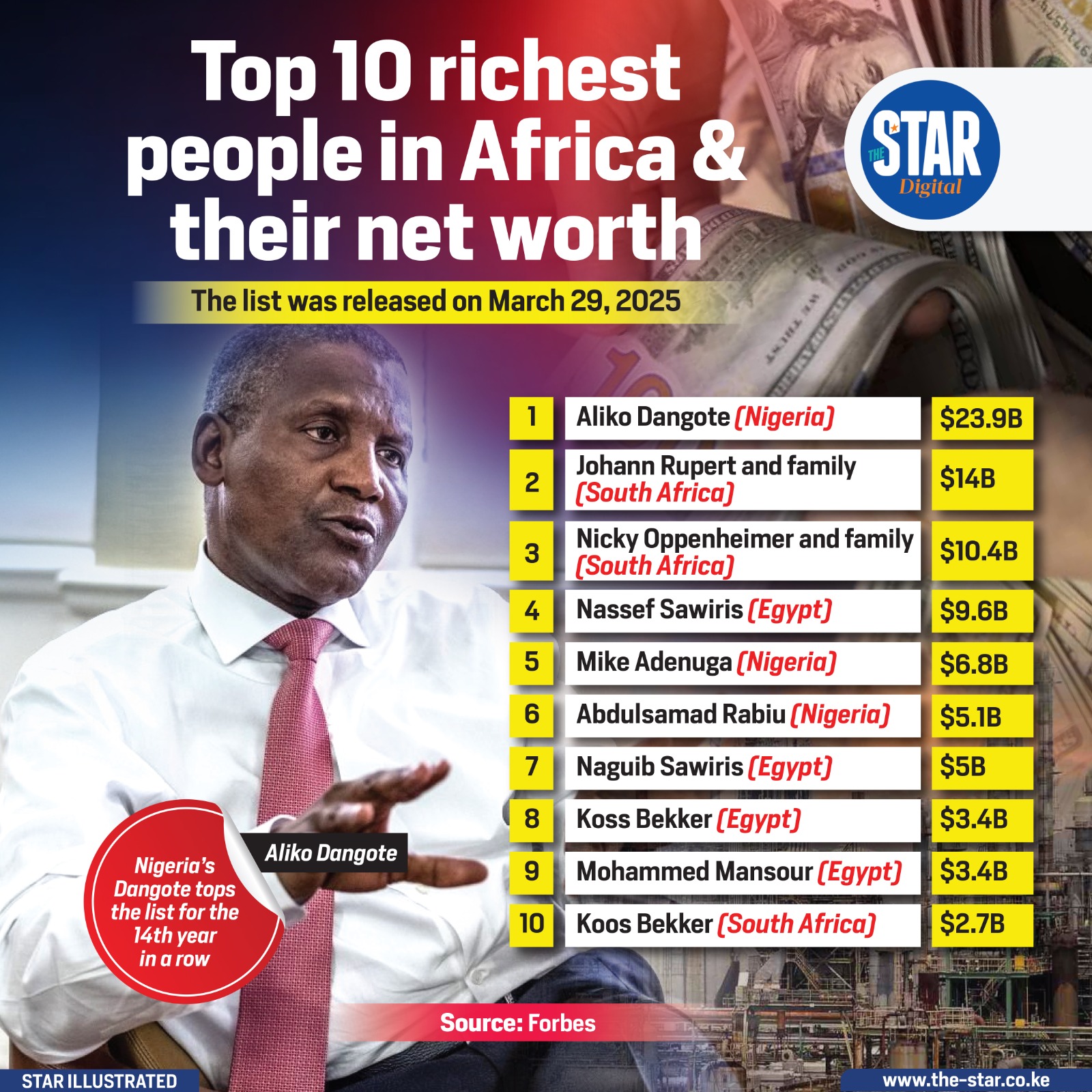
| Name | Estimated Net Worth | Primary Wealth Source | Country of Residence | Flagship Enterprise |
|---|---|---|---|---|
| Aliko Dangote | $13.9 Billion | Cement, Sugar, Oil Refining | Nigeria | Dangote Group |
| Johann Rupert | $12.2 Billion | Luxury Goods | South Africa | Richemont |
| Nicky Oppenheimer | $9.4 Billion | Diamonds, Investments | South Africa | De Beers / Oppenheimer Generations |
| Nassef Sawiris | $8.8 Billion | Construction, Fertilizer | Egypt | OCI N.V. / Orascom Construction |
| Issad Rebrab | $2.5 Billion | Food Conglomerate | Algeria | Cevital |
| Patrice Motsepe | $2.7 Billion | Mining | South Africa | African Rainbow Minerals |
Key Sectors Driving African Wealth Creation
Industrialization and resource monetization remain the twin engines propelling the continent's largest fortunes. A detailed examination of the sectors represented among top billionaires reveals specific pathways to massive capital accumulation.
Industrial Manufacturing and Infrastructure
Heavy industry, particularly cement production and construction materials, has generated some of the most resilient fortunes in Africa. The immense demand for urbanization, road construction, and housing development across sub-Saharan Africa creates sustained operational scale for dominant regional producers. Manufacturing tycoons who successfully verticalize their supply chains—controlling everything from limestone quarries and packaging plants to proprietary transport fleets—achieve formidable operational margins that insulate them against regional economic shocks.
Luxury Goods and Diversified Holdings
South Africa's distinct economic maturity has fostered wealth rooted in global luxury goods conglomerates and multi-industry investment holding companies. Entrepreneurs operating in this segment often derive their revenues from international markets, shielding their enterprises from domestic currency fluctuations. These holdings span financial services, industrial agriculture, paper and packaging, and high-end retail brands distributed across global consumer markets.
Telecommunications and Technology Infrastructure
The rapid expansion of mobile telecommunications infrastructure across the continent has transformed consumer habits and unlocked significant entrepreneurial wealth. Billionaires who capitalized on the early deregulation of national telecom sectors built extensive mobile network footprints, mobile financial services platforms, and fiber-optic data backbones. This digital infrastructure underpins modern commerce across West, East, and Southern Africa, establishing recurring revenue models that rival traditional commodity exports.
Regulatory and Economic Challenges Facing African Fortunes
Maintaining and expanding ultra-high-net-worth status within emerging markets presents distinct operational hurdles. Regulatory compliance across multiple jurisdictions requires sophisticated legal and corporate governance frameworks. Billionaires operating pan-African enterprises must navigate disparate tax codes, foreign exchange restrictions, and shifting trade policies implemented by regional economic communities such as the Economic Community of West African States or the Southern African Development Community.
Infrastructure deficits, including unreliable electrical grids and logistical bottlenecks in maritime ports and rail networks, also impose higher operational expenditures on large-scale industrial enterprises. Consequently, successful wealth preservation strategies frequently involve significant investments in captive power generation, private logistics fleets, and strategic lobbying to secure favorable industrial policies that support domestic manufacturing and export growth.
Frequently Asked Questions
Who is the richest man in Africa?
Aliko Dangote is widely recognized as the richest man in Africa, deriving the vast majority of his fortune from cement manufacturing, sugar processing, and large-scale petroleum refining through the Dangote Group.
How is billionaire net worth calculated?
Net worth is calculated by aggregating the total value of publicly traded stock holdings, private company valuations, real estate, cash, and other liquid assets, then subtracting known liabilities, personal debt, and encumbrances.
Why do African billionaire net worth figures fluctuate frequently?
Net worth figures fluctuate due to daily changes in global stock market prices, volatile exchange rates against the United States dollar, and localized economic conditions affecting the valuation of private industrial holdings.
What industries generate the most wealth in Africa?
Cement manufacturing, telecommunications, luxury goods, mining, construction, and diversified agro-industrial processing are the primary industries generating the largest fortunes on the African continent.
Are African billionaires expanding their investments outside the continent?
Many prominent African billionaires actively diversify their portfolios by acquiring international assets, investing in European and North American financial markets, and establishing global operational subsidiaries to hedge against regional risks.
Strategic Wealth Management and Philanthropy
As African fortunes mature, a notable transition toward institutionalized philanthropy and structured legacy planning is reshaping the billionaire landscape. Leading industrialists and financiers increasingly establish private foundations focused on public health, education, agricultural development, and entrepreneurial empowerment across the continent. This shift not only addresses pressing socio-economic challenges but also provides formalized governance structures for managing intergenerational wealth transfer, ensuring that large-scale industrial enterprises endure beyond the founding generation.