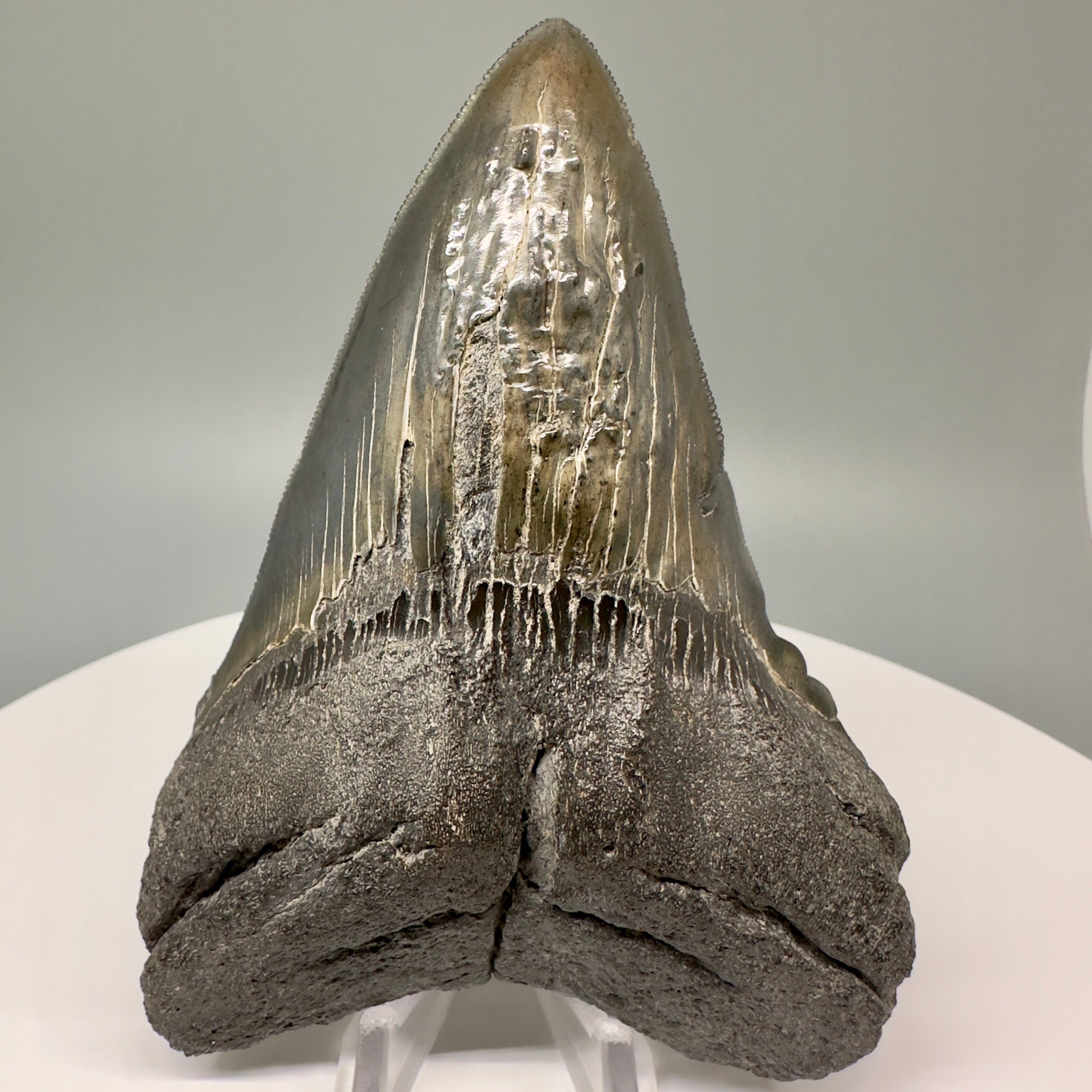
Finding affordable Megalodon teeth for sale online requires balancing size, condition, and provenance. In 2026, authentic teeth under four inches or those with minor enamel wear offer the best value, typically ranging from $30 to $150. Buyers should prioritize reputable specialized dealers over general marketplaces to ensure authenticity and avoid undisclosed restorations.
The Otodus megalodon remains the most iconic prehistoric predator to have ever swam the oceans. For many fossil enthusiasts, owning a piece of this apex predator's history is a bucket-list goal. However, as the market for "investment-grade" fossils has surged, many newcomers worry that these ancient relics are becoming priced out of reach. The good news is that "affordable" does not have to mean "fake." By understanding the variables that drive the market value of shark fossils, you can acquire a genuine Megalodon tooth without a museum-sized budget.
Understanding the Factors of Megalodon Tooth Valuation
In the fossil market of 2026, the price of a Megalodon tooth is determined by a specific set of criteria. To find an affordable specimen, you must decide which of these factors you are willing to compromise on.
Size: The Exponential Price Driver
Size is measured along the longest diagonal, from the tip of the crown to the furthest corner of the root. In the world of Megalodon collecting, every half-inch adds significant cost.
- Small (2–3 inches): These are the most affordable. They often come from juvenile Megalodons or smaller adults.
- Medium (3–4.5 inches): This is the "sweet spot" for most collectors. These teeth are large enough to be impressive but common enough to be priced moderately.
- Large (5+ inches): Prices begin to climb steeply here. A 6-inch tooth is significantly rarer than a 5-inch tooth and is priced accordingly.
Condition and "The Five Pillars"
Aside from size, five physical attributes dictate the price:
- Enamel: Is the enamel smooth and shiny, or is it "hydrated" and peeling? Affordable teeth often have some "feeding wear" or peeling.
- Serrations: Sharp, "saw-like" edges command a premium. Teeth with worn or "river-rolled" edges are much more budget-friendly.
- The Tip: A sharp, needle-like tip is rare. Specimens with a blunted or fed-on tip are significantly cheaper.
- The Bourlette: This is the chevron-shaped scar between the enamel and the root. A dark, complete bourlette is a hallmark of high-quality teeth.
- The Root: Many affordable teeth have cracked or partially missing roots. Since the root is bone-like and more porous than the enamel, it often suffers the most damage over millions of years.
Where to Buy Genuine Shark Fossils Online in 2026
The digital landscape for fossil sales has matured significantly. While general auction sites remain popular, specialized vendors offer better security for novice buyers.
Specialized Fossil Dealers
Dedicated paleontology websites are usually the safest bet. These dealers often hunt the fossils themselves or buy directly from divers in the "Megalodon Alley" regions of South Carolina, North Carolina, and Georgia. Because they have a reputation to maintain within the scientific community, they are less likely to sell "franken-teeth" (composite fossils made of multiple pieces).
Auction Sites and Marketplaces
Sites like eBay or Etsy can yield bargains, but they require a "buyer beware" mindset. In 2026, AI-generated listings and dropshipping have made it easier for unscrupulous sellers to hide the flaws of a fossil. Always check the seller’s history and look for "No Restoration" in the description. If a deal seems too good to be true for a 6-inch, pristine tooth, it almost certainly is.
Social Media Collector Groups
Facebook and Instagram have robust communities of divers and "dirt-kickers" who sell directly to the public. Buying from a diver who just pulled the tooth from the Cooper River can save you the "middleman" markup found in retail shops. However, these transactions often lack the return policies of established businesses.
Identifying Fakes, Restorations, and Enhancements
As the demand for affordable Megalodon teeth grows, so does the prevalence of modified specimens. It is vital to distinguish between a "raw" fossil and a "restored" one.
Restoration involves using epoxy, auto-body filler (like Bondo), and paint to recreate missing parts of the tooth—usually the root or the tip. While a restored tooth can look beautiful on a shelf, its market value is a fraction of a natural tooth.
- The "Black Light" Test: In many cases, a UV light will reveal restoration. Genuine enamel and ancient roots fluoresce differently than modern resins and glues.
- Heat Test: A hot needle touched to a suspect area of the root will often produce the smell of burning plastic if it has been restored with epoxy.
- Symmetry Check: Nature is rarely perfect. If a tooth is perfectly symmetrical and the color is too uniform across the root and crown, it may be a cast or heavily painted.
Casts and Reproductions are also common. These are resin or plaster molds of real teeth. While great for educational purposes, they should be clearly labeled as "replications." If you are looking for a genuine fossil, ensure the listing specifies the item is "100% natural."
Legal and Ethical Considerations for Buyers
The trade of Megalodon fossils is generally legal in the United States, as they are considered "invertebrate" fossils (despite sharks being vertebrates, their teeth are often classified under similar rules for hobbyist collecting in some jurisdictions) or are found on private land/navigable waterways. However, there are rules you should be aware of:
- State Laws: In South Carolina, for instance, a hobby diver needs a "Stewardship License" to legally collect fossils from submerged lands. Reputable sellers should be able to confirm their fossils were obtained legally.
- International Trade: If you are buying from overseas (e.g., Indonesia or Morocco), be aware of CITES regulations and import duties. Most shark fossils do not fall under CITES, but customs paperwork must be accurate to avoid seizure.
- Land Ownership: Fossils found on federal land (National Parks) are illegal to sell or own. Ensure your seller sources their teeth from private land or state-permitted diving zones.
2026 Price Comparison Table: Megalodon Teeth
The following table reflects the average market prices for natural, unrestored Megalodon teeth in 2026 based on common size and condition tiers.
| Size Range | Condition Grade | Average Price (USD) | Characteristics |
|---|---|---|---|
| 2.0" - 3.0" | Good / Collector | $35 - $70 | Minor root chips, decent enamel, clear serrations. |
| 3.1" - 4.0" | Budget / Commercial | $75 - $130 | Significant feeding wear, worn serrations, or partial root. |
| 3.1" - 4.0" | Choice / High Grade | $180 - $350 | Sharp serrations, intact tip, 90%+ enamel coverage. |
| 4.1" - 5.0" | Average / River Worn | $250 - $550 | Dark "river" patina, some "hydration" cracks, stable root. |
| 5.1" - 5.9" | Any Condition | $600 - $2,500 | Rare size; prices vary wildly based on enamel quality. |
| 6.0" + | Museum Quality | $4,500+ | Investment grade; usually sold via high-end galleries. |
Tips for First-Time Buyers Online
If you are ready to make your first purchase, follow these steps to ensure you get the best value for your money:
- Ask for "Dry" Photos: Many sellers photograph teeth while they are wet to make the enamel look shinier than it actually is. Ask for a photo of the tooth completely dry.
- Compare the "Bourlette": A tooth with a high-contrast bourlette (the area between the root and the blade) is often more desirable. Even in affordable teeth, a clear bourlette adds character.
- Check the Serrations under Magnification: If the seller provides close-up photos, look for "nicks." These occur when the shark struck bone millions of years ago. These "battle scars" can actually make a cheaper, worn tooth more interesting than a pristine one.
- Verify the Location: Teeth from different locations have different colors. "Lee Creek" teeth from North Carolina are often lighter and cream-colored, while "Cooper River" teeth from South Carolina are often dark black or charcoal due to phosphate mineralization.
Frequently Asked Questions
Is it legal to buy Megalodon teeth online?
Yes, it is perfectly legal to buy and sell Megalodon teeth in most countries, including the United States. Unlike modern ivory or certain endangered species' parts, Megalodon teeth are fossils of an extinct species. However, always ensure the seller complies with local "paleontological resources" laws, particularly if the fossils were found on state-owned submerged lands.
Why are some Megalodon teeth so much cheaper than others?
The price disparity is almost entirely due to condition and size. A tooth that was tumbled in a river for millions of years will lose its sharp edges and enamel, making it a "budget" tooth. Conversely, a tooth that was quickly buried in sediment and preserved with razor-sharp serrations is a rarity, commanding a premium price.
Do Megalodon teeth come with a Certificate of Authenticity (COA)?
While many sellers provide a COA, they are not a legal guarantee of authenticity. In the fossil world, a COA is only as good as the reputation of the person who signed it. It is better to rely on high-resolution photos and the seller's return policy than a printed piece of paper.
How can I tell if a tooth has been repaired or restored?
Look for areas where the texture changes abruptly. Natural bone and enamel have specific porous or glossy textures. If you see a section that looks unusually smooth or has a "matte" paint finish, it is likely a repair. Running a fingernail across the surface can also help; you will feel a "catch" at the seam where the filler meets the natural fossil.
What is the best way to display an affordable Megalodon tooth?
To keep your fossil safe, use a "caliper stand" or a custom-fitted acrylic stand. Avoid using adhesives or "tack" to hold the tooth in place, as the chemicals can eventually stain the porous root. For smaller, affordable teeth, "floating frame" display boxes (using flexible membranes) are an excellent and inexpensive way to show both sides of the tooth.
Your Next Steps: Building a Collection
Acquiring your first Megalodon tooth is often just the beginning. To find the best affordable deals, start by joining online forums and following reputable divers on social media to see "fresh off the boat" finds. By focusing on teeth in the 3-inch range with minor natural wear, you can build a significant collection of prehistoric history without overspending. Remember that every chip and scratch on a $50 tooth is a testament to a real-world struggle that occurred millions of years ago—making even the most "imperfect" fossil a priceless link to the ancient deep.