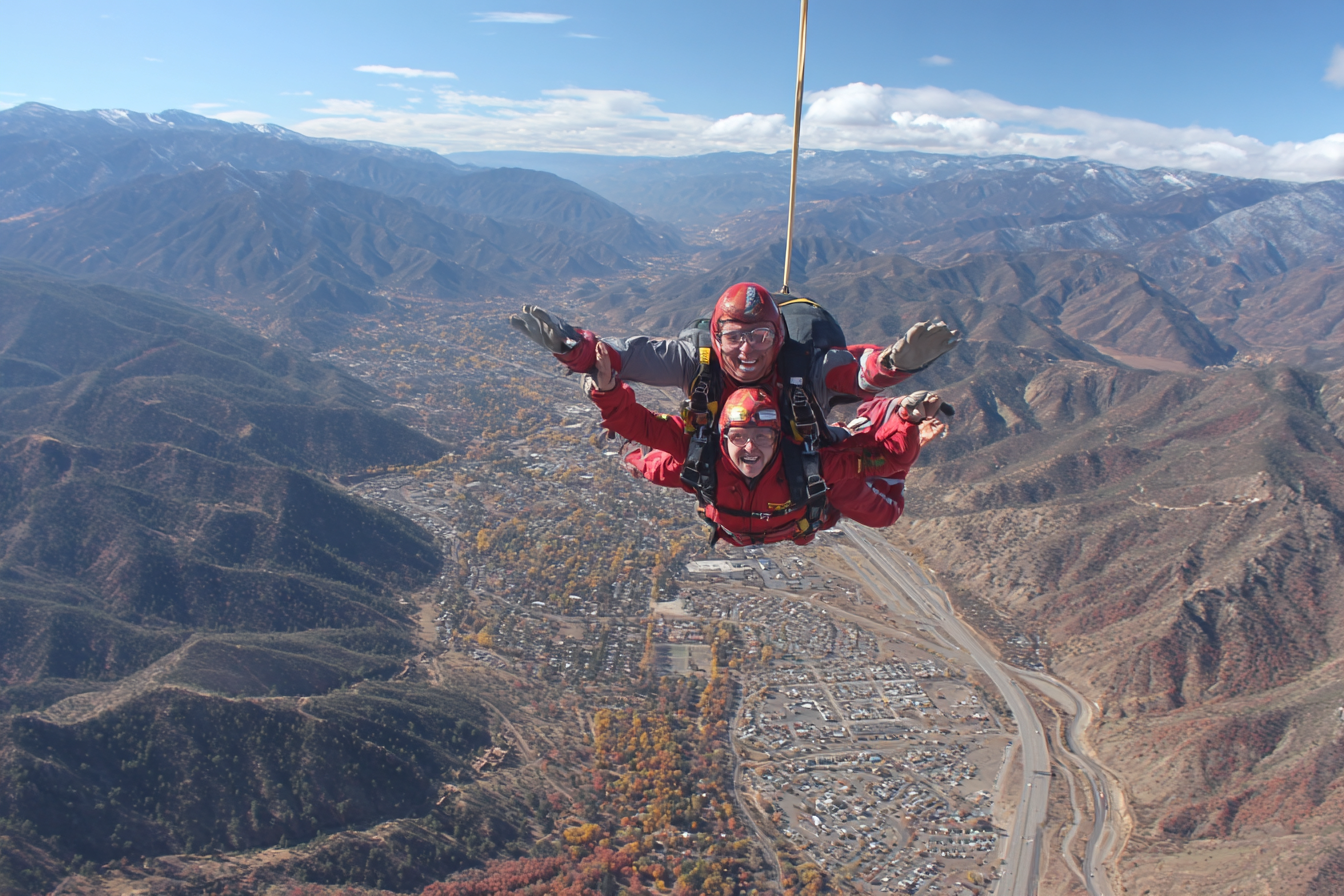
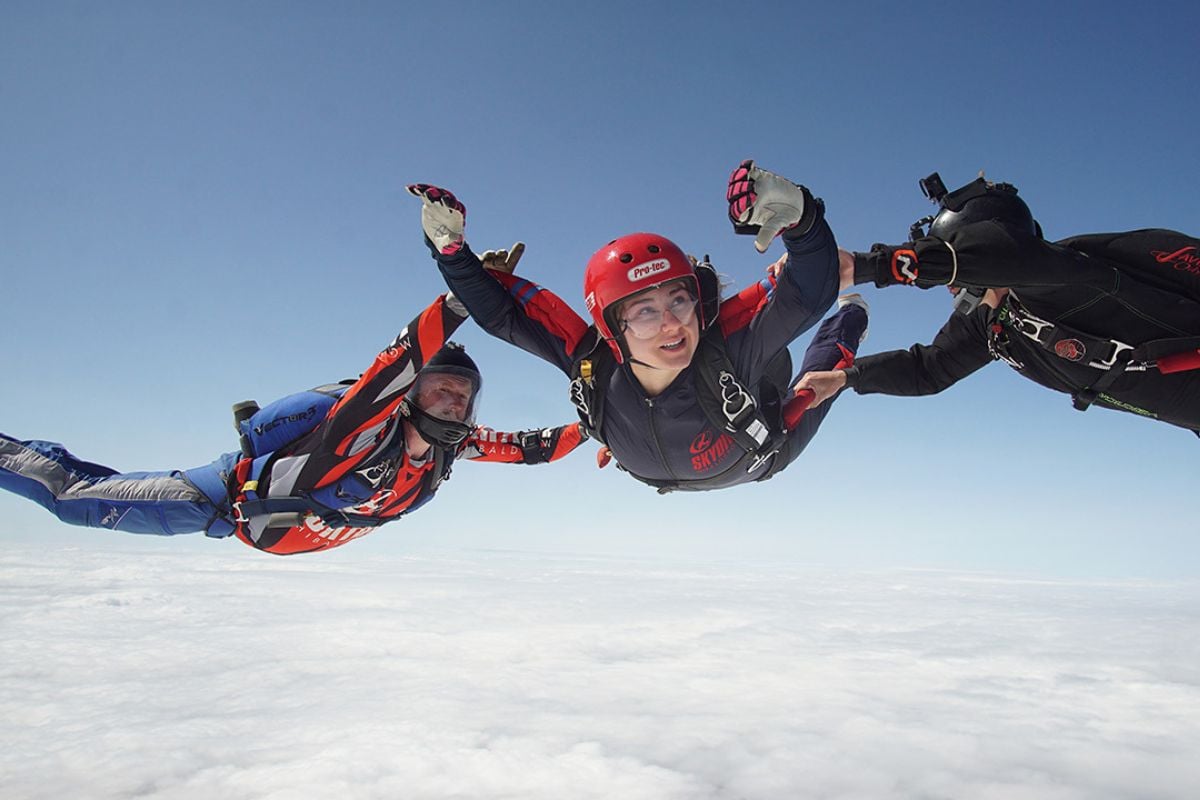
Accelerated Freefall (AFF) is an intensive skydiving program designed to train individuals for solo flight. Unlike tandem skydiving, students wear their own parachute systems from jump one, progressing through seven or eight structured levels under the direct supervision of certified instructors to achieve their United States Parachute Association (USPA) A-license and full skydiving autonomy.
Understanding the Foundation of AFF Training
Accelerated Freefall, commonly referred to as AFF training, is the most recognized and efficient method globally for learning how to skydive solo. Developed to bypass the older "Static Line" method—where a cord automatically deploys the parachute—AFF puts the student in control of their own Ripcord or Pilot Chute from the very beginning. As we move through 2026, the program remains the gold standard for safety and technical proficiency, adhering to the Integrated Student Program (ISP) guidelines established by the United States Parachute Association (USPA).
The "Accelerated" part of the name refers to the rapid progression into freefall. In traditional methods, students might spend weeks practicing short falls. In AFF, you jump from full altitude—typically 10,000 to 14,000 feet—on your first jump. While you are accompanied by two instructors who hold onto your harness during the initial levels, you are the one flying the parachute. This method forces a high level of sensory awareness and rapid skill acquisition, making it the preferred route for those serious about the sport.
The ultimate goal of the AFF program is to move the student through a series of "Target Learning Objectives" (TLOs). Each jump is a lesson that must be mastered before proceeding. By the time a student completes the seven or eight levels of AFF, they are cleared to jump solo without instructor supervision, although they remain in "student status" until they complete the full 25 jumps required for an A-license.
Eligibility and Physical Prerequisites for Students
Before enrolling in an AFF program, candidates must meet specific criteria that ensure both their safety and the safety of the instructors. While skydiving is an inclusive sport, the physical demands of high-speed freefall and canopy landing require a baseline of health and awareness.
Age and Legal Requirements: In the United States and many other jurisdictions in 2026, the minimum age to begin AFF training is 18. Some dropzones may allow younger participants with parental consent and specific waivers, but 18 remains the industry standard for solo certification programs. There is no maximum age, provided the individual is in good physical health.
Weight Limitations: Most flight schools have a weight limit, typically ranging between 220 and 240 pounds. This is not an arbitrary number but is dictated by the structural limits of the student parachute systems and the safety margins required for two instructors to maintain a grip on the student during freefall. In 2026, specialized "heavy-duty" gear is more common, but students near the limit should consult with their Dropzone (DZ) specifically.
Physical Fitness and Health: You do not need to be an elite athlete, but you do need core strength and flexibility. The "arch" position—the stable belly-to-earth position—requires a reasonable degree of back flexibility. Furthermore, individuals with a history of heart conditions, severe epilepsy, or significant shoulder dislocations should seek medical clearance. Sinus health is also critical, as the rapid pressure changes during a 120-mph descent can cause "ear blocks" or sinus pain if you are congested.
The Ground School Experience: What to Expect Before the First Jump
Every AFF journey begins with Ground School. In 2026, many flight centers offer a hybrid approach, combining digital modules or VR simulations with 4 to 8 hours of intensive in-person classroom instruction. This session is designed to demystify the mechanics of flight and prepare you for the "what-ifs" of skydiving.
The curriculum is divided into three primary segments:
- Freefall Mechanics: You will learn the "Box Man" position. This involves arching your hips toward the earth, keeping your legs slightly out, and your arms at 90-degree angles. This position uses air resistance to keep you stable.
- Canopy Control: Once the parachute is open, you become a pilot. Ground school teaches you how to steer using toggles, how to check the "traffic pattern" at the landing zone, and how to execute a flared landing to touch down softly.
- Emergency Procedures (EPs): This is the most critical part of training. You will practice the muscle memory for "Cut-Away" and "Reserve Deployment." If the main parachute malfunctions, students are trained to identify the problem and execute the reserve sequence within seconds.
By the end of the ground school, you will undergo a written or oral exam and a physical rehearsal of the jump flow. Only when the instructor is confident in your reactions will you be cleared to board the aircraft for Level 1.
Detailed Breakdown of the AFF Levels (1 through 7)
The AFF program is structured as a staircase of skills. While different schools may have slight variations, the USPA-standardized levels generally follow this progression.
Levels 1 to 3: The "Harness Hold" Phase
During these first three jumps, you are accompanied by two instructors who maintain a firm grip on your harness. Their role is to stabilize you if you wobble and to provide hand signals to correct your body position.
- Level 1: Focuses on altitude awareness (checking your altimeter) and "practice pulls" to ensure you can reach your deployment handle.
- Level 2: Introduces basic turns and forward movement while maintaining a stable arch.
- Level 3: The "Release" jump. Once you are stable, the instructors will let go of your harness, allowing you to fly completely solo for the first time in freefall, though they remain inches away to dock back if needed.
Levels 4 to 5: Single Instructor and Maneuvers
Now that you have proven stability, you move to a single instructor.
- Level 4: You learn 90-degree and 180-degree controlled turns.
- Level 5: Focuses on 360-degree turns and "tracking"—the ability to move horizontally across the sky by tilting your body.
Levels 6 to 7: Aerobics and Recovery
These levels test your ability to recover from instability and perform more complex moves.
- Level 6: You will perform a "backloop" and a "tracking" sequence. This level is vital because it proves you can regain a belly-to-earth position if you find yourself tumbling.
- Level 7: This is often the "Graduation Jump." It combines all skills: a solo exit, 360-degree turns, backloops, and a high-speed track, followed by a solo parachute deployment.
| Level | Primary Objective | Instructor Support | Key Maneuver |
|---|---|---|---|
| 1 | Altitude Awareness | 2 Instructors | Practice Ripcord Pulls |
| 2 | Body Flight Basics | 2 Instructors | Leg Awareness & Arching |
| 3 | Hover Control | 2 Instructors | Total Release Stability |
| 4 | Directional Control | 1 Instructor | 90° & 180° Turns |
| 5 | Heading Maintenance | 1 Instructor | 360° Turns |
| 6 | Unstable Recovery | 1 Instructor | Backloops & Tracking |
| 7 | Full Proficiency | 1 Instructor | Solo Exit & Sequencing |
Essential Equipment and Safety Technology in 2026
Modern AFF training benefits from advanced safety technology that has significantly lowered the incident rates in student skydiving. Every student rig is equipped with a Dual Parachute System, consisting of a "Main" canopy and a "Reserve" canopy.
In 2026, the most critical piece of safety tech is the Automatic Activation Device (AAD). This is a small computer inside the parachute container that monitors altitude and falling speed. If a student fails to deploy their parachute and is still in freefall at a dangerously low altitude (typically around 750–1,000 feet), the AAD will automatically fire a cutter to release the reserve parachute.
Additionally, students use Visual and Audible Altimeters. While the wrist-mounted visual altimeter is the primary tool for checking height, many schools now provide audible altimeters inside the helmet that beep at specific altitudes (e.g., "Check Alt," "Deploy," and "Emergency Altitude"). This provides a redundant layer of awareness during the high-stress environment of early jumps.
Financial Investment: Costs and Certification Packages
Pursuing AFF training is a significant financial commitment. As of 2026, prices vary by region and the specific amenities of the dropzone, but the following represents the industry average.
Pay-Per-Jump vs. Packages: Most students choose between paying for each level individually or purchasing a "Package Deal."
- Individual Jumps: Level 1 usually costs between $300 and $400 because it includes the 6-hour ground school and two instructors. Subsequent levels (2-7) typically cost between $200 and $280 each.
- Full AFF Packages: A full 7-8 level package generally costs between $2,200 and $3,200. This often includes ground school, all gear rentals, lift tickets, and instructor fees.
Additional Costs: It is important to remember that completing AFF does not equal getting a license. To earn a USPA A-License, you need 25 total jumps. After AFF (7-8 jumps), you must pay for "Solo Student" jumps and "Coach Jumps" to fill the gap to 25. Budgeting an additional $1,500 to $2,000 for these remaining jumps and the license application fee is a realistic approach for 2026.
Transitioning to the USPA A-License and Beyond
Completing your Level 7 jump is a massive milestone, but it is just the beginning of your journey as a "licensed" skydiver. At this stage, you are cleared for solo flight, but you are still prohibited from jumping with anyone other than a licensed coach or instructor.
To bridge the gap to the A-License, you must complete the USPA Proficiency Card. This checklist includes:
- Packing a Parachute: You must learn to pack your own main canopy under supervision.
- Coached Jumps: Learning how to dock with other skydivers in the air safely.
- Water Landing Training: Usually performed in a classroom or pool to understand how to exit gear in water.
- Spotting: Learning how to determine the "exit point" based on wind speed and aircraft ground speed.
Once you hit 25 jumps and pass your A-License exam, the world of skydiving opens up. You can jump at almost any dropzone in the world, jump with friends, and begin exploring disciplines like formation skydiving (FS), freeflying, or canopy piloting. AFF training provides the technical discipline and safety mindset required to enjoy these advanced facets of the sport for years to come.
Frequently Asked Questions
What happens if I fail an AFF level?
If you do not meet the Target Learning Objectives for a specific jump—such as failing to maintain stability or losing altitude awareness—you simply repeat that level. While this adds to the cost, it ensures you have the necessary skills to progress safely. It is very common for students to repeat at least one level during their training.
Do I have to do a tandem jump before starting AFF?
While not strictly required by USPA regulations, many dropzones in 2026 require at least one "Tandem AFF" or a standard tandem jump before enrollment. This helps acclimate the student to the "sensory overload" of freefall, making the actual Level 1 training jump much more productive.
How long does it take to complete the AFF course?
If the weather is clear and you are available full-time, you can finish the seven levels of AFF in as little as 3 to 5 days. However, most students spread the training over several weekends. It is recommended to jump at least once every 30 days to maintain "currency"; otherwise, you may be required to undergo retraining or a review jump.
Can I bring my own GoPro or camera during AFF?
No. The USPA safety guidelines strictly prohibit students from wearing cameras until they have reached at least 200 jumps. Cameras are a significant "snag hazard" for parachute lines and a massive distraction for a student who needs to focus on survival and flight mechanics.
What is the most difficult level of AFF?
Many students find Level 3 or Level 4 the most challenging. Level 3 is the first time instructors release their grip, which can be mentally daunting. Level 4 introduces the first solo turns, which requires a more nuanced understanding of how small body movements affect flight.
Next Steps for Aspiring Solo Divers
If you are ready to begin your AFF journey, the first step is to locate a USPA-member dropzone. These facilities are held to rigorous safety and instructional standards. Schedule a consultation or visit the dropzone to watch a ground school in session. This allows you to gauge the culture of the school and the quality of their equipment.
Before your first day, focus on your physical readiness by maintaining a flexible core and staying hydrated. Most importantly, arrive with an open mind and a willingness to follow instructions precisely. Skydiving is a sport of discipline; by mastering the fundamentals during your AFF training, you are setting the stage for a safe and exhilarating lifelong hobby in the skies.