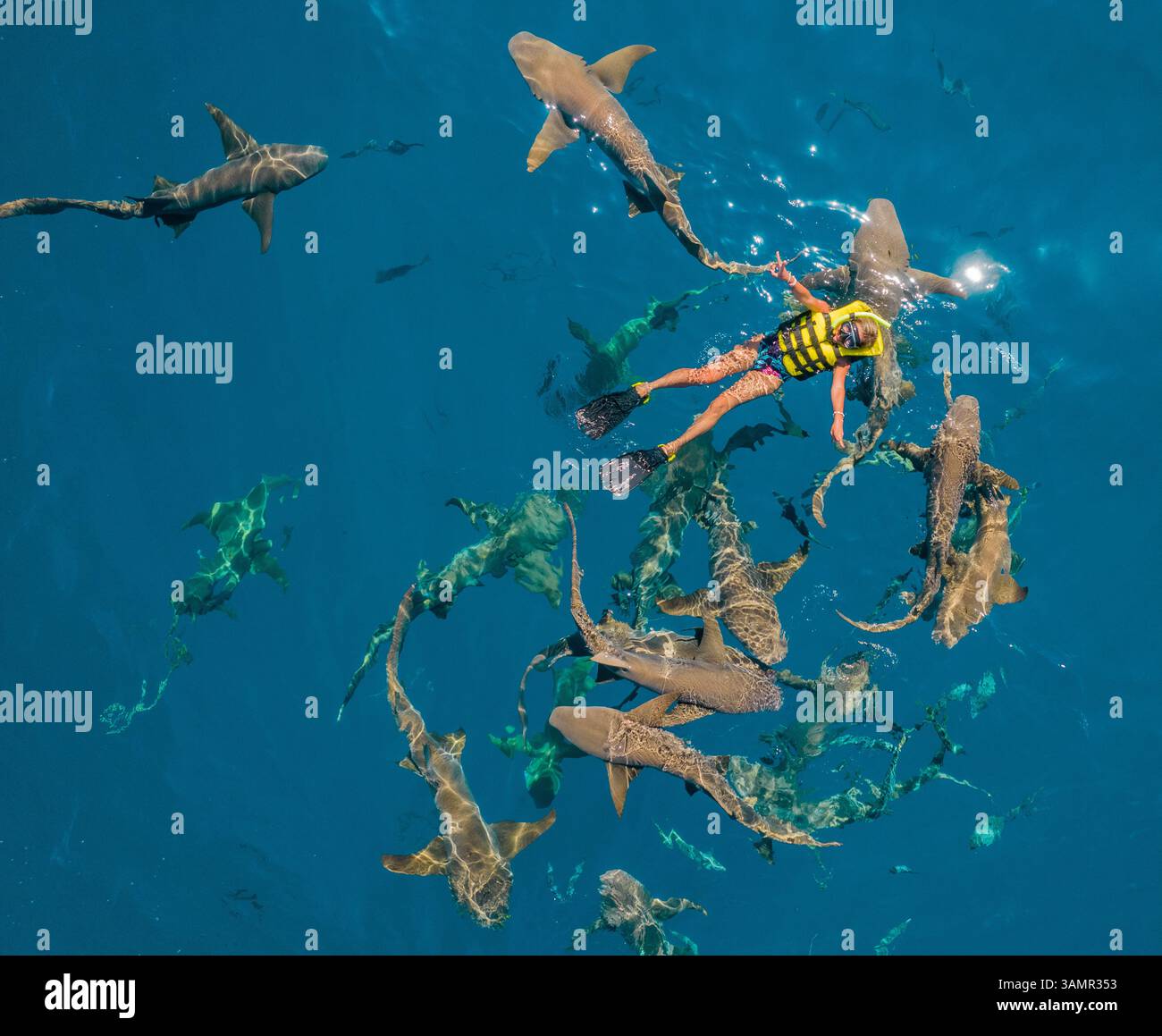
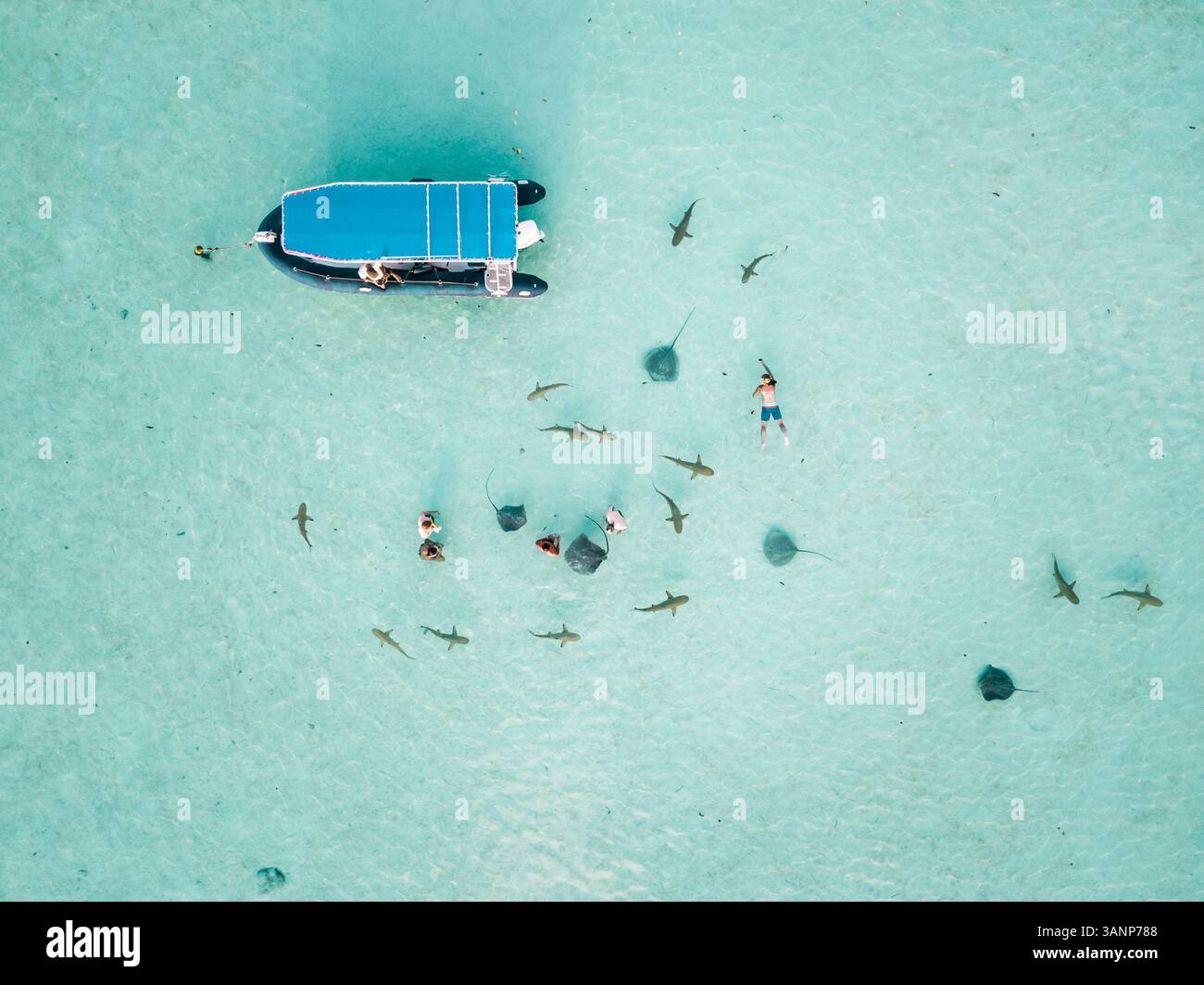
When viewing swimmers and sharks from an aerial perspective, the high-contrast imagery often creates a misleading sense of proximity and imminent danger. While drones and helicopters provide a clear vantage point that makes sharks appear strikingly visible against the seabed, this elevated view rarely reflects the actual underwater interaction risk or the behavioral realities of marine apex predators in relation to human activity.
The Perspective Gap: Why Aerial Views Can Be Deceptive
The primary reason aerial footage of sharks often causes alarm is the lack of depth perception and the compression of scale. From a drone at 100 feet, a shark swimming 20 feet below the surface appears to be directly alongside a swimmer. In reality, the vertical separation between the two is significant. This “bird’s-eye” view lacks the horizontal and vertical context required to assess true threat levels.
Furthermore, water clarity plays a disproportionate role in these visuals. In regions with high water visibility—such as parts of Australia, California, or Florida—drones capture images that might be impossible to see from a lifeguard tower or a boat. This creates a psychological effect where the public perceives an increase in shark activity, when in many cases, the sharks have always been there, simply unseen by the naked eye. The reality of shark-swimmer interaction is governed by proximity, animal behavior, and environmental triggers, none of which can be fully diagnosed from a wide-angle drone shot.
Defining Shark-Swimmer Interaction Risks
Understanding the risk of a shark encounter requires moving beyond visuals and into the biological realities of marine ecosystems. Sharks are exploratory feeders; they often investigate objects—including humans—through physical contact because they lack hands. However, the vast majority of shark sightings near swimmers are passive. The shark is typically moving through a migratory corridor or hunting specific fish species, and the human is an incidental, often uninteresting, presence in their environment.
Technical safety measures, such as shark spotter programs, utilize aerial observation not because every sighted shark is an attacker, but as a proactive tool for habitat monitoring. When a shark is spotted in close proximity to a flagged beach, the goal is to clear the water of a potential "exploratory" encounter before curiosity becomes contact. The reality is that humans are rarely a prey target, but the potential for a severe injury exists whenever a large predator and a soft-bodied mammal share a confined space.
Comparison of Observation Methods
To manage safety effectively, it is helpful to understand the limitations of various surveillance technologies currently in use as of 2026.
| Method | Field of View | Accuracy/Verification | Primary Limitation |
|---|---|---|---|
| Aerial Drone | Wide/Top-Down | High (in clear water) | Battery life and weather sensitivity |
| Lifeguard Tower | Horizontal/Surface | Moderate | Blind spots and glare interference |
| Acoustic Tagging | Localized/Sensor | High (for tagged sharks) | Only detects tagged individuals |
| Personal Deterrents | Immediate/Proximity | Variable | Dependent on shark species and state |
What to Expect When Sharks are Sighted
If you are at a beach where an aerial monitoring system is in place, understanding the standard operating procedure is essential for maintaining safety. When a drone or aircraft alerts local authorities to a shark, the response is usually graduated based on the shark’s size, species, and distance from the shoreline.
- Surveillance Phase: If a shark is detected at a distance, lifeguards may increase patrol levels but keep the beach open.
- Cautionary Phase: If the shark moves closer to the bathing area, you may hear sirens or see warning flags, requiring all swimmers to exit the water immediately.
- Assessment Phase: Authorities analyze the shark's behavior. If it is traveling, it will often pass the beach quickly. If it is "loitering" or circling in the same area, the water is typically closed for an extended period.
Do not attempt to verify the shark yourself. Many species that appear similar from the air have vastly different behavioral profiles. A Sandbar shark, which is generally docile, can easily be mistaken for a Bull shark or a Great White shark by an untrained observer. Relying on professional lifeguard judgment is the most reliable way to ensure personal safety.
Mitigating Risk in the Ocean Environment
While aerial surveillance is a powerful tool for large-scale safety, individual responsibility remains the most effective way to reduce the probability of an interaction. The reality of shark safety is largely about avoiding the conditions that attract predators.
Avoid swimming during dawn or dusk, as these are the peak hunting hours for many shark species. Furthermore, avoid swimming near river mouths or deep channels where sharks often congregate to hunt baitfish. If you are fishing, never keep the catch on your person or attached to your gear, as the scent trail can mimic injured prey, drawing sharks toward you.
It is also important to note that many modern "deterrents," such as magnetic anklets or electronic pulse devices, have limited effectiveness. While some have shown promise in lab settings, they are not guaranteed to prevent an interaction in the wild. Always treat these as supplemental rather than primary safety tools.
Common Misconceptions About Shark Behavior
A persistent myth is that sharks are "stalking" swimmers. In reality, most sharks are opportunistic. If they are in the same area as humans, it is usually because the environment—such as a sandbar, temperature break, or school of fish—is ideal for the shark’s survival, not because they are searching for humans.
Another misconception is that aerial views indicate an "infestation." Even when multiple sharks are visible in a small area, this often indicates a temporary feeding or schooling event. Sharks do not form "packs" to hunt humans. When you see multiple sharks, it is a sign that the local ecosystem is functioning properly, but it is simultaneously a signal that it is time to vacate the water to avoid a mistaken-identity encounter.
FAQ: Safety and Aerial Monitoring
Does seeing a shark from a drone mean it is hunting?
No. An aerial sighting indicates presence, not intent. Most sharks sighted via drone are either cruising between points or feeding on natural prey like fish or rays. The danger to humans is generally incidental, occurring when a shark investigates a splash or movement, not as part of a targeted hunt.
Why are some beaches closed for small sharks?
Beaches are often closed as a precaution regardless of the shark's size. Even a small shark can cause significant injury if it bites in a defensive or exploratory manner. Furthermore, the presence of a small shark often signals that the habitat conditions (such as bait fish density) are currently attractive to larger predators as well.
Is it safe to enter the water if I don't see any sharks?
There is no such thing as a "shark-free" ocean. Sharks are constant, natural inhabitants of coastal waters. The absence of a visual sighting does not mean sharks are not present; it only means they are not visible. Safety relies on following local warnings and understanding environmental conditions, not on the absence of a sighting.
How effective are shark nets or physical barriers?
Physical barriers like nets are designed to reduce the probability of a shark entering a high-traffic area. However, they are not 100% effective and can have significant environmental impacts on other marine life. Modern approaches are increasingly favoring non-lethal, high-tech surveillance and early warning systems over traditional barrier methods.
What should I do if I see a shark while swimming?
If you see a shark, try to remain calm. Do not make erratic, splashing movements, which can mimic the sound of distressed prey. Maintain eye contact if possible—sharks are often wary of being watched—and move slowly and deliberately toward the shore or a boat. Do not turn your back on the animal, and exit the water as quickly and quietly as possible.
Next Actions for Ocean Safety
To ensure you are fully prepared for your next visit to the coast, check the local council or lifeguard service website for their specific beach safety protocols. Many popular regions provide live updates on shark sightings and water conditions through mobile applications. Always familiarize yourself with the colored flag systems used at your destination, and if you are ever in doubt about the safety of the water, choose to remain on the sand. Prioritize education over assumption; the more you understand about the natural behavioral triggers of the species in your area, the better equipped you will be to enjoy the ocean responsibly.