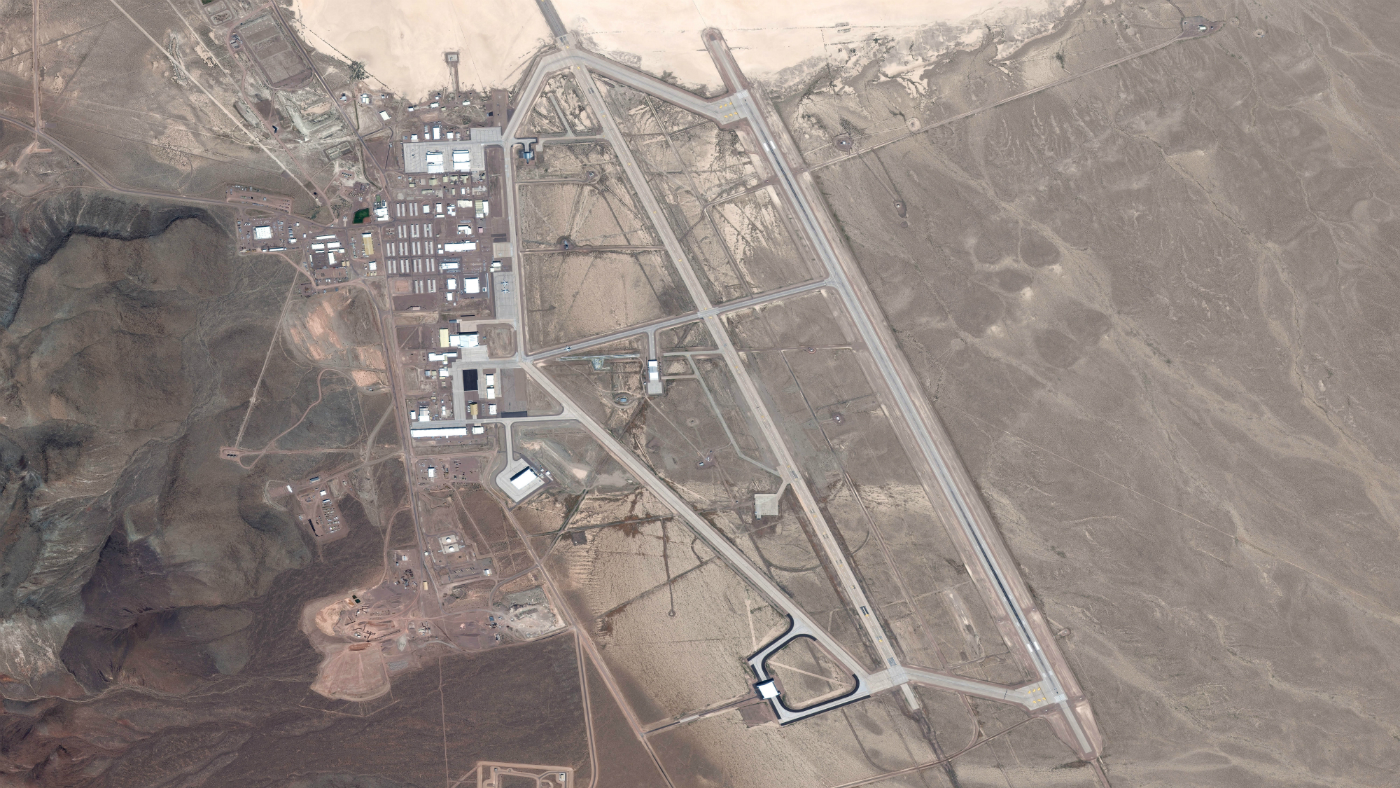
The search for a "complete guide, photos, and video inside the secret base" regarding the Area 51 raid refers to the viral 2019 "Storm Area 51" internet movement. While the event prompted mass online interest, no raid occurred, and no verified footage exists of the interior of the United States Air Force facility known as Groom Lake, which remains a restricted military installation.
Historical Context of the "Storm Area 51" Movement
In June 2019, a Facebook event titled "Storm Area 51, They Can't Stop All of Us" was created by Matthew Roberts. The premise was a satirical call to action urging participants to converge on the Nevada Test and Training Range to "see them aliens." The internet-born movement quickly transitioned from a niche joke into a global cultural phenomenon, with millions of users marking themselves as "going" or "interested."
The phenomenon gained traction due to a combination of long-standing pop culture fascination with Unidentified Aerial Phenomena (UAP) and the rapid, decentralized nature of social media virality. By September 2019, the date originally set for the "raid," it became clear that the event would not manifest as an armed or physical assault on the base. Instead, it culminated in small gatherings in the nearby towns of Rachel and Hiko, Nevada, often referred to as "Alienstock."
Operational Reality and Legal Status of Groom Lake
Area 51, formally part of the Edwards Air Force Base complex at Groom Lake, is one of the most restricted military sites in the United States. It is governed by strict federal regulations regarding airspace and ground trespassing. The United States government only officially acknowledged the existence of the location in 2013, following declassification requests regarding the history of the U-2 and OXCART (A-12) reconnaissance programs.
The facility remains active for research, development, and testing of classified aerospace technology. Because it is a secure military site, all unauthorized entry is prohibited under federal law, specifically 18 U.S. Code § 1382, which provides for the arrest and prosecution of individuals who trespass on military installations. There is no legitimate "guide" for entry, as the perimeter is heavily monitored by sensors, cameras, and private security contractors, and it is surrounded by vast, inhospitable desert terrain.
Debunking the Myth of "Inside" Photos and Videos
Since the 2019 viral event, numerous claims have circulated suggesting that "secret footage" or "leaked photos" from inside the base were captured by participants. These claims are universally unsupported by evidence. Any media claiming to show the interior of the primary operational areas of the base is typically a product of visual effects, misidentified civilian aerospace sites, or CGI recreations.
The difficulty in obtaining authentic imagery is twofold:
- Physical Security: The installation is positioned within a restricted area that extends well beyond the physical fence line, making it impossible to approach the main base buildings without detection.
- Technological Countermeasures: Even aerial or long-range photography is constrained by active counter-surveillance measures, including sophisticated motion sensors and patrol patterns maintained by security personnel.
Comparison of Public Perception vs. Documented Facts
Understanding the gap between internet rumors and factual documentation is essential for navigating information regarding military installations.
| Aspect | Internet Rumors / Viral Claims | Documented Military Reality |
|---|---|---|
| Access | Claims of "open" or "accessible" points | Strictly forbidden; federal prosecution risk |
| Interior Footage | Assertions of leaked base tours | No verified internal photos/videos exist |
| Purpose | Extraterrestrial containment | Classified aerospace testing and R&D |
| Security | Claims of minimal guard presence | High-tech sensors and armed patrols |
| The "Raid" | Mass storming of the gates | Small music/tourist festival in nearby towns |
Safety and Legal Considerations for Enthusiasts
For those interested in the history and geography of the region, it is crucial to distinguish between the restricted base and the surrounding public lands. The Nevada desert area near the site is popular with aviation enthusiasts and hikers; however, visitors must adhere to strict boundaries.
The perimeter of the restricted area is clearly marked with signs stating that "use of deadly force is authorized." These are not merely warnings; they are legal notices backed by federal statute. Crossing these boundaries, even inadvertently, can result in immediate detention, heavy fines, and a criminal record. Enthusiasts typically remain at designated public viewpoints, such as the "Black Mailbox" or other areas on public BLM (Bureau of Land Management) land, which provide distant, legal views of the remote landscape.
Frequently Asked Questions
Can I legally visit the perimeter of Area 51?
You can visit public lands in Lincoln County, Nevada, that are adjacent to the restricted zone. However, you must remain on public roads and marked public trails. Entering the restricted area, marked by orange posts and warning signs, is illegal and dangerous. Always carry a GPS, ample water, and spare fuel, as the region is extremely isolated.
Is there any way to see "leaked" video of the base?
No. There is no verified, authentic footage from inside the base’s operational facilities. Any media labeled as "leaked footage" that appears on social media platforms is almost certainly manufactured for entertainment or clickbait purposes. Trustworthy documentation of the base’s history is limited to official declassified reports provided by the CIA or the Department of Defense.
Why do people keep talking about a "raid"?
The "raid" is a legacy of the 2019 social media meme. It persists as a cultural shorthand for curiosity about government transparency and the search for extraterrestrial life. It is not an ongoing tactical effort or a coordinated movement.
How do I learn about the actual history of the site?
If you are interested in the historical significance of the location, consult official archives such as the National Archives or the declassified documents published by the CIA’s Freedom of Information Act (FOIA) reading room. These sources provide factual insights into the Cold War-era projects that took place at Groom Lake, such as the U-2, A-12, and F-117 programs.
Recommended Next Actions
If your interest is in aviation history or government transparency, your most productive path is to review declassified reports from the CIA’s historical archives. These documents offer verified accounts of the technologies tested at the site during the mid-20th century. For those wishing to visit the region, focus your planning on authorized, public locations like the Extraterrestrial Highway (State Route 375), which offers a safe and legal way to experience the unique culture of the surrounding Nevada desert. Avoid any service or guide claiming to offer "tours" of the restricted interior, as these are fraudulent.