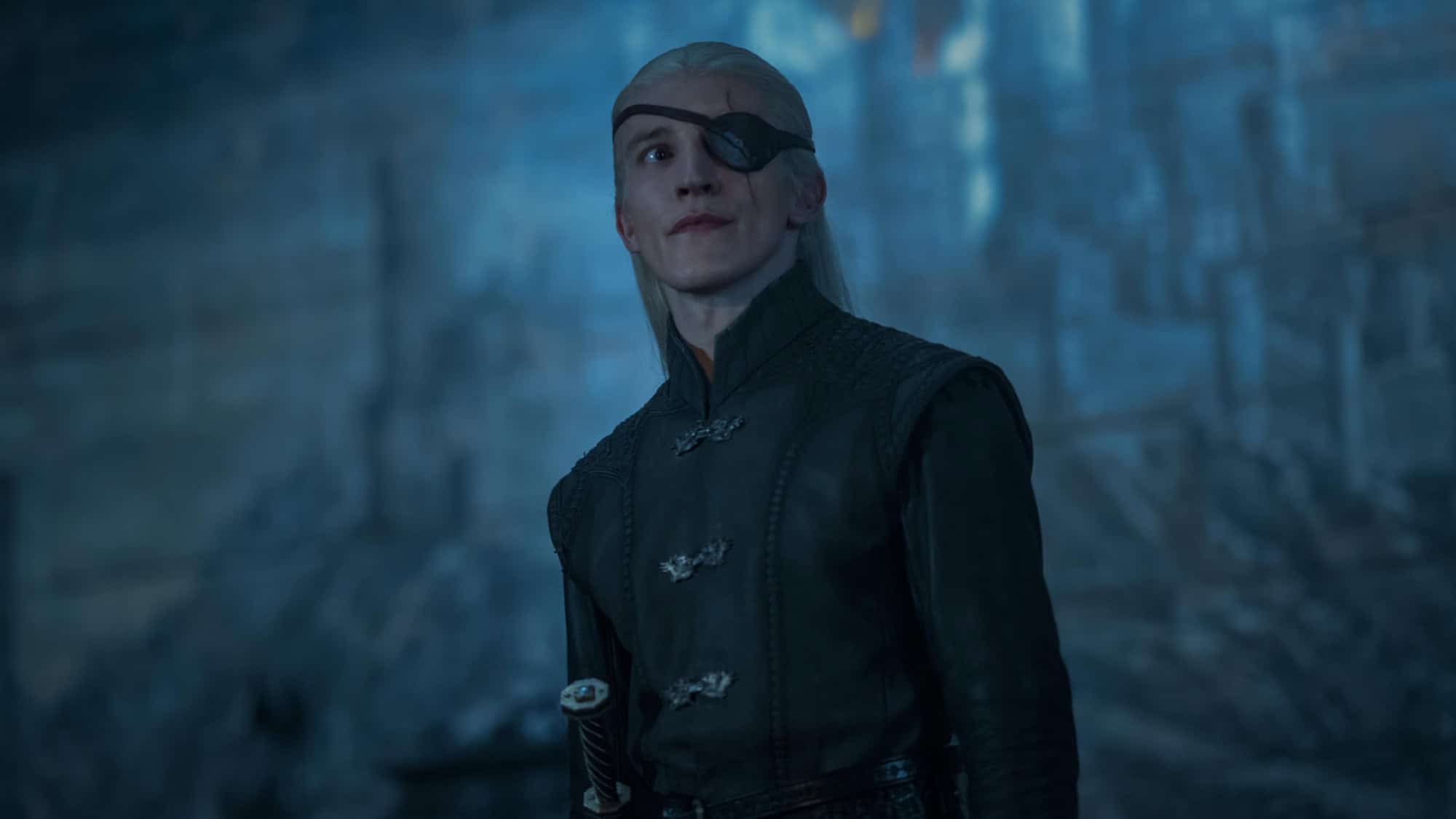
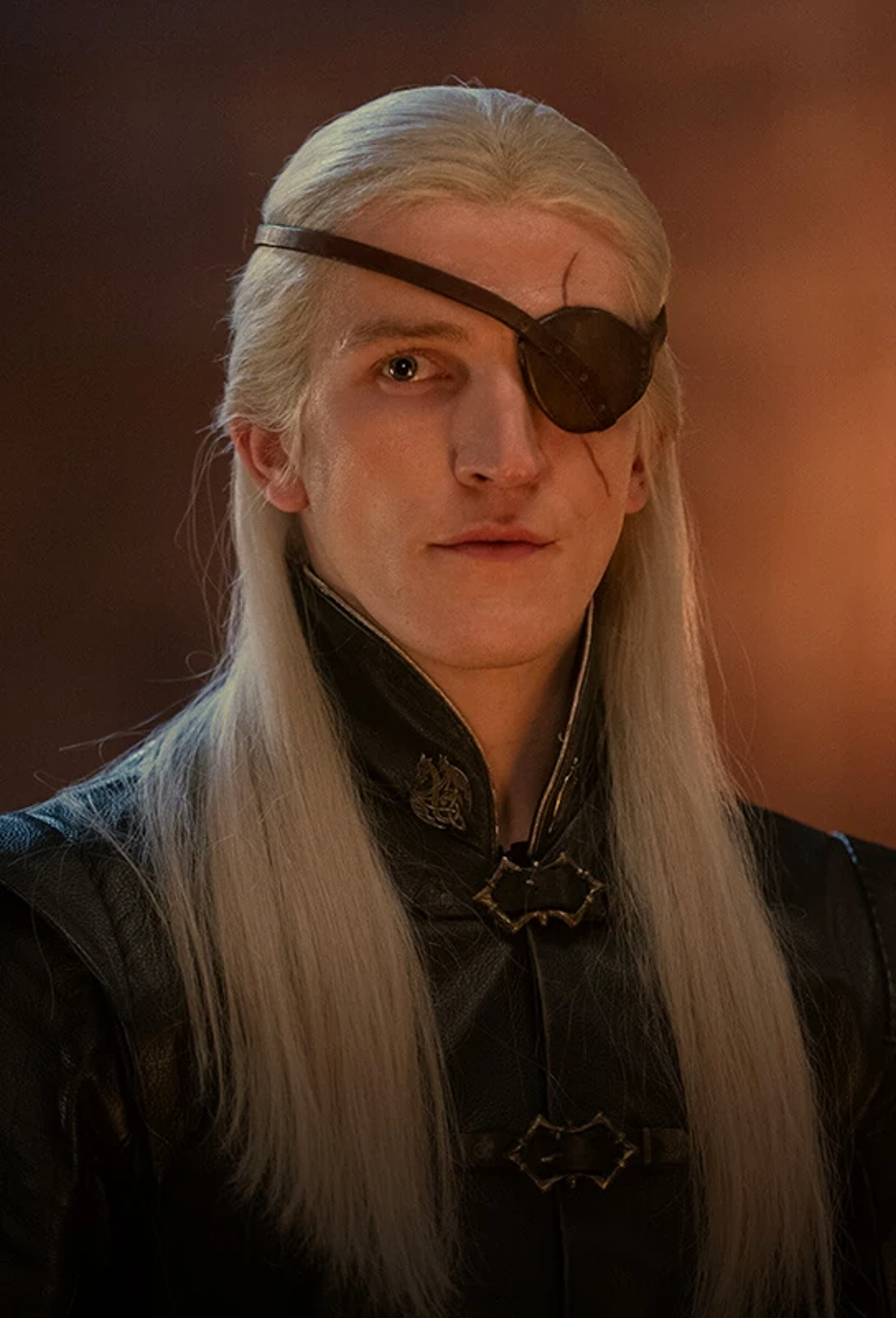
Aemond Targaryen is a central figure in the history of Westeros, recognized as the second son of King Viserys I Targaryen and Queen Alicent Hightower. A formidable dragonrider and a pivotal combatant during the civil war known as the Dance of the Dragons, his aggressive military tactics and profound mastery of the dragon Vhagar cemented his reputation as one of the most feared warriors of his era.
Origins and Early Life
Born in 110 AC to King Viserys I and Queen Alicent, Aemond Targaryen grew up in the shadow of his older brother, Aegon II, and his elder half-sister, Rhaenyra Targaryen. His early years were defined by the growing political divide between the Queen’s party—the Greens—and the supporters of the Princess, known as the Blacks.
Unlike his siblings, Aemond faced an early developmental challenge: he lacked a dragon during his formative childhood years. This void became a source of significant tension within the Red Keep. The turning point in his life occurred at the age of ten, following the funeral of Lady Laena Velaryon on Driftmark. It was there that Aemond famously claimed Vhagar, the largest and oldest dragon alive at the time. This feat gained him a powerful mount but resulted in the loss of his left eye during a confrontation with his nephews, an injury that would define his cold, hardened demeanor throughout his life.
The Mastery of Vhagar
The bond between Aemond and Vhagar is perhaps the most significant military factor in the early stages of the Dance of the Dragons. Vhagar, a veteran of Aegon the Conqueror’s wars, possessed unmatched size, speed, and lethality in aerial combat.
Aemond’s training and tactical application of Vhagar transformed him from a prince into a strategic asset for the Greens. His ability to command the dragon allowed the supporters of Aegon II to maintain air superiority during key territorial disputes. Unlike other dragonriders of his generation who often treated their mounts as extensions of their status, Aemond approached dragon warfare with a calculated, ruthless efficiency.
Role in the Dance of the Dragons
Following the death of King Viserys I, Aemond emerged as a primary enforcer for the Green faction. His actions during the conflict were instrumental in shaping the trajectory of the war.
- The Storm’s End Incident: Aemond was sent to Storm’s End to secure the allegiance of Lord Borros Baratheon. During this mission, he encountered Prince Lucerys Velaryon. The ensuing aerial engagement resulted in the death of Lucerys, marking a point of no return that escalated the political rift into a full-scale civil war.
- The Riverlands Campaign: Tasked with punishing the houses that supported Rhaenyra in the Riverlands, Aemond utilized Vhagar to raze lands and holdings. This scorched-earth approach displayed his commitment to the Green cause but also earned him a reputation for unnecessary cruelty.
- Strategic Vulnerability: Despite his tactical successes, Aemond’s tendency to operate independently often left the capital, King’s Landing, exposed. His decision to pursue his own campaign allowed the Blacks to capitalize on the lack of aerial defense at the Red Keep.
Strategic Comparison: Dragonriders of the Conflict
The effectiveness of a dragonrider in the Dance of the Dragons was predicated on the synergy between rider experience and dragon age.
| Rider | Dragon | Tactical Strength | Known Vulnerabilities |
|---|---|---|---|
| Aemond Targaryen | Vhagar | Raw power, extreme intimidation | Overconfidence, strategic isolation |
| Daemon Targaryen | Caraxes | Experience, cunning, speed | Emotional instability |
| Rhaenyra Targaryen | Syrax | Political leverage, mobility | Lack of direct combat experience |
| Aegon II Targaryen | Sunfyre | Resilience, maneuverability | Physical injury, limited aerial reach |
The Battle Above the Gods Eye
The final chapter of Aemond’s life occurred at the Battle Above the Gods Eye. This engagement remains the most studied aerial combat event in the histories of the Seven Kingdoms. Realizing the stalemate in the war, Aemond faced his uncle, Prince Daemon Targaryen, in a high-stakes duel.
The combat saw both riders and their dragons plunge into the lake, ending both of their lives. This event marked a massive blow to the military capacity of both the Greens and the Blacks, effectively stripping the war of its two most dangerous aerial combatants. For historians, this battle represents the peak of dragon warfare—a demonstration of the catastrophic cost of using such weapons in domestic disputes.
Political Implications and Legacy
Aemond’s legacy is complex, oscillating between that of a loyal protector of his house and a catalyst for the destruction of the Targaryen dynasty. By hardening his heart and prioritizing power, he ensured the Greens remained a viable threat long after they might have otherwise folded. However, his volatility also served to alienate potential allies and radicalized his opponents.
In the years since the Dance of the Dragons, Aemond is often used as a cautionary tale by scholars regarding the dangers of untempered ambition and the inherent instability of absolute power held by a single dragonrider. His life serves as a definitive case study in how individual grievances, when coupled with monumental military strength, can dismantle a kingdom from within.
Frequently Asked Questions
What was the specific cause of Aemond Targaryen’s eye injury?
Aemond lost his left eye during a skirmish with his nephews, Jacaerys and Lucerys Velaryon, shortly after he claimed Vhagar. During the altercation, Lucerys utilized a blade to defend himself, resulting in the permanent injury. This event became a permanent point of contention between the two branches of the royal family.
Why is Aemond Targaryen considered a "Green" supporter?
Aemond is a Green because he supported his mother, Queen Alicent Hightower, and his brother, Aegon II, in their claim to the Iron Throne. The "Green" faction was composed of those who believed the crown should pass to the eldest son of Viserys I rather than his eldest daughter, Rhaenyra.
Did Aemond Targaryen have any heirs?
Historical records do not attribute any legitimate or bastards children to Aemond Targaryen. His short, combat-heavy life focused almost entirely on the military consolidation of his family’s position, leaving him without a direct legacy in terms of progeny.
How did the size of Vhagar affect Aemond’s combat style?
Vhagar’s immense size meant she was not as agile as smaller dragons like Caraxes. Aemond compensated for this by utilizing Vhagar’s raw strength and armored durability to overwhelm opponents quickly. He often used her size to intimidate or physically crush smaller dragons before they could outmaneuver him.
What is the significance of the Gods Eye in the Targaryen timeline?
The Gods Eye is a massive lake in the Riverlands that became the site of the most significant dragon battle in history. The death of both Aemond and his uncle Daemon at this location effectively shifted the war’s momentum, proving that even the most powerful riders were not invincible.
Next Steps for Further Research
To gain a deeper understanding of the events surrounding Aemond Targaryen, readers should consult the primary accounts found in Fire & Blood. For a comprehensive view of the tactical movements of the Dance of the Dragons, focus on the chronologies regarding the Riverlands campaigns and the correspondence between Dragonstone and King’s Landing during the early months of the conflict. Verification of these events requires cross-referencing the accounts of Archmaester Gyldayn with surviving testimony from the era.