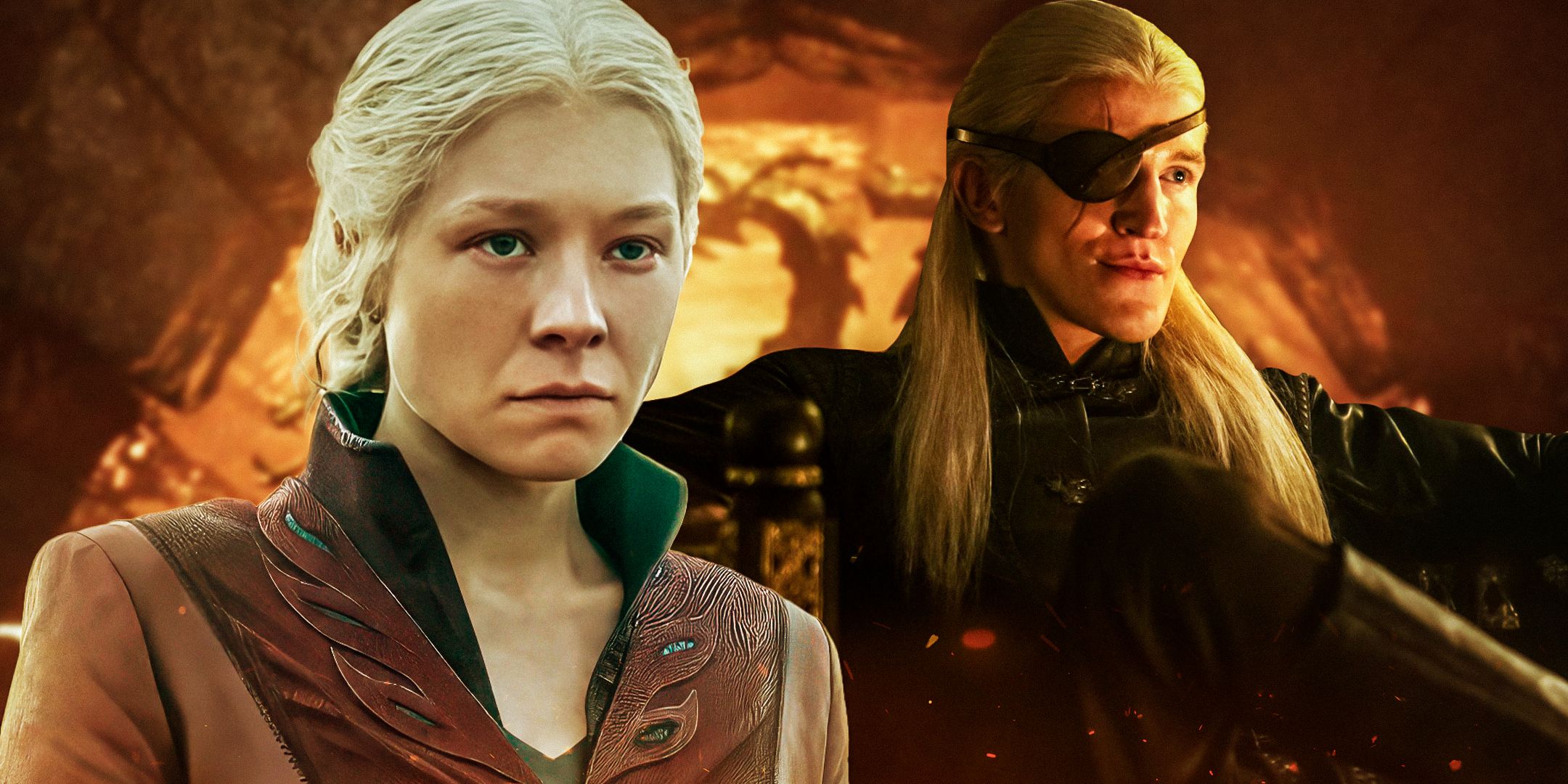
Aemond Targaryen dies during the Battle Above the Gods Eye when his dragon, Vhagar, is brought down into the lake by Daemon Targaryen and his dragon, Caraxes. During the descent, Daemon leaps from Caraxes to drive his blade, Dark Sister, through Aemond’s sapphire eye. Both riders and their dragons perish, marking a terminal turning point in the Dance of the Dragons.
The Tactical Context of the Battle Above the Gods Eye
To understand why Aemond Targaryen’s death occurs, one must first recognize the strategic desperation of the Dance of the Dragons by the time the conflict reaches the Gods Eye. Aemond, serving as Prince Regent for the Greens, had been engaging in a campaign of scorched-earth terror across the Riverlands. This strategy was designed to draw out his uncle, Daemon Targaryen, who had been consolidating power for the Blacks.
By the time the two forces converged at Harrenhal and subsequently moved to the skies above the lake, the war had become a war of attrition. Aemond relied heavily on the sheer size and combat experience of Vhagar, the largest living dragon in the world. However, size proved to be a liability against the agility of Caraxes and the tactical experience of a veteran dragonrider like Daemon. The death of Aemond was not a result of a simple martial failure but a calculated, albeit suicidal, maneuver by Daemon to neutralize the Greens' primary aerial threat.
The Mechanics of the Engagement
The engagement is defined by the physical disparity between the two combatants. Vhagar was significantly larger, slower, and older than Caraxes. Daemon, aware that a head-on aerial brawl might not guarantee a victory against Vhagar’s fire and claws, utilized the environment to his advantage. The combatants locked their dragons in a mid-air death grapple, with Caraxes’s neck wrapped around Vhagar’s.
As the dragons plummeted toward the surface of the Gods Eye, the structural integrity of the fight collapsed. Aemond remained chained to his saddle, effectively trapped as his mount spiraled toward the water. Daemon, however, had the mobility to disengage. The fatal strike involved Daemon leaping from the saddle of Caraxes while the dragons were in mid-tumble. By driving Dark Sister directly into Aemond’s sapphire prosthetic eye, Daemon ensured that his opponent would not survive the impact of the crash, even if he somehow survived the initial plunge. The subsequent impact of the dragons hitting the lake ensured the destruction of both combatants.
Why This Moment Matters in the Narrative
The death of Aemond Targaryen functions as a definitive "point of no return" for the Dance of the Dragons. Throughout the series, Aemond represents the unchecked volatility and tactical aggression of the Green faction. His presence provided a constant, looming threat that kept the Blacks in a state of high alert. His removal signifies several critical shifts in the narrative landscape:
- The Loss of the Strategic Deterrent: Without Aemond and Vhagar, the Green faction loses its most formidable military asset. This tilts the balance of power decisively toward the Black faction in the immediate aftermath, though both sides suffer irreparable losses.
- The Deconstruction of the Dragonriders: The battle serves as a thematic conclusion to the era of absolute dragon dominance. The fact that the most powerful dragon in existence could be brought down by a smaller, more nimble adversary highlights the vulnerability of the Targaryen hegemony.
- The Ambiguity of Heroism: The encounter frames the conflict as a shared destruction. Neither Daemon nor Aemond walks away as a clear victor; rather, the event underscores the tragic cost of the war, where the most powerful figures effectively eliminate one another, leaving a power vacuum that changes the political trajectory of Westeros.
Comparative Dynamics: Aemond vs. Daemon
The following table outlines the key differences between the two riders and their mounts leading up to the final confrontation, illustrating why the battle ended in mutual destruction.
| Feature | Aemond Targaryen (Vhagar) | Daemon Targaryen (Caraxes) |
|---|---|---|
| Dragon Size | Massive; ancient and heavily armored. | Lean; long-necked and highly agile. |
| Combat Style | Brute force and fire superiority. | Tactical, aggressive, and experienced. |
| Strategic Role | Prince Regent; primary enforcer. | Black faction commander; rogue element. |
| Outcome | Killed in the fall; dragon destroyed. | Disappeared/Killed; dragon destroyed. |
The Legacy of the Sapphire Eye
Aemond’s physical appearance—specifically his sapphire eye—is a core part of his character identity. It symbolizes his resentment, his transformation into a warrior, and his detachment from his kin. His death via that same eye carries deep symbolic weight. It is a moment of poetic symmetry where his defining mark of difference becomes his point of vulnerability. In the show’s context, this serves to ground the high-fantasy spectacle in the specific, tragic personal history of the Targaryen family. The eye, which once signaled his terrifying, cold authority, becomes the instrument through which his story is abruptly closed.
Frequently Asked Questions
Did Aemond Targaryen survive the impact of the dragons hitting the water?
No. The official accounts within the source material maintain that Aemond died either from the sword wound delivered by Daemon or the subsequent impact of the dragons hitting the lake. His body, still chained to Vhagar’s saddle, remained submerged at the bottom of the Gods Eye for years until it was eventually recovered.
Was the death of Aemond considered a victory for the Black faction?
It was a pyrrhic victory. While Aemond was the most dangerous threat to the Blacks, the loss of Daemon Targaryen—a primary strategist and a key dragonrider—was a catastrophic blow to their cause. The battle effectively removed two of the most influential players from the board simultaneously.
Why was Vhagar so difficult to defeat in combat?
Vhagar was the last of the dragons from the Conquest of Westeros. Her sheer size and thick, impenetrable scales made her a living fortress. Most other dragons could not withstand her fire or her physical strikes, which is why Daemon’s decision to engage in a close-quarters, grappling-based fight was considered an act of desperation rather than a standard aerial tactic.
Does the show handle the death differently than the source material?
The show maintains the core historical beats established in the source material, focusing on the visual spectacle of the struggle. While the adaptation allows for specific aesthetic choices regarding the choreography of the fight, the fundamental outcome—the mutual destruction of both riders and their dragons—remains the anchor of the sequence.
What is the long-term impact on the Dance of the Dragons?
The death of Aemond accelerates the conclusion of the war. With the Green’s aerial superiority gone, the political landscape of the Seven Kingdoms shifts, leading to the eventual decline of the dragons and the weakening of the Targaryen dynasty's absolute grip on power, paving the way for the internal collapses that define the later years of their reign.
Recommended Next Steps for Understanding the Conflict
To further understand the nuances of the Dance of the Dragons, readers should analyze the Battle of the Gullet and the subsequent Fall of King's Landing. These events, occurring in proximity to the skirmishes in the Riverlands, provide the necessary context to appreciate why the struggle at the Gods Eye became the inevitable climax for the series’ most volatile characters. Focusing on the tactical military records and the shifting allegiances of the Houses involved will clarify the broader political fallout.