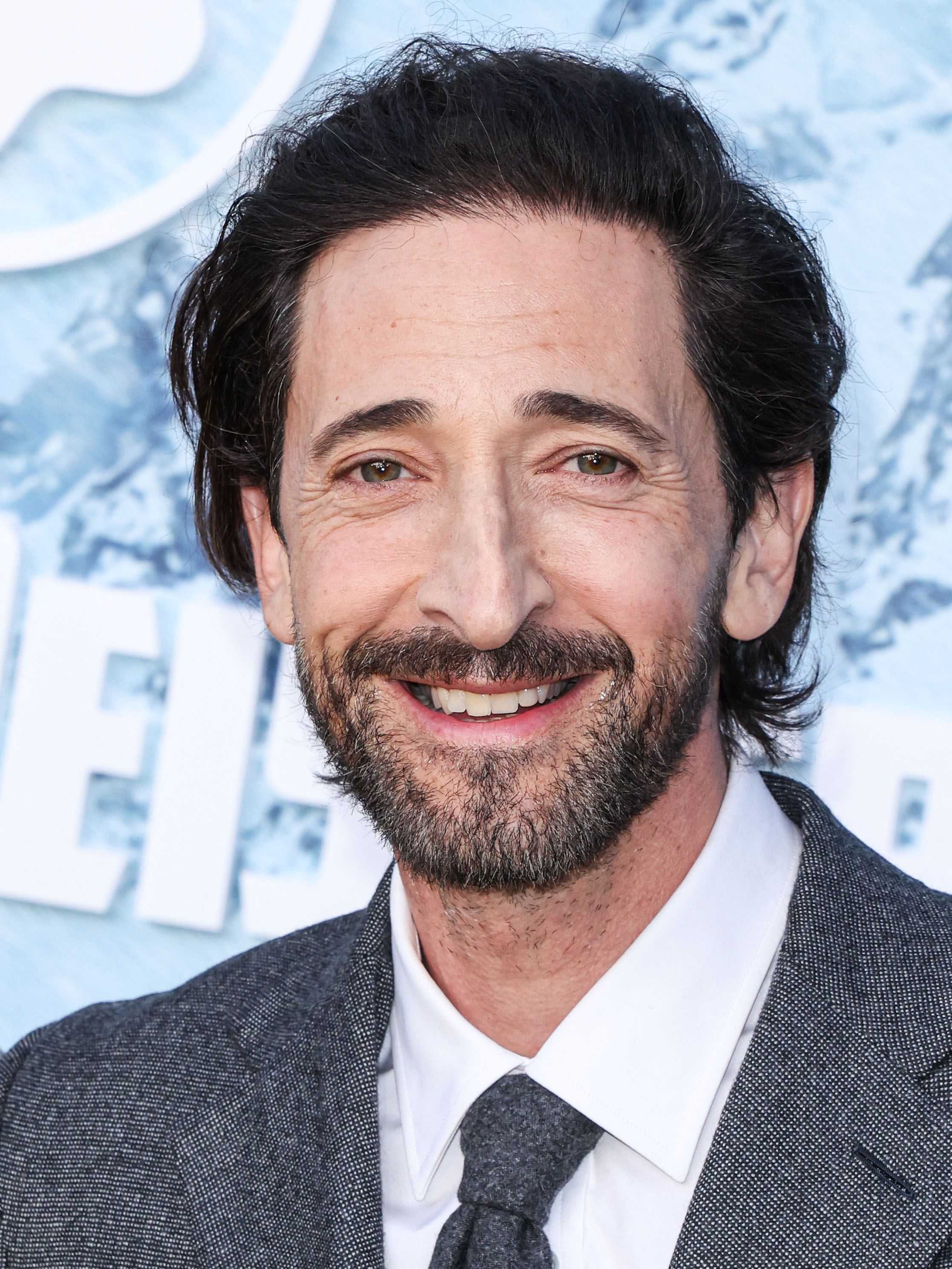
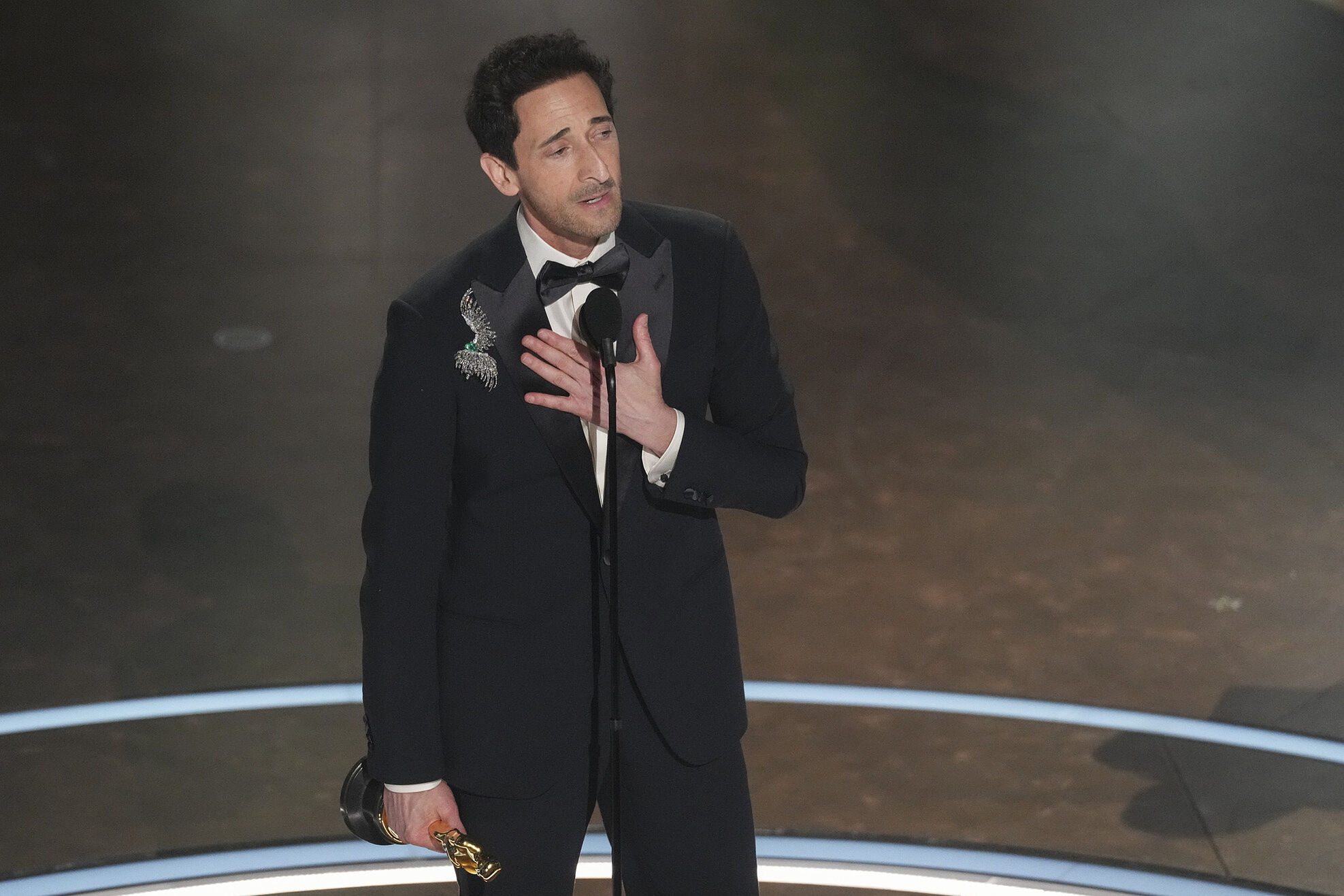
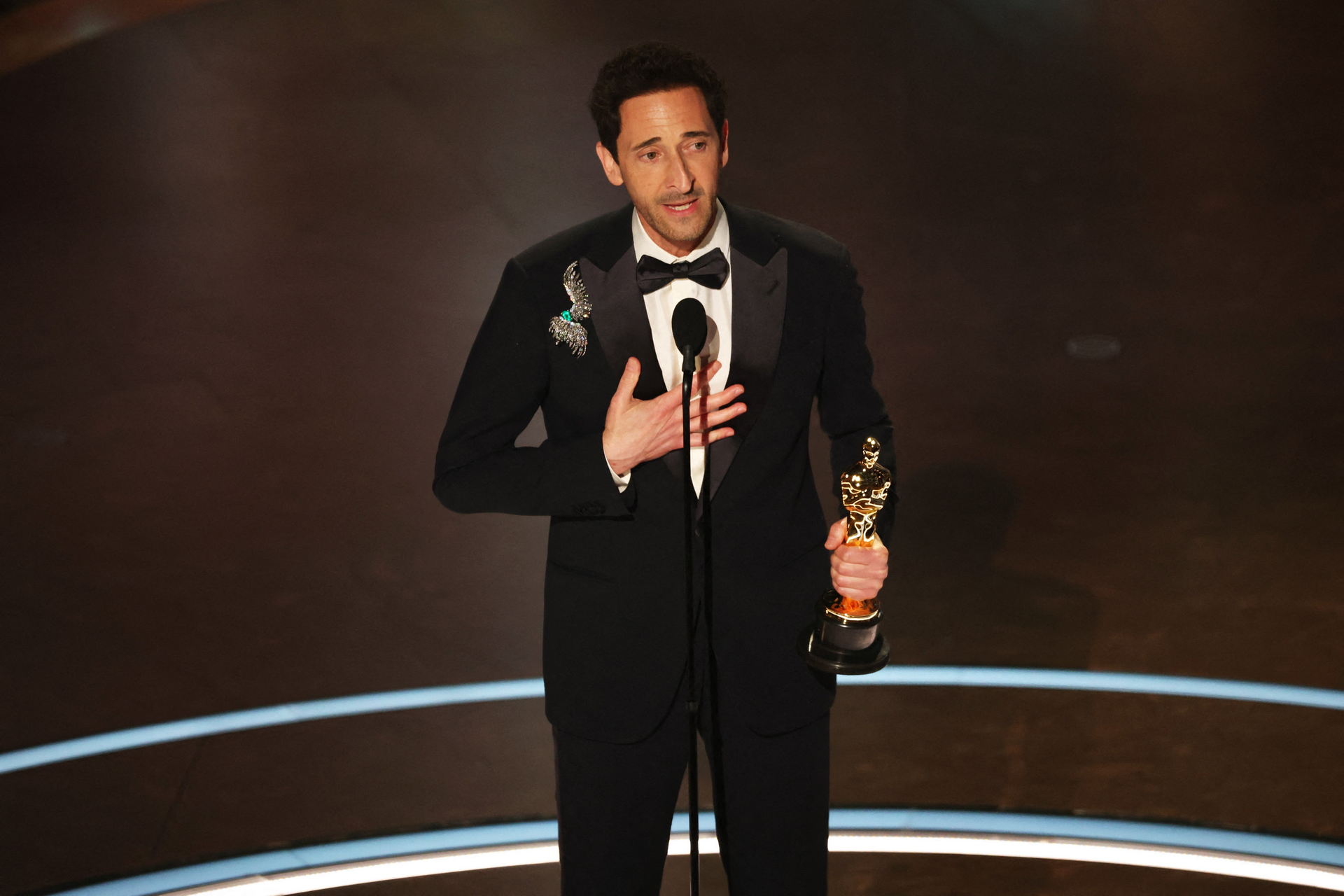
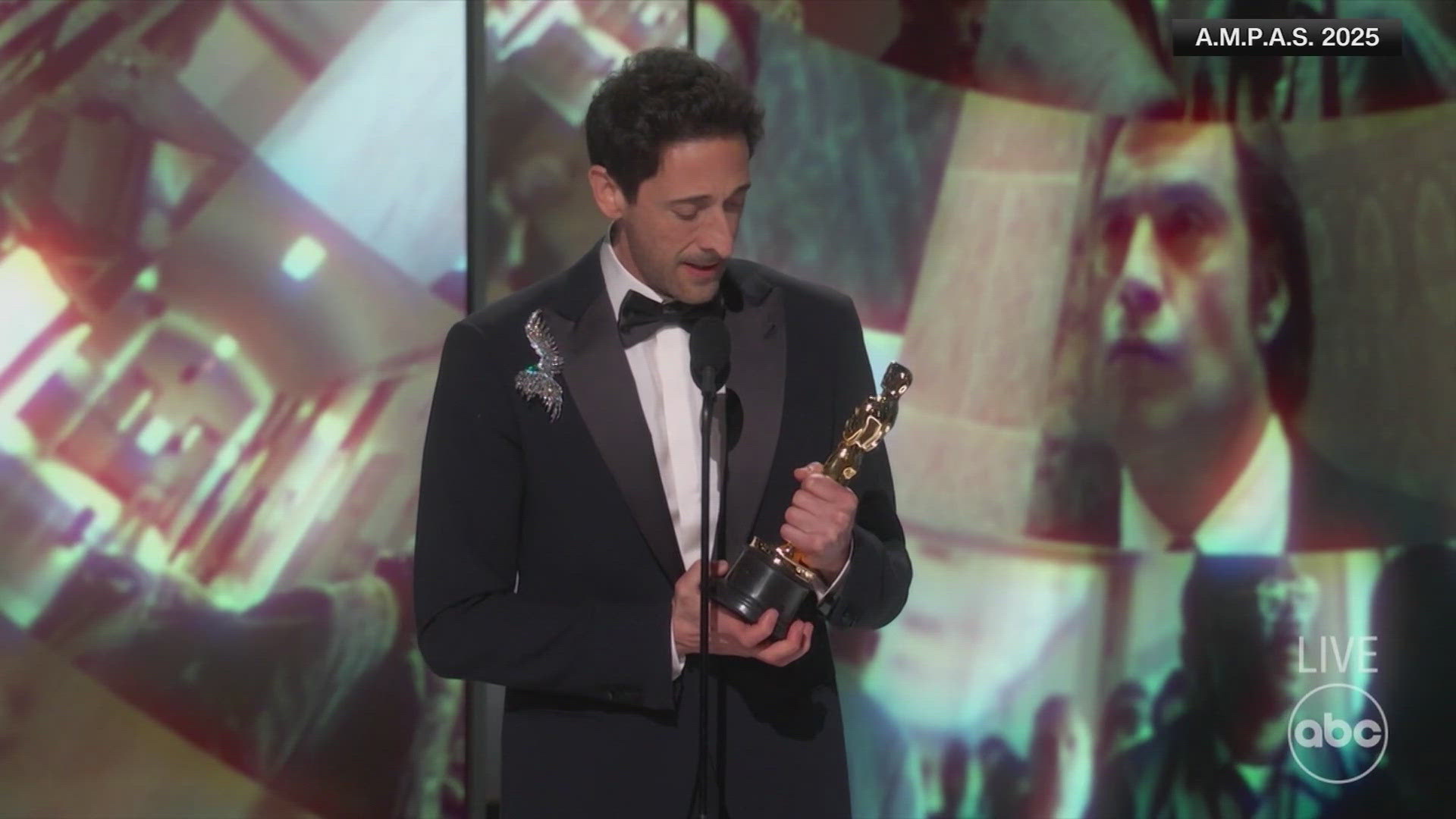
Adrien Brody’s longest and most famous speech occurred at the 75th Academy Awards in 2003, where he won Best Actor for his role in The Pianist. The speech is celebrated for its emotional intensity, the impromptu kiss with Halle Berry, and Brody’s refusal to let the orchestra cut him off as he delivered a poignant plea for peace during the onset of the Iraq War.
The 75th Academy Awards, held on March 23, 2003, remains one of the most culturally significant ceremonies in Hollywood history. Occurring just days after the United States began its invasion of Iraq, the atmosphere was a complex blend of traditional Tinseltown glamour and heavy political tension. It was within this environment that a 29-year-old Adrien Brody made history, becoming the youngest man to ever win the Academy Award for Best Actor—a record he still holds as of 2026.
Brody’s victory was considered an upset by many, as he was nominated alongside heavyweight veterans like Daniel Day-Lewis, Jack Nicholson, Nicolas Cage, and Michael Caine. When his name was announced, the sheer adrenaline of the moment led to a sequence of events that produced what is often cited as the most memorable "long" speech in Oscar history.
The Full Transcript of Adrien Brody’s Acceptance Speech
To understand the weight of the moment, one must read the words as they were delivered, including the interruptions and the physical actions that defined the broadcast. Below is the comprehensive transcript of Adrien Brody’s acceptance speech for his role as Władysław Szpilman in The Pianist.
(Speech begins as Adrien Brody takes the stage and kisses presenter Halle Berry)
Adrien Brody: "I bet they didn't tell you that was in the gift bag. (Laughs) Oh my God. Thank you. Thank you, really. Thank you."
(He pauses, visibly overwhelmed, looking at the Oscar statue)
"It doesn't—it doesn't... it comes in flashes, you know? It’s not... it’s not really real. But I want to thank the Academy. I want to thank the other nominees, I am so honored to be in your company. My parents, who are here—thank you for being so wonderful and giving me the strength and the... the ability to believe in myself."
"I want to thank Roman Polanski for the opportunity of a lifetime. For... for the guidance. For the brilliance of his work. I want to thank the crew, the cast... Thomas Kretschmann, who was so wonderful. I want to thank Focus Features, and everyone involved in the film."
(The orchestra begins to play the "exit music" to signal he should wrap up. Brody holds up his hand and leans toward the microphone.)
"Wait, wait, wait... I haven't even finished yet. Please stop. Cut it out. I have one—I have one thing to say. Please. Stop the music. I haven't gotten to the part where I'm thankful. Okay."
(The music stops. The audience erupts in a standing ovation.)
"I'm filled with a lot of sadness tonight because I'm accepting an award at such a strange time. My experiences in making this film made me very aware of the sadness and the dehumanization of people at times of war, and the repercussions of war. And whomever you believe in, whether it’s God or Allah, may he watch over you, and let’s pray for a peaceful and swift resolution."
"And I have a friend from Queens who’s a soldier in Kuwait right now, Tommy Zarabinski. And I hope you and your boys make it back real soon. God bless you. I love you. Thank you."
Analyzing the Impact: Why the Speech Went "Long"
Most Academy Award speeches are strictly capped at 45 seconds before the orchestra begins to "play off" the winner. Brody’s speech lasted nearly four minutes from the moment his name was called until he exited the stage. However, it wasn't the duration alone that made it "long"; it was the way he commanded the space.
The Defiance of the Orchestra
In 2003, the "play-off" music was a rigid rule. When Brody silenced the orchestra, he broke the fourth wall of the televised ceremony. By saying, "Cut it out," he transitioned from a grateful actor to a man with a moral imperative. This moment of defiance is taught in public speaking courses as an example of seizing a platform for a higher purpose. In the context of 2026, where social and political activism is common at award shows, Brody’s 2003 intervention is seen as a precursor to the modern era of the "political acceptance speech."
The Historical Weight of The Pianist
To understand why Brody felt so compelled to speak about war, one must look at the film for which he won. The Pianist tells the true story of a Jewish musician surviving the Holocaust in Warsaw. Brody famously underwent extreme physical transformations for the role, losing 30 pounds and giving up his apartment and car to simulate the feeling of loss and isolation. By the time he stood on that stage, the lines between the historical trauma of the film and the real-world conflict in the Middle East had blurred for him.
Key Moments and Symbolic Actions
The "longest speech" wasn't just a monologue; it was a performance of raw emotion. Several key elements elevated it beyond a standard thank-you list.
- The Kiss: Before a word was spoken, Brody’s dip-and-kiss of Halle Berry became an instant iconic image. While it has been scrutinized through different cultural lenses in later decades, at the time, it was viewed as an explosion of pure, unbridled joy.
- The Silence: When the music stopped and the room went silent, the tension in the Kodak Theatre was palpable. Brody used that silence effectively, slowing his pace to ensure his message about the "dehumanization of people" was heard clearly.
- The Personal Connection: By mentioning a specific friend—Tommy Zarabinski from Queens—Brody grounded a global political event in a personal, human story. This transition from the abstract (war) to the specific (a friend in Kuwait) is what resonated most with the viewing public.
Comparing Oscar Speech Lengths: Where Does Brody Rank?
While Brody’s speech felt long due to the interruption of the music, it is not technically the longest in history. That title belongs to Greer Garson, who spoke for over five minutes in 1943. However, in the modern era of televised time-slots, Brody’s is among the most extended and impactful.
| Winner | Year | Approximate Duration | Notable Feature |
|---|---|---|---|
| Greer Garson | 1943 | 5 minutes 30 seconds | The legendary "longest ever" speech. |
| Adrien Brody | 2003 | 3 minutes 50 seconds | Silenced the orchestra; anti-war plea. |
| Matthew McConaughey | 2014 | 3 minutes 30 seconds | The "Alright, alright, alright" speech. |
| Halle Berry | 2002 | 4 minutes 20 seconds | Emotional speech on breaking the glass ceiling. |
| Shirley MacLaine | 1984 | 3 minutes 20 seconds | A philosophical reflection on her career. |
How to Watch the Video in 2026
For those looking to watch the full, unedited video of Adrien Brody’s speech in 2026, there are several high-fidelity sources available. The Academy of Motion Picture Arts and Sciences (AMPAS) has digitized its entire archive into 4K resolution.
- The Oscars Official YouTube Channel: This is the most accessible source. The video is usually titled "Adrien Brody Wins Best Actor: 75th Oscars."
- The Academy Museum Digital Archive: For a more scholarly view, the Academy Museum provides the speech along with behind-the-scenes footage and commentary on the cultural climate of 2003.
- Streaming Platforms: Most major streaming services that host Oscar retrospectives include the 75th Academy Awards as a pivotal episode in their documentary series.
When watching the video, pay close attention to the reaction shots of the audience. You can see Jack Nicholson nodding in approval and the polarized reactions of the celebrities in the room, reflecting the divided national sentiment regarding the Iraq War at that time.
Frequently Asked Questions
Did Adrien Brody get in trouble for his long speech?
No. While he ignored the time limits and silenced the orchestra, the emotional weight of his message and the standing ovation he received from the audience protected him from any formal reprimand. The Academy generally views such moments as "Oscar Gold"—spontaneous, authentic television that drives ratings and cultural relevance.
Who was the soldier Brody mentioned in his speech?
Brody mentioned "Tommy Zarabinski," a childhood friend from Queens who was serving in Kuwait at the time. This mention was significant because it bypassed partisan politics and focused on the safety of individuals serving in the military, which helped the speech resonate across the political spectrum.
Was the kiss with Halle Berry scripted?
No, the kiss was entirely spontaneous. Halle Berry later confirmed in interviews that she had no idea it was coming. In the years following, Brody has described it as a moment of "overwhelming joy" where he wasn't thinking clearly about protocol or personal space, while Berry has remarked on her surprise at the boldness of the gesture.
Is Adrien Brody still the youngest Best Actor winner?
Yes. As of 2026, Adrien Brody remains the youngest recipient of the Academy Award for Best Actor in a Leading Role. He was 29 years and 343 days old when he won for The Pianist. Before him, the record was held by Richard Dreyfuss, who won at age 30 for The Goodbye Girl.
Why did the music start playing during his speech?
The Academy Awards uses a "wrap-up" musical cue to ensure the live broadcast stays on schedule. Because Brody spent several seconds kissing Halle Berry and then paused to take in the moment, he reached his allotted time limit before he could get to his main message. His decision to ask the orchestra to stop was a rare breach of protocol.
Understanding the Legacy of the "Peace Plea"
Brody’s speech is often categorized as a "political" speech, but it was more accurately a "humanist" speech. He did not explicitly condemn the administration or the war effort in a partisan way; instead, he spoke about "dehumanization" and "sadness." This nuance is why the speech has aged better than many other political statements from that era.
In 2026, looking back at the 2003 ceremony, film historians note that Brody’s speech was the emotional anchor of the night. It bridged the gap between the historical atrocities depicted in The Pianist and the contemporary fears of the audience. By insisting on finishing his speech, Brody ensured that the night wasn't just about a gold statue, but about the responsibility of the artist to speak truth to power.
For those studying public speaking or cinematic history, analyzing the "Brody Method"—using a personal platform to deliver a universal message of empathy—remains a vital exercise. The speech stands as a testament to the idea that some things are more important than a broadcast schedule.