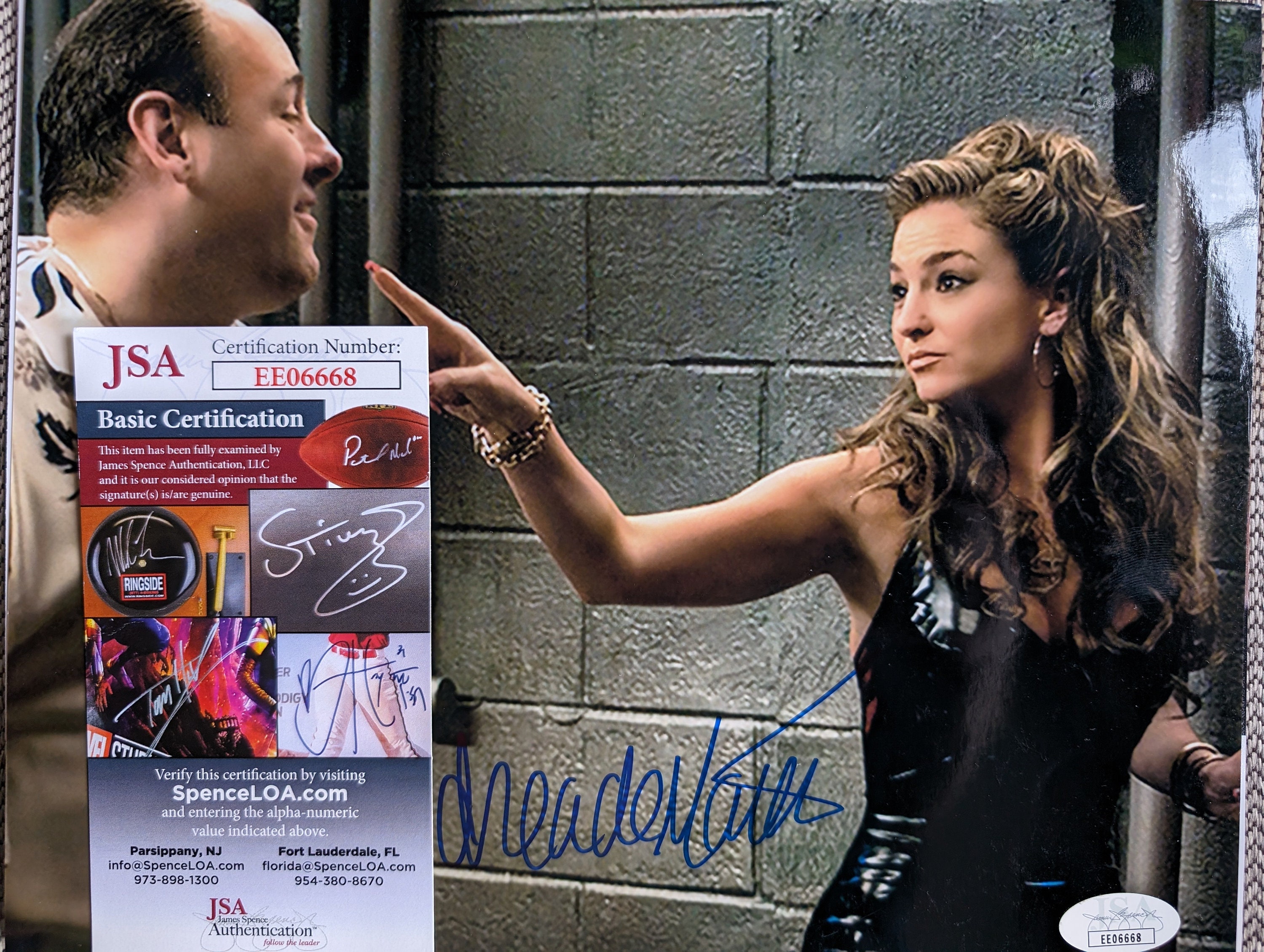
Adriana La Cerva remains one of the most compelling and tragic figures in television history. As a central character in HBO’s The Sopranos, her trajectory serves as the show’s most harrowing exploration of the intersection between personal ambition, romantic entanglement, and the crushing weight of the criminal underworld. Her story arc functions as a cautionary narrative regarding the impossibility of maintaining innocence within the DiMeo crime family.
Historical Context and Character Development
Introduced in the premiere of The Sopranos in 1999, Adriana La Cerva—portrayed by Drea de Matteo—begins as the girlfriend of Christopher Moltisanti. Initially appearing as a peripheral character defined primarily by her loyalty to Christopher and her affinity for the material luxuries afforded by his status, Adriana evolves into a multi-dimensional figure. Over the course of five seasons, she navigates the complexities of her role as a mafia associate’s partner while attempting to carve out an independent identity through professional endeavors like managing the Crazy Horse nightclub.
Her character is unique because she represents the "civilian" perspective within the mob narrative. Unlike the made men or the wives who are fully integrated into the culture, Adriana is perpetually in a state of transition. She is savvy enough to understand the lifestyle but lacks the defensive armor possessed by characters like Carmela Soprano. This vulnerability becomes the focal point of her narrative arc, transforming her from a comic or background figure into the emotional anchor of the show's later seasons.
The Catalyst: Cooperation and Coercion
The pivotal turning point for Adriana occurs in the fourth season when she is approached by the Federal Bureau of Investigation (FBI). After being threatened with a long prison sentence for drug distribution and accessory to murder—stemming from a death that occurred in the Crazy Horse—she is forced into the role of a confidential informant.
This interaction introduces the primary tension that defines her character until her conclusion: the conflict between her loyalty to Christopher and her desire for self-preservation. Adriana’s struggle is not born of a political or moral objection to the mafia, but rather a desperate, naive hope that she can somehow manipulate the FBI’s demands to keep her relationship with Christopher intact. This fundamental misunderstanding of the stakes—that the FBI does not care about her personal happiness, and that the mafia does not tolerate betrayal, however coerced—leads to her inevitable downfall.
The Crazy Horse as a Symbol of Independence
Managing the Crazy Horse nightclub serves as the most significant endeavor for Adriana outside of her domestic sphere. The club represents her attempt at autonomy, a space where she exerts authority and builds a professional reputation. It also highlights the inherent danger of her position; the club serves as both a legitimate business enterprise and a site for illegal activities, which inevitably draws the scrutiny of federal agents.
The location is where the walls between her private and public life finally collapse. By using the club as a meeting place and a focal point for her informant activities, the venue effectively seals her fate. It acts as a microcosm for the larger themes of the series: the attempt to cultivate a "legitimate" life while inextricably linked to a criminal enterprise, a pursuit that proves impossible for those caught in the orbit of the DiMeo family.
Comparison of Key Character Trajectories
To understand Adriana’s place in the narrative structure of The Sopranos, it is useful to compare her position with other women in the series. The following table highlights the differences in agency, awareness, and outcome for central female characters.
| Character | Relationship to Mob | Awareness Level | Ultimate Outcome |
|---|---|---|---|
| Carmela Soprano | Wife | High (Strategic Ignorance) | Survives, status maintained |
| Adriana La Cerva | Girlfriend/Fiancée | Moderate (Forced Participant) | Deceased (Violated code) |
| Rosalie Aprile | Widow | High (Generational) | Survives, marginalized |
| Janice Soprano | Sister | Total (Instigator) | Survives, adaptive |
The distinction between these characters lies in their ability to reconcile their proximity to the mob with their personal survival strategies. Adriana’s fatal error was her attempt to exist between these two worlds without the protective, often cynical, insulation that the other women cultivated.
The Climax: The Betrayal of Trust
Adriana’s story reaches its conclusion when her attempt to convince Christopher to enter the Witness Protection Program is rebuffed. Her decision to confess her role as an informant to Christopher is arguably the most vulnerable moment for any character in the series. It is a plea for love over survival, demonstrating a profound, perhaps fatal, lack of comprehension regarding the ideology of the organization to which Christopher belongs.
When Christopher chooses his life as a soldier over his life with Adriana, he condemns her. This moment confirms that in the logic of The Sopranos, the organization and its rules always supersede individual romantic connections. Her death is not merely a plot point but the definitive statement on the expendability of those who fall outside the core structure of the hierarchy.
Common Questions Regarding the Character
Was Adriana La Cerva ever truly safe from the FBI?
No. Once the FBI identified her as a point of leverage, they prioritized the long-term utility of the information she could provide over her personal safety. Her interaction with the FBI was designed to be exploitative; the agents cultivated her, provided the illusion of support, and systematically isolated her from any potential allies.
Did Christopher Moltisanti have a choice in his decision?
Within the strict constraints of the "mafia code" depicted in the show, Christopher’s options were binary: either report Adriana’s betrayal to Tony, or face the prospect of being branded a traitor himself. While he expressed emotional conflict, his choice ultimately reaffirmed his commitment to the life of a made man, prioritizing his standing within the organization above his feelings for Adriana.
What is the significance of the "Long-Term Parking" episode?
This episode serves as the culmination of Adriana’s narrative arc. The title itself refers to the irony of her situation: she believed she was negotiating a way out, while in reality, her fate was being cemented by the very people she sought to trust. The episode is widely cited by critics as one of the most powerful and tragic hours in television history.
Was Adriana's fate inevitable from the beginning?
From a structural perspective, yes. As a character who existed at the periphery of the criminal lifestyle but lacked the cynicism to navigate it, she was positioned as the series' most tragic victim. Her naivety functioned as the necessary engine to drive the show’s exploration of the cost of living among violent men.
Next Steps for Deeper Analysis
For viewers or scholars seeking to explore the character further, the following actions are recommended:
- Revisit the Episode "Long-Term Parking" (Season 5, Episode 12): Observe the visual and auditory cues used by director Tim Van Patten to build suspense and emphasize the isolation of the character.
- Review the Interaction with Agent Deborah Ciccerone: Study the subtle ways the FBI manipulated Adriana by leveraging her friendship and emotional needs, providing a masterclass in psychological coercion.
- Analyze the Series Finale Context: Consider how the absence of characters like Adriana in the final season informs the viewer’s understanding of the moral vacuum left by the primary antagonists.