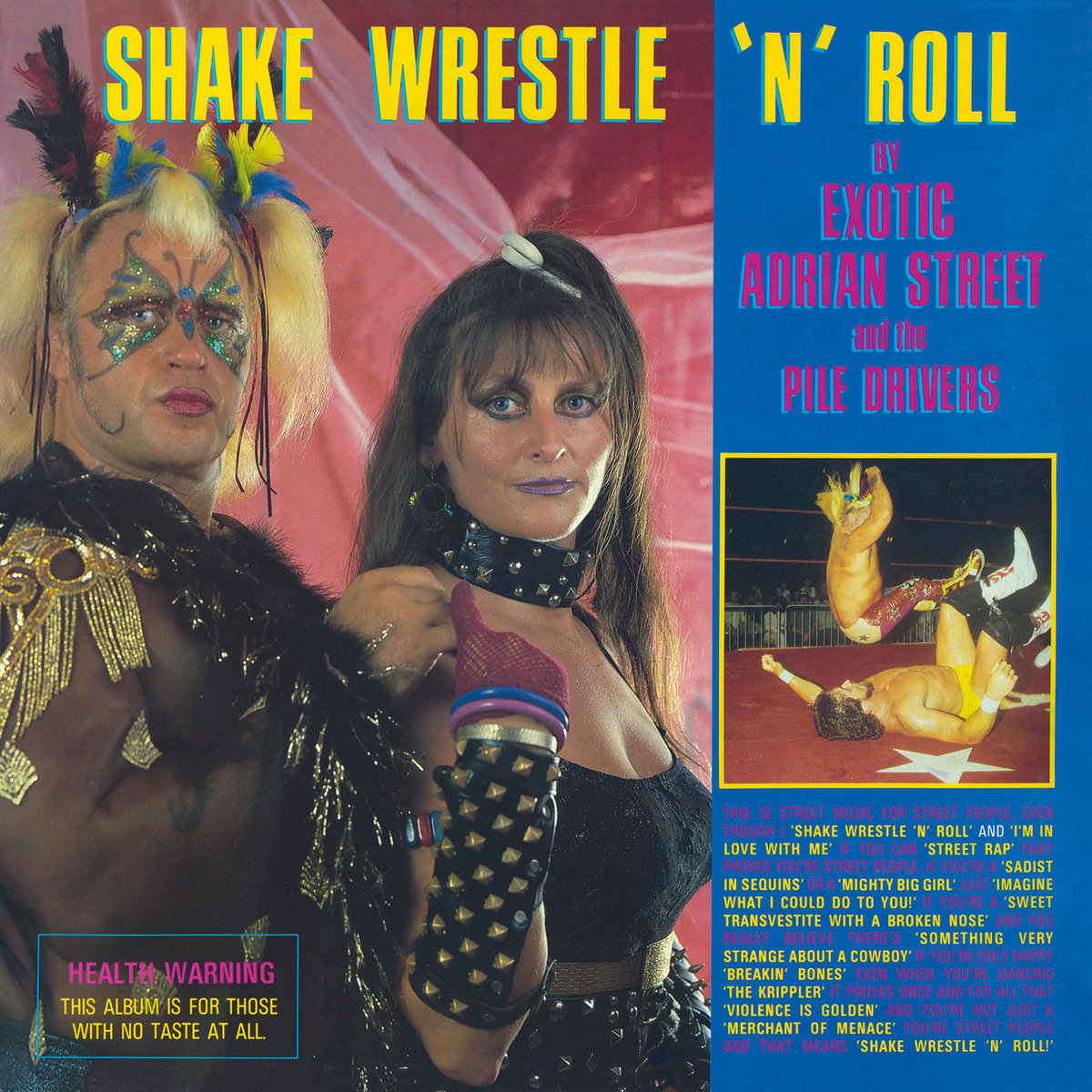
Adrian Street was a trailblazing British professional wrestler whose career bridged the gap between classic technical catch-as-catch-can grappling and the flamboyant, theatrical presentation that came to define modern sports entertainment. While millions remember "The Exotic" Adrian Street for his platinum blonde hair, theatrical makeup, and sequined robes—a persona that shattered rigid mid-century masculine stereotypes in the ring—his foundational expertise lay deep within the rigorous traditions of British grappling. Understanding Street's legacy requires examining how traditional mat wrestling evolved into the high-impact, character-driven spectacle he mastered. This comprehensive guide explores the core principles of British wrestling style, the technical foundations of catch wrestling, Street's historical impact, and how contemporary athletes can apply his disciplined approach to hold-and-counter sequences.
The Foundations of British Catch Wrestling and Technical Mat Work
Long before global television syndication popularized studio wrestling, the British Isles cultivated a distinct style of professional wrestling rooted in catch-as-catch-can wrestling, Cumberland and Westmorland wrestling, and Lancashire style submission wrestling. This discipline prioritized joint locks, pinning combinations, leverage, and mat awareness over high-flying acrobatics or cinematic strikes. Wrestlers like Adrian Street, who began his professional journey in the early 1960s after working in Welsh coal mines, spent years absorbing these harsh, practical lessons in working men's clubs and fairground booths.
The British style emphasized the transition from standing position to mat control. Practitioners learned to dominate opponents through superior center-of-gravity manipulation, wrist locks, armbars, and specialized pinning techniques known as falls. Unlike the heavier, slower styles seen in some North American territories during the same era, British catch wrestling relied on swift transitions, counter-wrestling, and an encyclopedic knowledge of holds. Street possessed a deceptive amateur and professional grounding that allowed him to handle any opponent, ensuring that his flamboyant character was backed by legitimate, hard-earned toughness inside the ropes.
Deconstructing the Technical Repertoire of Adrian Street
Evaluating Adrian Street as a technical wrestler reveals a masterclass in ring psychology, pacing, and efficient energy expenditure. Street understood that grappling was as much about controlling the audience's emotional investment as it was about executing a submission hold. His in-ring catalog featured precise leverage mechanics that minimized his own physical exertion while maximizing psychological and physical pressure on opponents.
| Technical Category | Primary Focus | Practical Application in Match Strategy |
|---|---|---|
| Mat Control & Escapes | Hip movement, bridging, base maintenance | Neutralizing dominant top positions and securing quick reversals |
| Joint Manipulation | Wrist locks, hammerlocks, single-leg Boston crabs | Inflicting gradual leverage pressure to set up pins or submissions |
| Psychological Control | Pacing, verbal taunts, referee manipulation | Disrupting opponent rhythm and drawing high-intensity crowd reactions |
| Striking & Counters | Open-hand slaps, European uppercuts, drop-down counters | Punctuating technical holds with sudden bursts of calculated offense |
This structured approach ensured that Street could transition seamlessly from a gritty, counter-wrestling exchange on the canvas to playing the ultimate flamboyant villain. By maintaining absolute discipline in his foundational holds, he preserved the structural integrity of the match while pushing the boundaries of sports entertainment performance.
The Evolution from Traditional Matman to Theatrical Pioneer
The transformation of Adrian Street from a rugged Welsh heavyweight contender into "The Exotic" stands as one of the most significant character evolutions in professional wrestling history. By adopting a persona characterized by silk robes, makeup, and feminine mannerisms, Street weaponized crowd prejudice against himself, generating nuclear heat wherever he competed. However, this theatrical shift did not dilute his technical capabilities; rather, it amplified them.
When opponents underestimated Street due to his flamboyant appearance, he punished them with legitimate catch wrestling holds and punishing mat work. This contrast created a compelling narrative arc within matches: the audience came to see him defeated for his audacity, only to witness his technical mastery continually frustrate challengers. For modern practitioners, Street's career demonstrates the vital importance of marrying deep technical competence with distinct character work. A grappling guide inspired by Street must emphasize that technical skill gains maximum utility when paired with flawless ring awareness and compelling persona projection.
Core Training Principles for Modern Technical Grapplers
Aspiring grapplers and professional wrestlers seeking to emulate the effectiveness of vintage British catch wrestling must master several non-negotiable physical and mental principles. Conditioning in the British style focused on functional strength, neck bridging, cardiovascular endurance, and mat resilience.
- Develop an Immovable Base: Practice maintaining a low center of gravity during tie-ups, ensuring that opponents cannot easily destabilize your posture or secure single-leg takedowns.
- Master the Transition: Never linger in a static position. Every hold should flow naturally into a counter, a pinning combination, or an escape route based on your opponent's defensive reaction.
- Prioritize Leverage Over Raw Power: Learn to isolate joints and fulcrums so that smaller athletes can neutralize larger, heavier opponents through precise biomechanical positioning.
- Integrate Ring Psychology: Understand where you are positioned relative to the ropes, the referee, and the crowd, using your physical positioning to tell a coherent story throughout a bout.
Comparing British Catch Wrestling with Contemporary Styles
The landscape of professional grappling has shifted significantly since the peak of British independent wrestling in the mid-to-late twentieth century. To understand the utility of Adrian Street's foundational style, it is helpful to contrast it with modern grappling frameworks.
| Feature | British Catch Style (Vintage Era) | Modern Hybrid Pro Wrestling | Submission Grappling (No-Gi) |
|---|---|---|---|
| Primary Objective | Securing falls and joint submissions via leverage | Balancing athletic spectacle, high spots, and storytelling | Eliciting a tap-out via dominant submission grappling |
| Pacing | Methodical, building from mat exchanges to explosive climaxes | Fast-paced, high-impact sequences with rapid transitions | Strategic, tactical chess match focused on positional control |
| Attire & Presentation | Practical trunks/boots evolving into theatrical gear | Branded athletic wear, spandex, or cinematic costumes | Rash guards, board shorts, and functional athletic gear |
| Rule Constraints | Traditional falls counts, rope breaks, round limits | Varied promotion-specific rules, often incorporating pinfalls and submissions | Strict submission-only or points-based tournament formats |
Frequently Asked Questions
What makes Adrian Street's wrestling style unique?
Adrian Street combined authentic British catch-as-catch-can technical mastery with an unprecedented, flamboyant theatrical persona. While his appearance challenged conventional norms, his execution of mat holds, leverage counters, and psychology remained grounded in rugged, traditional British wrestling.
Did Adrian Street compete in legitimate wrestling contests?
Street trained and competed during an era when professional wrestling maintained close ties to catch-as-catch-can traditions. While professional bouts were predetermined for entertainment, Street possessed genuine hook-and-hold grappling expertise capable of neutralizing legitimate challengers in the locker room.
How can modern wrestlers apply catch wrestling principles?
Modern athletes can integrate catch wrestling by focusing on tight wrist control, seamless positional transitions, bridging mechanics, and using leverage rather than relying purely on brute strength or high-risk aerial maneuvers.
What was the significance of British independent wrestling in the 1970s?
The 1970s golden era of British wrestling, broadcast widely on ITV's World of Sport, showcased highly technical mat work, strict round rules, and distinct character archetypes that influenced generations of global talent.
Where did Adrian Street learn his craft?
Street began his athletic conditioning and combat training in Wales before entering the professional ranks in the early 1960s, refining his craft against hardened veterans in traditional working men's clubs and fairground booths across the United Kingdom.
Next Steps for Mastering Technical Grappling Foundations
To truly honor the legacy of innovators like Adrian Street, students of grappling must dedicate consistent hours to unglamorous fundamental drilling. Begin by focusing exclusively on basic mat movement, hip escapes, and pressure maintenance before attempting complex holds or high-impact sequences. Study archival footage of vintage British matches to observe how masters of the mat controlled pacing, managed distance, and used minimalist movements to break down their opponents. By anchoring your training in sound mechanics, leverage awareness, and historical respect, you build a resilient foundation capable of adapting to any era of professional wrestling or submission grappling.