Adrian Peterson competed in Season 32 of Dancing with the Stars in 2023, paired with professional dancer Britt Stewart. The former NFL MVP participated in four weeks of the competition before being eliminated during Disney Night. His journey featured a progression from high-energy Salsa to a final, emotional Rumba.
The Transition from the NFL Gridiron to the Ballroom
Adrian Peterson is widely regarded as one of the greatest running backs in NFL history. Known for his explosive power, vertical speed, and physical resilience, Peterson spent the majority of his career with the Minnesota Vikings, where he earned the 2012 NFL MVP award. However, the skill set required for a professional football player—low center of gravity, aggressive bursts of movement, and rigid muscular control—often contrasts sharply with the requirements of ballroom dance.
When Peterson joined the cast of Dancing with the Stars (DWTS) for its 32nd season, he joined a long lineage of professional athletes, particularly NFL players, who have sought to translate their athleticism into rhythmic grace. Players like Emmitt Smith, Hines Ward, and Rashad Jennings had previously won the Mirrorball Trophy, setting a high bar for Peterson. As of 2026, Peterson’s stint is remembered as a testament to the "fish out of water" narrative that often defines the show's most compelling celebrity arcs. He entered the competition not as a natural dancer, but as a disciplined athlete willing to undergo a rigorous technical overhaul.
The physical demands of DWTS are often underestimated by professional athletes. While Peterson was used to the high-impact collisions of the football field, the repetitive, fine-motor movements of Latin and Ballroom styles presented a different kind of physiological challenge. Specifically, the "ball-flat" footwork of the Salsa and the intricate "heel leads" of the Quickstep required him to rewire decades of muscle memory built on the football field.
Britt Stewart: The Professional Partner and Coach
For Season 32, Peterson was paired with professional dancer Britt Stewart. Stewart made history as the first Black female pro on Dancing with the Stars, and by the time she was paired with Peterson, she had established a reputation as a patient yet demanding instructor. Her background in contemporary, hip-hop, and ballroom gave her a versatile toolkit to help Peterson find his rhythm.
The pairing was stylistically interesting due to the physical discrepancy between the two. Peterson stands at 6'1" with a heavily muscled, "top-heavy" frame, while Stewart is known for her fluid, elongated lines. One of Stewart’s primary challenges was teaching Peterson how to "soften" his movements. In football, stiffness is a defensive tool; in dance, it is a technical flaw.
Throughout their four-week tenure, Stewart focused on Peterson’s posture and frame. Because of his height and the width of his shoulders, Peterson often struggled with keeping his "top line" steady in standard ballroom dances like the Viennese Waltz. Stewart’s coaching emphasized the connection between the partners, moving away from Peterson’s individualistic athletic instincts and toward a cohesive, synchronized unit.
Season 32: Context and Competition
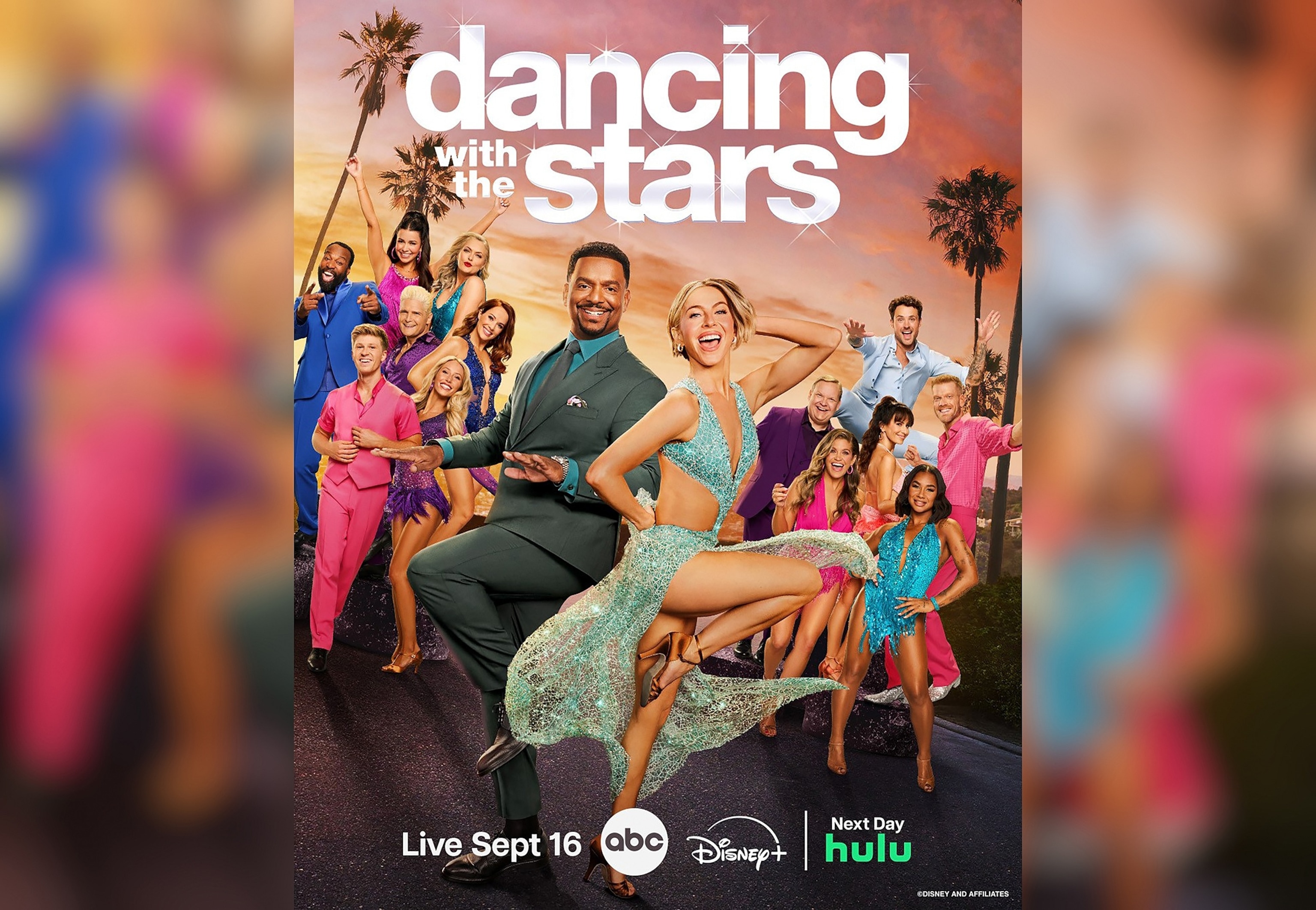
Season 32 of Dancing with the Stars premiered in September 2023, marking a return to its original network, ABC, while simultaneously streaming on Disney+. The season was hosted by Alfonso Ribeiro and Julianne Hough, with a judging panel consisting of Carrie Ann Inaba, Bruno Tonioli, and Derek Hough.
The competition Peterson faced was formidable. The Season 32 cast included several contestants with prior performance experience, such as Marvel star Xochitl Gomez, singer Jason Mraz, and Vanderpump Rules star Ariana Madix. In this environment, "pure" athletes often find themselves at a disadvantage during the early weeks when technical polish is compared against natural performance ability.
Peterson's presence on the show was also marked by a degree of public scrutiny. His casting revived discussions regarding his 2014 legal issues involving child discipline. While the show moved forward with his participation, the social media discourse surrounding his season was more polarized than that of his fellow contestants. This atmospheric tension placed additional pressure on Peterson and Stewart to deliver performances that could win over a skeptical audience through sheer effort and improvement.
Week-by-Week Performance Details
Adrian Peterson’s journey on the show was brief but showed a clear upward trajectory in terms of technical scores. He survived three rounds of elimination before finally falling in the fourth week.
Week 1: Premiere Night - Salsa
Peterson made his debut with a Salsa performed to "Sugar" by Maroon 5. The Salsa is a difficult first dance for many athletes because it requires "loose hips" and a constant rhythmic bounce that contradicts the grounded stance of a football player. The judges noted his effort but pointed out significant stiffness in his upper body.
- Score: 18/30
Week 2: Latin Night - Quickstep
In the second week, the couple tackled the Quickstep to "The Way You Move" by OutKast. The Quickstep is notorious for its fast pace and the requirement for "shuffling" footwork that must remain light and airy. For a man of Peterson’s size, staying light on his feet while maintaining a rigid ballroom frame was a massive hurdle. The judges were critical of his footwork, leading to his lowest score of the season.
- Score: 15/30
Week 3: Motown Night - Viennese Waltz
During Motown Night, the duo performed a Viennese Waltz to "Baby Can I Hold You" by Tracy Chapman (the Motown link was the specific arrangement/theme of the evening). This dance was a turning point for Peterson. The slower tempo allowed him to focus on his "frame" and the emotional connection with Stewart. Guest judge Michael Strahan, a fellow NFL veteran, provided a unique perspective on Peterson's transition, praising his poise.
- Score: 22/40 (Included a guest judge score)
Week 4: Disney Night - Rumba
Peterson’s final performance was a Rumba to "Can You Feel the Love Tonight" from The Lion King. The Rumba is often called the "dance of love," requiring sensual, fluid movements and a deep focus on the "Rumba walk." Peterson showed his greatest technical improvement in this week, demonstrating better hip action and hand extensions. Despite the improvement, the competitive field was too strong, and he was eliminated at the end of the night.
- Score: 23/40
Performance Summary Table
The following table outlines the technical progression and thematic elements of Adrian Peterson's Season 32 journey.
| Week | Theme | Dance Type | Song Choice | Score | Result |
|---|---|---|---|---|---|
| 1 | Premiere | Salsa | "Sugar" (Maroon 5) | 18/30 | Safe |
| 2 | Latin Night | Quickstep | "The Way You Move" (OutKast) | 15/30 | Safe |
| 3 | Motown Night | Viennese Waltz | "Baby Can I Hold You" (Tracy Chapman) | 22/40 | Safe |
| 4 | Disney Night | Rumba | "Can You Feel the Love Tonight" | 23/40 | Eliminated |
The "Redemption" Narrative and Public Reception
Throughout his four weeks, the narrative arc for Adrian Peterson focused on "redemption" and "vulnerability." For a man who built a career on being an untouchable physical force, the ballroom offered a rare look at his softer side. During rehearsal packages, Peterson often spoke about the difficulty of being "small" and "graceful" when his entire life had been predicated on being "big" and "strong."
However, the public reception remained divided. While many longtime Vikings fans and NFL enthusiasts supported him, a segment of the DWTS audience remained vocal about his past. This division likely impacted the "Fan Vote," which accounts for 50% of the total score. In Dancing with the Stars, a celebrity can have lower scores and still survive if their fan base is large and active. Conversely, a celebrity with decent scores—like Peterson in Week 4—can be eliminated if they fail to capture the public's sympathy or enthusiasm.
His elimination on Disney Night was seen by many as a natural conclusion to his journey. He had improved significantly, moving from a 15-point performance to a 23-point performance (on a 40-point scale), but he had reached the ceiling of his natural dancing ability relative to the younger, more agile contestants remaining in the competition.
Elimination and Final Reflections
The elimination of Adrian Peterson and Britt Stewart in Week 4 came as a disappointment to his supporters but was not a total surprise given the leaderboard standings. In his exit speech, Peterson expressed gratitude toward Britt Stewart for her patience and for pushing him outside of his comfort zone. He noted that the experience had given him a new appreciation for the artistry involved in dance—a sentiment echoed by many former athletes who realize that "training" for a dance is just as grueling as "training" for a season of football.
Britt Stewart also praised Peterson’s work ethic. She highlighted that he never missed a rehearsal and approached the ballroom with the same "film study" mentality he used in the NFL. This professional discipline is often what keeps athletes in the competition longer than their technical skills might suggest they should last.
As we look back from 2026, Adrian Peterson’s stint on Dancing with the Stars serves as a classic example of the "athlete-to-artist" pipeline. While he did not win the Mirrorball Trophy, he successfully navigated a medium that was entirely foreign to him, providing a humanizing look at one of football's most intense figures.
Who was Adrian Peterson's partner on Dancing with the Stars?
Adrian Peterson's professional partner was Britt Stewart. Stewart is a veteran professional on the show, known for being the first Black female pro in the show's history. She has previously been paired with celebrities like Johnny Weir and Daniel Durant. Her coaching style with Peterson focused on softening his athletic rigidity and improving his ballroom frame.
What season of DWTS was Adrian Peterson on?
Adrian Peterson appeared on Season 32 of Dancing with the Stars. This season premiered in the fall of 2023. It was a notable season as it marked the show’s return to ABC after a brief period of being exclusive to the Disney+ streaming platform.
How far did Adrian Peterson go in the competition?
Adrian Peterson lasted until Week 4 of the competition. He was eliminated on "Disney Night" after performing a Rumba to "Can You Feel the Love Tonight" from The Lion King. While his scores had been improving, he and Britt Stewart did not receive enough fan votes to overcome their position on the leaderboard against the remaining contestants.
What was Adrian Peterson's highest score on the show?
His highest score was a 23 out of 40, which he received during his final performance (Week 4, Disney Night). It is important to note that starting in Week 3, the scores were out of 40 due to the presence of a fourth guest judge. His highest score on the traditional 30-point scale was an 18, earned during the Premiere Night Salsa.
Why was Adrian Peterson’s casting controversial?
The controversy stemmed from a 2014 legal case where Peterson was indicted for reckless or negligent injury to a child. The incident involved the use of a "switch" to discipline his son. While Peterson reached a plea deal and served a suspension from the NFL, the news resurfaced when he was cast on DWTS, leading to a mixed reaction from the audience and discussions regarding accountability and "cancel culture" in reality television.
Analyzing Athlete Performance in Reality Competitions
For those interested in the crossover between professional sports and performance arts, Adrian Peterson’s journey provides a blueprint for understanding how "power athletes" struggle in the ballroom. When reviewing past performances of NFL players, it is beneficial to look at the "lower body vs. upper body" dichotomy.
If you are analyzing Peterson's performances, focus on his Week 3 Viennese Waltz. It represents the best example of how an athlete can use their core strength to maintain a difficult ballroom frame. Comparing his Week 2 Quickstep to his Week 4 Rumba also offers a clear lesson in how a celebrity can improve their "rhythmic awareness" over just a few weeks of intensive training. This progression remains a valuable case study for fans of the show who want to see how elite physical conditioning can—and sometimes cannot—transfer to the world of professional dance.