Adrian Newey is widely regarded as the greatest technical mind in Formula 1 history, having designed championship-winning cars for Williams, McLaren, and Red Bull Racing. With over 200 Grand Prix victories and a record-breaking number of Constructors' Titles, his genius lies in his peerless understanding of aerodynamics and his unique ability to translate complex fluid dynamics into physical mechanical grip.
The Philosophy of an Aerodynamicist: Beyond the Wind Tunnel
To understand Adrian Newey’s impact on motorsport, one must first understand his methodology. In an era dominated by Computational Fluid Dynamics (CFD) and supercomputer simulations, Newey remains a purist who famously prefers a drawing board and a pencil to a CAD workstation. His ability to "see" the air—to visualize how a vortex will interact with a rear wing or how a floor edge will seal a low-pressure zone—is what separates him from even the most talented modern engineers.
Newey’s philosophy is rooted in the "holistic car." While many departments in an F1 team focus on specialized components, Newey views the car as a single aerodynamic entity. This perspective allows him to find performance in the spaces between components—the interactions that a specialist might overlook. His 2026 status as a veteran of the sport highlights a career spent anticipating regulatory shifts before they even occur, often finding loopholes that the FIA’s rule-makers never intended.
His academic background is equally significant. Newey’s thesis at the University of Southampton focused on ground-effect aerodynamics, a subject that would become the defining technical battleground of the 2020s. This deep-rooted knowledge allowed him to master the 2022 technical regulations far more effectively than his rivals, leading to the most dominant era in the history of Red Bull Racing.
The Williams Era: Defining Electronic Dominance (1991–1996)
When Adrian Newey joined Williams in 1991, he paired his aerodynamic prowess with the team’s existing technical sophistication. The result was a series of cars that were essentially "computers on wheels." The FW14B and its successor, the FW15C, represent the pinnacle of active suspension technology in Formula 1.
The FW14B was a revelation. While rivals were struggling with mechanical grip, Newey’s design utilized an active suspension system that kept the car at a constant ride height, ensuring the aerodynamic platform remained perfectly stable through every corner. This allowed Nigel Mansell to dominate the 1992 season with a level of superiority rarely seen in the sport. Newey’s genius was not just in the electronics, but in how the aerodynamics were shaped to take advantage of that perfectly controlled platform.
Following the ban on electronic aids in 1994, Newey proved he didn't need "gadgets" to win. The FW18, driven by Damon Hill in 1996, was a masterclass in packaging. Newey pushed the boundaries of driver positioning and weight distribution, creating a car so aerodynamically efficient that it won 12 out of 16 races that year. This era established Newey as the man who could make a car fast regardless of the regulatory environment.
The McLaren Years: Newey vs. Ferrari (1997–2005)
Moving to McLaren in 1997, Newey faced the challenge of toppling the burgeoning Ferrari-Schumacher era. His first major success came with the MP4/13, a car designed for the new "narrow track" and grooved tire regulations of 1998. While other designers struggled to find balance with the reduced width, Newey utilized a longer wheelbase and innovative brake-steer technology to maintain high cornering speeds.
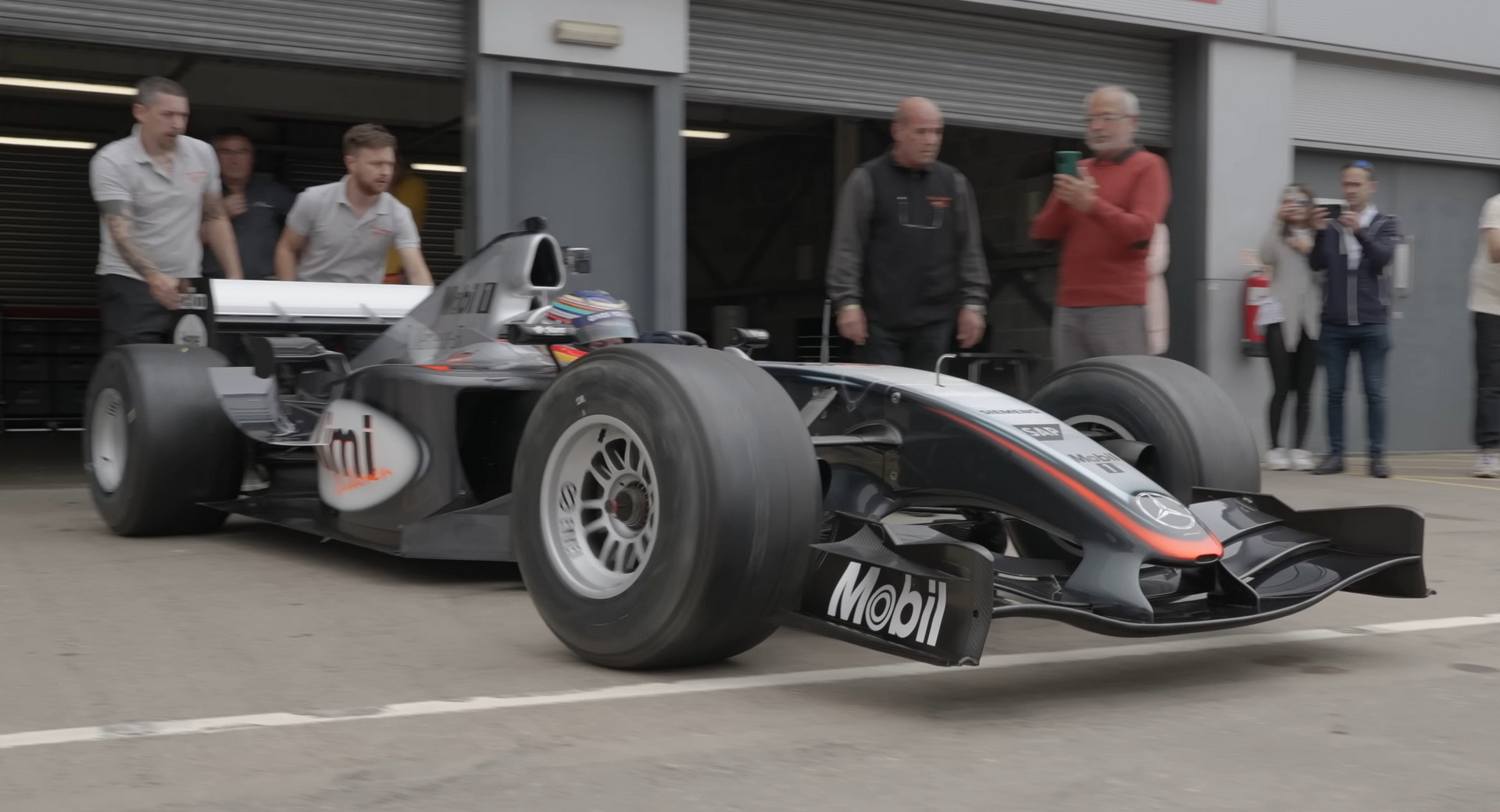
The McLaren years highlighted Newey’s appetite for risk. He often pushed packaging to the absolute limit, sometimes at the expense of reliability. The MP4-18, for example, was so tightly packaged for aerodynamic gain that it never actually raced due to cooling and structural issues. However, this "bleeding edge" approach resulted in the MP4/20 of 2005, which was arguably the fastest car of its season, even if it lacked the bulletproof reliability of the rival Renault.
Key highlights of the McLaren era:
- Innovations in Carbon Fiber: Pushing the limits of thin-wall castings to save weight.
- Vortex Management: Early use of "bargeboards" to control the messy air coming off the front wheels.
- Low-Center-of-Gravity Engines: Collaborating with Mercedes-Benz to lower the engine’s mounting point for better handling.
Red Bull Racing: Building a Dynasty from Scratch (2006–2024)
When Newey joined Red Bull Racing in 2006, the team was a mid-field outfit known more for its marketing than its engineering. Newey was the "silver bullet" that transformed them into a powerhouse. Starting with the RB5 in 2009, Newey introduced the high-rake concept—tilting the car forward to use the front wing as a more effective aerodynamic tool and creating a massive expansion zone at the rear.
The RB6 through RB9 era (2010–2013) saw Sebastian Vettel win four consecutive titles. During this time, Newey mastered "exhaust-blown diffusers." By redirecting hot exhaust gases over the rear diffuser, he generated downforce even when the driver was off the throttle. This required an incredible level of synergy between Newey’s aero team and Renault’s engine engineers, showcasing Newey’s ability to lead across multiple disciplines.
The 2022 regulatory shift back to "ground effect" played directly into Newey's hands. While other teams suffered from "porpoising" (a violent bouncing at high speeds), Newey’s RB18 and RB19 were stable from day one. He understood that the secret wasn't just in the floor's shape, but in the suspension’s ability to control the car's pitch. The RB19 became the most successful car in F1 history, winning 21 out of 22 races in 2023.
Technical Milestones of Newey’s Career
The following table summarizes the key designs that defined Adrian Newey’s career and the specific engineering breakthroughs associated with them.
| Car Model | Year | Key Engineering Breakthrough | Primary Achievement |
|---|---|---|---|
| Williams FW14B | 1992 | Integrated Active Suspension & Traction Control | 10 Wins, Driver & Constructor Title |
| McLaren MP4/13 | 1998 | Narrow-track Aero Optimization & Brake Steer | Dominant World Championship |
| Red Bull RB7 | 2011 | Perfected Cold/Hot Exhaust-Blown Diffuser | 12 Wins, 18 Pole Positions |
| Red Bull RB19 | 2023 | Advanced Under-floor Venturi Tunnels & Anti-Dive Suspension | Most Dominant Season in F1 History |
| Aston Martin Valkyrie | 2021+ | Road-legal High-Downforce Ground Effect | Defined the "Hypercar" Category |
The Ground Effect Masterclass and the 2022 Technical Revolution
The 2022 technical regulations represented the largest shift in F1 design in 40 years, moving away from "over-body" aerodynamics to "under-body" ground effects. Many modern engineers had never worked with ground effect, as it had been banned since the early 1980s. Adrian Newey, however, had literally written his university thesis on it.
While Mercedes and Ferrari focused on spectacular "sidepod" designs, Newey focused on the floor and suspension. He recognized that if the floor is the primary source of downforce, the suspension must be stiff enough to prevent the floor from hitting the ground (which causes the air to "stall" and the car to bounce), yet compliant enough to handle curbs.
His implementation of anti-dive and anti-squat suspension geometry allowed the Red Bull cars to remain aerodynamically "flat" during braking and acceleration. This mechanical stability meant the aero remained consistent, giving drivers Max Verstappen and Sergio Perez the confidence to push the car to its limits. This period solidified the notion that Newey isn't just an aerodynamicist—he is a master of the entire vehicle dynamic package.
Transitioning to 2026: The Legacy and the Final Chapter
As of 2026, the landscape of Formula 1 has shifted again with new power unit regulations and active aerodynamics. Adrian Newey’s career has entered a final, storied phase. After his highly publicized departure from Red Bull Racing in 2024/2025, his influence has extended toward legacy projects and new challenges, including his massive contribution to the Aston Martin Valkyrie project and his eventual transition to a new technical leadership role.
Newey’s legacy is not just the trophies, but the generations of engineers he has mentored. His "Newey-isms"—the obsession with detail, the insistence on manual drawing to foster creativity, and the relentless pursuit of the "unfair advantage"—are now baked into the culture of every team he has touched. He remains the benchmark against which every Technical Director in the pit lane is measured.
Even as Formula 1 moves toward increasingly restrictive regulations and standardized parts, Newey continues to find "grey areas." His ability to interpret the spirit of the law while finding the performance in the letter of the law remains unmatched. Whether designing a championship-winning F1 car or a record-breaking hypercar, his work remains a testament to the power of human intuition in a world of digital simulation.
Frequently Asked Questions
Why is Adrian Newey considered better than other F1 designers?
Newey possesses a rare combination of theoretical knowledge (specifically in ground effect) and decades of practical experience. Unlike many modern designers who rely entirely on computer simulations, Newey uses his drawing board to conceptualize the "flow" of a car, often identifying aerodynamic opportunities that software algorithms might overlook or dismiss as unconventional.
Has Adrian Newey ever designed anything other than Formula 1 cars?
Yes. Beyond his legendary F1 career, Newey was instrumental in designing the Aston Martin Valkyrie, a road-legal hypercar that utilizes F1-grade aerodynamics. He also has a history in IndyCar, where his designs won the Indianapolis 500 and the CART championship in the 1980s, proving his genius is not limited to a single racing series.
What is Newey's "drawing board" and why does he still use it?
Newey uses a traditional large-scale drafting board to hand-draw his designs. He believes this process allows for a more "organic" development of shapes and surfaces. While the final designs are eventually digitized for manufacturing, the creative "spark" and the initial aerodynamic surfaces originate from his manual sketches, allowing him to maintain a tactile connection to the car's geometry.
How did Newey handle the 2022 porpoising issue so much better than others?
Newey’s experience with ground-effect aerodynamics from the early 1980s gave him a head start. He understood that porpoising was a symptom of an unstable aerodynamic platform. By designing a highly sophisticated suspension system that controlled the car's ride height and pitch more effectively than his rivals, he was able to keep the under-floor air consistent, preventing the stall-and-bounce cycle.
Which is Adrian Newey’s most successful car design?
Statistically, the Red Bull RB19 (2023) is his most successful design, winning 21 out of 22 races in a single season. However, many purists point to the Williams FW14B (1992) as his greatest achievement, as it represented a technological leap over its competition that has arguably never been matched since.
Identifying Excellence: How to Study Newey’s Impact
For those looking to understand the technical nuances of Adrian Newey’s work, the best approach is to analyze the "evolutionary" steps between his cars. Rather than looking at a single season, observe how he carries a concept—such as the high-rake philosophy or the "undercut" sidepod—and refines it over several years. Studying his autobiography, How to Build a Car, provides unparalleled insight into his mental framework. To truly appreciate his genius in 2026 and beyond, one must look past the wings and bodywork and focus on the floor and suspension—the hidden areas where Newey truly wins championships.