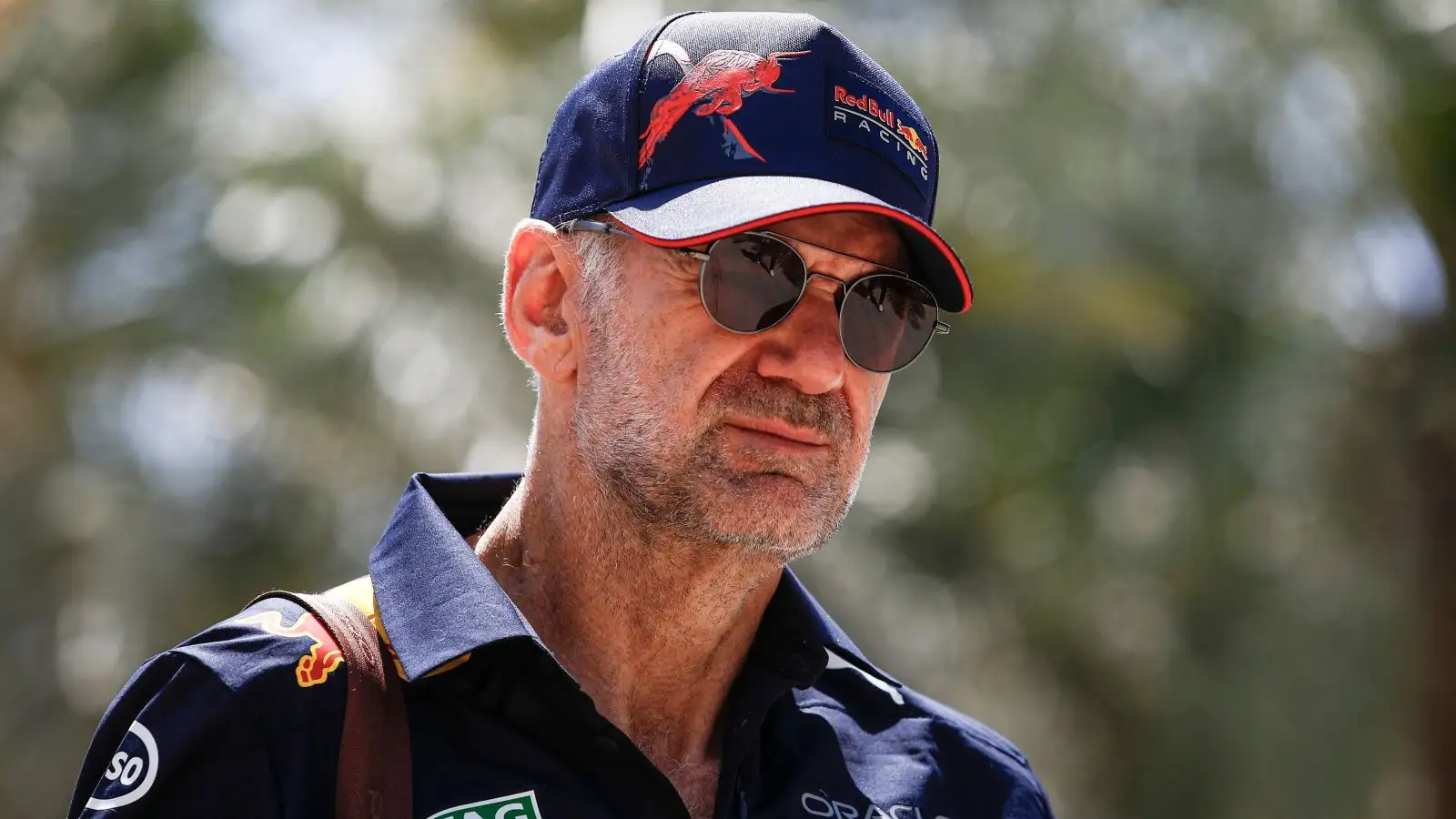
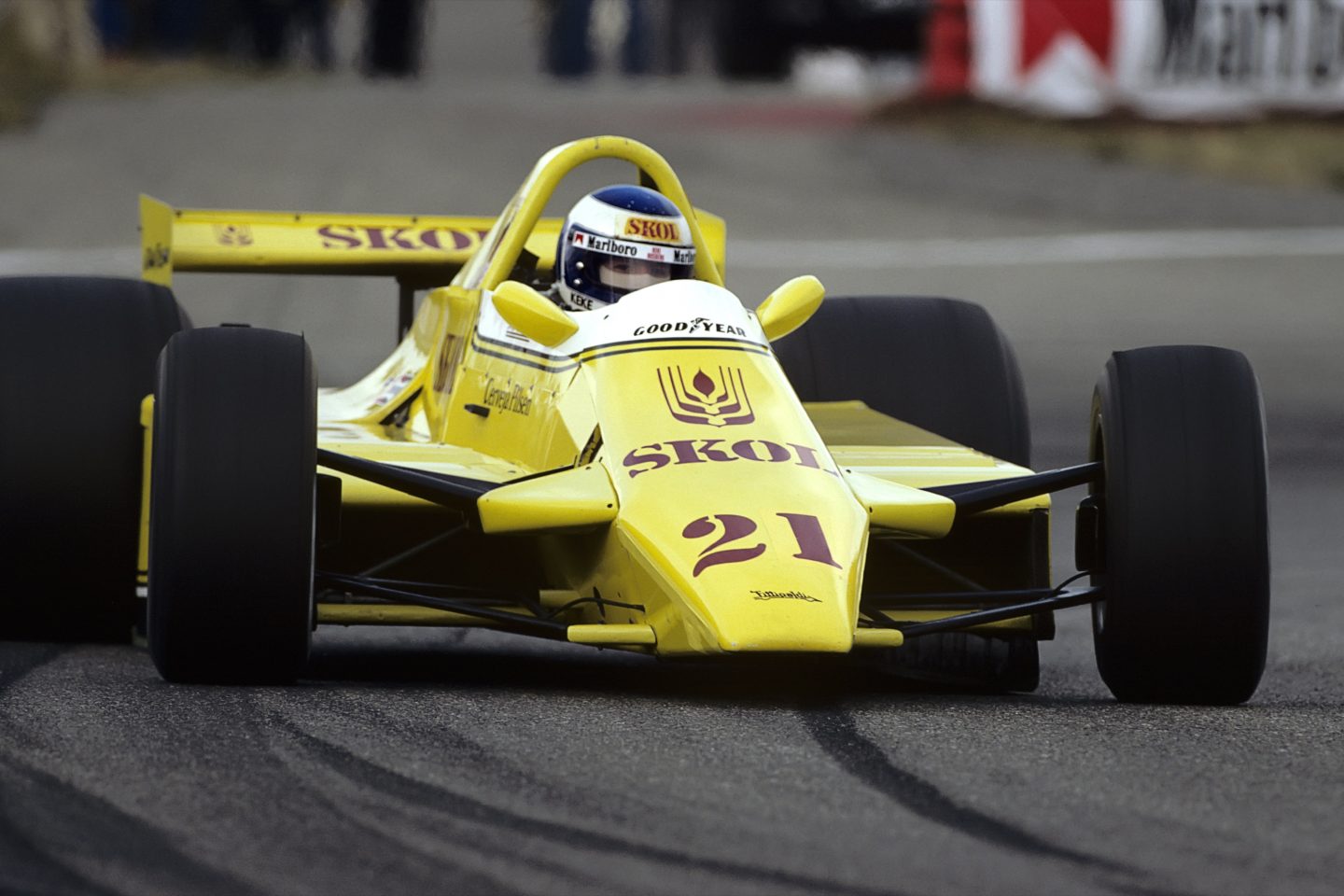
Adrian Newey is arguably the greatest aerodynamicist in motorsport history, responsible for over 12 Formula 1 Constructors' Championships and numerous driver titles. From the active-suspension Williams FW14B to the ground-effect Red Bull RB20 and the RB17 hypercar, Newey’s designs prioritize aerodynamic efficiency and aggressive mechanical "packaging" to redefine the boundaries of automotive performance.
As of 2026, Adrian Newey’s legacy has entered a transformative final chapter. Having concluded his historic tenure at Red Bull Racing and transitioned to his high-profile role at Aston Martin, Newey remains the only designer to have won world titles with three different Formula 1 teams (Williams, McLaren, and Red Bull). His career is a masterclass in how to interpret—and often exploit—the complex physics of airflow to create the fastest vehicles on the planet. This guide examines the technical evolution of his most significant designs and the philosophy that continues to influence the 2026 grid and the hypercar market.
The Genesis of Dominance: The Williams and McLaren Years
Newey’s reputation as a "rulebook whisperer" began in earnest during the early 1990s. After showing flashes of brilliance with the Leyton House March team, he moved to Williams Racing, where he formed a legendary partnership with Patrick Head. The result was a series of cars that were technically years ahead of their competition.
The Williams FW14B and FW15C
The 1992 Williams FW14B is often cited as the most technologically advanced car of its era. Newey’s genius lay in his ability to integrate complex electronic systems—such as active suspension, traction control, and anti-lock brakes—into a chassis that was already aerodynamically superior. The active suspension allowed the car to maintain a perfectly level ride height regardless of the bumps on the track or the aerodynamic load, ensuring the underbody diffusers worked at maximum efficiency 100% of the time. This "computational" approach to grip allowed Nigel Mansell to dominate the 1992 season.
The McLaren MP4/13
After moving to McLaren in 1997, Newey immediately made an impact. The 1998 MP4/13 was a response to a major regulation change that narrowed the track of F1 cars and introduced grooved tires. While other designers struggled with the reduced stability, Newey maximized the car's wheelbase and optimized the airflow around the narrower chassis. The MP4/13 featured a distinctive low-nose design and a highly efficient rear wing that gave Mika Häkkinen the tools to defeat Michael Schumacher’s Ferrari. It was during this era that Newey’s focus on "packaging"—fitting the engine, cooling, and suspension into the smallest possible volume—became his trademark.
The Red Bull Era: From Mid-Field to Total Hegemony
When Adrian Newey joined Red Bull Racing in 2006, the team was a mid-pack outfit known more for its marketing than its engineering. Newey was the foundational pillar upon which the team's championship infrastructure was built.
The RB5 and the 2009 Revolution
The 2009 season saw a massive overhaul of aerodynamic regulations. While Brawn GP famously won with the "double diffuser," Newey’s RB5 was arguably the most influential design of the year. It introduced the high-nose, V-profile chassis and the pull-rod rear suspension—concepts that almost every team on the grid eventually copied. The RB5 laid the groundwork for the four consecutive world titles won by Sebastian Vettel in the RB6 through RB9.
The Blown Diffuser Masterclass
Between 2010 and 2013, Newey perfected the "exhaust-blown diffuser." By directing high-energy exhaust gases over the rear diffuser, he was able to generate massive amounts of downforce even when the car was off-throttle in corners. This required a deep level of integration between the Renault engine maps and the aerodynamic surfaces of the car—a classic example of Newey’s holistic design approach.
The Ground-Effect Renaissance (RB18 and RB19)
The return of ground-effect aerodynamics in 2022 allowed Newey to revisit the physics he had studied early in his career. While other teams struggled with "porpoising" (a violent bouncing motion caused by aerodynamic stalling), Newey’s RB18 and the subsequent RB19 were immune. The RB19, in particular, became the most dominant car in F1 history, winning 21 out of 22 races in 2023. Newey’s design utilized a sophisticated floor and suspension geometry that kept the "venturi tunnels" under the car stable across a wide range of speeds and ride heights.
Beyond Formula 1: The Hypercar Legacy
In recent years, Newey has expanded his reach beyond the confines of FIA regulations, applying his knowledge to road-legal and track-only hypercars. These projects represent the "purest" expression of his design philosophy, free from many of the constraints of professional racing.
The Aston Martin Valkyrie
A collaboration between Red Bull Advanced Technologies and Aston Martin, the Valkyrie was Newey’s first attempt at a road car. The design is essentially a Le Mans prototype disguised as a street car. Its most striking feature is the massive tunnels running beneath the chassis, which generate enough downforce to allow the car to corner at over 3G. Newey insisted on a naturally aspirated V12 engine for its sound and packaging benefits, emphasizing that the driving experience should be as visceral as the performance.
The Red Bull RB17
Announced during his final years at Red Bull and reaching production in late 2025/early 2026, the RB17 is a track-only hypercar. Unlike the Valkyrie, which had to meet road-legal requirements, the RB17 is Newey unleashed.
- Powerplant: A mid-mounted V10 engine delivering over 1,100 horsepower.
- Weight: A target weight of under 900 kg, achieved through an advanced carbon-fiber monocoque.
- Aerodynamics: Active aerodynamic elements that can adjust downforce levels in real-time to balance drag and cornering grip.
The RB17 serves as the ultimate "souvenir" of Newey’s time at Red Bull, embodying every lesson learned from three decades of F1 competition.
Technical Comparison of Iconic Newey Designs
| Car Model | Year | Key Innovation | Primary Achievement |
|---|---|---|---|
| Williams FW14B | 1992 | Active Suspension & Traction Control | 10 Wins, WDC & WCC Titles |
| McLaren MP4/13 | 1998 | Narrow-Track Aero Optimization | WDC & WCC Titles |
| Red Bull RB7 | 2011 | Perfected Blown Diffuser | 12 Wins, 18 Pole Positions |
| Red Bull RB19 | 2023 | Stable Ground-Effect Floor | Most Dominant F1 Car Ever |
| Aston Martin Valkyrie | 2022 | Road-Legal Venturi Tunnels | 1,100kg Downforce at Speed |
| Red Bull RB17 | 2026 | Active Aero & F1-Spec Packaging | Ultimate Track-Day Hypercar |
The Newey Design Philosophy: The Drawing Board and the Pencil
In an age of Supercomputers and Computational Fluid Dynamics (CFD), Adrian Newey remains a famous outlier: he still uses a manual drawing board and a pencil. This is not merely a nostalgic quirk; it is central to how he visualizes airflow.
Newey’s "Why" is rooted in the belief that while computers can calculate air pressure, they struggle to innovate new shapes. By drawing by hand, he maintains a tactile connection to the car’s surfaces. He views the car as a single aerodynamic entity rather than a collection of wings and pods. This leads to "extreme packaging," where internal components like radiators and gearboxes are sculpted into shapes that minimize their impact on external airflow.
Furthermore, Newey is a master of the "gray areas" of technical regulations. He does not just read the rules to see what is allowed; he reads them to see what is not forbidden. This mindset led to innovations like the "F-duct" and various iterations of flexible wings that pushed the limits of what scrutineers would accept.
The 2026 Landscape: Newey at Aston Martin
The 2026 season marks a pivotal moment in Newey’s career as he begins his tenure at Aston Martin under the new power unit and chassis regulations. The 2026 rules focus heavily on active aerodynamics—with wings that move on straights to reduce drag—and a 50/50 power split between the internal combustion engine and electric battery.
For a designer like Newey, these regulations are a playground. The requirement to balance high electric energy recovery with aerodynamic efficiency plays directly into his strengths in packaging and systems integration. As Aston Martin moves into its new state-of-the-art wind tunnel facility, the "Newey effect" is expected to elevate the team into a consistent title contender, challenging the dominance of his former employers at Red Bull.
Common Questions About Adrian Newey Cars
Why is Adrian Newey considered better than other F1 designers?
Newey possesses a unique ability to "see" the air. While most designers rely entirely on CFD data, Newey’s decades of experience allow him to sketch aerodynamic concepts that computers might take weeks to simulate. He also excels at the mechanical side of design, ensuring that the suspension geometry complements the aerodynamic platform.
How many championships have Adrian Newey-designed cars won?
As of the start of the 2026 season, cars designed by Adrian Newey have won 13 Formula 1 Constructors' Championships and assisted drivers in securing 13 World Titles. His winning streak spans four different decades, proving his ability to adapt to radically different technical eras.
What is the difference between the Valkyrie and the RB17?
The Aston Martin Valkyrie was designed to be road-legal, which required compromises in terms of weight, tire choice, and safety features like airbags and emissions equipment. The Red Bull RB17 is a track-only vehicle, allowing Newey to use "illegal" F1 technologies like active skirts and unrestricted fan-assisted aero, making it significantly faster around a circuit.
Does Adrian Newey design the engines as well?
No, Newey is primarily an aerodynamicist and chassis designer. However, he works very closely with engine manufacturers (such as Honda, Renault, and Mercedes) to dictate the "footprint" of the engine. He often requests specific shapes for the intake and exhaust systems to ensure they don't interfere with his aerodynamic goals.
Will the 2026 Aston Martin be a Newey car?
While the 2025 Aston Martin will have some of his influence, the 2026 car will be the first "ground-up" Newey design for the team. Given the massive regulation changes scheduled for 2026, his expertise in interpreting new rules is expected to give Aston Martin a significant advantage in the early stages of the new era.
How to Study Newey’s Engineering Principles
For enthusiasts and aspiring engineers, understanding Newey’s work requires looking beyond the lap times. To truly appreciate his designs, one should focus on three specific areas of study:
- Fluid Dynamics: Study how air behaves in "venturi tunnels" and how low pressure is maintained under a car.
- Packaging Geometry: Observe how Newey-designed cars (like the RB19) have significantly tighter "waists" and engine covers compared to their rivals.
- Regulatory Analysis: Read the FIA Technical Regulations and then look at photos of Newey’s cars to see how he found loopholes in bodywork height and wing profiles.
The best way to stay updated on his 2026 developments is to monitor technical analysis from official F1 broadcasters and engineering journals, which frequently feature "cutaway" drawings of his latest innovations. As he settles into his role at Aston Martin, his work will continue to serve as the benchmark for what is possible when human intuition meets advanced physics.