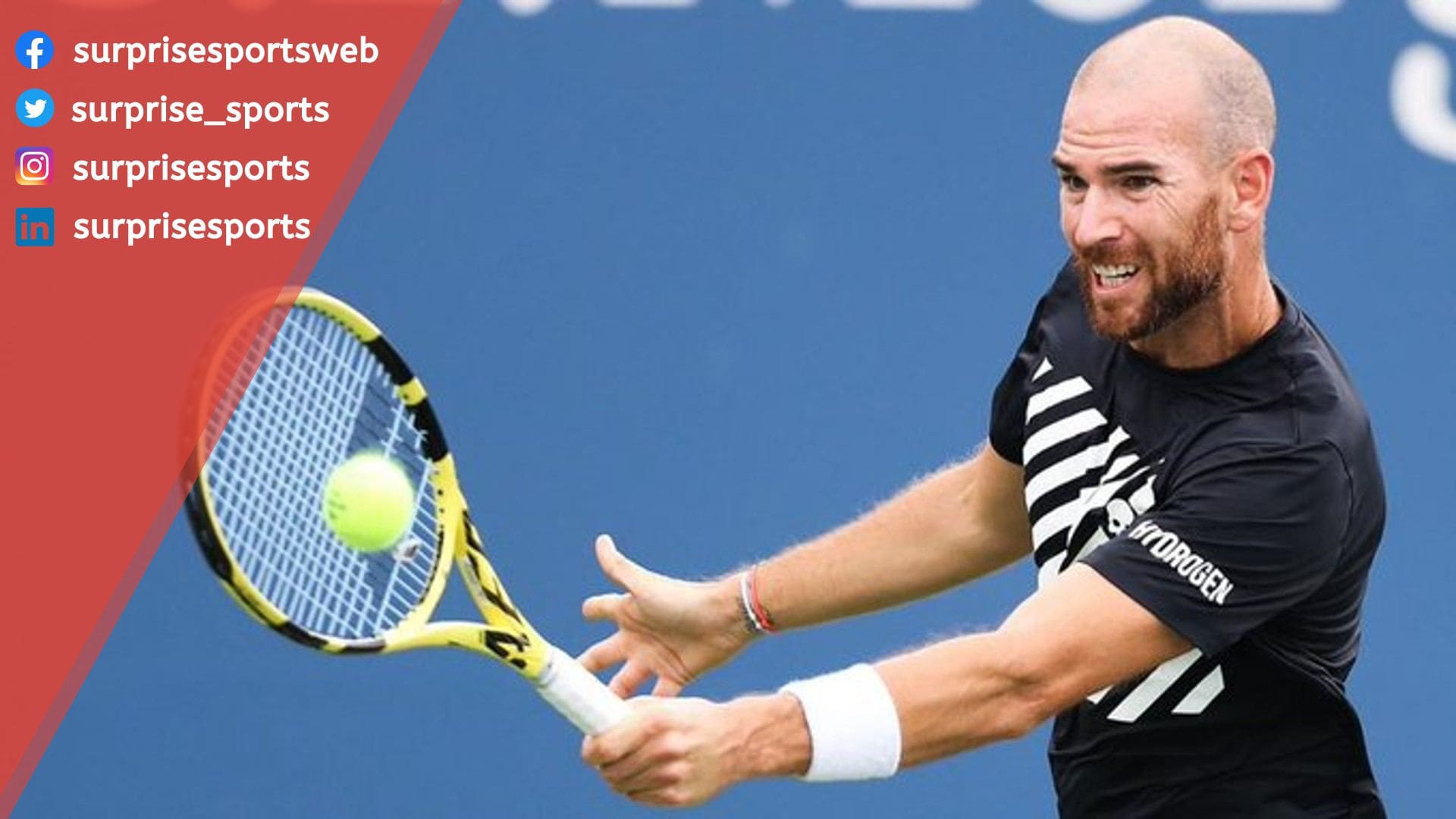
As of 2026, Adrian Mannarino’s net worth is estimated to be between $7 million and $10 million. This valuation is primarily anchored by his career prize money, which has surpassed $13.5 million, alongside strategic equipment partnerships and a disciplined, low-overhead approach to his professional branding and coaching staff.
Breaking Down the Prize Money: A Two-Decade Career
Adrian Mannarino’s financial foundation is built almost entirely on his longevity and consistency on the ATP Tour. Unlike "flash-in-the-pan" players who might have one high-earning season and then disappear, Mannarino has been a fixture in the professional ranks since 2004. By 2026, his career prize money reflects over 20 years of competing at the highest level, including significant hauls from his late-career peak between 2023 and 2025.
Tennis prize money is distributed based on round-by-round progression. Mannarino has excelled in the ATP 250 and 500 circuits, where he has historically secured the bulk of his titles. While the winner’s check at an ATP 250 event typically ranges from $80,000 to $120,000, Mannarino’s ability to reach the quarterfinals or better in dozens of these tournaments annually has created a steady, high-volume income stream.
Furthermore, his consistency in Grand Slams provides a "salary floor." Even a first-round exit at a major tournament in 2026 yields approximately $80,000 to $100,000. Having reached the second week of majors multiple times, particularly at Wimbledon, Mannarino has capitalized on the largest paydays available in the sport.
The Business of Being "Unbranded": Endorsement Strategy
One of the most unique aspects of Adrian Mannarino’s financial profile is his frequently "unbranded" appearance on court. While most top-50 players sign lucrative "head-to-toe" clothing contracts with giants like Nike, Adidas, or Lacoste, Mannarino has often been seen wearing plain t-shirts purchased from retail stores or generic athletic wear.
This unconventional approach has two major financial implications:
- Foregone Revenue vs. Freedom: By not signing a restrictive clothing deal, Mannarino potentially misses out on six-figure annual retainers. However, he also avoids the performance-based "reductions" common in tennis contracts, where a drop in ranking can lead to a significant decrease in pay.
- Equipment Specialization: While he may be flexible with apparel, his equipment is a different matter. Mannarino has a long-standing relationship with Babolat, specifically using the Pure Aero series with incredibly low string tension (often cited as low as 10kg/22lbs). Equipment deals for veteran players of his caliber typically include a base retainer plus bonuses for ranking milestones and tournament wins.
By 2026, Mannarino’s "brand" is actually his lack of a brand. This "journeyman-hero" persona has made him a cult favorite, occasionally leading to one-off sponsorships with niche French companies or luxury watch brands that value his longevity and distinct personality over mass-market appeal.
Financial Realities: Taxes, Expenses, and Net Gains
When discussing a tennis player's "net worth," it is vital to distinguish between gross career earnings and actual take-home wealth. Professional tennis is one of the most expensive sports to operate as an independent contractor. Mannarino, as a French national, faces a complex tax and expense structure.
Coaching and Support Staff
Mannarino has often operated with a "lean" team compared to his peers. While some players travel with a coach, a physio, a fitness trainer, and a manager, Mannarino has frequently streamlined this. Even with a lean team, a top-tier coach can cost $2,000 to $5,000 per week plus a percentage of prize money (usually 10-15%).
Travel and Logistics
The ATP Tour requires global travel for roughly 30 to 35 weeks a year. Business class flights, hotels for the player and their team, and daily expenses can easily exceed $150,000 to $200,000 annually. These are out-of-pocket costs that significantly eat into the gross prize money reported by the ATP.
Taxation
As a French citizen, Mannarino is subject to high global taxation, although many professional players establish residency in tax-friendly jurisdictions like Monte Carlo to mitigate these costs. Regardless of residency, "withholding taxes" are applied in the country where the money is earned. For example, a win at the US Open is taxed by the IRS before the player ever sees the check.
Comparative Financial Metrics: 2026 Landscape
To understand where Mannarino stands in the 2026 financial hierarchy of tennis, it is helpful to compare him to peers who share similar ranking trajectories or career lengths.
| Player | Estimated Career Prize Money (2026) | Est. Net Worth | Primary Income Driver |
|---|---|---|---|
| Adrian Mannarino | $13.5M - $14.5M | $7M - $10M | ATP 250 Titles & Longevity |
| Richard Gasquet | $20M+ | $15M+ | Early Career Success & Endorsements |
| Ugo Humbert | $8M - $10M | $4M - $6M | Rising Star Sponsorships |
| Roberto Bautista Agut | $18M+ | $12M - $14M | Consistent Top 20 Performance |
Note: Prize money is gross; Net worth is an estimate based on career duration, tax residency, and known endorsement levels.
The "Late Bloomer" Dividend
Mannarino’s net worth saw its most significant growth after he turned 30. In professional tennis, the "aging curve" has shifted, and Mannarino is a prime example of a player who found his best form in his mid-to-late 30s.
In 2023 and 2024, Mannarino secured multiple ATP titles, which propelled him into the top 20 of the ATP rankings. This surge was financially transformative for three reasons:
- Seeding Protection: Higher rankings mean being seeded at tournaments, which leads to easier early-round draws and more consistent prize money.
- Appearance Fees: For ATP 250 and 500 events, top-20 players can command appearance fees (guaranteed money just for showing up), which are not included in public prize money totals. These can range from $50,000 to $150,000 for a player of Mannarino’s stature.
- Bonus Pools: The ATP distributes a "Bonus Pool" to players who finish the year in the top 30, providing a significant year-end injection of capital.
Investment and Long-term Financial Outlook
As Mannarino approaches the final chapters of his playing career in 2026, his focus has likely shifted toward wealth preservation and passive income. Most veteran players on the tour invest in real estate or diversified portfolios managed by sports-centric wealth management firms.
Mannarino’s disciplined approach to his career—evidenced by his low-string-tension technique that minimizes injury and his refusal to overspend on "brand" marketing—suggests a similar discipline in his private finances. Unlike players who spend lavishly on a large entourage, Mannarino’s higher "keep rate" of his prize money likely puts his actual liquid net worth higher than some players who earned more in gross prize money but had higher burn rates.
Post-Retirement Prospects
Looking beyond 2026, Mannarino’s financial future remains secure. His deep technical knowledge of the game, particularly his unique left-handed craftiness, makes him a prime candidate for:
- High-performance coaching: Elite academies in France and the US often pay six-figure salaries for former top-20 players.
- Broadcasting: His dry wit and extensive experience on the tour could transition well into commentary for French networks like Eurosport or L'Équipe.
How Ranking Impacts His 2026 Earnings
In 2026, every ranking spot matters. If Mannarino maintains a top 50 ranking, his annual gross earnings (prize money + sponsors) will likely hover around $800,000 to $1.2 million. If he falls out of the top 100 and moves to the Challenger Tour, those earnings could drop to $150,000 to $300,000, illustrating the high-stakes nature of professional tennis rankings.
FAQ: Adrian Mannarino’s Career and Wealth
Does Adrian Mannarino have a clothing sponsor in 2026?
Historically, Mannarino has often played without a primary clothing sponsor, preferring to buy his own apparel to ensure comfort and lack of contractual obligation. While he occasionally enters short-term deals, he remains one of the few high-ranking players to frequently appear "unbranded."
How much does Adrian Mannarino earn per year?
In a typical year where he maintains a top 50 ranking, Mannarino earns between $1 million and $1.5 million in gross prize money. After taxes and expenses (coaching, travel, insurance), his net take-home pay is generally estimated to be 40-50% of the gross.
What is Adrian Mannarino's biggest single payday?
His largest paydays come from deep runs at Grand Slams. For example, reaching the fourth round of a Grand Slam like the Australian Open or Wimbledon typically results in a check of approximately $300,000 to $400,000.
Why is his string tension so low, and does it save him money?
Mannarino uses an extremely low string tension (around 10kg/22lbs) to generate easy power and reduce strain on his arm. While it doesn't necessarily save money, it has contributed to his career longevity by preventing common injuries like "tennis elbow," allowing him to earn money well into his late 30s.
Is prize money the only way Mannarino earns?
No. In addition to prize money, he earns through equipment deals (Babolat), appearance fees at smaller ATP tournaments, and the ATP's pension program, which provides significant long-term financial security for players who remain in the top 100 for several years.
Monitoring Mannarino's Financial Trajectory
To stay updated on Adrian Mannarino's earnings and net worth, fans should monitor the ATP Tour's official player profile, which updates prize money totals weekly after every tournament. Additionally, observing his on-court apparel can provide clues about any new high-value endorsement deals. For those interested in the business of tennis, the annual ATP financial reports provide context on how "Bonus Pools" and pension contributions are trending, which are critical components of a veteran player's total wealth.