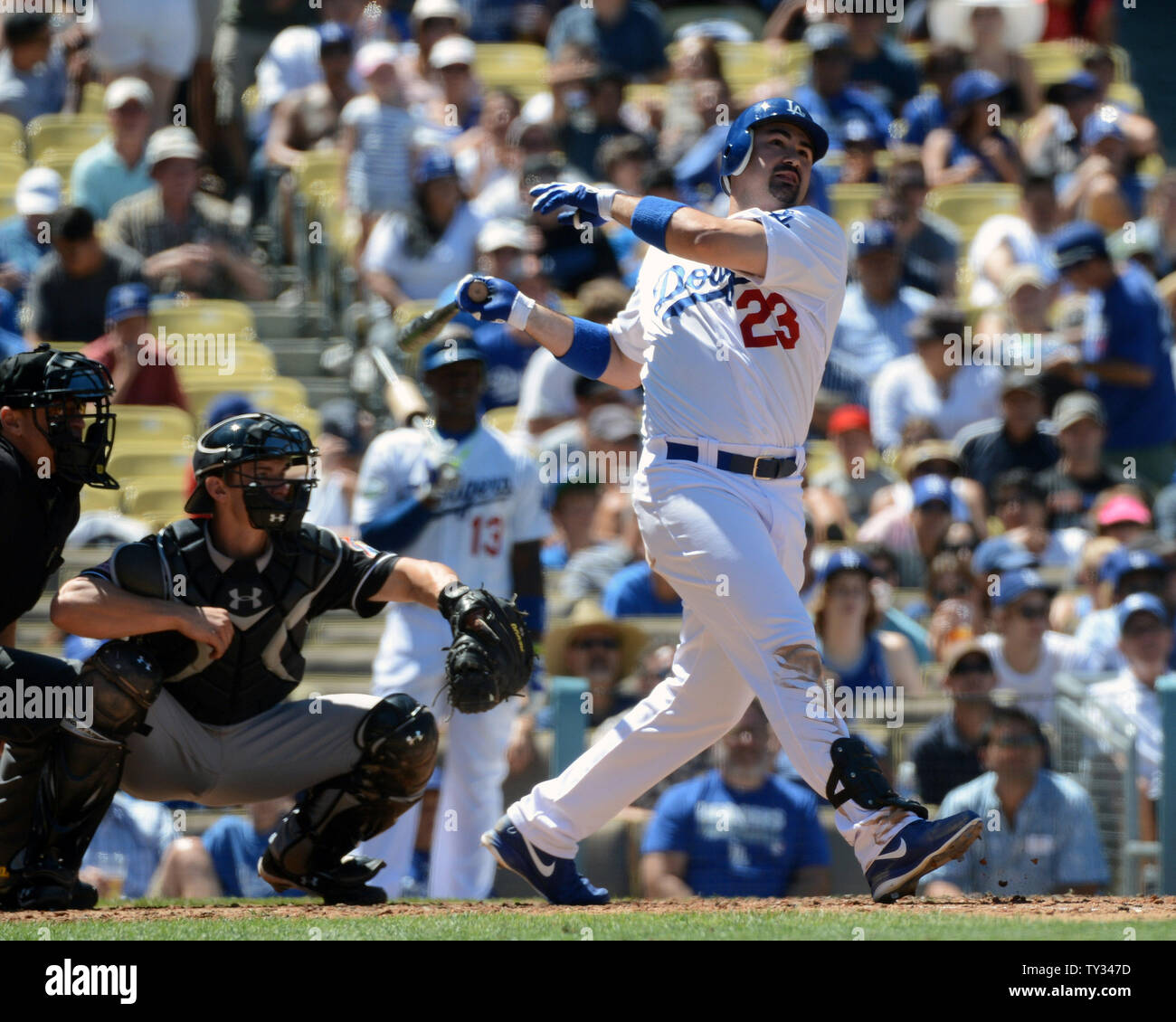
Adrian Gonzalez’s journey with the Los Angeles Dodgers was a transformative era that redefined the franchise's identity and community connection. Arriving in a 2012 blockbuster trade, "El Titán" provided veteran stability, elite defense, and a crucial cultural bridge for Los Angeles’s Mexican-American community, anchoring the team's transition into a perennial powerhouse.
The story of Adrian Gonzalez in Los Angeles is more than a collection of box scores and Gold Glove awards; it is the narrative of a franchise reclaiming its soul. To understand the "untold" nature of his journey, one must look past the 100-RBI seasons and examine how his arrival signaled the end of the dark McCourt era and the beginning of the Guggenheim dominance. Gonzalez was the cornerstone—the "professional hitter" who taught a young, talented roster how to win while carrying the weight of being the face of Latino baseball in Southern California.
The Trade That Changed Everything: August 2012
In the summer of 2012, the Los Angeles Dodgers were a team in flux. The franchise had just been sold to the Guggenheim Baseball Management group, and the new ownership was eager to prove they were willing to spend to win. On August 25, 2012, the Dodgers executed what is still remembered as one of the most significant "salary dump" acquisitions in MLB history, bringing Adrian Gonzalez, Carl Crawford, Josh Beckett, and Nick Punto over from the Boston Red Sox.
While the trade involved multiple All-Stars, Gonzalez was the crown jewel. For the Dodgers, acquiring a superstar first baseman who was not only in his prime but also a Mexican-American icon was a marketing and competitive masterstroke. Gonzalez made an immediate impact, hitting a three-run home run in his first at-bat as a Dodger against the Miami Marlins. That swing did more than put three runs on the board; it announced to the city of Los Angeles that the Dodgers were back as a legitimate threat in the National League.
The trade required the Dodgers to take on over $250 million in salary, a move that would have been unthinkable under previous ownership. Gonzalez's presence provided an immediate return on investment, stabilizing a lineup that had lacked a consistent middle-of-the-order threat since the peak of Manny Ramirez.
Cultural Icon: Fernandomania 2.0?
While Fernando Valenzuela’s impact on Los Angeles can never be fully replicated, Adrian Gonzalez came closer than any other player in the 21st century to capturing that same cultural lightning. Born in San Diego and raised in Tijuana, Gonzalez moved between two worlds with ease, making him the perfect ambassador for a city with a massive Mexican-American population.
Gonzalez’s "untold" story is deeply rooted in his off-field connection to the fans. He understood the responsibility of being "El Titán." He was often seen engaging with fans in Spanish, participating in community clinics, and championing charitable causes in East LA. For many Latino fans, Gonzalez wasn't just the first baseman; he was a representative of their heritage at the highest level of the sport.
This connection manifested in the "Viva Los Dodgers" events and the resurgence of the "Bleacher Creatures" who would chant his name in rhythm. Gonzalez’s walk-up music, often featuring Mariachi or regional Mexican tracks, turned Dodger Stadium into a celebration of culture. His presence helped the Dodgers reclaim their status as the premier sports destination for the Latino community in Southern California, a demographic that is the lifeblood of the team’s attendance figures.
The Professional Hitter: Consistency in Blue
On the field, Gonzalez was the model of consistency. During his peak years in Los Angeles (2013–2016), he was the ultimate "iron man" of the infield. He rarely missed games and was a fixture in the cleanup spot. His approach at the plate was a masterclass in situational hitting, a trait that earned him the nickname "The Professional Hitter" among teammates and broadcasters.
| Season | Games Played | Home Runs | RBIs | Batting Avg | Awards/Notes |
|---|---|---|---|---|---|
| 2013 | 157 | 22 | 100 | .293 | NL West Champions |
| 2014 | 159 | 27 | 116 | .276 | Silver Slugger, RBI Leader |
| 2015 | 156 | 28 | 90 | .275 | All-Star, Gold Glove |
| 2016 | 156 | 18 | 90 | .285 | Veteran Leader |
| 2017 | 71 | 3 | 30 | .242 | Final Season (Injured) |
Gonzalez led the National League in RBIs in 2014 with 116, a testament to his ability to drive in runs when it mattered most. His defensive prowess at first base was equally vital. He saved countless errors for a rotating cast of middle infielders, winning a Gold Glove in 2014 and consistently ranking at the top of defensive metrics for first basemen. His "stretch" at first base became a signature visual of the era.
The Mentor and the Clubhouse Glue
One of the less-discussed aspects of Gonzalez’s tenure was his role as a mentor. In 2013, the arrival of Yasiel Puig brought an electric but often chaotic energy to the clubhouse. Gonzalez was frequently the one tasked with guiding the young Cuban star, helping him navigate the nuances of the Major Leagues and the cultural pressures of playing in Los Angeles.
Gonzalez’s leadership was quiet but firm. He wasn't a "rah-rah" guy, but he led by example. When the Dodgers went on their historic 42-8 run in 2013, Gonzalez was the steady hand that kept the team grounded. He was the player who younger stars like Corey Seager and Joc Pederson looked up to as they transitioned from top prospects to big-league mainstays.
His influence extended to the dugout culture. He was a key figure in the "Mickey Mouse" celebration of 2013, a lighthearted response to criticism from the St. Louis Cardinals that helped unify a team that was finally learning how to have fun while winning.
The 2017 Season and the Passing of the Torch
The untold story of Adrian Gonzalez’s LA journey has a bittersweet ending. By 2017, the years of playing nearly every game began to catch up with him. A nagging back injury (herniated disks) sidelined him for the first time in his career. While he worked tirelessly to return, the emergence of a young Cody Bellinger changed the team's trajectory.
Bellinger’s historic Rookie of the Year campaign essentially pushed the veteran Gonzalez out of a starting role. For a player who had been the face of the franchise, this was a difficult transition. Gonzalez handled it with class, but the 2017 postseason was a point of contention for some. Due to his injury, he was not on the World Series roster and famously took a family vacation to Europe during the Fall Classic.
While some fans questioned his absence, Gonzalez maintained that he didn't want to be a distraction to a team that was moving in a different direction. It was a quiet, somewhat unceremonious end to a legendary run in Los Angeles. He was traded to the Atlanta Braves in a salary-clearing move in December 2017 and was promptly released, eventually finishing his career with the New York Mets before officially retiring.
The Legacy of "El Titán" in Los Angeles
In 2026, looking back at the last decade and a half of Dodgers baseball, Adrian Gonzalez’s legacy is secure. He is remembered as the player who anchored the lineup during the most successful regular-season stretch in the team’s history. While he didn't win a World Series ring in Los Angeles, he laid the foundation for the 2020 championship and the sustained success that followed.
Gonzalez’s journey is a story of stability. Before he arrived, the Dodgers' first base position was a revolving door. He provided five years of elite, reliable production that allowed the front office to focus on building other parts of the roster. More importantly, he re-established the "Dodger Way" of community engagement and professional excellence.
FAQs
How many Gold Gloves did Adrian Gonzalez win with the Dodgers?
Adrian Gonzalez won one Gold Glove with the Dodgers in 2014. However, he was a finalist multiple times during his tenure in Los Angeles and is widely considered one of the best defensive first basemen of his generation, having won four Gold Gloves total throughout his career.
Why did Adrian Gonzalez leave the Dodgers during the 2017 World Series?
In 2017, Gonzalez was dealing with a severe back injury that kept him off the postseason roster. He chose to spend time with his family in Europe during the World Series, a move that sparked some controversy. He later clarified that he felt it was best to step away and let the active players focus on the games without the distraction of his presence while he was unable to contribute physically.
Was Adrian Gonzalez the main player in the "Nick Punto Trade"?
Yes, although it is often jokingly called the "Nick Punto Trade" by fans and media, Adrian Gonzalez was the primary target for the Dodgers. The trade also included All-Stars Carl Crawford and Josh Beckett, but Gonzalez's long-term contract and consistent production made him the centerpiece of the deal.
What is Adrian Gonzalez doing in 2026?
As of 2026, Adrian Gonzalez remains active in the baseball community and his various business ventures. He has spent time as an analyst for SportsNet LA, the Dodgers' television network, providing expert commentary and maintaining his strong bond with the organization and its fan base.
What was Adrian Gonzalez’s most famous moment as a Dodger?
Many fans point to his first-at-bat home run in 2012 as his most iconic moment, but his performance in the 2013 NLCS is also highly regarded. In Game 5 against the Cardinals, he hit two home runs, helping the Dodgers stave off elimination and cementing his status as a big-game performer.
Commemorating a Legend: Next Steps for Fans
For fans looking to honor the legacy of "El Titán," the best course of action is to visit the Dodgers' memorabilia sections at the stadium or check out the "Legends of Dodger Baseball" displays. His impact on the Mexican-American community continues through various youth baseball initiatives in the Los Angeles area. As the Dodgers continue their dominance in 2026, remembering the veteran leadership of players like Gonzalez is essential to understanding how the franchise reached its current heights.