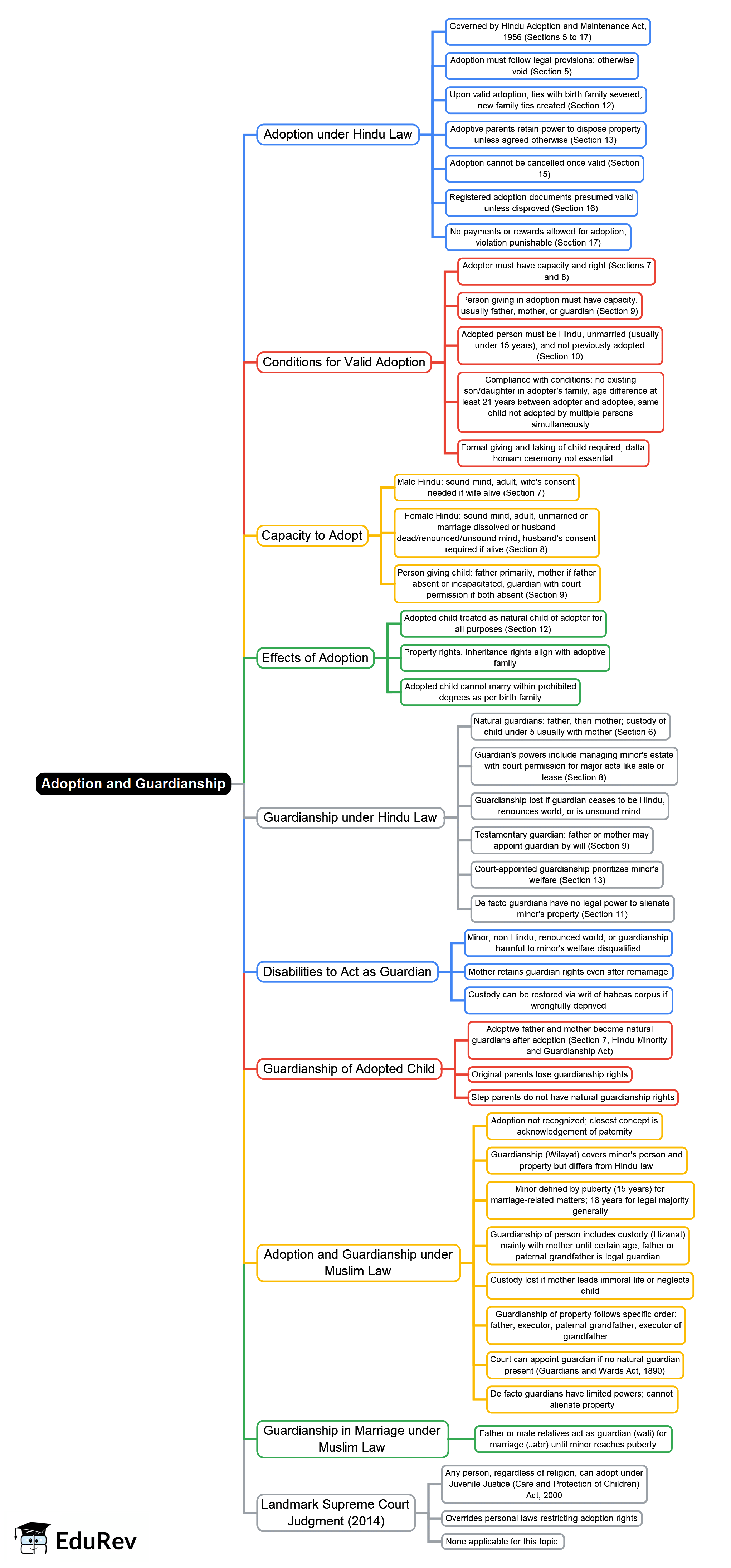
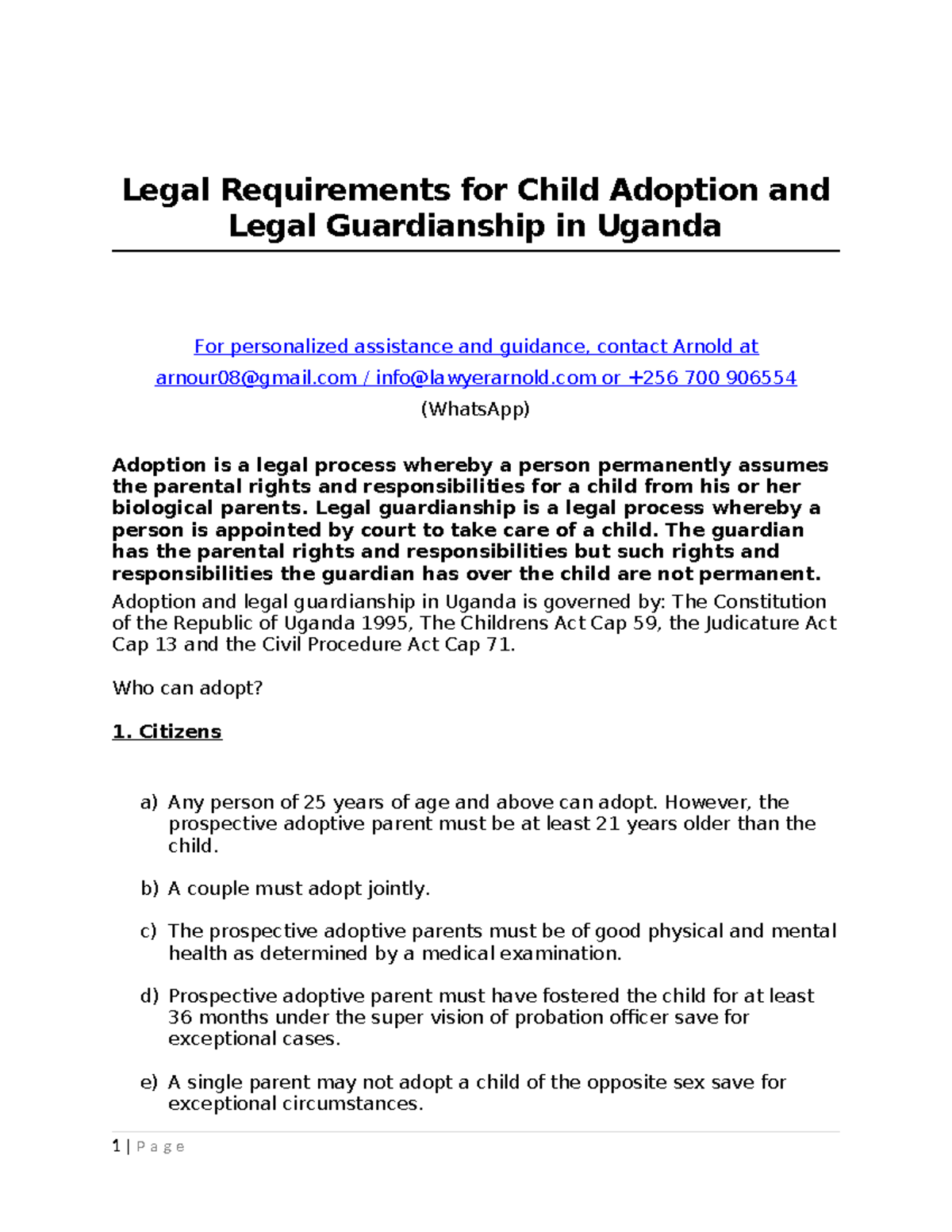
Adoption and guardianship are distinct legal arrangements designed to provide stability and care for children when biological parents are unable to do so. While adoption creates a permanent, lifelong parental bond by terminating original parental rights, guardianship grants legal custody and decision-making authority without severing the biological parent-child relationship, often serving as a flexible or temporary solution.
Determining the most appropriate path for a child’s future involves navigating complex legal frameworks, understanding the long-term implications of parental rights, and assessing the specific needs of the family unit. In 2026, the legal landscape surrounding these options continues to prioritize the "best interests of the child" standard, though the procedural requirements and financial supports available for each path differ significantly. This guide explores the nuances of adoption and guardianship to help caregivers and families make informed decisions.
The Legal Framework of Adoption and Guardianship
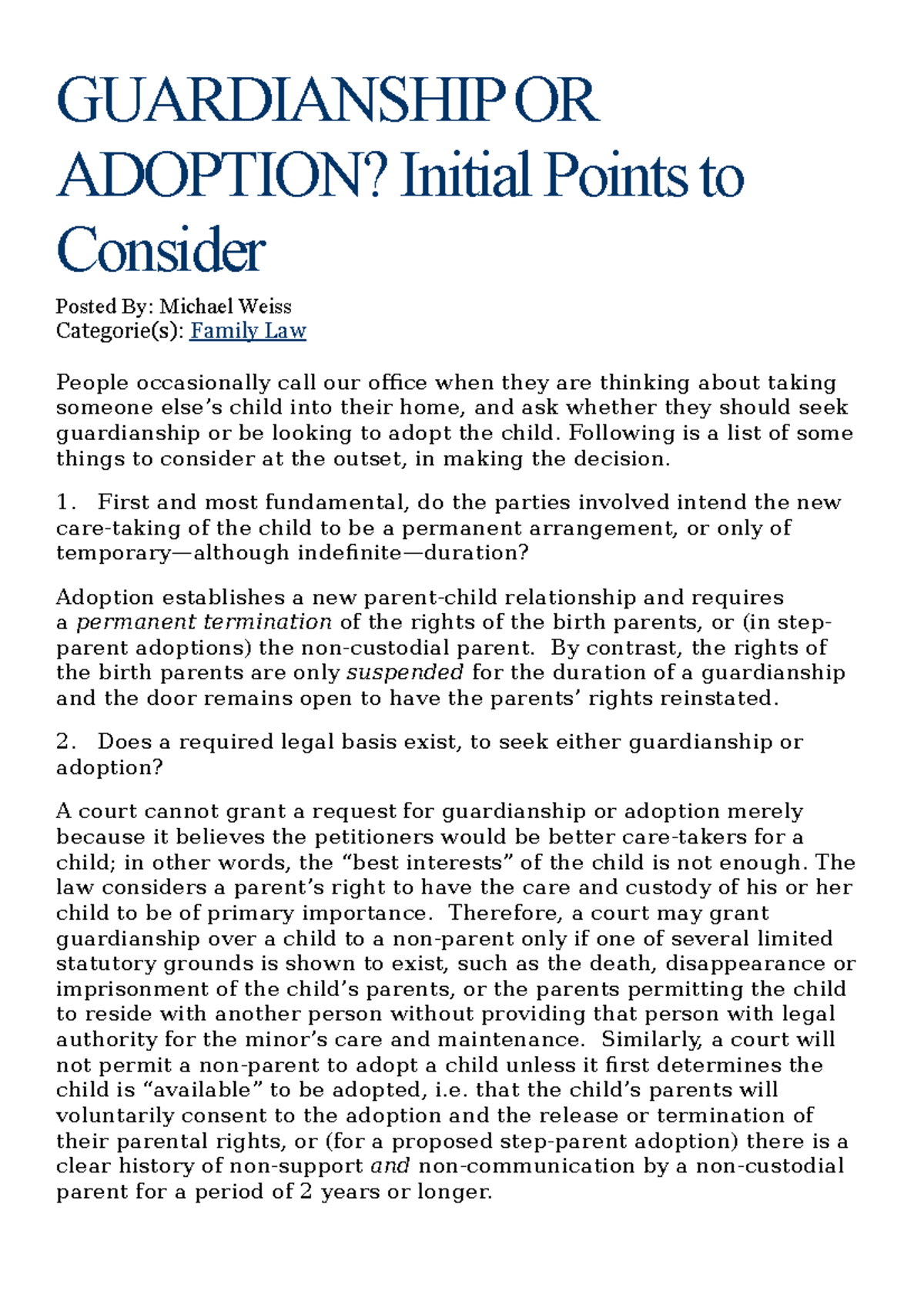
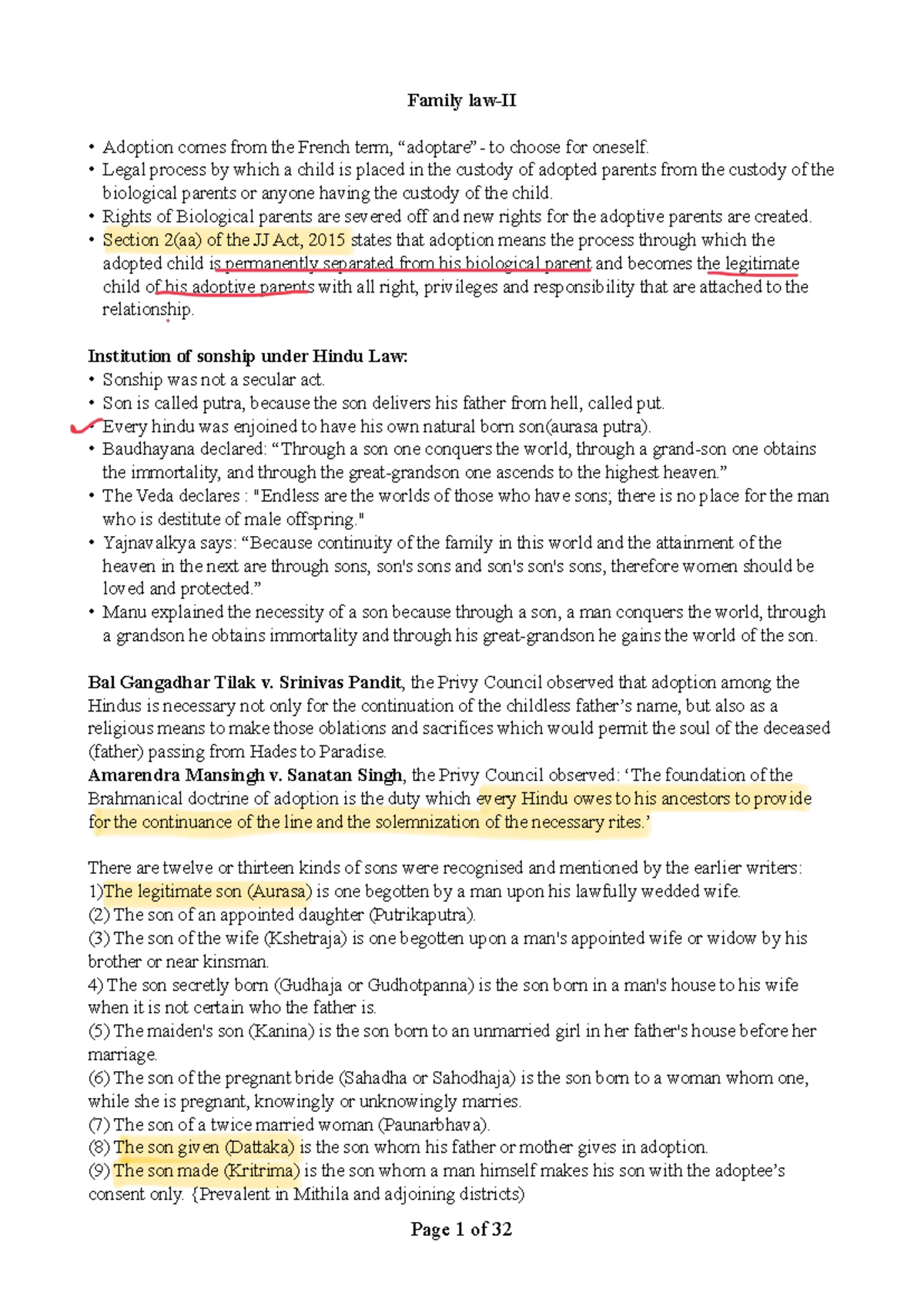
To understand which path to pursue, one must first recognize the fundamental legal theories underpinning each. Adoption is a transformative legal event. Once a court issues an adoption decree, the legal ties between the child and their biological parents are completely and irrevocably severed. The adoptive parents become the child's legal parents in every sense, equivalent to a biological relationship. This includes rights to inheritance, the ability to change the child's surname, and the assumption of all financial and legal liabilities.
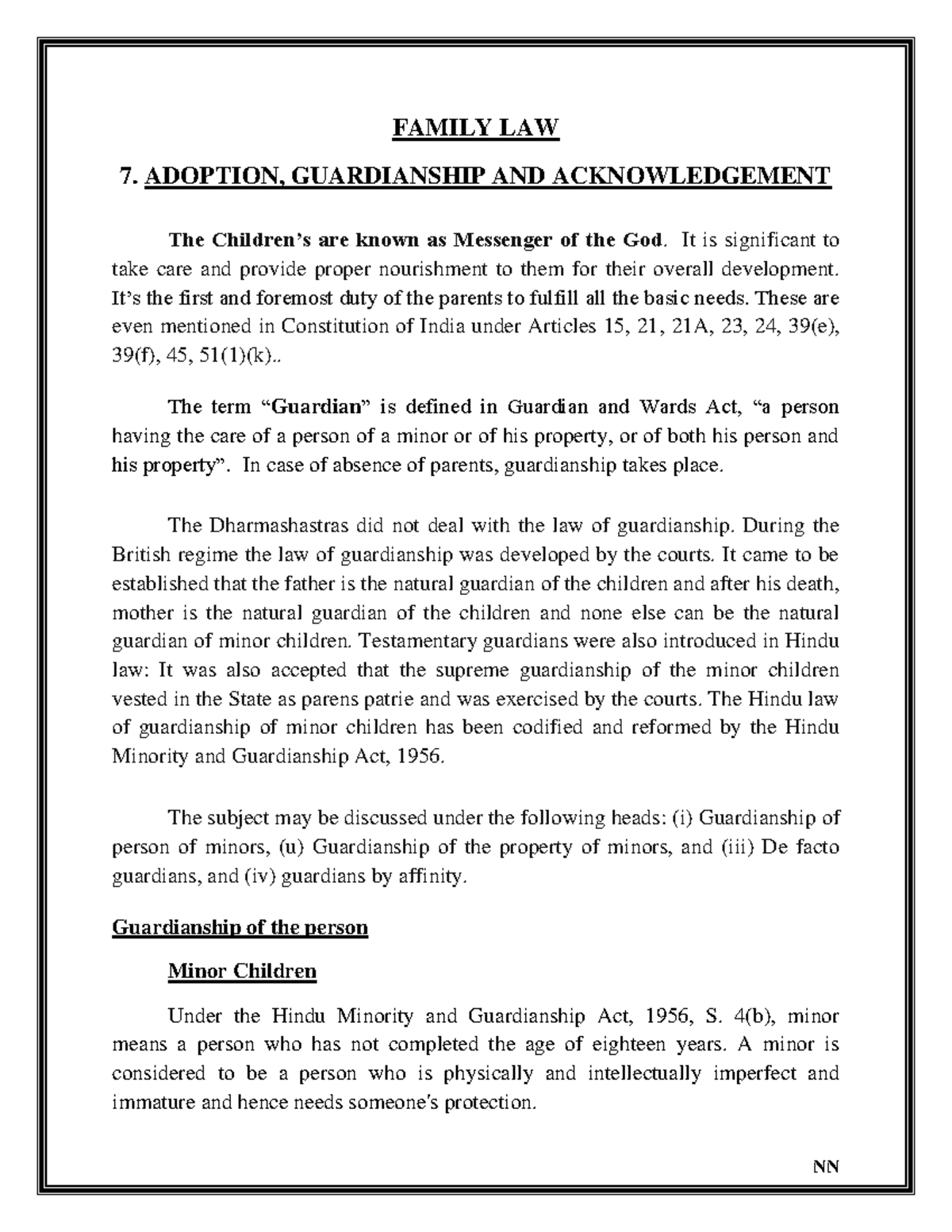
Guardianship, conversely, is a court-ordered relationship where an adult (the guardian) is granted the authority to care for a minor and make decisions regarding their upbringing, education, and medical care. However, the biological parents remain the "legal" parents. Their rights are typically suspended rather than terminated. This means the parents may still have visitation rights, an obligation to pay child support, and the potential to petition the court to dissolve the guardianship if their circumstances improve.
In many jurisdictions, guardianship is viewed as a "least restrictive alternative." It provides a safety net for children whose parents are temporarily incapacitated—due to illness, incarceration, or substance abuse—without the "legal death" of the parental relationship that adoption entails. For many kinship caregivers, such as grandparents or aunts, guardianship is a preferred method because it preserves the existing family structure while ensuring the caregiver has the legal authority needed to enroll the child in school or authorize surgery.
Key Differences: Permanency, Parental Rights, and Responsibility
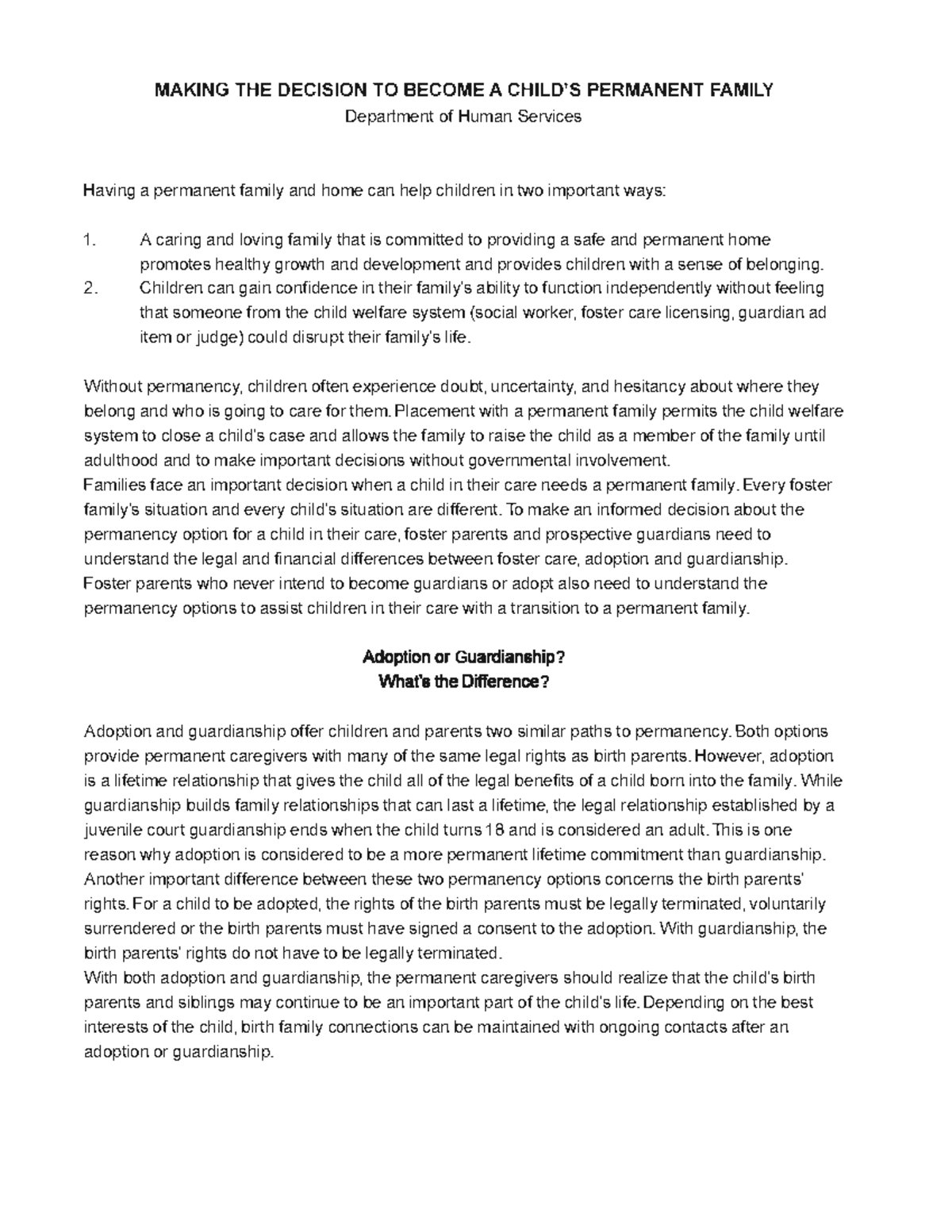
The most critical distinction between these two paths lies in their level of permanency. Adoption is intended to be forever. It does not end when the child turns 18; the legal relationship continues into adulthood. In contrast, a legal guardianship typically expires automatically when the child reaches the age of majority (usually 18). While some forms of "permanent guardianship" exist in certain states, they are still subject to potential judicial review or modification if the biological parents can prove a significant change in circumstances.
The scope of parental rights also varies. In an adoption, the adoptive parents have total autonomy over the child's life, including whether the child has contact with the biological family. In a guardianship, the court often retains oversight. The guardian may be required to file annual reports detailing the child’s physical and emotional status, and the court may mandate specific visitation schedules for the biological parents. This oversight ensures that the child’s needs are being met, but it also means the guardian does not have the same level of independent authority that an adoptive parent enjoys.
Financial responsibility and inheritance are further points of divergence. Adopted children automatically inherit from their adoptive parents under intestacy laws (as if they were biological offspring) and lose their right to inherit from biological parents. Guardianship does not grant automatic inheritance rights. If a guardian wishes for a ward to inherit their estate, they must explicitly state this in a legally valid will or trust. Additionally, while adoptive parents are solely responsible for the child's financial support, guardians can often seek child support from the biological parents.
Eligibility and Prerequisites for Caregivers in 2026
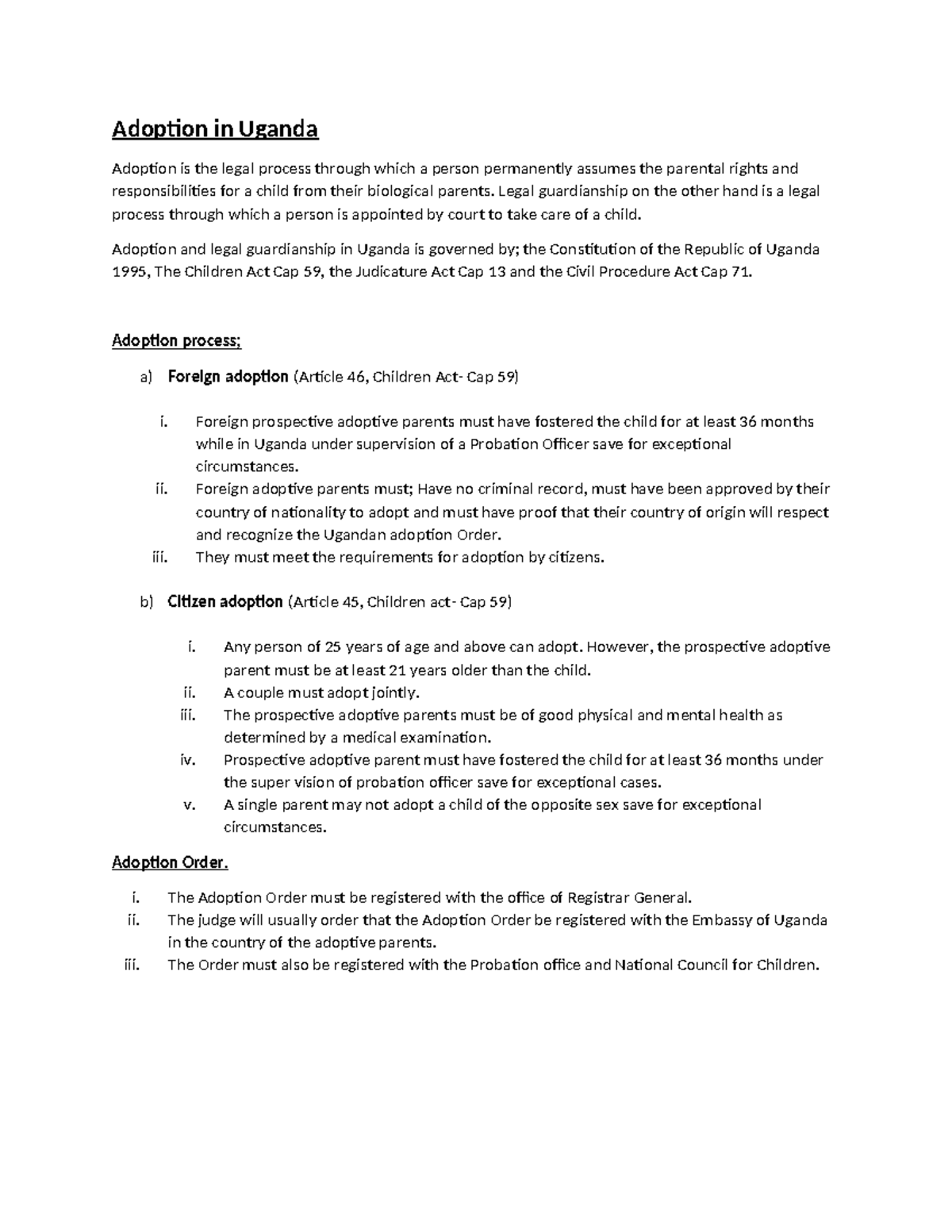
As of 2026, the eligibility requirements for both adoption and guardianship have become increasingly standardized across many jurisdictions to ensure child safety. Prospective caregivers must undergo a rigorous screening process, though the intensity of this process is generally higher for adoption.
- The Home Study: For adoption, a comprehensive home study is mandatory. This involves multiple interviews, a physical inspection of the home, and an evaluation of the household's dynamics. For guardianship, the court may order a "home visit" or a less intensive investigation, although this varies depending on whether the guardian is a relative or a non-relative.
- Criminal and Child Abuse Background Checks: Both paths require thorough background checks. In 2026, most states utilize integrated federal databases to screen for histories of violence, child neglect, or other disqualifying offenses.
- Financial Stability: Prospective caregivers must demonstrate that they have the means to provide for the child’s basic needs. While you do not need to be wealthy to adopt or become a guardian, you must show a stable income and a safe living environment.
- Health Evaluations: Adoptive parents are often required to submit medical records to ensure they are physically and mentally capable of raising a child to adulthood. This is less common in guardianship cases unless the proposed guardian’s health is specifically called into question.
For more information on state-specific eligibility, the Child Welfare Information Gateway provides comprehensive resources on current statutes and requirements.
Comparison Table: Adoption vs. Guardianship
The following table summarizes the primary legal and functional differences between these two arrangements to assist in the decision-making process.
| Feature | Adoption | Legal Guardianship |
|---|---|---|
| Duration | Permanent (for life) | Usually until age 18; can be temporary |
| Parental Rights | Terminated (completely severed) | Suspended or limited (not terminated) |
| Court Oversight | Ends after the final decree | Ongoing (requires annual reports) |
| Inheritance Rights | Automatic (same as biological child) | Not automatic (must be in a will) |
| Name Change | Standard part of the process | Rare; requires a separate legal petition |
| Financial Support | Adoptive parents are solely responsible | Guardian may receive child support or stipends |
| Reversibility | Extremely difficult; requires legal "undoing" | Possible if parents prove fitness |
| Legal Status | Caregivers are the legal parents | Caregivers are court-appointed representatives |
The Step-by-Step Legal Process for Each Path
The procedural journey for adoption and guardianship involves several key milestones, starting with a formal petition to the court. While the steps appear similar, the legal burden of proof differs.
The Adoption Process
- Petition for Adoption: The prospective parents file a legal document with the family court.
- Termination of Parental Rights (TPR): This is the most complex step. It requires either the voluntary consent of the biological parents or a court order finding that the parents are unfit (due to abandonment, abuse, or neglect).
- The Home Study and Placement: The child lives with the family for a probationary period (often six months) while social workers monitor the adjustment.
- The Finalization Hearing: A judge reviews all reports and, if satisfied that the adoption is in the child's best interest, signs the final Decree of Adoption.
The Guardianship Process
- Petition for Guardianship: The proposed guardian files a petition stating why the guardianship is necessary.
- Notice to Interested Parties: All legal parents and close relatives must be formally notified of the petition, giving them the right to object.
- The Hearing: The court holds a hearing to determine if the biological parents are currently unable or unwilling to care for the child and if the proposed guardian is suitable.
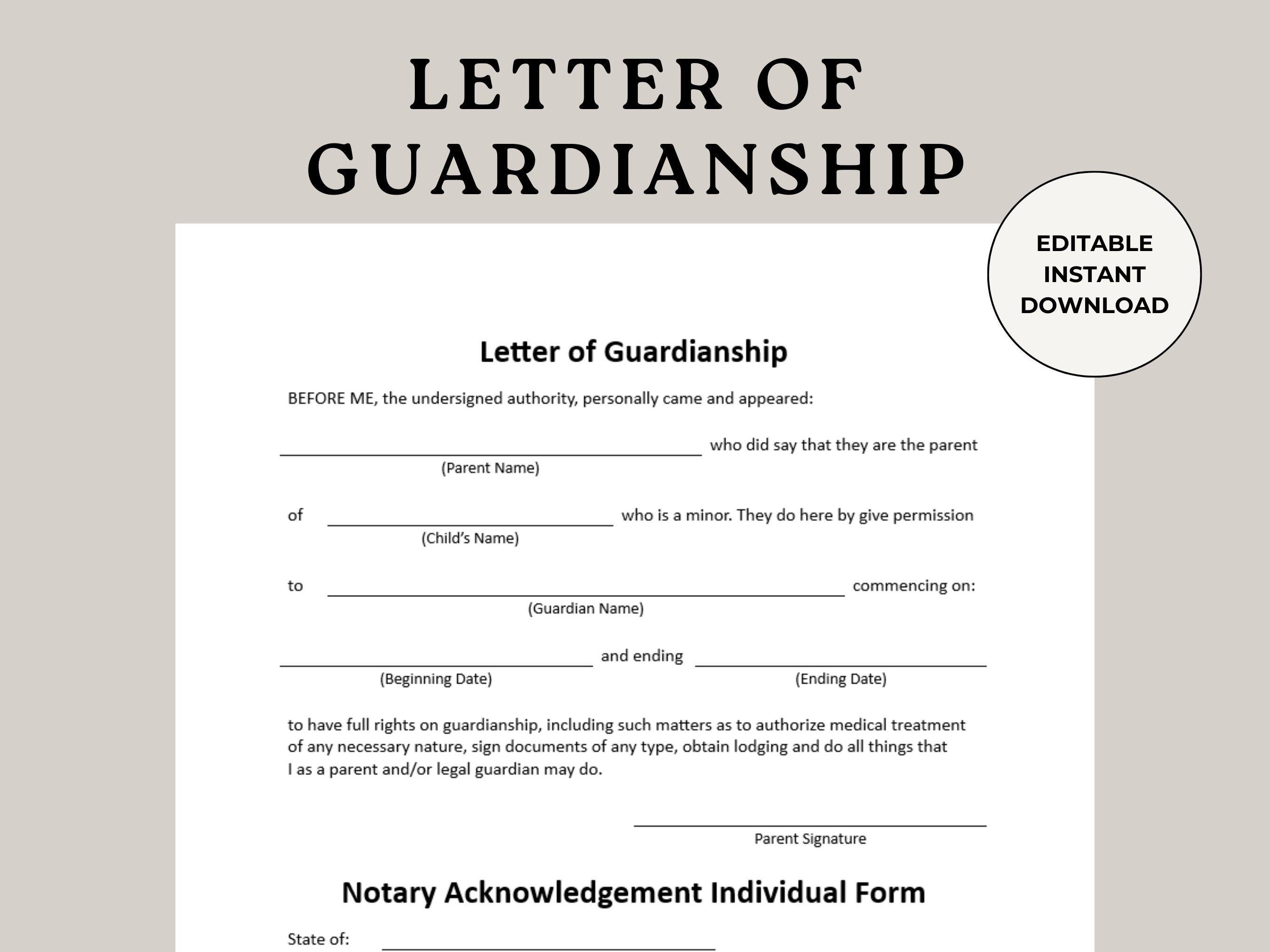
- Letters of Guardianship: If approved, the court issues "Letters of Guardianship," which are the legal documents the guardian uses to prove their authority to schools and doctors.
Financial Considerations and Support Systems
The costs associated with these paths can vary wildly. Adoption can be expensive, particularly through private agencies, where fees in 2026 may range from $20,000 to $50,000. However, adopting through the foster care system is often nearly free, and many states provide adoption subsidies for children with "special needs" (which can include being part of a sibling group or an older age). The federal Adoption Tax Credit remains a vital tool for families, allowing them to offset qualified adoption expenses.
Guardianship is generally less expensive from a legal fee perspective, but the long-term financial support is different. Guardians may be eligible for "Kinship Navigator" programs or TANF (Temporary Assistance for Needy Families) grants. In many states, if a child was in foster care prior to the guardianship, the guardian may receive a monthly stipend similar to a foster care payment through "Subsidized Guardianship" programs. Unlike adoptive parents, guardians do not benefit from the federal adoption tax credit.
Identifying Potential Challenges and Legal Risks
Both paths carry inherent risks that families must weigh. In guardianship, the primary risk is instability. Because the biological parents retain their rights, they can return to court at any time to request the return of the child. This "revolving door" can be stressful for both the child and the guardian. Furthermore, guardians may face interference from biological parents who disagree with their parenting decisions or medical choices.
Adoption's primary challenge is its finality and the legal "severing" of family ties, which can have profound psychological effects on the child. There is also the risk of a contested adoption. If a biological parent does not consent, the legal battle to terminate their rights can be lengthy, expensive, and emotionally draining. Additionally, in cases involving Indigenous children, the Indian Child Welfare Act (ICWA) imposes strict requirements that prioritize placement within the child's tribe, which can complicate both adoption and guardianship proceedings for non-tribal members.
How to Determine Which Option Suits Your Family's Needs
Choosing between adoption and guardianship requires a realistic assessment of the biological parents' situation and the child’s need for permanency. If the goal is to provide a child with a "forever home" where they are legally indistinguishable from a biological child, adoption is the superior choice. It provides the highest level of security and removes the child from the uncertainty of the court system.
If the situation involves a parent who may eventually be able to resume care—such as someone undergoing medical treatment or a short-term incarceration—guardianship is often the more ethical and practical choice. It provides the child with immediate safety while keeping the door open for family reunification. Caregivers should consult with a family law attorney to review local statutes, as the specific "flavor" of guardianship (e.g., standby, temporary, or permanent) varies significantly by state.
Frequently Asked Questions
Can a guardianship be converted to an adoption later?
Yes, a guardianship can often be converted into an adoption. This typically happens if the biological parents' situation does not improve over a long period or if they decide to voluntarily terminate their rights. The guardian would then need to file a new petition for adoption and complete the full adoption process, including a home study.
Do biological parents pay child support in a guardianship?
In most jurisdictions, biological parents still have a legal obligation to support their child financially even if a guardian has been appointed. The court may order child support payments to be made directly to the guardian to help cover the costs of the child’s upbringing.
How long does the legal process typically take?
A guardianship can often be established in a matter of weeks or months, especially in emergency situations where a "temporary guardianship" is needed. Adoption is a much longer process, often taking one to two years from the initial petition to the final decree, due to the mandatory waiting periods and the rigorous home study requirements.
What is the role of a Guardian ad Litem?
In many adoption and guardianship cases, the court appoints a Guardian ad Litem (GAL). The GAL is an independent person—often an attorney—whose sole job is to represent the "best interests of the child." They interview all parties, visit the home, and provide a recommendation to the judge regarding which legal arrangement is most beneficial for the child.
Seeking Professional Guidance
The choice between adoption and guardianship is one of the most significant legal decisions a person can make. Because family law is primarily governed by state statutes, it is essential to seek the advice of a qualified attorney specializing in child welfare or family law in your specific jurisdiction. They can provide a clear roadmap of the local requirements, help navigate the complexities of termination of parental rights, and ensure that the child's legal interests are fully protected as you move forward.