An address format is a standardized arrangement of recipient and geographic data used to ensure the accurate delivery of mail and packages. To function correctly, an address must follow specific regional conventions regarding the order of the recipient’s name, building number, street, city, administrative region, and postal code. In 2026, maintaining precise address formatting is essential for both physical logistics and digital data integrity across global supply chains.
The Essential Components of a Modern Address
The structure of an address is designed to move a piece of mail from a broad geographic area to a specific individual or business. While the order may change depending on the country, several core elements remain constant across most international systems.
Recipient Information
The first line of any address is the recipient. This can be an individual’s name, a job title, or a business entity. In professional settings, the "Attention" (ATTN) line is often used to ensure the mail reaches the correct department or person within a large organization. Accuracy here is vital for the final stage of delivery—getting the item into the hands of the right person once it reaches the building.
Street Address and Secondary Units
This section identifies the specific building. It typically includes the house or building number and the street name. One of the most common points of failure in delivery is the omission of secondary address units, such as apartment numbers, suite numbers, or floor levels. These should be clearly marked—for example, "Apt 4B" or "Suite 500"—to prevent the carrier from returning the item as "undeliverable as addressed."
Locality and Administrative Area
The locality is usually the city or town. The administrative area refers to the state, province, canton, or territory. In many Western systems, the locality precedes the administrative area. This hierarchy allows regional sorting facilities to route mail to the correct local post office.
Postal and ZIP Codes
Perhaps the most critical element for automated sorting is the postal code (known as the ZIP code in the United States). These alphanumeric or numeric strings correspond to specific delivery routes or geographic clusters. By 2026, most national postal services utilize advanced optical character recognition (OCR) to scan these codes instantly. An incorrect postal code is the leading cause of "dead mail" or significant transit delays.
International Variations in Address Formatting
Global logistics rely on the Universal Postal Union (UPU) S42 standard, which provides a framework for international addressing. However, the internal logic of an address varies significantly between the "Western" style and the "Eastern" style.
The Western "Small-to-Large" Approach
Countries like the United States, United Kingdom, Canada, and Australia follow a bottom-up hierarchy. The address begins with the most specific information (the person) and ends with the most general (the country).
- United States: Follows the USPS Publication 28 guidelines. It typically places the city, state, and ZIP code on the final line of the domestic address.
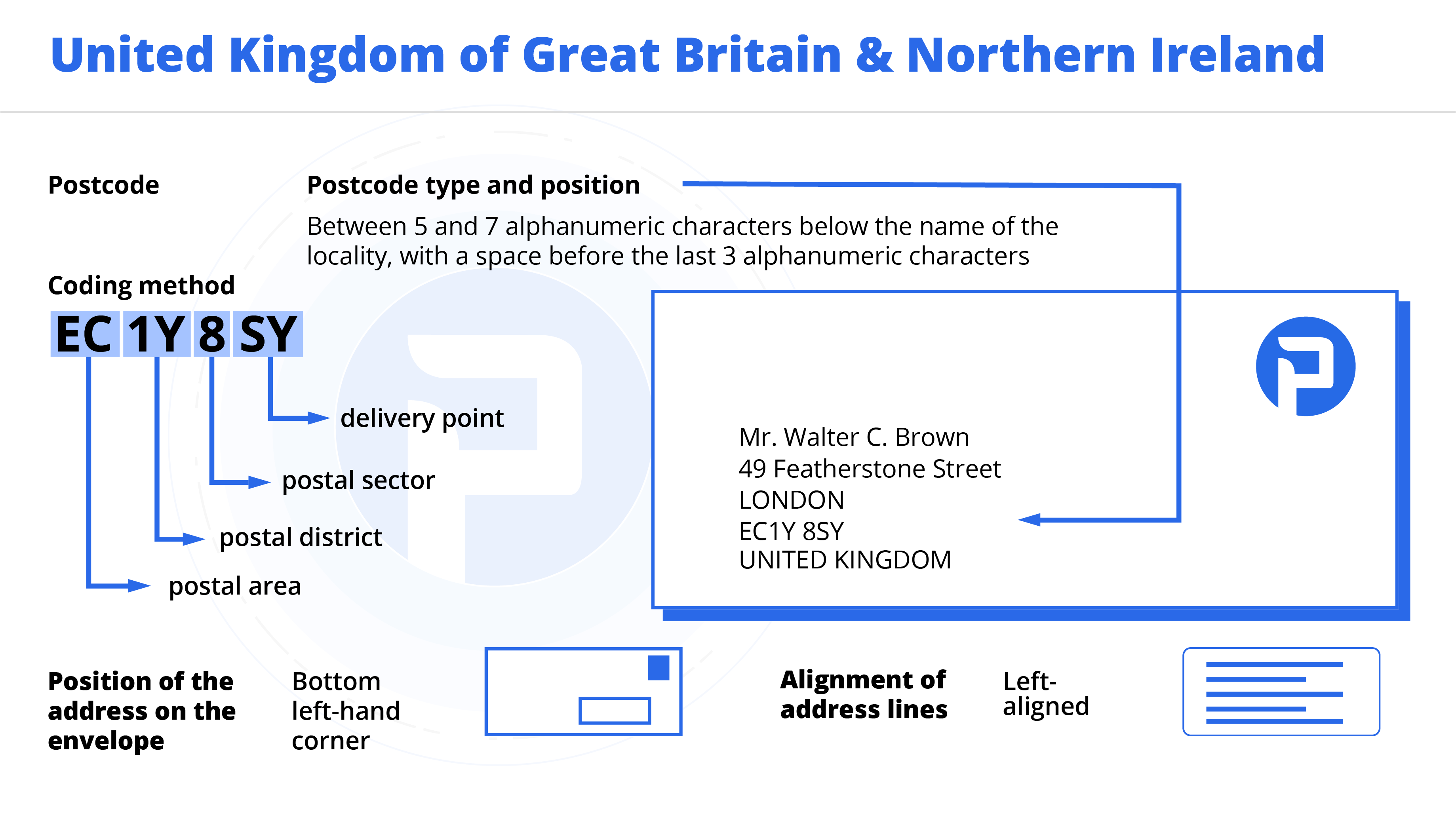
- United Kingdom: Royal Mail requires the "Post Town" to be in capital letters, followed by the Postcode on a separate line at the bottom.
- Germany: In German addresses, the house number typically follows the street name (e.g., Schillerstraße 10), and the postal code precedes the city name.
The Eastern "Large-to-Small" Approach
Many East Asian countries, including China, Japan, and South Korea, traditionally use a top-down hierarchy when writing addresses in their native scripts. The sequence begins with the country or province, followed by the city, district, neighborhood, and finally the recipient’s name.
When these addresses are transliterated into Latin characters for international shipping, they are often reversed to match Western expectations, though local delivery speed is often improved if the local format is respected alongside the international one.
Technical Standards for Digital Address Data
In the digital landscape of 2026, address formatting is not just about ink on paper; it is about data structures in databases, CRM systems, and e-commerce platforms. Improperly formatted digital addresses lead to failed credit card authorizations, shipping errors, and poor customer experiences.
ISO 19160-1 and Data Normalization
The ISO 19160-1 standard provides a conceptual model for addressing. For developers and data scientists, "address normalization" is the process of converting various formats into a single, consistent structure. This involves:
- Parsing: Breaking a single string of text into components like "Street Name" and "Postal Code."
- Standardization: Changing "Street" to "St" or "Avenue" to "Ave" based on the postal authority's preferred abbreviations.
- Validation: Checking the address against an official database (like the USPS AIS products) to ensure the building actually exists.
The Role of Address Verification APIs
Modern e-commerce sites use real-time verification APIs. When a user begins typing, the system suggests valid addresses. This reduces the "fat-finger" errors common on mobile devices and ensures that every address entering the system is "deliverable" before the order is even processed.
Global Address Format Comparison Table
The following table illustrates the differences in formatting for several major jurisdictions as of 2026.
| Country | Address Hierarchy | House Number Position | Postcode Position | Example Format |
|---|---|---|---|---|
| USA | Small to Large | Before Street | After State | 123 Main St, New York, NY 10001 |
| UK | Small to Large | Before Street | Last Line | 10 High St, LONDON, SW1A 1AA |
| Germany | Small to Large | After Street | Before City | Schillerstraße 5, 10117 Berlin |
| France | Small to Large | Before Street | Before City | 22 Rue de Rivoli, 75001 Paris |
| Japan | Large to Small | End of String | Before Prefecture | 100-8994 Tokyo-to, Chuo-ku, 1-1-1 |
| Australia | Small to Large | Before Street | After State | 50 George St, Sydney NSW 2000 |
Common Addressing Challenges and Solutions
Even with standardized systems, certain address types present unique challenges for individuals and automated systems alike.
Military and Diplomatic Addresses
For those serving overseas, addresses often use APO (Army Post Office), FPO (Fleet Post Office), or DPO (Diplomatic Post Office). The "City" field is replaced by APO/FPO/DPO, and the "State" field uses AA, AE, or AP. These must be formatted as domestic mail to the relevant military postal hub, usually in New York, Miami, or San Francisco, despite the final destination being international.
Rural and Non-Standard Locations
In many parts of the world, particularly in rural Africa, South America, and parts of the Middle East, formal street names and house numbers may not exist. In these cases, "descriptive addressing" is used (e.g., "The blue house behind the central market"). To solve this in a digital-first world, technologies like "Plus Codes" or "What3Words" provide unique digital identifiers for every three-meter square on earth, allowing for precise delivery where traditional formatting fails.
PO Boxes and Parcel Lockers
Post Office Boxes require a specific format to ensure the mail is held at the station rather than dispatched for street delivery. Usually, the PO Box number replaces the street address line. If a physical street address is also required for courier services (like FedEx or UPS) that do not deliver to PO Boxes, it is best to list the street address on Line 1 and the PO Box on Line 2.
Best Practices for Business Correspondence
For businesses in 2026, maintaining a clean address database is a matter of financial efficiency. Each failed delivery represents lost postage, wasted packaging, and potential customer churn.
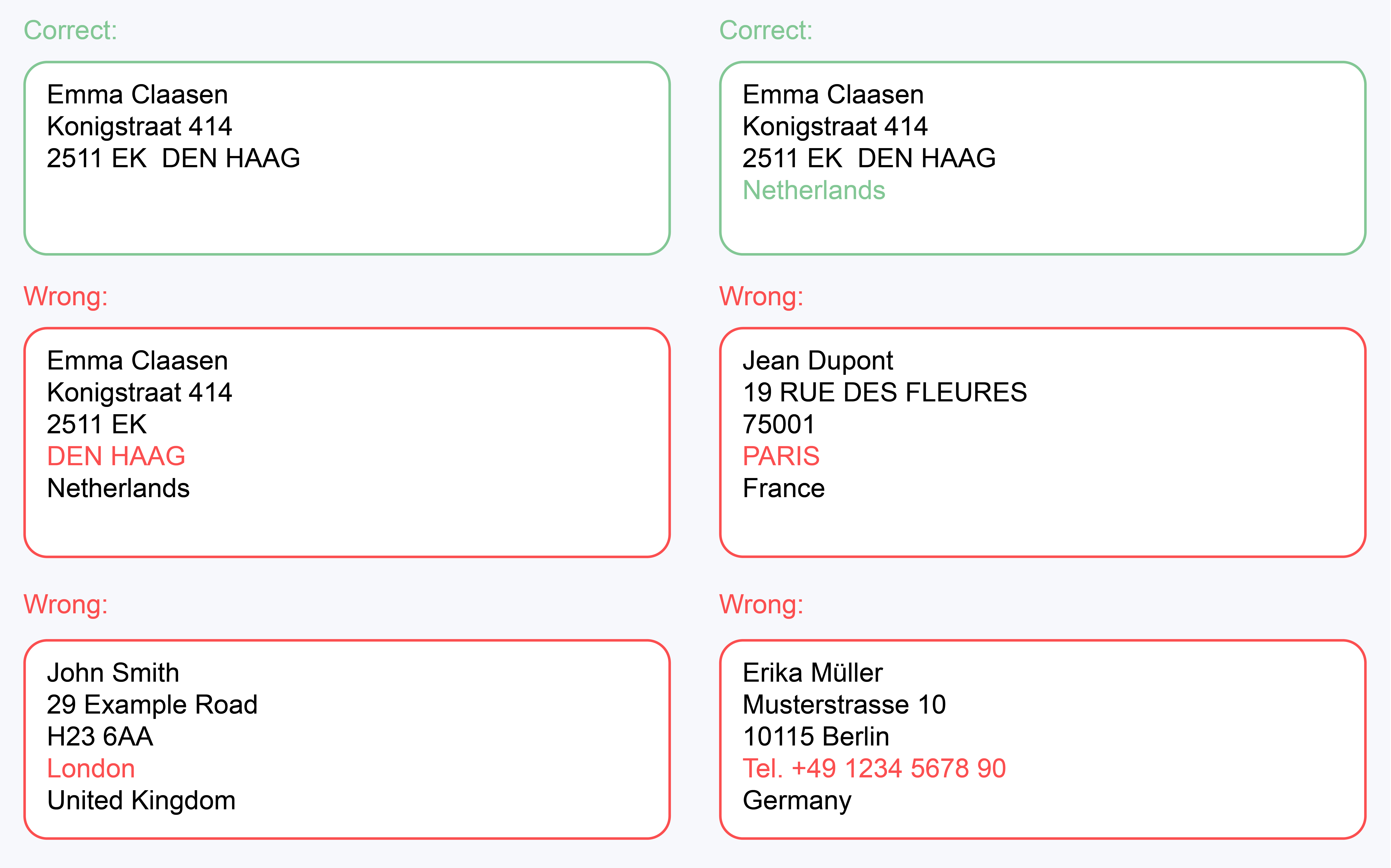
- Use Uppercase for Cities: Many postal services, including the USPS and Royal Mail, prefer the city/town name to be in all capital letters to assist OCR scanners.
- Avoid Excessive Punctuation: Modern scanners prefer "123 Main St" over "123 Main St." Commas and periods can sometimes be misread as characters by older sorting machines.
- Include the ZIP+4 Code: In the US, using the extra four digits identifies a specific segment of a delivery route, which can speed up processing by as much as 24 hours.
- Clear Contrast: Ensure the text is printed in dark ink (black or dark blue) on a light-colored background. Patterned or dark envelopes can interfere with automated reading technology.
Frequently Asked Questions
Does the order of the address really matter for international mail?
Yes, the order is crucial because sorting machines are programmed to look for specific data in specific locations. For example, if you place the postal code before the street name in a country where it is expected at the end, the machine may misroute the package to a different region or reject it entirely for manual sorting, which causes delays.
Are addresses case-sensitive?
Generally, addresses are not case-sensitive, but using all caps for the city and postal code is a best practice. Modern postal scanners are highly sophisticated, but clear, capitalized block lettering remains the most reliable format for ensuring the fastest automated transit.
How should I format an address for an apartment or suite?
Secondary address units should ideally be placed on the same line as the street address, separated by a comma or space (e.g., "123 Maple St, Apt 4"). If the street address is too long, the unit number can be placed on the line immediately above the street address, though this is less preferred by some postal services.
What is the correct way to write a return address?
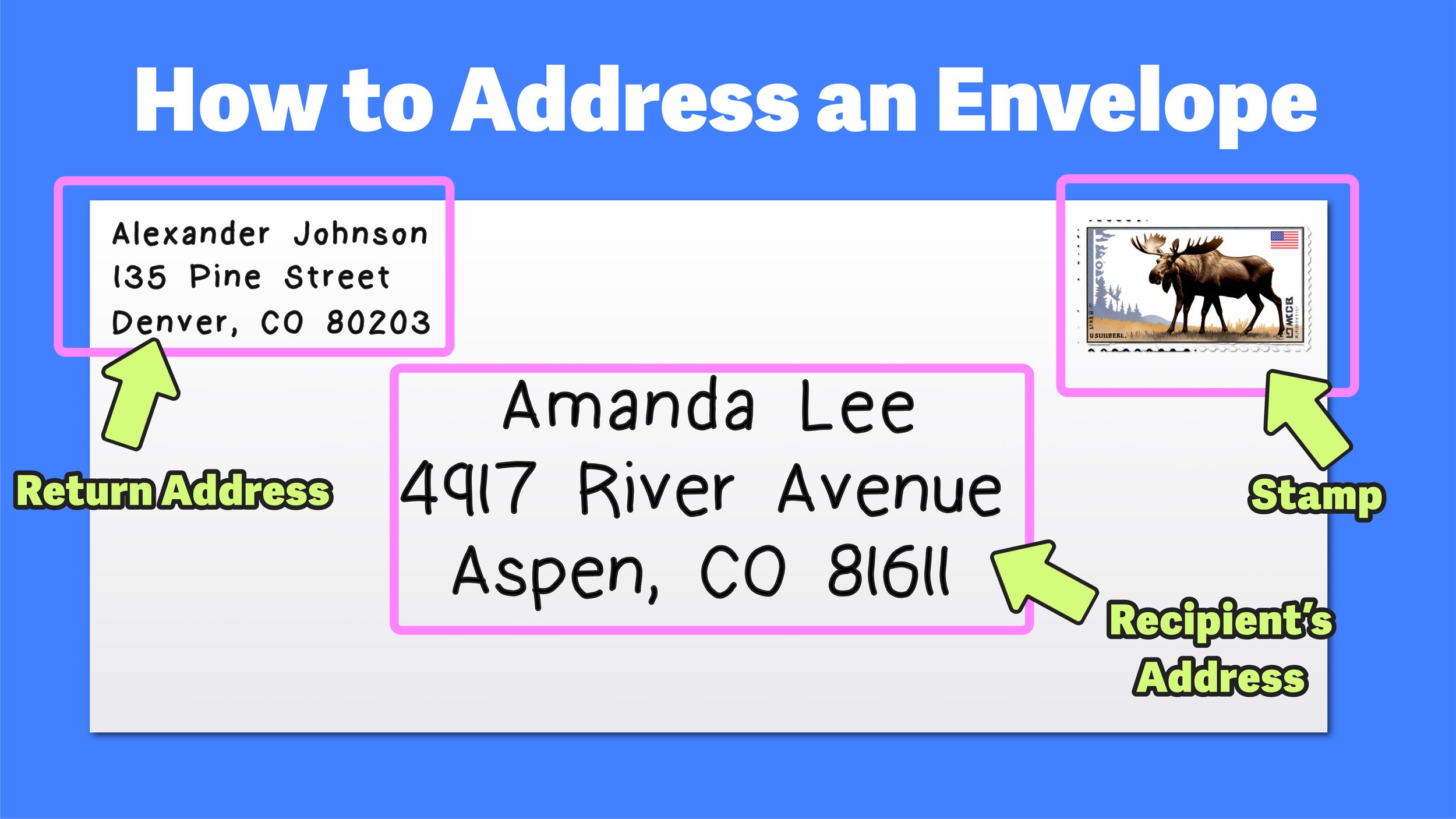
The return address should be placed in the upper left-hand corner of the envelope or package. It should follow the same format as the delivery address but is typically printed in a slightly smaller font size. Including a return address is vital; without it, the postal service has no way to return the item to you if it is undeliverable.
Should I include the country name for domestic mail?
No, if you are mailing an item within your own country, you should not include the country name. Including it can sometimes confuse local sorting machines into thinking the item is destined for international export. Only include the country name (on the very last line, in capital letters) when the destination is outside your own borders.
Improving Your Address Data Quality
The most effective next step for any organization or individual handling significant volumes of mail is to perform an address audit. For individuals, this means updating contact lists and ensuring that "saved addresses" in e-commerce profiles include apartment numbers and correct ZIP+4 codes.
For businesses, the priority should be integrating a CASS-certified (Coding Accuracy Support System) software solution. These tools automatically correct and format addresses against official postal databases at the point of entry. By enforcing strict address format standards, you reduce the risk of logistical errors, lower shipping costs, and ensure that your communications reach their intended recipients without unnecessary delay.