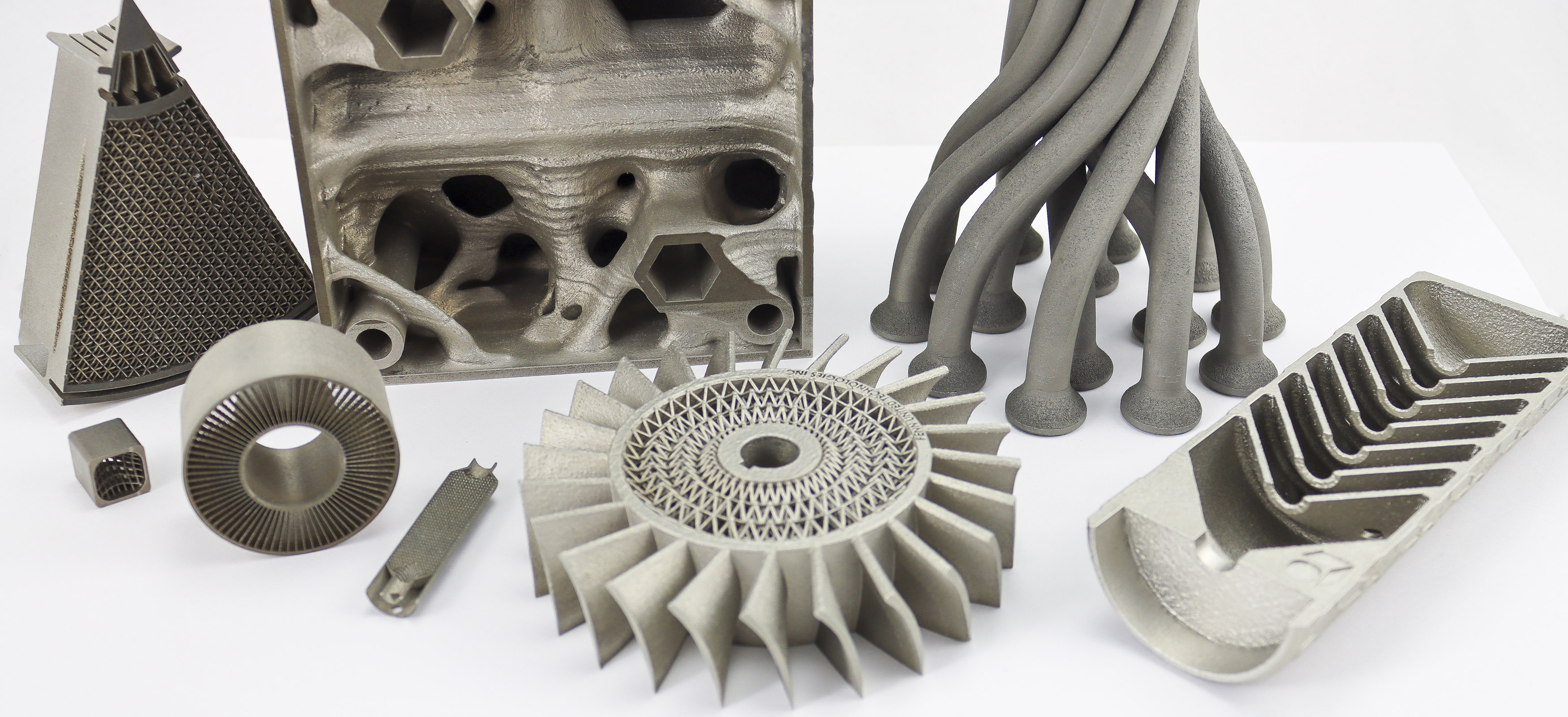
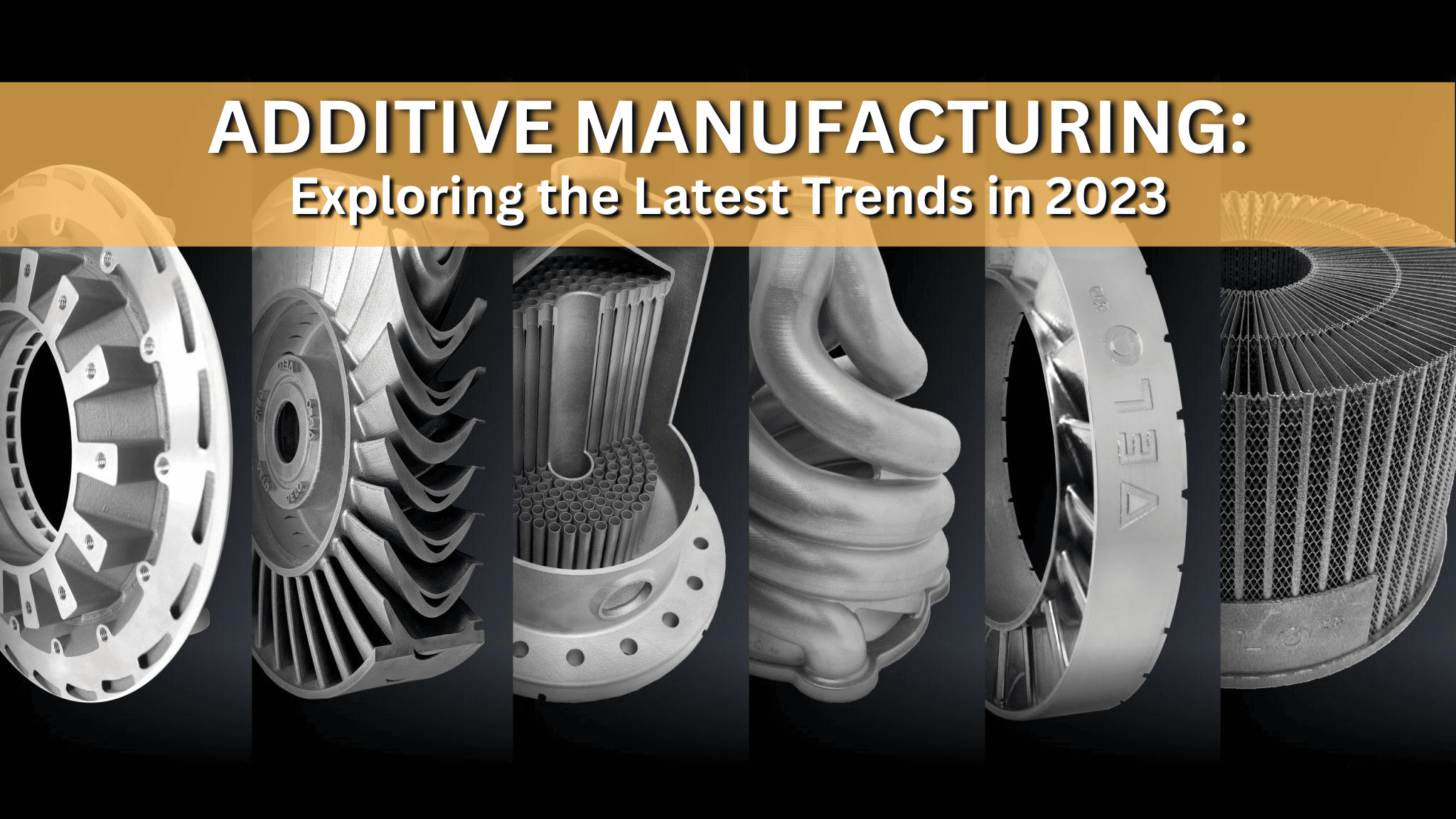
Additive manufacturing (AM) is the process of joining materials to make objects from 3D model data, usually layer upon layer, as opposed to subtractive manufacturing methodologies such as traditional machining. By 2026, this technology has transitioned from a prototyping tool to a primary production method for complex, high-performance components across the aerospace, medical, and automotive sectors.
The Foundational Principles of Additive Manufacturing
To understand additive manufacturing, one must first distinguish it from conventional subtractive processes. In traditional manufacturing, a block of material is cut, bored, or milled away to reach the final shape. This often results in significant material waste and geometric limitations. Additive manufacturing reverses this logic by adding material only where it is required by the digital design.
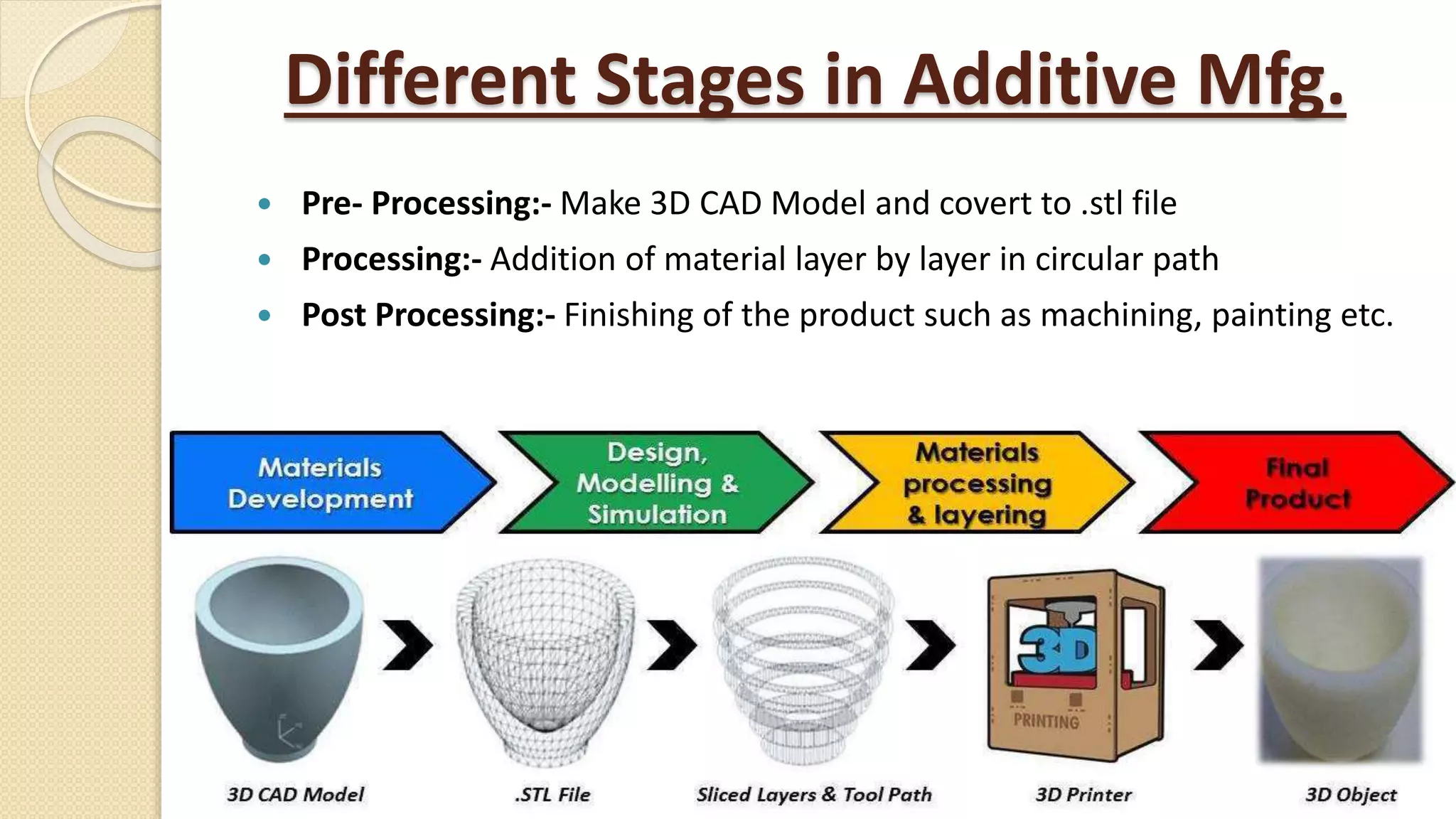
The core of the AM workflow is the "digital thread." This begins with a Computer-Aided Design (CAD) file, which is then converted into a format the printer can interpret, typically an STL or 3MF file. This digital model is "sliced" into horizontal layers. The printer then executes these layers sequentially, using a heat source, binder, or chemical reaction to solidify the material. This method allows for internal geometries, such as lattice structures and conformal cooling channels, that are physically impossible to create using drills or molds.
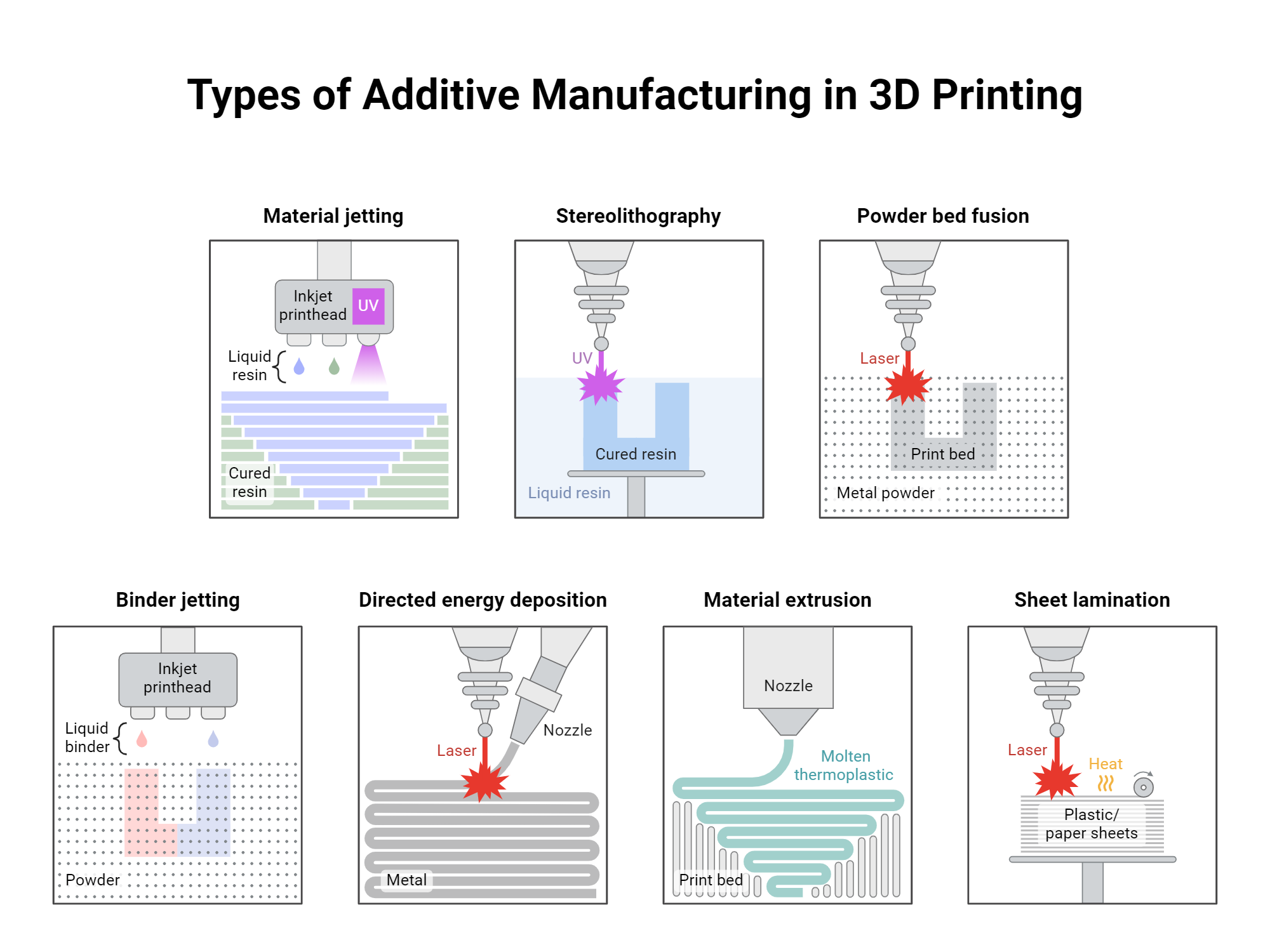
As of 2026, the industry has largely adopted the ISO/ASTM 52900 standards, which categorize additive processes into seven distinct families. Understanding these categories is essential for selecting the right technology for a specific engineering problem.
The Seven Standardized Categories of AM Technology
Selecting an additive process requires balancing material properties, surface finish, and mechanical requirements. The following seven categories define the current landscape of the industry.
1. Vat Photopolymerization (SLA, DLP)
This process uses a vat of liquid photopolymer resin, which is selectively cured by a light source—usually a laser or a digital light projector (DLP).
- Best For: High-detail prototypes, dental applications, and jewelry.
- Advantage: Exceptional surface finish and dimensional accuracy.
- Limitation: Parts are often brittle and can degrade under prolonged UV exposure.
2. Powder Bed Fusion (SLS, SLM, EBM)
Powder Bed Fusion (PBF) uses a thermal source (laser or electron beam) to fuse powder particles layer by layer. Selective Laser Sintering (SLS) is common for polymers, while Selective Laser Melting (SLM) and Electron Beam Melting (EBM) are used for metals.
- Best For: Functional end-use parts and complex metal aerospace components.
- Advantage: High mechanical strength and the ability to print without support structures in some polymer variants.
3. Material Extrusion (FDM/FFF)
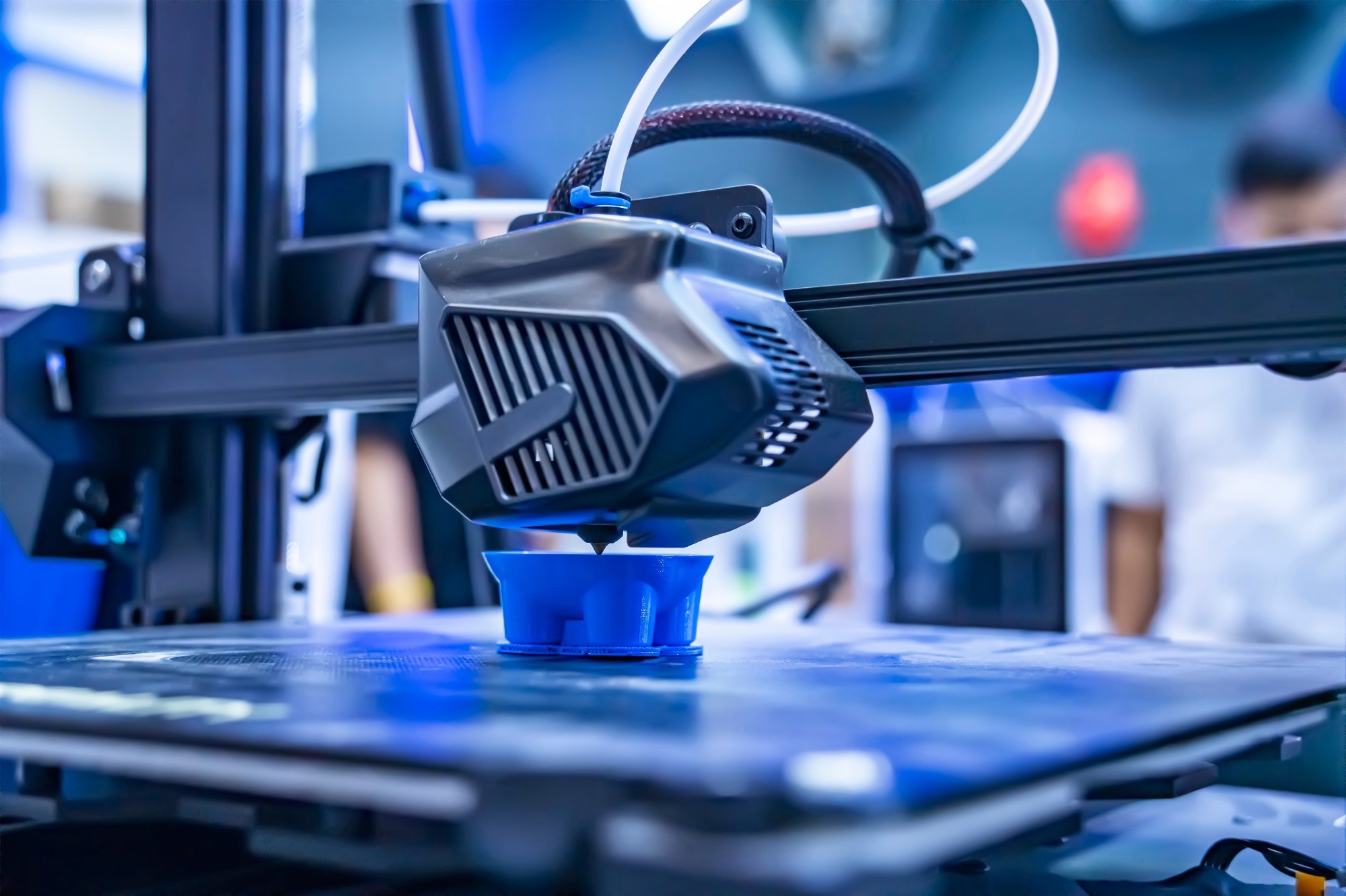
Perhaps the most recognizable form of 3D printing, Material Extrusion involves pushing a thermoplastic filament through a heated nozzle.
- Best For: Rapid prototyping, jigs, fixtures, and educational models.
- Advantage: Low cost and a wide variety of available materials, including carbon-fiber-reinforced filaments.
4. Material Jetting
Similar to a 2D inkjet printer, droplets of material are deposited onto a build platform and cured immediately.
- Best For: Full-color modeling and multi-material prototypes.
- Advantage: Ability to combine rigid and flexible materials in a single print.
5. Binder Jetting
This process involves a liquid bonding agent being selectively deposited onto a layer of powder (metal, sand, or ceramic). Metal binder jetting requires a secondary furnace sintering step.
- Best For: Large-scale sand casting molds and high-volume metal production.
- Advantage: Fast build speeds and no need for support structures during the printing phase.
6. Directed Energy Deposition (DED)
DED uses focused thermal energy (laser, electron beam, or electric arc) to fuse materials as they are being deposited.
- Best For: Repairing existing components and building very large metal structures.
- Advantage: High deposition rates and the ability to add material to existing parts.
7. Sheet Lamination
This involves bonding sheets of material (paper, metal, or plastic) to form an object.
- Best For: Low-cost aesthetic models.
- Advantage: Speed and the ability to use standard office-grade materials.
Technical Comparison of Leading AM Processes (2026 Status)
| Technology Family | Common Materials | Typical Accuracy | Primary Use Case |
|---|---|---|---|
| Vat Photopolymerization | Photopolymer Resins | ±0.05 mm | Dental crowns, high-detail models |
| Powder Bed Fusion (Metal) | Titanium, Inconel, Steel | ±0.1 mm | Jet engine components, implants |
| Powder Bed Fusion (Polymer) | Nylon (PA11, PA12) | ±0.3 mm | Functional housings, air ducts |
| Material Extrusion | PLA, ABS, PEEK, Ultem | ±0.2 mm | Tooling, functional prototypes |
| Binder Jetting | Stainless Steel, Sand | ±0.2 mm | Casting molds, batch production |
| Directed Energy Deposition | Specialized Alloys | ±0.5 mm | Turbine blade repair, large frames |
Design for Additive Manufacturing (DfAM)
To maximize the benefits of AM, engineers must move away from "Design for Manufacture" (DFM) mindsets tailored for machining. Additive manufacturing introduces a concept known as "complexity for free," where the cost of a part is determined by its volume and material usage rather than the intricacy of its shape.
Topology Optimization and Generative Design
In 2026, AI-driven generative design has become standard. By inputting load requirements, material constraints, and weight targets, software can "grow" a part geometry that is optimized for performance. This often results in organic-looking structures that use 40-60% less material while maintaining the same structural integrity as a solid machined block.
Consolidation of Assemblies
One of the most significant advantages of AM is part consolidation. A traditional assembly consisting of 20 separate parts (fasteners, gaskets, and brackets) can often be redesigned as a single additive component. This reduces the bill of materials (BOM), eliminates assembly labor, and removes potential points of failure like leaking joints or loose screws.
Economic Considerations and Total Cost of Ownership
The economic viability of additive manufacturing depends on several factors beyond the initial machine purchase. In 2026, the focus has shifted toward the "Total Cost of Ownership" (TCO), which includes material costs, labor, and post-processing.
While injection molding remains the superior choice for production runs in the hundreds of thousands, AM has found its niche in low-to-medium volume production. The "break-even point" for AM has climbed steadily as machines become faster and material costs decrease.
- Material Costs: AM materials (especially high-grade metal powders and specialized resins) remain more expensive per kilogram than bulk pellets used in traditional manufacturing.
- Labor and Post-Processing: Despite the "push-button" reputation, industrial AM requires significant post-processing. This includes support removal, surface finishing (vibratory tumbling or chemical vapor smoothing), and heat treatment to relieve internal stresses.
- Digital Inventory: AM enables "on-demand" manufacturing, reducing the need for massive warehouses. Companies can store a digital file and print a replacement part only when it is needed, drastically lowering inventory carrying costs.
Quality Assurance and Certification Standards
For industries like aerospace and medical devices, the variability of AM parts has historically been a challenge. By 2026, rigorous quality assurance (QA) protocols have been established to ensure consistency.
- In-Situ Monitoring: Modern industrial printers use high-speed cameras and sensors to monitor the melt pool in real-time. If a defect is detected during the print, the system can pause or adjust parameters to save the part.
- Powder Recyclability: In powder-based systems, managing the quality of reused powder is critical. Over multiple cycles, the chemistry and morphology of the powder can change, potentially affecting the mechanical properties of the final part.
- Non-Destructive Testing (NDT): Techniques such as CT scanning are frequently used to inspect internal geometries for voids or inclusions that cannot be seen from the surface.
Common Mistakes in Additive Manufacturing Implementation
Organizations often fail to realize the full value of AM due to several recurring errors:
- Printing "As-Is": Attempting to print a part designed for CNC machining without any redesign. This usually results in a part that is more expensive and less performant than the original.
- Underestimating Post-Processing: Budgeting for the printer but failing to account for the costs of automated finishing equipment, specialized cooling, and safety equipment for handling fine powders.
- Ignoring Material Science: Assuming that "Stainless Steel" in an additive process will behave exactly like "Stainless Steel" from a forge. The rapid heating and cooling cycles in AM create unique microstructures that require specific heat treatments to optimize.
Frequently Asked Questions
Is additive manufacturing cheaper than traditional manufacturing?
It depends entirely on volume and complexity. For simple geometries in high volumes (e.g., 50,000 plastic brackets), traditional injection molding is significantly cheaper. However, for highly complex geometries, customized medical implants, or low-volume aerospace components (e.g., 50 units), additive manufacturing is often more cost-effective because it eliminates the need for expensive tooling and molds.
What are the main safety risks associated with AM?
The primary risks involve the handling of fine metal and polymer powders, which can be combustible or hazardous if inhaled. Proper ventilation, Explosion-Proof (XP) vacuums, and Personal Protective Equipment (PPE) are mandatory. Additionally, high-powered lasers and chemicals used in resin curing require strict safety protocols and specialized training for operators.
How do I choose between SLS and FDM for plastic parts?
FDM is generally better for functional prototypes where surface finish is less critical and low cost is a priority. It is also preferred for very large parts. SLS (Selective Laser Sintering) is superior for functional end-use parts that require isotropic strength (strength in all directions) and complex geometries without the need for support structures.
Can additive manufacturing produce parts as strong as forged metal?
In many cases, yes. Through optimized parameters and post-build heat treatments (such as Hot Isostatic Pressing or HIP), metal AM parts can achieve mechanical properties—such as tensile strength and fatigue resistance—that meet or exceed those of cast or forged equivalents. However, this requires careful process control and validation.
What is the typical lead time for an additive manufacturing project?
While the physical printing of a part might take anywhere from 4 to 48 hours, the total lead time usually ranges from 3 to 10 days. This includes the time required for file preparation, job scheduling, cooling, support removal, and any necessary thermal or surface treatments. This is still significantly faster than the 6-12 weeks often required for traditional tooling.
Strategic Implementation for Your Organization
If you are looking to integrate additive manufacturing into your production workflow, start by identifying "pain points" in your current manufacturing cycle. High-cost, low-volume parts, components with long lead times from suppliers, or assemblies that are difficult to manufacture using traditional means are prime candidates for AM.
Before purchasing hardware, it is often advisable to utilize an industrial 3D printing service bureau to validate your designs and material choices. This allows you to test different technologies—such as Binder Jetting vs. SLM—without the multi-million dollar capital investment. Once a use case is proven, focus on training your engineering team in DfAM principles, as the greatest value of additive manufacturing lies not in the machine itself, but in the ability to design parts that were previously impossible to build.