The adaptation sequence is the biological process by which an organism adjusts to internal or external stressors to maintain homeostasis and enhance functional capacity. This three-stage sequence—comprising the alarm reaction, the resistance phase, and either exhaustion or supercompensation—determines how the body survives and thrives under physical, environmental, or psychological pressure.
In the fields of exercise science, clinical medicine, and evolutionary biology, the adaptation sequence represents the fundamental blueprint for growth. Whether an individual is training for an elite athletic event, acclimating to a high-altitude environment, or managing chronic workplace stress, the body follows a predictable path to reconcile the gap between current capabilities and new demands. As of 2026, our ability to monitor this sequence through real-time biomarkers has transformed how we approach human performance and longevity.
The Foundations of the Adaptation Sequence (GAS)
The formal study of the adaptation sequence began with Hans Selye’s General Adaptation Syndrome (GAS), a model first proposed in the mid-20th century. Selye identified that the body produces a non-specific response to any demand placed upon it. While the stressors may differ—ranging from extreme cold to heavy weightlifting—the physiological sequence remains remarkably consistent.
The sequence is rooted in the drive for homeostasis, the state of steady internal, physical, and chemical conditions maintained by living systems. When a stressor disrupts this balance, the body initiates a cascade of events designed to return to baseline or, ideally, to establish a new, higher baseline (allostasis). In 2026, researchers emphasize that the sequence is not merely a survival mechanism but a sophisticated feedback loop that utilizes cellular signaling to "prepare" the organism for future encounters with the same stressor.
The Alarm Phase: The Immediate Response
The first stage of the adaptation sequence is the alarm reaction. This is the immediate "fight or flight" response mediated by the sympathetic nervous system. When a stressor is introduced, the body releases catecholamines (adrenaline and noradrenaline) and glucocorticoids (cortisol).
During this phase, physiological markers include increased heart rate, heightened blood glucose levels, and diverted blood flow from the digestive system to the skeletal muscles. In an athletic context, this represents the initial "shock" of a new workout. Performance typically dips during the alarm phase as the body's resources are redirected toward managing the immediate threat rather than building new tissue.
The Resistance Phase: The Compensation Stage
If the stressor persists or is repeated, the body enters the resistance phase. This is the most critical part of the sequence for those seeking growth or improvement. During this stage, the body attempts to counteract the disruptions of the alarm phase.
The physiological focus shifts toward repair and reinforcement. For instance, if the stressor is resistance training, the body initiates protein synthesis to repair micro-tears in muscle fibers. If the stressor is heat, the body begins increasing plasma volume and sweat rate. The resistance phase is characterized by a "leveling out" of stress hormones and an increase in functional capacity. According to the American Physiological Society, this phase is governed by the SAID Principle (Specific Adaptations to Imposed Demands), which dictates that the body will adapt specifically to the type of stress applied.
Exhaustion vs. Supercompensation
The final stage of the sequence can follow two distinct paths depending on the magnitude and duration of the stressor:
- Exhaustion: This occurs when the stressor is too intense or prolonged, and the body’s resources are depleted. In this state, the ability to resist the stressor vanishes, leading to injury, illness, or chronic overtraining.
- Supercompensation: In a controlled environment—such as a structured training program—the stressor is removed at the peak of the resistance phase, allowing for recovery. The body does not just return to its original state; it builds back stronger to ensure that the next time the same stressor appears, it will be less disruptive.
Mechanisms of Biological Adaptation
The "why" behind the adaptation sequence lies in cellular signaling and gene expression. When we talk about "getting fit" or "getting used to the heat," we are actually describing a complex series of molecular events.
Cellular Signaling Pathways
When a cell experiences stress, it activates specific signaling pathways. For example, the mTOR (mammalian target of rapamycin) pathway is a primary regulator of muscle protein synthesis in response to mechanical load. Conversely, the AMPK pathway is activated during endurance-based stressors to promote mitochondrial biogenesis. These pathways act as the "engine room" of the adaptation sequence, translating the physical stress of the alarm phase into the structural changes of the resistance phase.
Epigenetic Influence
By 2026, the role of epigenetics in the adaptation sequence has become a focal point of clinical research. While our DNA sequence remains the same, the expression of certain genes can be "turned on" or "off" by environmental stressors. This means that consistent exposure to a specific adaptation sequence can lead to long-term changes in how an individual's body responds to their environment, effectively "training" the genome for resilience.
Applying the Sequence to Athletic Training
In the world of professional sports and high-level fitness, the adaptation sequence is managed through periodization. This is the systematic planning of physical training to ensure that the athlete stays within the resistance phase and achieves supercompensation while avoiding the exhaustion phase.
The Importance of Recovery
The adaptation sequence is not completed during the "work" portion; it is completed during the "rest" portion. Without adequate recovery, the body stays stuck in the alarm phase or slides directly into exhaustion. Modern training protocols in 2026 utilize Heart Rate Variability (HRV) monitoring to determine where an athlete sits in the sequence. A high HRV suggests the body has successfully navigated the resistance phase and is ready for a new stressor, while a low HRV indicates the body is still struggling with the alarm phase.
Progressive Overload
To keep the adaptation sequence moving forward, one must apply progressive overload. Once the body has adapted to a specific stressor (e.g., lifting 100lbs), that stressor no longer triggers a significant alarm response. To elicit further adaptation, the intensity or volume must be increased. This restarts the sequence, pushing the body to reach a new level of resistance and supercompensation.
Environmental Adaptation Sequences
Beyond physical exercise, the adaptation sequence is the mechanism through which humans survive in diverse climates. Two of the most studied sequences are those related to heat and altitude.
Heat Acclimation Sequence
When exposed to high temperatures, the body undergoes a predictable sequence of adaptations over 7 to 14 days:
- Days 1-3: Increased heart rate and core temperature (Alarm).
- Days 4-7: Plasma volume expansion begins, and the body starts sweating sooner and more profusely (Resistance).
- Days 8-14: Salt concentration in sweat decreases, and cardiovascular stability improves (Supercompensation/Acclimation).
Altitude Acclimation Sequence
At high altitudes, the primary stressor is hypoxia (low oxygen). The adaptation sequence involves:
- Immediate: Increased ventilation and heart rate.
- Intermediate: Release of erythropoietin (EPO) from the kidneys, stimulating the production of more red blood cells to carry oxygen.
- Long-term: Increased capillary density in muscle tissues to improve oxygen delivery.
Comparison of Adaptation Sequence Phases
| Phase | Duration | Primary Hormonal Markers | Metabolic State | Outcome Goal |
|---|---|---|---|---|
| Alarm | Minutes to Hours | High Adrenaline/Cortisol | Catabolic (Breaking down) | Detection of stressor |
| Resistance | Days to Weeks | Stabilizing Cortisol, High GH/IGF-1 | Anabolic (Building up) | Structural Reinforcement |
| Exhaustion | Weeks to Months | Chronic High or Low Cortisol | Metabolic Dysfunction | (Failure Case) Systemic Collapse |
| Supercompensation | Days | Optimized Hormonal Balance | Peak Efficiency | Functional Improvement |
Common Pitfalls and Troubleshooting
Many individuals fail to see results from their efforts because they inadvertently disrupt the adaptation sequence. Recognizing these errors is essential for consistent progress.
1. The "Too Much, Too Soon" Error
If the initial alarm phase is too violent—meaning the stressor is far beyond the body's current capacity—the body may skip the resistance phase and go directly to a state of injury or systemic inflammation. This is common in "weekend warriors" who attempt high-intensity sports without a foundation.
2. Lack of Stressor Variation
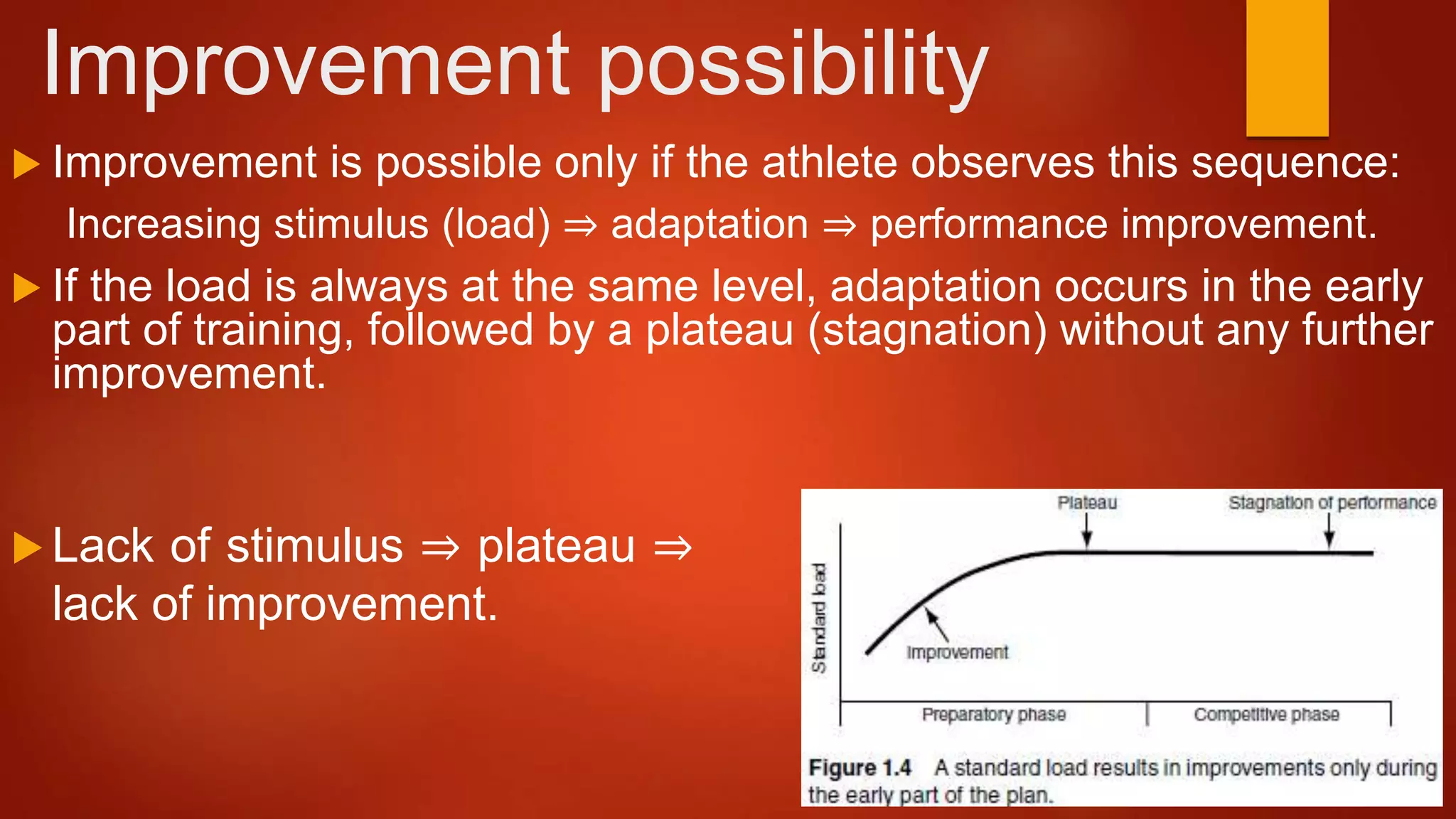
If the stressor never changes, the body reaches a "plateau." This occurs when the body has fully adapted and remains in a stable resistance phase without any new alarm triggers. To break a plateau, the sequence must be re-initiated with a novel or more intense stressor.
3. Insufficient Substrate Availability
Adaptation requires "building blocks," such as amino acids, micronutrients, and sleep. Even with the perfect training stimulus, the body cannot complete the resistance phase if it lacks the necessary fuel. Chronic calorie restriction, for example, often forces the adaptation sequence toward exhaustion rather than growth.
Frequently Asked Questions
How long does it take for a full adaptation sequence to occur?
The timeline varies significantly based on the type of stressor. A simple muscular adaptation to a new exercise might take 48 to 72 hours for a single cycle of supercompensation. However, complex adaptations like heat acclimation take about two weeks, and structural changes like bone density increases can take six months or longer.
Can you undergo multiple adaptation sequences at once?
Yes, but with limitations. The body has a finite "adaptive energy" pool. If you are simultaneously trying to adapt to a high-altitude environment, a restrictive diet, and a new heavy lifting program, the cumulative stress may push you into the exhaustion phase across all categories. This is known as the interference effect.
Is the exhaustion phase permanent?
The exhaustion phase is typically reversible through prolonged rest and the removal of the stressor. However, chronic exhaustion (such as Overtraining Syndrome or Clinical Burnout) can lead to long-term hormonal imbalances that may take months of medical intervention to rectify.
Why do some people adapt faster than others?
Genetics play a significant role in the "responsiveness" to stress. Factors such as the ratio of fast-twitch to slow-twitch muscle fibers, baseline hormonal levels, and even psychological resilience can dictate the speed and efficiency of the resistance phase. In 2026, personalized genetic testing is often used to tailor training volumes to an individual's innate adaptive capacity.
Strategic Recommendations for Optimizing Adaptation
To master the adaptation sequence, one must treat stress as a tool rather than an enemy. Successful optimization requires a balance between intensity and recovery.
- Monitor with Precision: Use wearable technology to track HRV and sleep quality. If your recovery markers are trending downward, reduce the intensity of your stressors to prevent the exhaustion phase.
- Systematize Your Stress: Do not apply stressors randomly. Whether it is learning a new skill or physical training, use a "block" approach where you focus on one or two specific adaptations at a time.
- Prioritize the Resistance Phase: Focus on the "Why" of your training. If you are training for strength, ensure your resistance phase is supported by high protein intake and neurological rest.
- Listen to Biofeedback: The alarm phase often presents with "soreness" or fatigue. Learn to distinguish between the healthy discomfort of the resistance phase and the debilitating fatigue that signals the onset of exhaustion.
By understanding and respecting the biological stages of the adaptation sequence, you can transform the way your body responds to challenge, ensuring that every stressor leads to a stronger, more resilient version of yourself.