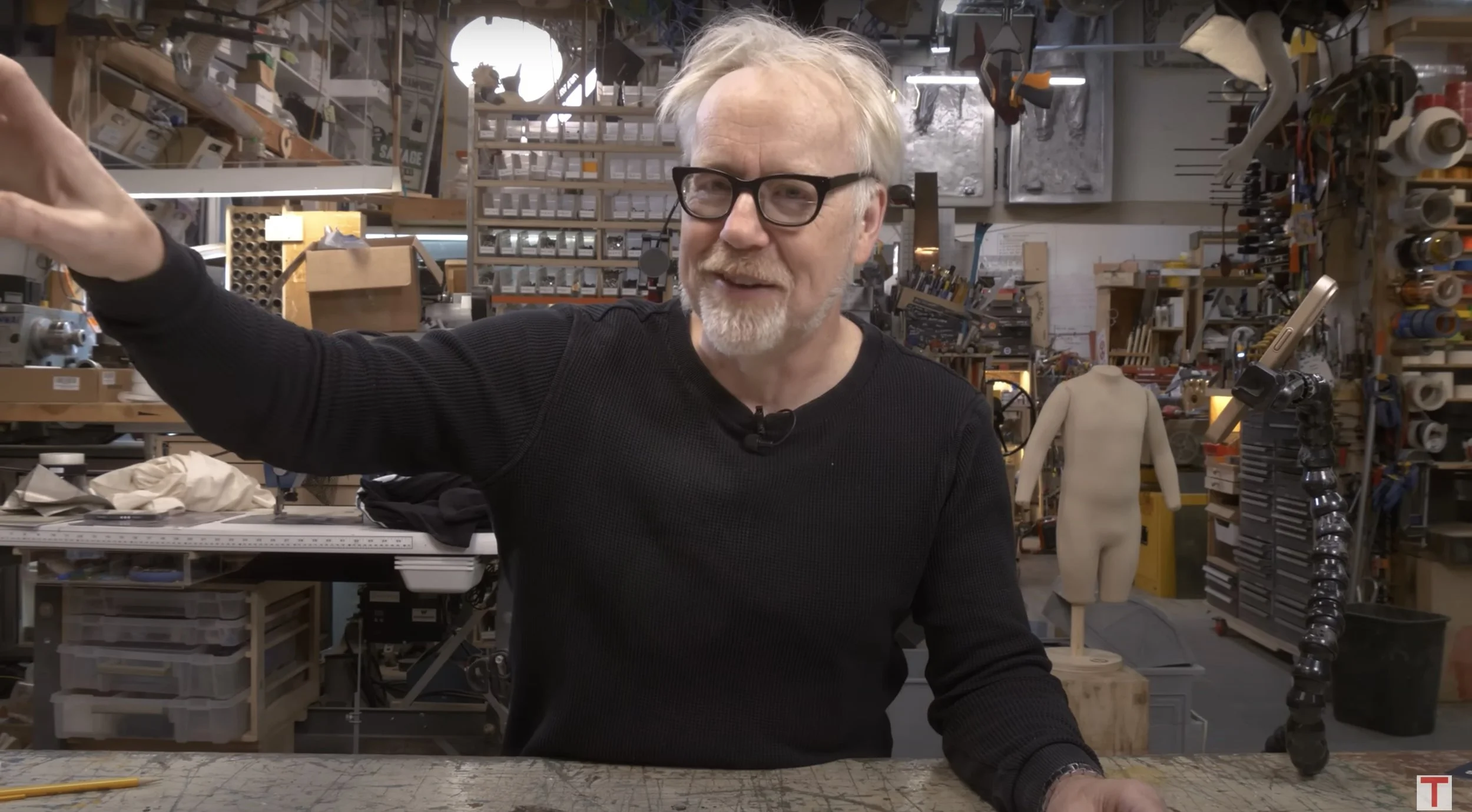
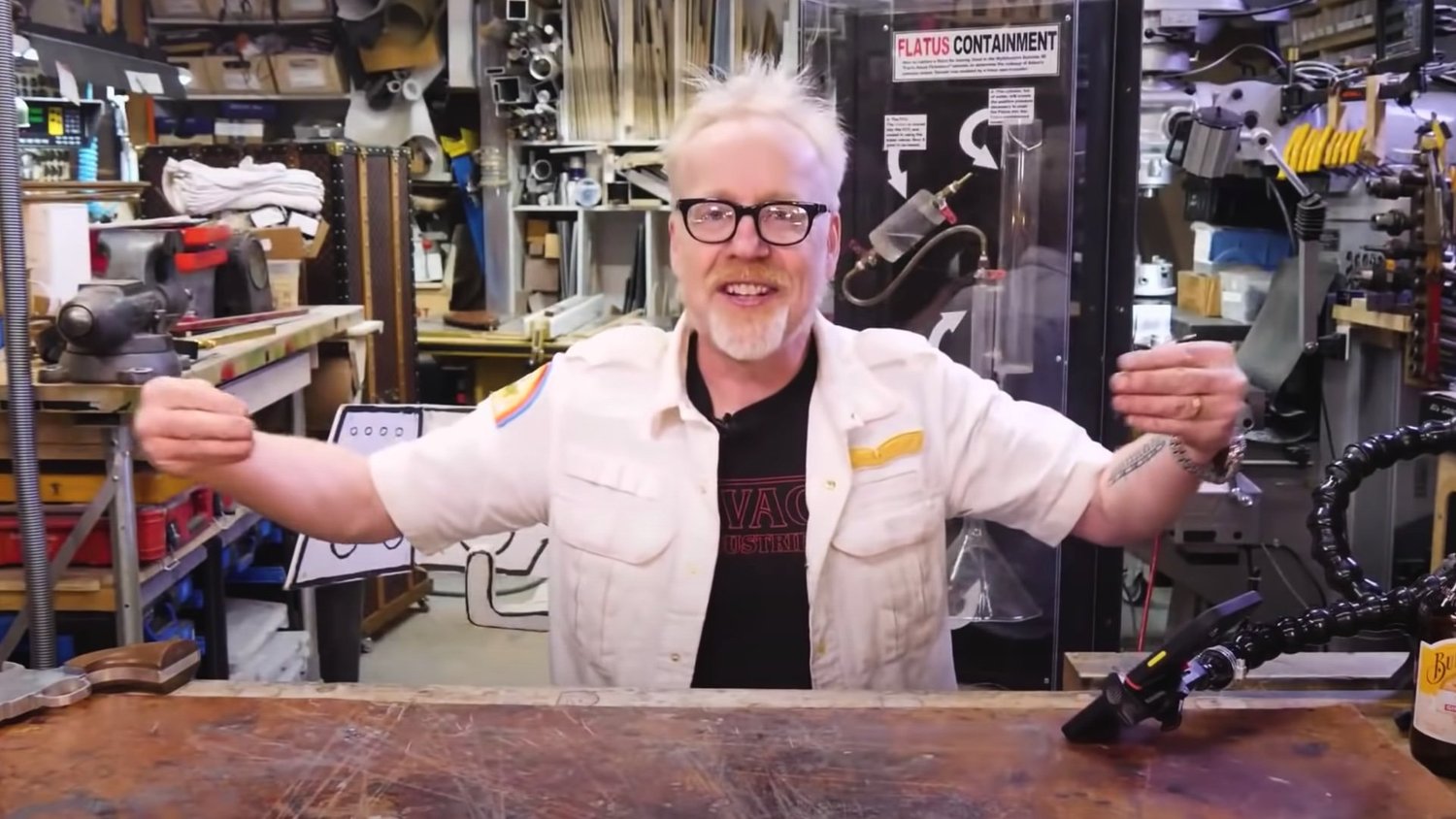
The truth behind the myths in MythBusters lies in the unique intersection of rigorous experimental physics and high-budget television production. While the results were scientifically grounded, Adam Savage has frequently revealed that the "truth" often involved hundreds of hours of failed trials, strict insurance protocols, and a professional—yet distant—relationship with co-host Jamie Hyneman that prioritized results over personal friendship.
For over a decade, MythBusters served as the primary gateway for the public to engage with the scientific method. Led by Adam Savage and Jamie Hyneman, the show didn't just debunk urban legends; it fundamentally changed how science was communicated on television. However, looking back from 2026, the legacy of the show is defined as much by what happened off-camera as what was broadcast to millions. To understand the truth behind the myths, one must look at the mechanical reality of their builds, the editorial choices made by Discovery Channel, and the evolution of Adam Savage from a special effects technician into a global ambassador for the "maker" movement.
The Reality of the Scientific Method on Television
The primary goal of MythBusters was to test the validity of rumors, movie tropes, and internet adages. While the show utilized the scientific method—observation, hypothesis, experimentation, and conclusion—the "truth" is that television as a medium requires a narrative arc that science often lacks. In a laboratory, a "boring" result is still a result, but in television, it can be a production disaster.
Adam Savage has often noted that the most difficult part of the show wasn't the explosions, but the "small-scale testing" phase. This was the stage where the duo established the parameters of a myth. If they were testing whether a penny dropped from the Empire State Building could kill a pedestrian, they couldn't just jump to the skyscraper. They had to calculate terminal velocity in a wind tunnel first. The truth is that many myths were effectively solved in the first two days of testing at M5 Industries, but the production required the "big build" to satisfy the audience's desire for spectacle.
Furthermore, the "Control" in their experiments was often the hardest element to maintain. To provide a truly scientific answer, variables must be isolated. In the chaotic environment of a bomb range or a high-speed track, isolating variables like wind speed, humidity, and mechanical failure was an ongoing struggle. The "truth" behind many "Busted" verdicts was that they were "Busted under these specific, reproducible conditions," rather than an absolute universal impossibility.
The Professional Dynamic: Savage vs. Hyneman
One of the most persistent myths about MythBusters is the personal relationship between Adam Savage and Jamie Hyneman. To the audience, they were a "buddy-cop" duo of science. However, the truth, which Savage has been candid about in recent years, is that the two were never friends. They are two profoundly different individuals with clashing personalities—Savage being the expressive, energetic communicator and Hyneman being the stoic, detail-oriented engineer.
This friction was not a manufactured TV drama; it was a genuine byproduct of two different approaches to problem-solving. Savage frequently prioritized the "how" of the build, focusing on the aesthetics and the storytelling of the construction. Hyneman focused on the "what," emphasizing efficiency and structural integrity. This tension is actually what made the show scientifically robust. Every idea was scrutinized and challenged by the other partner. The truth behind their success was not friendship, but a deep, mutual respect for each other's technical competence. This professional distance allowed them to work together for 14 years without the emotional burnout that often ends television partnerships.
Technical Scope and Myth Classification
The show utilized a three-tier system for judging myths: Busted, Plausible, and Confirmed. These were not arbitrary labels but were based on the ability to replicate the "mythical" result using the parameters described in the legend.
| Myth Category | Definition of the "Truth" | Example Case | Technical Challenge |
|---|---|---|---|
| Busted | The results could not be replicated under the stated conditions or through any "reasonable" escalation. | Penny Drop Death | Reaching terminal velocity with a low-mass object. |
| Plausible | The myth could happen, but only under highly specific or unlikely circumstances. | Refrigerator as a Faraday Cage | Finding a fridge with the exact seal and metal density required. |
| Confirmed | The myth occurred exactly as described in the source material. | Lead Balloon | Engineering a structure light enough to float but strong enough to hold shape. |
The "Lead Balloon" episode remains a pinnacle of the show’s technical truth. While the common idiom suggests that something heavy and unsuccessful "goes over like a lead balloon," Savage and Hyneman proved that with enough surface area and thin enough lead foil, a lead balloon can, in fact, fly. This highlighted the show's underlying philosophy: the "truth" is often a matter of engineering and scale rather than pure theory.
The 2011 Cannonball Incident and Safety Realities
One aspect of the "truth" that the show rarely dwelled on was the genuine danger involved in their work. In 2011, during the filming of a myth involving a homemade cannon, a cannonball took an unexpected trajectory, skipped off a hill, and tore through a residential home in Dublin, California. Fortunately, no one was injured, but the incident shattered the illusion of the "controlled environment."
The truth behind the myths involved a massive insurance and safety apparatus. Every explosion required permits from the ATF (Bureau of Alcohol, Tobacco, Firearms and Explosives) and local fire marshals. The presence of JD Nelson, the show's recurring safety expert and police sergeant, was not just for the camera; it was a legal necessity. Post-2011, the production’s safety protocols became even more stringent, often limiting what Adam and Jamie could actually do. Many myths were left on the cutting room floor because the risk-to-reward ratio for the insurance underwriters was too high.
Redefining "Failure" as a Data Point
Adam Savage has spent much of his post-MythBusters career, including his work on Tested and various speaking engagements up to 2026, discussing the "Culture of Failure." In the context of the show, the truth was that "failure" was often the most productive part of the process.
When a rig failed to fire or a car didn't flip as expected, the team didn't just reset; they analyzed the telemetry. They used high-speed cameras (often filming at 10,000 frames per second or more) to see exactly where the mechanical failure occurred. This forensic approach to engineering is where the real science happened. The "truth" wasn't just the final explosion; it was the high-speed footage that showed the exact millisecond a material reached its breaking point. For many viewers, this taught a more valuable lesson than the myths themselves: that science is a process of elimination and iterative improvement.
The Legacy of Maker Culture in 2026
As of 2026, the impact of Adam Savage and MythBusters is seen in the explosion of the "Maker" movement and STEM education. The show demystified the workshop. It showed that "the truth" is something you can find with a lathe, a welder, and a spreadsheet.
Adam Savage’s transition to digital media through Tested allowed him to show an even deeper truth: the obsession with detail. On MythBusters, a 40-minute episode might show 5 minutes of building. In his current format, Savage spends hours discussing the specific grade of aluminum or the type of weathered paint used on a prop. This has inspired a generation of engineers and hobbyists to value the process over the result. The show proved that curiosity, when backed by the scientific method, is a superpower available to anyone with a toolkit.
Frequently Asked Questions
Did Adam Savage and Jamie Hyneman really do all the builds?
While Adam and Jamie were the lead designers and did a significant amount of the hands-on fabrication, they were supported by a dedicated "Build Team" (famously including Kari Byron, Tory Belleci, and Grant Imahara) and a crew of behind-the-scenes shop assistants and engineers. As the show grew in complexity, specialized contractors were occasionally brought in for heavy machinery or specialized pyrotechnics.
Were any myths "faked" for television?
No myths were faked in terms of the results. However, the sequence of events was often edited for clarity. For example, a build that took three weeks might be edited to look like it took two days. If a result was ambiguous, the team would usually re-test it multiple times off-camera to ensure that what they showed on screen was the most representative outcome.
What happened to the items built on the show?
Most of the smaller props and test rigs were stored at M5 Industries or in Discovery Channel archives. Some iconic items have been donated to museums, such as the Smithsonian or the San Francisco Exploratorium. Many of the cars and large-scale rigs were scrapped or recycled after the tests were completed, as they were often structurally compromised during experimentation.
Why did the original show end?
The original run of MythBusters ended in 2016 primarily due to a combination of rising production costs, shifting viewer demographics, and a desire from both Savage and Hyneman to pursue individual projects. After 14 years and nearly 300 episodes, both hosts felt they had exhausted the most compelling myths that could be safely and effectively tested on a television budget.
Is Adam Savage still testing myths today?
While he no longer hosts a show called MythBusters, Adam Savage continues to apply the same principles on his YouTube channel, Tested, and in various television specials. He often revisits old myths with new technology or explores the engineering "truth" behind movie props and historical artifacts, maintaining the same rigorous spirit of inquiry.
Practical Steps for Engaging with the Maker Movement
If you are inspired by the "truth behind the myths" and wish to apply the Savage-Hyneman approach to your own projects, consider these actionable steps:
- Document Everything: Use a notebook or digital log to track variables in your projects. Knowing why something failed is more valuable than a lucky success.
- Learn Basic Fabrication: Start with fundamental skills like 3D printing, basic woodworking, or electronics (Arduino/Raspberry Pi). These are the building blocks of most MythBusters rigs.
- Prioritize Safety: Never work with high-voltage electricity, pressurized systems, or volatile chemicals without proper training and safety equipment. The "truth" is never worth a permanent injury.
- Join a Community: Look for local "Maker Spaces" or online forums where you can share techniques and troubleshoot builds with others.
By focusing on the process and maintaining a healthy skepticism of "common knowledge," you can uncover the truths in your own field of interest, just as Adam Savage did for over a decade on the front lines of televised science.