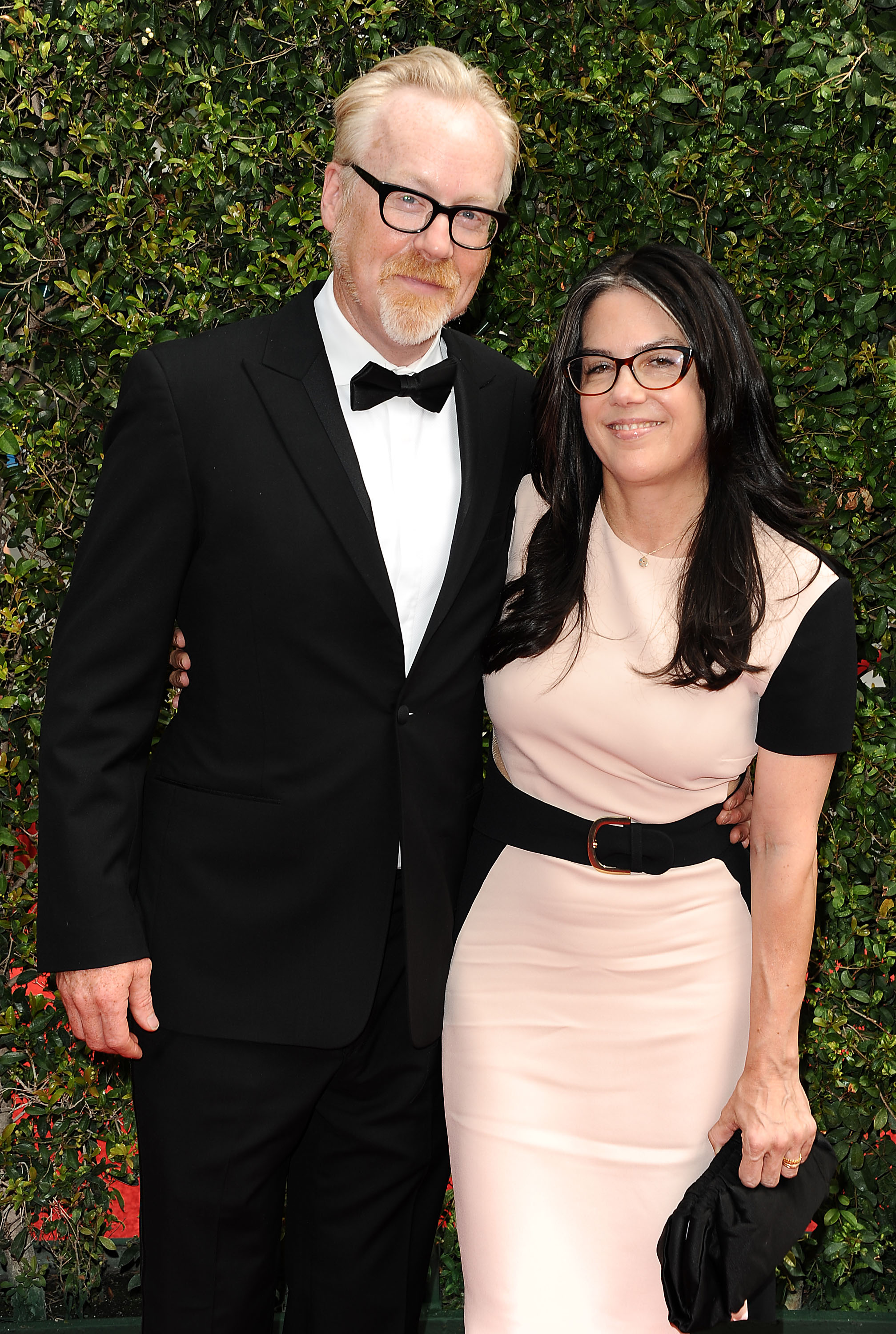
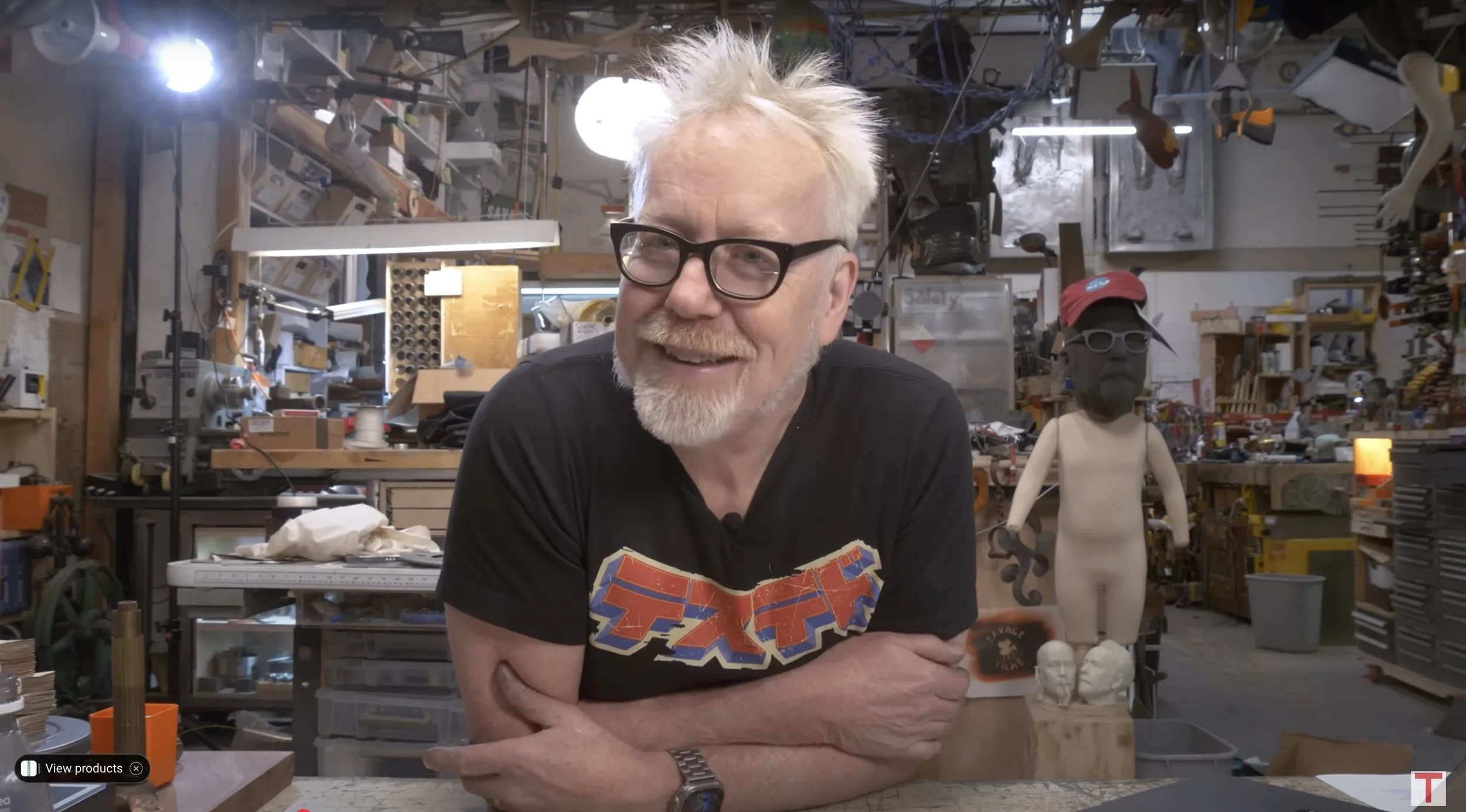
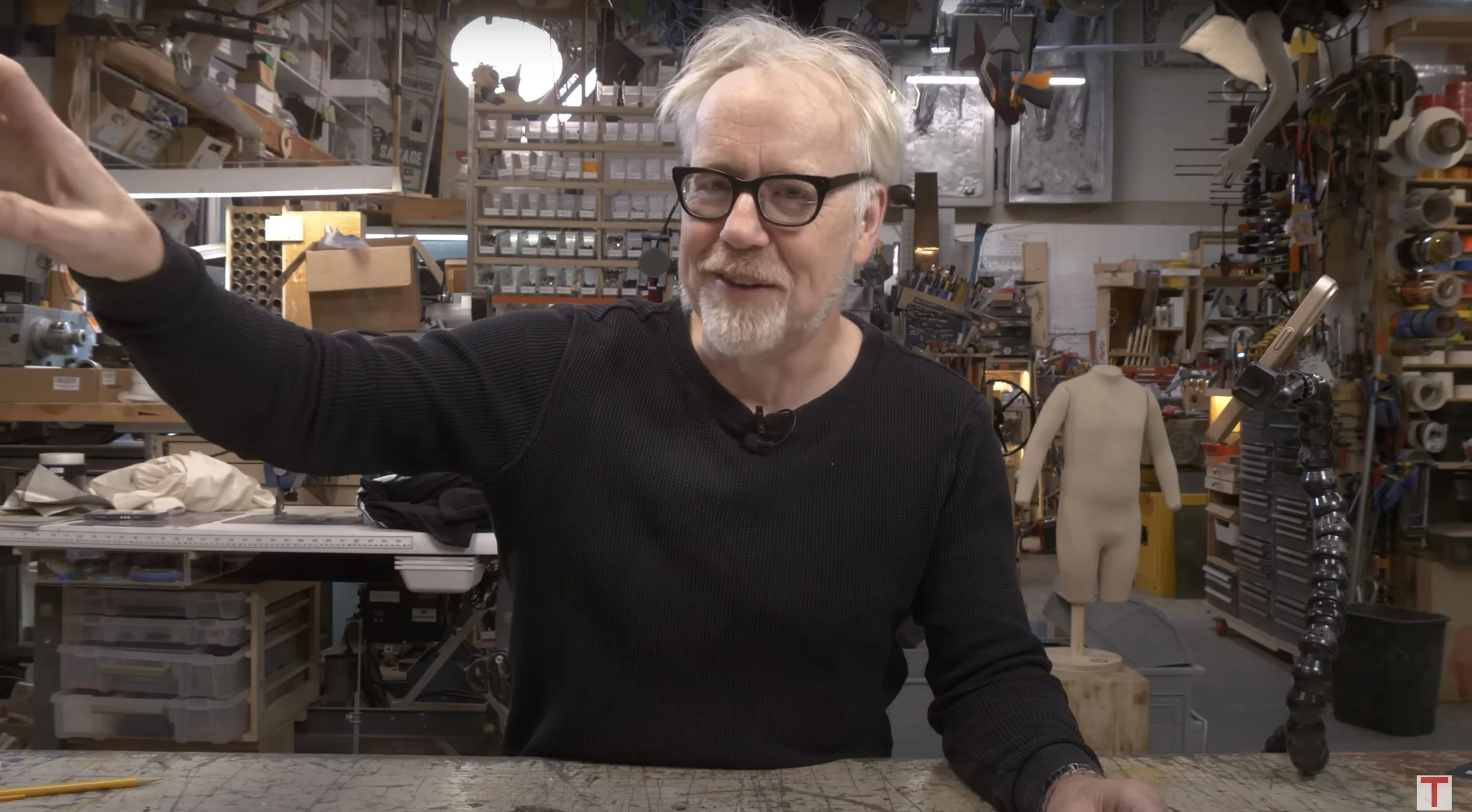
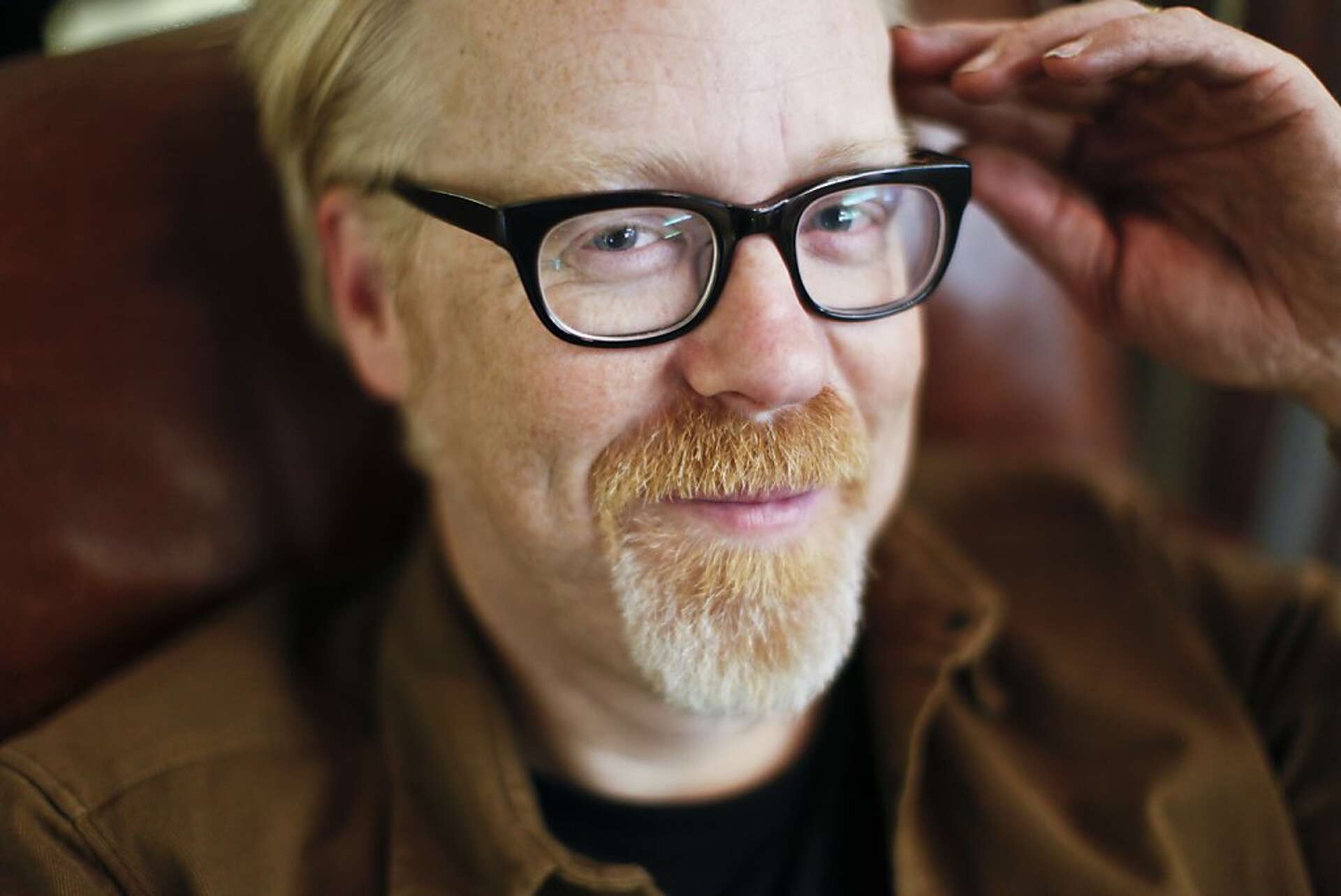
Adam Savage is an American special effects designer, television personality, and educator best known as the co-host of the long-running Discovery Channel series MythBusters. As of 2026, he remains a central figure in the global maker movement through his digital platform "Adam Savage’s Tested," where he champions scientific curiosity, technical craftsmanship, and the creative value of iteration.
The Foundations of a Maker: From Theater to Industrial Light & Magic
Long before becoming a household name, Adam Savage spent decades honing a diverse set of technical skills that would eventually define his career. Born into a creative family—his father was a painter and filmmaker for Sesame Street—Savage began his professional life in the theater and commercial sectors of New York and San Francisco. His early work involved everything from graphic design and animation to scenic painting and prop building.
By the late 1990s, Savage transitioned into the high-stakes world of motion picture special effects. He joined Industrial Light & Magic (ILM), the legendary studio founded by George Lucas. During his tenure there, he contributed to iconic franchises, including Star Wars: Episode I – The Phantom Menace and Episode II – Attack of the Clones, as well as The Matrix sequels and A.I. Artificial Intelligence.
His work at ILM wasn't just about making things look "cool"; it was about solving complex mechanical and aesthetic problems under tight deadlines. This period solidified his expertise in model making, vacuum forming, and the use of diverse materials like resin, fiberglass, and specialized plastics. These years served as a masterclass in "thinking with your hands," a concept he would later popularize for a global audience.
The MythBusters Era: Bridging Science and Entertainment
In 2003, Savage teamed up with Jamie Hyneman to host MythBusters, a show that would change the landscape of science communication. For 14 seasons and 248 episodes, the duo applied the scientific method to urban legends, movie tropes, and historical myths. While Hyneman provided a stoic, engineering-focused foil, Savage became the "everyman" scientist—enthusiastic, curious, and willing to put his own body (and eyebrows) on the line for the sake of data.
The impact of MythBusters extended far beyond television ratings. It demystified the scientific process for millions of viewers by showing that science isn't just about laboratory results; it is about the messy, often frustrating process of trial and error. Savage’s famous mantra on the show—"Remember, kids, the only difference between screwing around and science is writing it down"—encapsulated a generation's approach to STEM (Science, Technology, Engineering, and Math) education.
The show relied on several core methodologies:
- Scale Modeling: Before blowing up a full-sized ship or car, the team built accurate miniatures to test physics on a smaller scale.
- High-Speed Documentation: The use of high-speed cameras allowed the team to analyze mechanical failures and impact forces that the human eye could never perceive.
- Controlled Testing Environments: Utilizing decommissioned military bases and runways, they ensured that dangerous experiments were conducted with rigorous safety protocols.
Adam Savage’s Tested and the Digital Pivot
Following the conclusion of the original MythBusters run, Savage shifted his focus to the digital frontier. He joined forces with Norman Chan and Will Smith (of Tested.com) to evolve the platform into "Adam Savage’s Tested." As of 2026, this YouTube-centric channel has become a definitive archive of the maker movement, garnering millions of subscribers and providing a behind-the-scenes look at the creative process.
The "Tested" era represents a shift from "debunking" to "creating." The channel’s most popular format, the "One Day Build" (ODB), showcases Savage building a prop, tool, or costume from start to finish. Unlike traditional TV, these videos are largely unedited regarding the mistakes made. If a measurement is wrong or a piece of wood splits, Savage shows the audience how he fixes it. This transparency has fostered a community of makers who feel empowered by the realization that even experts fail during the construction process.
Through Tested, Savage has also documented the evolution of fabrication technology. He frequently explores the intersection of traditional woodworking and metalworking with modern tools like 3D printers, CNC routers, and laser cutters. His "The Cave" workshop in San Francisco has become one of the most famous private maker spaces in the world, serving as a laboratory for his ongoing obsession with prop replicas and costume design.
The Philosophy of Making: "Every Tool’s a Hammer"
In 2019, Savage published his book Every Tool’s a Hammer: Life Is What You Make It, which outlines his philosophy on creativity and craftsmanship. Even years later, in 2026, the principles in this book serve as a roadmap for hobbyists and professionals alike. He argues that "making" is a fundamental human drive and that everyone possesses the capacity to create if they overcome the fear of starting.
One of the most influential concepts Savage introduced is First Order Retrievability. This is a workshop organization strategy where every tool is accessible without having to move another tool out of the way. By reducing the "friction" of starting a task, a maker is more likely to remain in a state of creative flow.
Another key tenet is the acceptance of "Failure is Always an Option" (a phrase he famously wore on a t-shirt during MythBusters). In the context of 2026's fast-paced technological environment, Savage’s emphasis on iterative design—the process of building a "rough" version, testing it, and then building a better one—remains highly relevant. He encourages makers to use "poor man’s materials" like cardboard and hot glue to prototype ideas before moving to expensive materials like aluminum or carbon fiber.
Technical Skills and Professional Contributions
Savage’s expertise spans a vast array of technical disciplines. His ability to synthesize these skills allows him to tackle projects that involve both aesthetic beauty and mechanical complexity.
| Skill Category | Specific Techniques & Tools | Application in Savage's Work |
|---|---|---|
| Special Effects | Vacuum forming, mold making, casting | Prop replicas (e.g., Blade Runner blaster, Captain America's shield) |
| Soft Goods | Industrial sewing, pattern making, weathering | Screen-accurate space suits and cosplay (e.g., The Martian, Apollo 11) |
| Metalworking | Lathe turning, milling, TIG welding | Custom tool carts, structural frames for large-scale builds |
| Finishing | Airbrushing, dry brushing, chemical aging | Creating "history" on props through realistic wear and tear |
| Electronics | Arduino programming, LED wiring, soldering | Interactive costumes and kinetic sculptures |
His contributions to cosplay deserve special mention. Savage is a regular attendee of San Diego Comic-Con, often walking the floor "incognito" in elaborate, screen-accurate costumes. By treating cosplay with the same technical rigor as a Hollywood movie production, he has helped elevate the hobby into a respected art form. His builds of the A7L Apollo moon suit, for instance, are so accurate they have been displayed in museums and praised by aerospace historians.
Shop Organization and the "Cave" Environment
A significant portion of Savage’s current influence stems from his advocacy for better workspaces. He often discusses the psychology of the workshop, suggesting that a well-organized space is a "brain externalized." His shop, "The Cave," is a testament to this idea.
Savage uses a system of custom-built tool carts and "Sortimo" stacking boxes. These allow him to move his entire kit for a specific task—like soldering or leatherworking—directly to his workbench. This mobility is crucial for a multi-disciplinary maker who may be working on a 3D-printed helmet in the morning and a wooden cabinet in the afternoon. He also emphasizes the importance of "knolling"—the process of arranging related objects in parallel or 90-degree angles—which he learned from sculptor Tom Sachs. Knolling is not just for aesthetics; it helps a builder account for all parts and tools before a project begins.
Frequently Asked Questions
How did Adam Savage get his start in the movie industry?
Adam Savage began his career in theater and commercials, building props and sets in New York. He eventually moved to San Francisco, where his reputation for high-quality model making led him to Industrial Light & Magic (ILM). At ILM, he worked on major films such as Star Wars and The Matrix, specializing in physical models and miniatures before the industry shifted heavily toward CGI.
What is "First Order Retrievability"?
First Order Retrievability is an organizational philosophy popularized by Savage. It dictates that every frequently used tool should be visible and accessible without having to move anything else. By eliminating the need to dig through drawers or move boxes, a maker can maintain their creative momentum and reduce the mental "overhead" of starting a project.
Is Adam Savage still active in 2026?
Yes. As of 2026, Adam Savage continues to produce content for "Adam Savage’s Tested." He remains active in the maker community, participating in public speaking engagements, collaborating with museums on historical prop restorations, and mentoring the next generation of engineers and artists through his digital platforms.
Why did MythBusters end?
The original MythBusters series ended in 2016 after a 13-year run. The decision was primarily driven by the natural lifecycle of the show and a desire by the hosts and the network to move on to new projects. While the show was later revived with new hosts, the original partnership between Savage and Hyneman remains the definitive era of the program.
What book did Adam Savage write about making?
Adam Savage wrote Every Tool’s a Hammer: Life Is What You Make It, published in 2019. The book is part memoir and part instructional guide, detailing his journey as a maker and offering practical advice on everything from shop organization and tool selection to overcoming "creative block" and the fear of failure.
Engaging with the Maker Movement
For those inspired by Adam Savage’s career, the best next step is to begin a project of your own. Savage frequently suggests starting with a "kit" or a small repair rather than an overly ambitious build. The goal is to build the "muscle memory" of problem-solving.
To follow his current work, the "Tested" YouTube channel remains the primary resource for his "One Day Builds" and deep dives into movie prop history. Additionally, his book remains an essential read for anyone looking to understand the intersection of craftsmanship and the scientific method. Whether you are a professional engineer or a weekend hobbyist, the core lesson from Savage’s career remains constant: stay curious, document your failures, and never stop building.