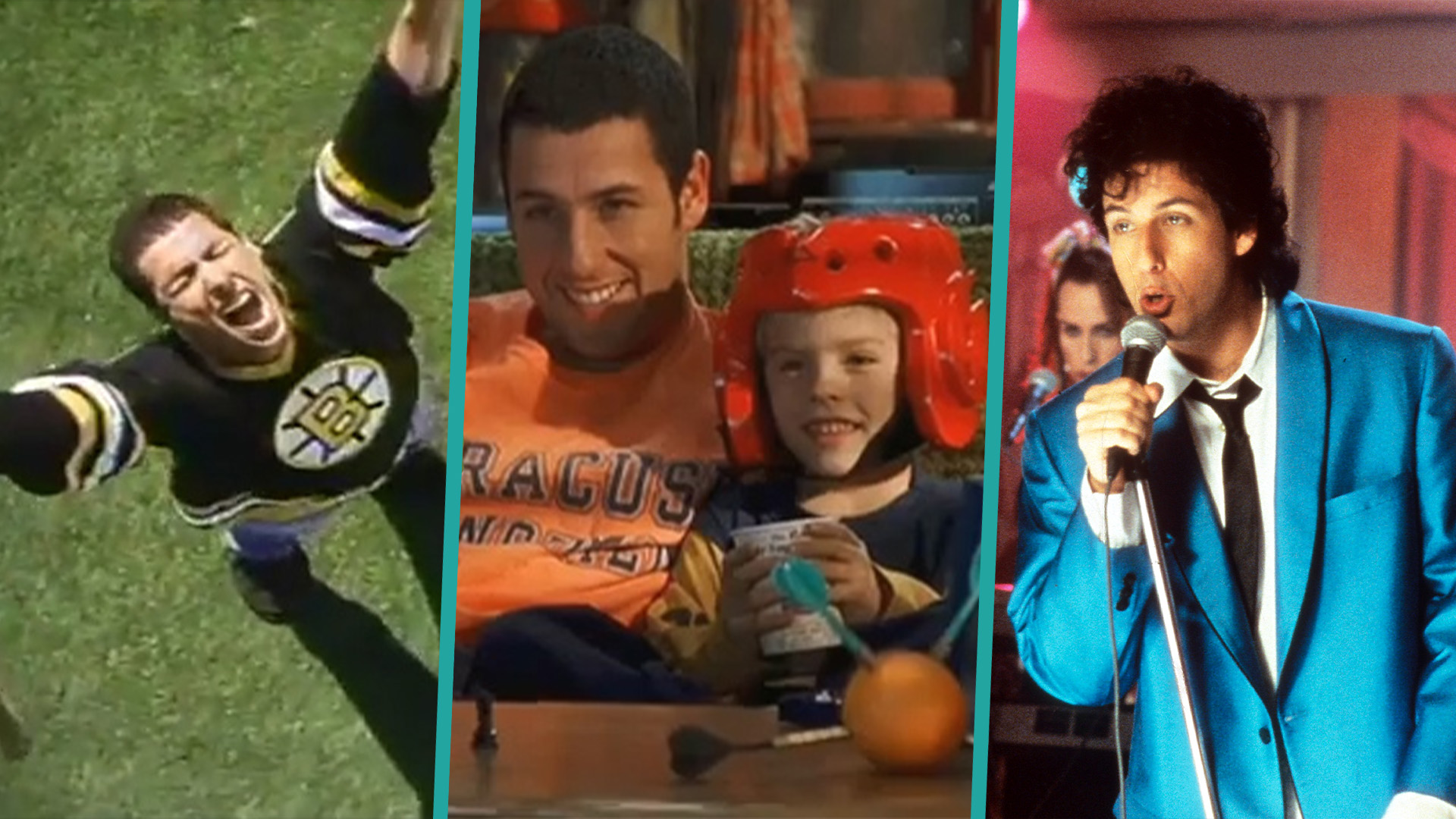
As of 2026, Adam Sandler remains one of the most influential figures in Hollywood comedy, yet he rarely occupies the director's chair. While he serves as the primary creative force, writer, and producer for nearly all his projects through Happy Madison Productions, his formal directing credits are limited to a single short film from 1996.
The name Adam Sandler is synonymous with a specific brand of American comedy—one defined by loyalty, recurring cast members, and a blend of slapstick and sentimentality. Because his "creative fingerprint" is so distinct, audiences often assume he is the one behind the camera. However, Sandler has spent his decades-long career refining a unique "Auteur-Producer" model. Instead of directing, he delegates the technical execution to a trusted inner circle of directors while maintaining absolute control over the script, casting, and tone.
The Formal Directing Credits of Adam Sandler
To understand Adam Sandler’s relationship with directing, one must look at his official filmography. Despite having over 80 acting credits and more than 60 producing credits by 2026, his "Directed by" credits are almost non-existent.
The only formal directing credit attributed to Adam Sandler is for a 1996 short video titled "The Dog." This project was a low-budget comedy sketch featuring Sandler and his frequent collaborators. Beyond this early experimental piece, Sandler has never directed a feature-length film, a television episode, or a major documentary.
This absence of directing credits is not a result of a lack of capability, but rather a deliberate career strategy. Sandler’s role on set is often described by co-stars as "shadow directing." He is known to be heavily involved in the blocking of scenes, the timing of jokes, and the editing process. However, by hiring a director, he frees himself to focus on his performance and the improvisational energy of the set, which are the hallmarks of a Happy Madison production.
The Happy Madison Hierarchy: Who Actually Directs Sandler's Films?
Sandler has built a "creative family" that allows him to maintain the consistency of his brand without needing to manage the technical minutiae of directing. By 2026, a handful of directors have been responsible for the vast majority of Sandler's commercial hits. This loyalty-based system is rare in Hollywood and ensures that every "Adam Sandler movie" feels familiar to his global audience.
The Inner Circle of Directors
The following directors have become the architects of the Sandler aesthetic:
- Dennis Dugan: Perhaps the most frequent collaborator, Dugan has directed eight Sandler vehicles. His style is characterized by a "hands-off" approach that allows Sandler’s physical comedy to take center stage.
- Steven Brill: Known for directing Little Nicky and Hubie Halloween, Brill often handles the more high-concept or "costume-heavy" Sandler comedies.
- Frank Coraci: Coraci directed the films that helped define Sandler’s "romantic lead" persona, including The Wedding Singer and The Waterboy.
- Peter Segal: Segal was instrumental during Sandler’s mid-2000s peak, directing hits like 50 First Dates and Anger Management.
By working with these individuals repeatedly, Sandler ensures that the director understands his comedic shorthand. This relationship allows Sandler to act as a "de facto director" without the official title, as these directors are often specifically hired to execute Sandler’s specific vision rather than impose their own artistic style.
Comparing Sandler’s Frequent Directorial Collaborations
To understand how Sandler distributes directing roles, it is helpful to look at the volume and variety of his partnerships. The table below outlines the primary directors who have shaped his career up to 2026.
| Director | Number of Films | Notable Titles | Primary Genre/Style |
|---|---|---|---|
| Dennis Dugan | 8 | Happy Gilmore, Big Daddy, Grown Ups | Broad Physical Comedy |
| Steven Brill | 6 | Mr. Deeds, Hubie Halloween, Do-Over | High-Concept/Character-Based |
| Frank Coraci | 4 | The Wedding Singer, The Waterboy, Click | Romantic Comedy/Fantasy |
| Peter Segal | 3 | 50 First Dates, Anger Management | Polished Studio Comedy |
| Chris Columbus | 1 | Pixels | Special Effects/Blockbuster |
| Johan Renck | 1 | Spaceman | Dramatic/Sci-Fi (Netflix Era) |
Why Adam Sandler Chooses Not to Direct
The question of why a creator with such total control over his projects avoids the director's chair is a matter of professional philosophy. In multiple interviews throughout his career, Sandler has alluded to the fact that his favorite part of filmmaking is the "hang." Directing is an arduous, 24/7 technical responsibility that involves managing lighting rigs, union disputes, and complex post-production schedules.
Prioritizing Performance and Writing
Sandler is a prolific writer. By 2026, he has written or co-written most of his classic films. For Sandler, the "directing role" is effectively handled during the screenwriting phase. He envisions the jokes, the timing, and the locations before a director is even hired. On set, he prefers the freedom to move between the monitor and the scene, tweaking dialogue and encouraging his friends (like Chris Rock, Kevin James, and David Spade) to improvise.
The Burden of Technical Oversight
A director’s role involves significant "math"—calculating focal lengths, managing continuity, and adhering to strict logistical timelines. Sandler’s production style is famously relaxed, often involving filming in locations where he and his family want to vacation (a fact he has joked about on Jimmy Kimmel Live). By hiring a professional director to handle the technical "heavy lifting," Sandler can maintain the stress-free environment he is known for fostering on his sets.
The Evolution of the "Sandler Auteur" in the Netflix Era
Since signing his landmark deal with Netflix, Sandler’s approach to directing roles has shifted slightly, though he still avoids the title himself. In the 2020s, he began collaborating with directors outside of his traditional "Happy Madison" bubble to explore more dramatic territory.
Films like Uncut Gems (directed by the Safdie Brothers) and Spaceman (directed by Johan Renck) saw Sandler submitting to the vision of strong, independent directors. In these instances, Sandler consciously stepped back from his "de facto director" role to focus entirely on his craft as an actor. This evolution shows a clear distinction: when Sandler wants to create a "Sandler Movie," he hires a director who will follow his lead; when he wants to challenge himself, he seeks out a director he can follow.
Creative Control vs. Directorial Credit
Even in his Netflix comedies like You Are So Not Invited to My Bat Mitzvah, Sandler serves as a producer while his daughter stars and Sammi Cohen directs. His "role" in these projects is that of a mentor and curator. He provides the resources and the platform, but he values the fresh perspectives that external directors bring to the Happy Madison brand as it adapts to a new generation of viewers.
Frequently Asked Questions
Did Adam Sandler direct "Grown Ups"?
No, Grown Ups and its sequel Grown Ups 2 were directed by Dennis Dugan. However, Adam Sandler co-wrote the script and produced the films. Because the cast consists of Sandler’s real-life best friends and the humor is quintessential Sandler, many fans mistakenly believe he directed the film.
Has Adam Sandler ever won an award for directing?
Adam Sandler has not won any awards for directing, as he has no feature-length directing credits. He has, however, won numerous awards for acting, writing, and producing, including a Mark Twain Prize for American Humor in 2023, which recognized his overall impact on the industry.
Does Adam Sandler direct his own stand-up specials?
While Sandler is the creative lead for his stand-up specials, such as 100% Fresh (2018), he typically hires a director to manage the multi-camera setup. 100% Fresh was directed by Steven Brill, though the special’s unique "lo-fi" aesthetic and collage-style editing were heavily influenced by Sandler’s personal vision.
Why is Adam Sandler credited as a producer if he doesn't direct?
In Hollywood, the producer is often the "boss" of the director. As a producer through Happy Madison, Sandler secures the funding, hires the crew, and has the final say on the "final cut" of the movie. This gives him more power than a typical director would have, allowing him to shape the film without needing to be behind the camera for every technical shot.
Will Adam Sandler ever direct a movie?
As of 2026, there are no official announcements regarding Sandler’s directorial debut. Given his successful track record of delegating these roles to his trusted collaborators, industry analysts suggest he is unlikely to take on the formal title of director unless it is for a deeply personal, smaller-scale project.
Tracking Sandler’s Future Production Roles
For fans and film students interested in the "Sandler Method," the best way to track his influence is to look at the Producer and Writer credits on his upcoming Netflix projects. While the "Directed by" line will likely continue to feature names like Steven Brill or new talent, the creative architecture remains firmly in Sandler’s hands.
If you are looking to see Sandler’s most concentrated creative work, focus on the films where he holds a "Written by" credit. These are the projects where his "directing role" is most felt, as he is the primary author of the film's rhythm and soul. Moving forward through 2026, his role as a Hollywood mogul and talent scout appears to be his preferred way of shaping the industry, rather than stepping behind the lens himself.