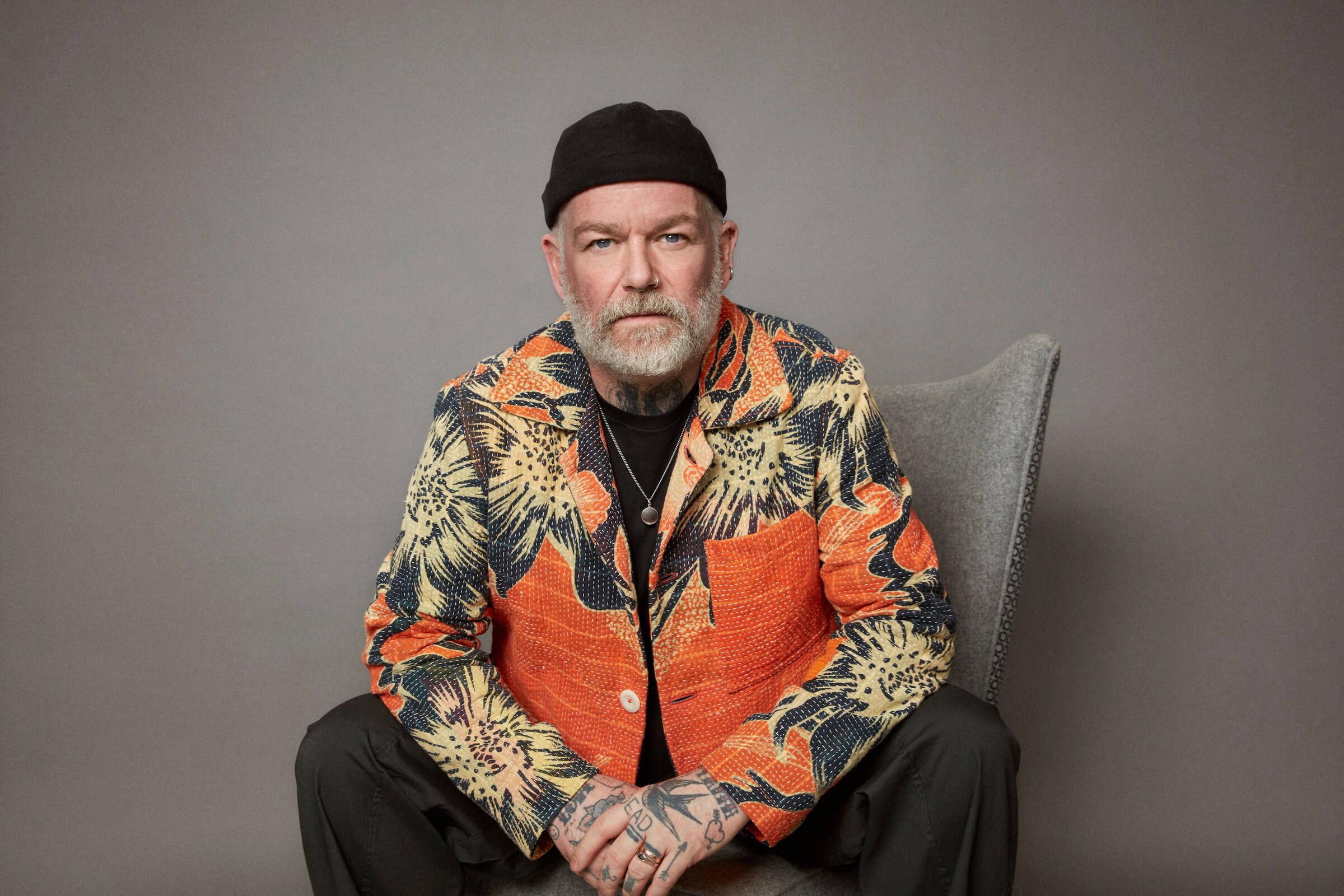
Adam Reed is the visionary American writer, animator, and voice actor responsible for creating the critically acclaimed animated series Archer. As the co-founder of Floyd County Productions, Reed served as the primary creative force for the show’s first ten seasons and provided the iconic voice for Ray Gillette, leaving an indelible mark on adult animation.
For over two decades, Adam Reed has functioned as one of the most distinctive voices in television comedy. His journey from the experimental hallways of Cartoon Network’s Adult Swim to the mainstream success of FX’s Archer illustrates a career built on subversive wit, hyper-literate dialogue, and a refusal to adhere to traditional sitcom structures. As of 2026, looking back at the complete run of Archer (which concluded its final season in 2023), Reed’s influence is viewed as a cornerstone of the modern "golden age" of adult animation.
The Formative Years: From Williams Street to Floyd County
The foundation of Adam Reed’s career was laid in the late 1990s and early 2000s, primarily through his partnership with Matt Thompson. Working at Cartoon Network’s "Williams Street" production house, Reed and Thompson developed a reputation for low-budget, high-concept absurdity. Their first major breakthrough, Sealab 2021, repurposed 1970s animation into a surrealist workplace comedy. This project established the "Reed-style" of writing: fast-paced, reference-heavy, and deeply cynical.
Following Sealab 2021, Reed created Frisky Dingo, a superhero parody that many fans consider the spiritual predecessor to Archer. It was during this period that Reed moved his operations to Atlanta, Georgia, eventually founding Floyd County Productions. This move was pivotal, as it allowed Reed to maintain total creative control over his projects, away from the traditional Hollywood ecosystem. The technical setup of his studio favored a unique blend of 3D character modeling and 2D background art, a look that would eventually become the visual signature of the Sterling Archer universe.
The Genesis of Sterling Archer
The idea for Archer famously came to Reed while he was sitting in a café in Spain, struggling to find a way to approach a beautiful woman. He imagined a suave, James Bond-like figure who would have the perfect line—but would also be an incredibly arrogant, deeply flawed person. This internal conflict between the hyper-competent secret agent and the emotionally stunted "man-child" became the engine of the series.
When Archer premiered on FX in 2009, it was unlike anything else on the network. It combined the tropes of 1960s espionage with modern workplace grievances and a non-linear sense of history. Reed’s writing ignored the constraints of a specific era; characters used 21st-century cell phones while driving 1970s muscle cars and fighting Cold War enemies. This "anachronistic soup" allowed Reed to pull references from any decade, rewarding viewers who possessed a deep knowledge of history, literature, and pop culture.
The Voice of Ray Gillette: A Balancing Act
While Reed is primarily a writer and director, his contribution as a voice actor is a central component of Archer's success. He voiced Ray Gillette, the ISA (and later ISIS) bomb specialist and pilot. Ray is a multifaceted character: a gay man from the deep South, a former Olympic medalist, and often the only "sane" person in a room full of narcissists.
Reed’s performance as Ray is notable for its restraint and comedic timing. Unlike the bombastic delivery of H. Jon Benjamin (Sterling Archer) or Jessica Walter (Malory Archer), Reed’s Ray provides a dry, cynical counterpoint to the madness. The character also served as a vehicle for Reed to explore themes of physical disability and resilience, as Ray was frequently injured and "cybernetically enhanced" throughout the series.
Maintaining the voice of a series regular while writing nearly every script for the first several seasons was a Herculean task. Reed has noted in interviews with outlets like The Hollywood Reporter that the process of recording his lines often happened late at night, after the day's administrative and writing duties at Floyd County were finished.
Literary Depth and the "Archer-isms"
One of the reasons Archer maintained a dedicated cult following for 14 seasons is the sheer density of Reed’s scripts. A single episode might contain jokes referencing:
- Herman Melville’s "Bartleby, the Scrivener"
- Obscure 1970s Formula One drivers
- The chemical properties of nerve gas
- Mid-century interior design
This hyper-literacy set the show apart from contemporary animated hits like Family Guy. Reed did not rely on "cutaway" gags; instead, the humor was baked into the character interactions and the rapid-fire dialogue. The concept of "phrasing," which became a global catchphrase, is a prime example of how Reed turned simple linguistic observations into long-running comedic motifs.
The Bold Pivot: The Coma Anthology Years
By Season 7, Reed began to express a sense of creative fatigue with the standard spy format. In a move that was controversial at the time but is now praised for its boldness, he transitioned the show into an anthology format for Seasons 8, 9, and 10. These seasons—Dreamland, Danger Island, and Archer: 1999—took place entirely within the subconscious of a comatose Sterling Archer.
This period allowed Reed to experiment with different genres:
- Film Noir: Exploring the dark alleys of 1940s Los Angeles.
- Adventure/Pulp: Moving the cast to a pre-WWII tropical island.
- Retro-Futurism: Sending the team into a "used future" space station.
These seasons were the last for which Reed served as the sole primary writer. They represented his final major "statement" on the characters before stepping back into a more peripheral role.
Comparative Overview of Adam Reed’s Major Works
The following table outlines the evolution of Reed's career and the shift in scope and tone across his primary projects.
| Show Title | Years Active | Primary Roles | Animation Style | Key Comedic Focus |
|---|---|---|---|---|
| Sealab 2021 | 2000–2005 | Creator, Writer, Voice | Recycled 70s footage | Surrealism & Absurdity |
| Frisky Dingo | 2006–2008 | Creator, Writer, Voice | Flash Animation | Superhero Parody |
| Archer (Early) | 2009–2016 | Creator, Lead Writer, Voice | 3D/2D Hybrid | Espionage & Workplace |
| Archer (Coma) | 2017–2019 | Creator, Lead Writer | Genre-shifting | Anthology & Narrative |
| Archer (Late) | 2020–2023 | Creator, Consultant, Voice | 3D/2D Hybrid | Legacy & Conclusion |
Transitioning the Baton
Starting with Season 11, Adam Reed stepped down from his role as the daily showrunner and head writer. He remained an executive producer and continued to voice Ray Gillette, but the writing room expanded to include new voices. This transition was essential for the show’s longevity, allowing Archer to continue until its series finale in 2023 while giving Reed the space to focus on other creative ventures and the management of Floyd County Productions.
His departure from the "driver’s seat" changed the texture of the show. While the later seasons remained true to his original vision, they leaned more heavily into character growth and emotional resolution—particularly regarding Archer’s relationship with his mother, Malory, and his partner, Lana Kane. Reed’s groundwork made this evolution possible; he built characters so distinct that they could eventually "speak" for themselves under different writers.
The Technical Influence of Floyd County Productions
Under Reed’s guidance, Floyd County Productions became a powerhouse in the animation industry. Based in Atlanta, the studio helped establish Georgia as a hub for television production outside of New York and Los Angeles. The technical process Reed championed—using high-resolution photography for backgrounds and meticulous character "rigs" that allowed for subtle facial expressions—influenced a decade of adult animation.
The studio’s ability to produce high-quality, cinematic animation on a television budget was a direct result of Reed’s "do-it-yourself" roots at Williams Street. By the time Archer concluded, Floyd County had expanded to work on other major properties, including Hit-Monkey and Dicktown, cementing Reed's legacy as a business leader in the creative arts.
Frequently Asked Questions
Does Adam Reed still voice Ray Gillette in 2026?
As Archer concluded its original run in 2023, Reed is no longer actively recording new episodes as Ray Gillette. However, his performance remains a central part of the series' syndication and streaming legacy. He has not officially retired from voice acting and may appear in future guest roles or new projects.
Why did Adam Reed stop writing every episode of Archer?
Reed cited creative exhaustion and a desire to see the characters through different lenses as the primary reasons for stepping back after Season 10. Having written the vast majority of the first 110 episodes almost single-handedly, the shift to a writers' room allowed the show to maintain its energy through to its 14th and final season.
What is Adam Reed’s net worth and current status?
While exact financial figures are private, Reed’s success as a creator, owner of a production studio, and voice actor has placed him among the most successful figures in cable animation. In 2026, he remains a principal at Floyd County Productions, focusing on executive production and developing new intellectual properties.
Is Archer based on any specific real-life person?
No, the character of Sterling Archer is a satirical amalgamation of James Bond, Derek Flint, and various 1960s "cool" icons, blended with Reed’s own observations on toxic masculinity and entitlement. The brilliance of Reed's creation is that Archer is a parody of a genre rather than a single person.
How to Explore Adam Reed’s Work Further
For those looking to understand the full scope of Adam Reed’s creative evolution, the best path is a chronological viewing of his major works. Start with Sealab 2021 to see the origins of his "mean-spirited" comedic timing, move to Frisky Dingo to witness the birth of his serialized storytelling, and finish with the complete 14-season run of Archer.
By studying the transition from the low-budget absurdity of his early career to the polished, award-winning complexity of Archer, viewers can appreciate how Reed transformed a niche comedic sensibility into a globally recognized brand. Aspiring writers and animators should specifically look at the scripts for Season 4’s "Sea Tunt" or Season 6’s "Vision Quest," which are masterclasses in bottle-episode writing and ensemble character dynamics.