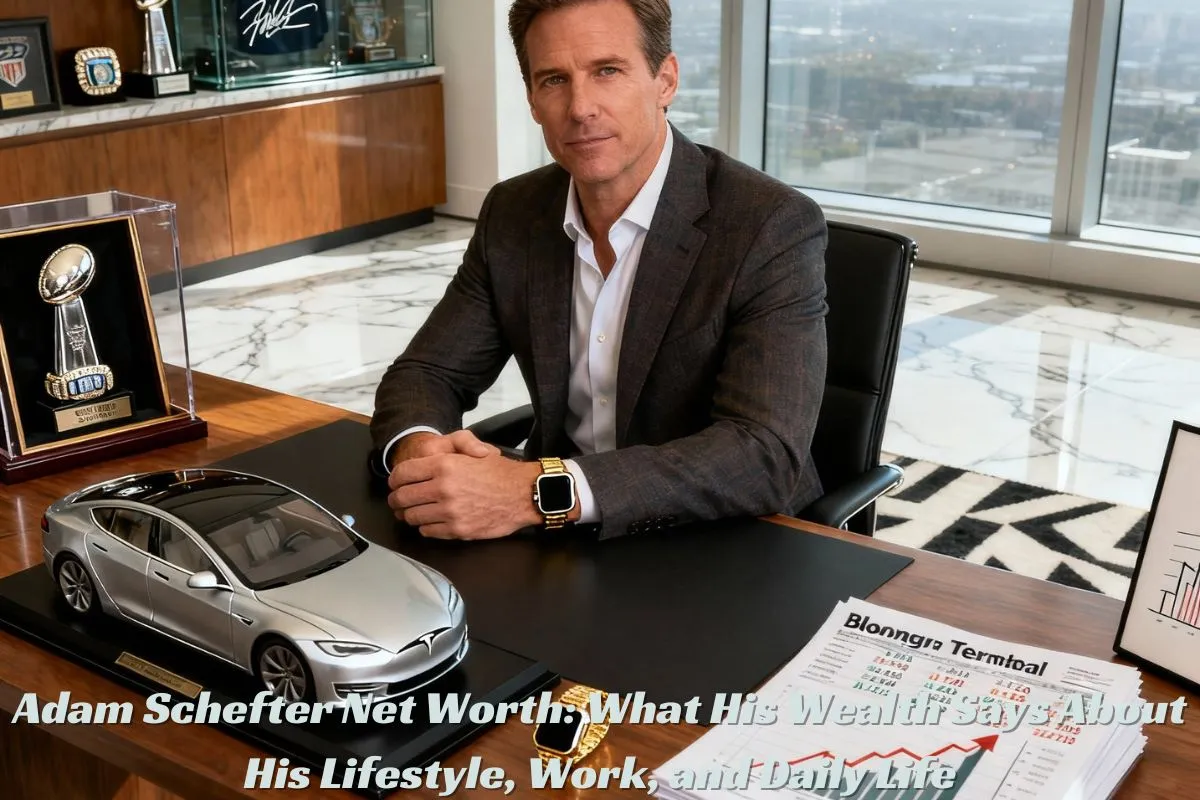
As of 2026, Adam Goldston’s net worth is estimated to be between $100 million and $150 million. This wealth is primarily derived from his majority ownership of Athletic Propulsion Labs (APL), a privately held company he co-founded with his twin brother, Ryan. His fortune was built through a unique blend of disruptive sports technology, high-end fashion positioning, and a strategic direct-to-consumer business model that bypassed traditional athletic retail norms.
The Genesis of Athletic Propulsion Labs (APL)
The foundation of Adam Goldston’s fortune began at the University of Southern California (USC), where he and his brother Ryan were two-sport athletes, playing both football and basketball. Their frustration with existing athletic footwear led to the conceptualization of a shoe that could instantly improve vertical leap. In 2009, from their dorm room, they launched Athletic Propulsion Labs.
Unlike many tech or fashion startups that seek immediate venture capital, the Goldstons maintained a tight grip on their equity. By bootstrapping the initial phases and focusing on research and development, Adam Goldston ensured that the majority of the brand’s future value would remain with the founders. The core of their initial value proposition was the "Load ‘N Launch" technology—a device implanted in the forefoot of the shoe designed to act as a launchpad.
This early period was defined by a commitment to technical specifications over aesthetic trends. The Goldstons spent years refining the compression springs and propulsion mechanics, positioning APL not just as a sneaker company, but as a technology firm. This distinction would later allow them to command luxury price points far exceeding those of mass-market competitors like Nike or Adidas.
The NBA Ban: A Catalyst for Global Recognition
The most significant turning point in Adam Goldston’s career—and the single event that arguably solidified his path to a multi-million dollar net worth—occurred on October 19, 2010. On that day, the NBA officially banned APL’s Concept 1 basketball shoe. The league stated that the footwear provided an "undue competitive advantage" by increasing a player's vertical jump through its mechanical technology.
This ban, which could have been a death knell for a new brand, was instead leveraged into one of the most successful marketing campaigns in the history of footwear. Adam Goldston and his team pivoted the narrative, framing the ban as proof that their product worked. The "banned by the NBA" tag became a badge of honor, leading to an immediate sell-out of their inventory.
This surge in demand created a massive cash injection and global brand awareness without the need for traditional multi-million dollar athlete endorsement deals. By capitalizing on the controversy, Goldston managed to achieve "cult status" for APL almost overnight, which provided the capital necessary to expand beyond basketball into the broader luxury lifestyle and running markets.
The Pivot to "Performance Luxury"
While the NBA ban provided the initial fame, the long-term wealth of Adam Goldston was built on a calculated pivot toward the "performance luxury" segment. He identified a gap in the market between high-performance athletic gear (which often lacked aesthetic sophistication) and high-fashion sneakers (which often lacked comfort and technical utility).
By 2014, APL became the first athletic brand to be sold at Net-a-Porter, a major luxury fashion e-commerce platform. This was a significant milestone because it moved APL out of the sporting goods store and into the luxury fashion ecosystem. This shift allowed Goldston to implement a higher pricing strategy:
- Mass Market Performance: $100 – $160
- APL Performance Luxury: $300 – $600+
This margin-heavy strategy significantly increased the company's valuation. By focusing on high-quality materials like TechLoom (a proprietary 3D stretch-knit) and sophisticated color palettes, Goldston ensured that APL shoes were as likely to be seen on a fashion runway or at a high-end gym as they were on a basketball court.
Revenue Streams and Business Scalability
The structure of Adam Goldston’s wealth is heavily influenced by APL’s lean operational model. As a private company, APL does not disclose exact annual revenue, but industry analysts have consistently pointed to its high profitability relative to its headcount.
| Category | Description | Impact on Net Worth |
|---|---|---|
| Direct-to-Consumer (DTC) | Sales through the APL website and flagship stores. | High margins due to lack of wholesale markups. |
| Luxury Wholesale | Partnerships with Saks Fifth Avenue, Neiman Marcus, and Mr Porter. | High-volume distribution while maintaining brand prestige. |
| Global Licensing | International distribution rights in EMEA and Asia-Pacific. | Scalable revenue without high operational overhead in new markets. |
| Collaborations | Limited edition drops with brands like McLaren. | Brand equity enhancement and high-ticket sales. |
| Apparel Expansion | Technical lifestyle clothing and outerwear. | Diversification of the product line and increased lifetime customer value. |
The move into physical retail also played a role in the brand's 2026 valuation. The opening of flagship stores in Los Angeles (The Grove) and New York allowed the brand to control the customer experience fully. These locations are often described as "temples of luxury," reinforcing the high-end positioning that supports the company’s valuation.
Analyzing the 2026 Net Worth Valuation
Estimating the net worth of a private founder like Adam Goldston requires looking at the "multiples" applied to luxury apparel brands. In 2026, luxury performance brands often trade at 3x to 5x revenue multiples, depending on growth rates and brand desirability.
If APL’s annual revenue is estimated in the high tens of millions or low hundreds of millions, the company’s valuation easily clears the $300 million mark. Given that Adam and Ryan Goldston are the primary owners and have not diluted their shares through massive venture rounds, their individual stakes represent a substantial portion of that valuation.
Furthermore, Goldston’s wealth is likely diversified through a portfolio of private investments. Successful founders in the fashion-tech space frequently act as angel investors in adjacent startups, including sustainable textile tech, e-commerce logistics, and wellness platforms. This "founder-as-investor" model often adds a significant layer to the total net worth beyond their primary business.
Strategic Brand Collaborations and Retail Footprint
A major pillar of Adam Goldston’s wealth-building strategy has been the use of high-profile collaborations. In 2022, APL announced a multi-year partnership with McLaren Automotive. This was not merely a marketing gimmick; it was a synergy between two companies obsessed with aerodynamics and mechanical efficiency. The resulting "HySpeed" footwear retailed for approximately $450, further cementing APL’s position at the top of the price pyramid.
These collaborations serve two purposes for Goldston’s net worth:
- Price Anchoring: By selling a $450 shoe, the $300 core products appear more accessible, driving higher volume in the mid-range of their catalog.
- Brand Halo: Aligning with a brand like McLaren places APL in the same category as high-performance supercars, attracting ultra-high-net-worth customers who are less price-sensitive.
In the years leading up to 2026, APL also expanded its footprint into the Middle East and Asian markets, specifically targeting cities like Dubai and Shanghai. These regions have shown a voracious appetite for Western luxury athleisure, providing a massive runway for growth that has significantly inflated the brand's valuation.
Leadership and Future Outlook
Adam Goldston serves as Co-CEO, a role that involves overseeing the brand's creative direction and strategic partnerships. His leadership style is characterized by "intentional scarcity"—releasing products in controlled quantities to maintain demand and prevent the brand dilution that often plagues mass-market athletic companies.
Looking ahead from 2026, the potential for an Initial Public Offering (IPO) or a strategic acquisition by a luxury conglomerate (such as LVMH or Kering) remains a likely exit strategy that would catapult Goldston’s net worth into the "Billionaire" conversation. However, the brothers have historically expressed a preference for independence, valuing the creative freedom that comes with private ownership.
The sustainability of his fortune is tied to APL's ability to innovate. As the footwear market moves toward sustainable materials and personalized, 3D-printed performance, Goldston has positioned APL to be at the forefront of these technological shifts, ensuring the brand remains relevant to a younger, tech-savvy luxury consumer base.
FAQ
What is the source of Adam Goldston's wealth?
The vast majority of Adam Goldston's wealth comes from his ownership stake in Athletic Propulsion Labs (APL). Unlike many founders who sell large portions of their company to venture capitalists early on, Goldston and his brother retained significant equity, allowing them to benefit directly from the company’s growth and high-margin luxury sales.
How much of APL does Adam Goldston own?
While exact percentages are private, it is widely reported that Adam and Ryan Goldston own the majority of APL. They have famously avoided traditional venture capital funding rounds, instead opting for a "bootstrapped" growth model that emphasizes profitability and brand control over rapid, dilution-heavy expansion.
Was the NBA ban on APL shoes a real event?
Yes. On October 19, 2010, the NBA officially banned the APL Concept 1 shoe for the 2010-2011 season. The league cited the "Load ‘N Launch" technology as a violation of their rules against shoes that provide an unfair competitive advantage. This event is cited by marketing experts as one of the most successful "accidental" branding moments in sports history.
What makes APL shoes different from other luxury sneakers?
APL distinguishes itself through a focus on "Performance Luxury." Unlike fashion-house sneakers (like those from Gucci or Balenciaga) which are primarily designed for aesthetics, APL shoes are designed for high-level athletic performance, including running and basketball, while using high-end materials usually reserved for luxury fashion.
Does Adam Goldston have other business interests?
While APL is his primary focus, Goldston is known to be an active participant in the fashion and tech investment community. He has been recognized on the Forbes 30 Under 30 and WWD 40 Under 40 lists, which has provided him with a network for various private equity and angel investment opportunities.
Strategy for Aspiring Entrepreneurs
Adam Goldston’s path offers a masterclass in equity retention and niche positioning. For those looking to build significant wealth in the consumer goods space, the "APL model" suggests that maintaining control over your cap table (the list of who owns what in the company) is more important for long-term wealth than raising large amounts of capital early. By focusing on a specific technological differentiator—the Load 'N Launch tech—and pivoting into a high-margin luxury segment, Goldston was able to build a massive fortune without needing to capture a massive market share. The lesson is clear: high margins and brand exclusivity often lead to more sustainable personal wealth than high-volume, low-margin competition.