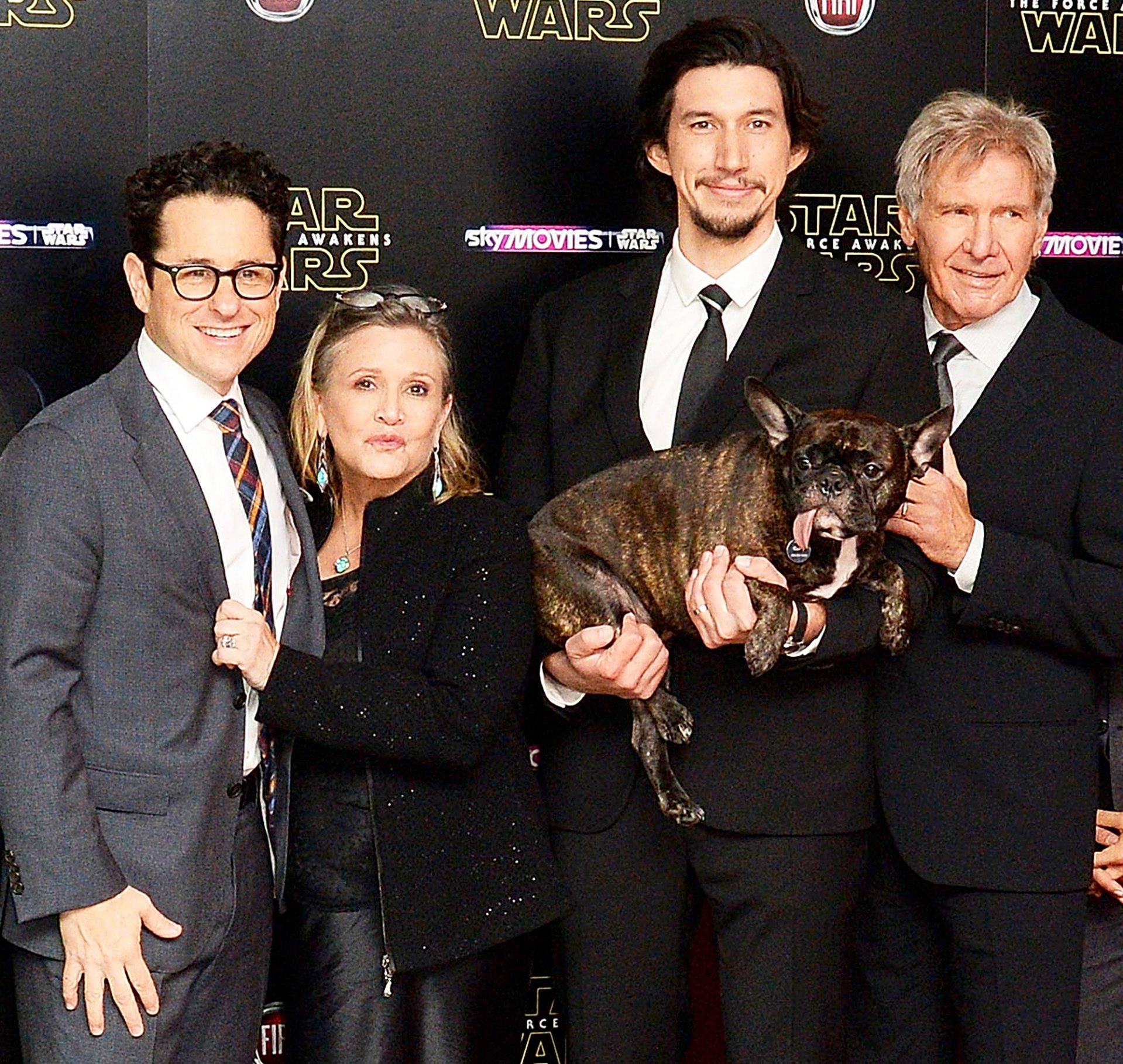
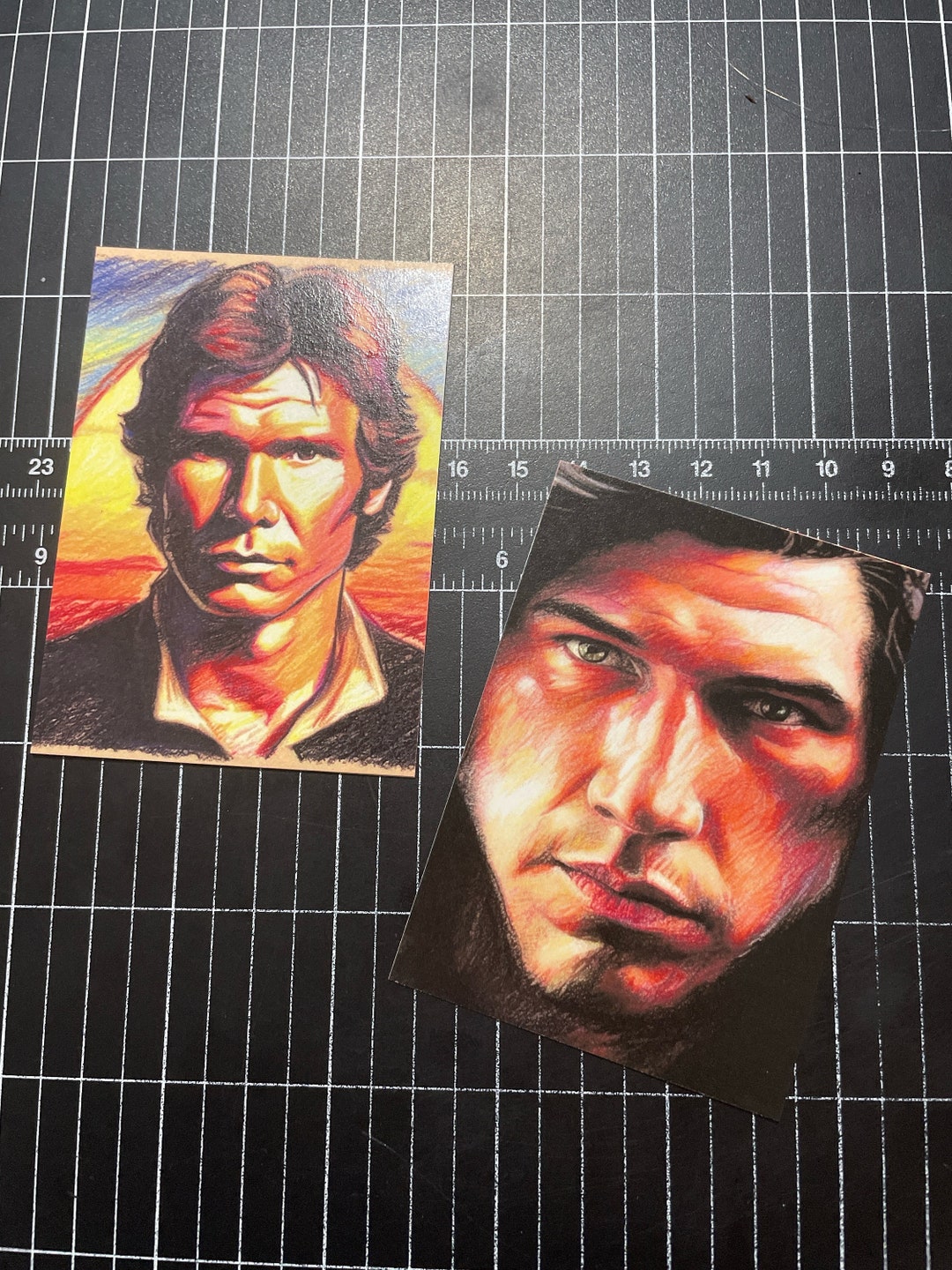
The ultimate Star Wars showdown between Adam Driver and Harrison Ford is a clash of two distinct eras and acting philosophies. While Ford’s Han Solo defined the rogue archetype through effortless charisma and improvisational wit, Driver’s Kylo Ren brought a modern, psychological intensity to the franchise. Their shared narrative—a tragic father-son bond—serves as the emotional anchor that bridges the original and sequel trilogies.
In the history of the Star Wars saga, few relationships carry as much weight as that of Han Solo and his son, Ben Solo (later Kylo Ren). As we look back from the vantage point of 2026, the debate over who "owned" the screen is less about combat and more about the evolution of the series' soul. Harrison Ford provided the foundational "cool" that allowed Star Wars to transcend children's fantasy, while Adam Driver provided the dramatic gravitas that allowed the sequels to explore the darker, more fractured elements of the Skywalker bloodline.
The Icon: Harrison Ford’s Han Solo and the Birth of the Rogue
Harrison Ford’s portrayal of Han Solo in the 1970s and 80s was revolutionary for the science fiction genre. Before Ford, heroes in space operas were often stiff or purely noble. Han Solo was different—he was a cynical smuggler, a man driven by credits rather than causes, and he brought a grounded, Western-inspired grit to George Lucas’s galaxy.
Ford’s performance was characterized by a specific type of "intuitive acting." He famously pushed back against Lucas’s dialogue, once stating, "You can type this sh*t, George, but you can't say it." This resulted in a character that felt lived-in and authentic. The peak of this intuition was the iconic "I know" response to Princess Leia’s "I love you" in The Empire Strikes Back, a moment that Ford largely crafted himself to fit Han’s persona.
By the time Ford returned for The Force Awakens in 2015, the character had aged into a mentor figure, yet he retained the same weary charm. His presence provided a bridge for older fans, grounding the new narrative in the nostalgia of the Original Trilogy. For Ford, Han Solo was always a character defined by his transformation from a selfish loner to a selfless leader, a journey that reached its tragic conclusion at the hands of his own son.
The Complexity: Adam Driver’s Kylo Ren and the New Breed of Villain
If Harrison Ford represented the rugged simplicity of 1970s heroism, Adam Driver represented the psychological complexity of 2010s drama. When Driver was cast as Kylo Ren, he didn't approach the role as a traditional "bad guy" in the vein of Darth Vader. Instead, he treated Kylo Ren as a vulnerable, deeply hurt young man who was playing a part he wasn't entirely suited for.
Driver’s performance is often cited by critics as the standout element of the Sequel Trilogy. His background in theater and his "method-adjacent" focus allowed him to bring a physical intensity to the role. Unlike Vader, whose menace came from stillness and a deep voice, Kylo Ren’s menace came from his volatility. He was a "loose cannon" with a lightsaber, prone to tantrums and moments of crippling indecision.
The brilliance of Driver’s work lies in the subtle shifts between the mask and the face. When the mask is on, he is a terrifying enforcer; when it is off, Driver uses his expressive features to show the conflict of a boy trying to kill the "light" still flickering inside him. This internal war made him a more relatable antagonist than many of his predecessors, setting a new standard for performance within the franchise.
Narrative Parallel: Smuggler’s Arc vs. Fallen Jedi’s Redemption
Comparing these two actors requires looking at the narrative arcs they were tasked with carrying. Han Solo’s arc is one of the most celebrated in cinema. He begins as a mercenary in A New Hope, evolves into a decorated General in Return of the Jedi, and eventually dies as a father trying to save his son. It is a linear, satisfying progression from cynicism to faith.
Conversely, Ben Solo’s arc is a "reverse-Vader" trajectory. He begins in a position of power and descent, having already fallen to the dark side. His journey is about the exhausting struggle to stay "dark" while being pulled toward the light. Adam Driver had to portray a character who was constantly failing at being the villain he thought he needed to be.
The resolution of Ben Solo’s arc in The Rise of Skywalker—the transition back to the light—owed much of its success to Driver’s physical acting. Once redeemed, Ben Solo barely speaks; Driver communicates the character’s newfound peace through his movements and expressions, mirroring some of the rogue-ish physicality that Ford originally brought to Han.
The Confrontation: The Bridge Scene on Starkiller Base
The ultimate showdown between the two occurred on the bridge of Starkiller Base in The Force Awakens. This scene is the definitive comparison point for their acting styles. Harrison Ford plays the scene with a rare tenderness, stripping away Han Solo’s usual sarcasm to show a father’s desperation.
Adam Driver, in response, delivers a masterclass in emotional ambiguity. As Kylo Ren tells his father, "I'm being torn apart. I want to be free of this pain," Driver’s voice cracks, making the audience (and Han) believe for a moment that he will come home. The subversion of that hope—the murder of Han Solo—was a turning point for the franchise. It cemented Kylo Ren as a villain who had done the unthinkable, something even Darth Vader hadn't done on screen.
From a technical perspective, the chemistry between Ford and Driver was essential. Ford’s veteran presence provided the "weight" necessary for the scene to matter, while Driver’s raw emotion provided the "heat." Without the mutual respect and skill of both actors, the scene could have felt like a hollow passing of the torch; instead, it felt like a genuine Shakespearean tragedy.
Performance Analysis: Technique and Impact
When evaluating "Adam Driver vs Harrison Ford," we must consider their different eras of filmmaking. Ford operated in a time when practical effects and broad character archetypes were the standard. Driver operated in a time of high-definition digital scrutiny and complex, "prestige TV" style character writing.
| Feature | Harrison Ford (Han Solo) | Adam Driver (Kylo Ren/Ben Solo) |
|---|---|---|
| Acting Style | Charismatic, Intuitive, "Cool" | Intense, Emotional, Physical |
| First Appearance | A New Hope (1977) | The Force Awakens (2015) |
| Key Prop | DL-44 Heavy Blaster Pistol | Crossguard Lightsaber |
| Character Goal | Survival & Freedom | Eliminating the Past / Finding Purpose |
| Defining Moment | "I know." | The "Memory" conversation in Episode IX |
| Cultural Archetype | The Lovable Rogue | The Conflicted Anti-Villain |
Ford’s impact is measured by his longevity and the way Han Solo became a blueprint for every "charming smuggler" character that followed. Driver’s impact is measured by how he challenged the Star Wars fandom’s perception of what a villain could be, moving the needle from "cool but evil" to "pitiable and complex."
The Legacy in 2026: Who Defined Star Wars More?
As we reflect on their contributions in 2026, it becomes clear that both actors were necessary for the franchise to survive and thrive across generations. Harrison Ford gave Star Wars its heart and its sense of adventure. He was the human element in a world of droids and aliens, reminding the audience that heroes are often just regular people forced to do the right thing.
Adam Driver gave the modern era of Star Wars its artistic credibility. At a time when big-budget franchises are often criticized for "formulaic" acting, Driver’s performance was consistently daring and unpredictable. He brought a "prestige" level of acting to a blockbuster setting, ensuring that the conflict of the Skywalkers felt like a high-stakes emotional drama rather than just a series of laser fights.
Why did Kylo Ren kill Han Solo?
Kylo Ren killed Han Solo because he believed it was the ultimate test to sever his ties to the Light Side and his family. He thought that by committing an act of irredeemable evil—patricide—he would finally achieve the strength and focus he sensed in his grandfather, Darth Vader. However, the narrative suggests the act actually "split his soul to the bone," making him more conflicted rather than stronger.
Is Adam Driver considered the best actor in the sequels?
While opinions vary, Adam Driver is widely regarded by critics and fans as the most consistently strong performer in the Sequel Trilogy. His ability to convey complex emotions and his physical dedication to the role (performing many of his own stunts and maintaining high intensity) set him apart, even among a talented cast including Daisy Ridley and John Boyega.
How did Harrison Ford feel about returning to Star Wars?
Harrison Ford was famously ambivalent about Han Solo for decades, once suggesting the character should have died in Return of the Jedi. However, he was persuaded to return for The Force Awakens by the strength of the script and the character’s definitive ending. He later made a surprise cameo in The Rise of Skywalker, which he reportedly enjoyed because it allowed him to provide closure for the character of Ben Solo.
Did Adam Driver and Harrison Ford get along on set?
Yes, reports from the set of The Force Awakens indicated a high level of mutual respect between the two. Adam Driver has spoken about Ford’s professionalism and how he learned from watching Ford navigate the pressures of a massive production. Ford, in his typical dry fashion, has praised Driver’s talent, acknowledging the weight Driver brought to their shared scenes.
Who is more powerful: Han Solo or Kylo Ren?
In terms of "Force power," Kylo Ren is undeniably more powerful, as he is a gifted Force user with immense raw strength. However, in terms of narrative "power" and influence on the galaxy, Han Solo’s legacy as a hero of the Rebellion and his role in turning his son back to the light arguably make him the more influential figure in the grand scheme of the Star Wars mythos.
Final Verdict: A Shared Mastery
The "showdown" between Adam Driver and Harrison Ford does not have a single winner because their performances are symbiotic. Ford’s Han Solo had to be iconic so that his death at the hands of Driver’s Kylo Ren would feel like a monumental loss. Driver’s performance had to be brilliant so that the sacrifice of a legend like Ford felt narratively justified.
For fans looking to appreciate this rivalry further, the best next step is a back-to-back viewing of The Force Awakens and The Rise of Skywalker. Pay close attention to the mirror-image conversations between Han and Ben in both films. These scenes showcase the transition of the "Star Wars mantle" from the old guard to the new, proving that while the actors belong to different generations, their commitment to the emotional truth of their characters is what makes the "showdown" a masterpiece of cinematic history.