Ad tech, or advertising technology, refers to the collective infrastructure, software, and tools used by advertisers, publishers, and agencies to automate the buying, selling, and management of digital advertising campaigns. This ecosystem facilitates programmatic transactions, ensuring that specific advertisements reach intended audiences across websites, mobile applications, and connected devices in real time.
The Structural Components of the Ad Tech Ecosystem
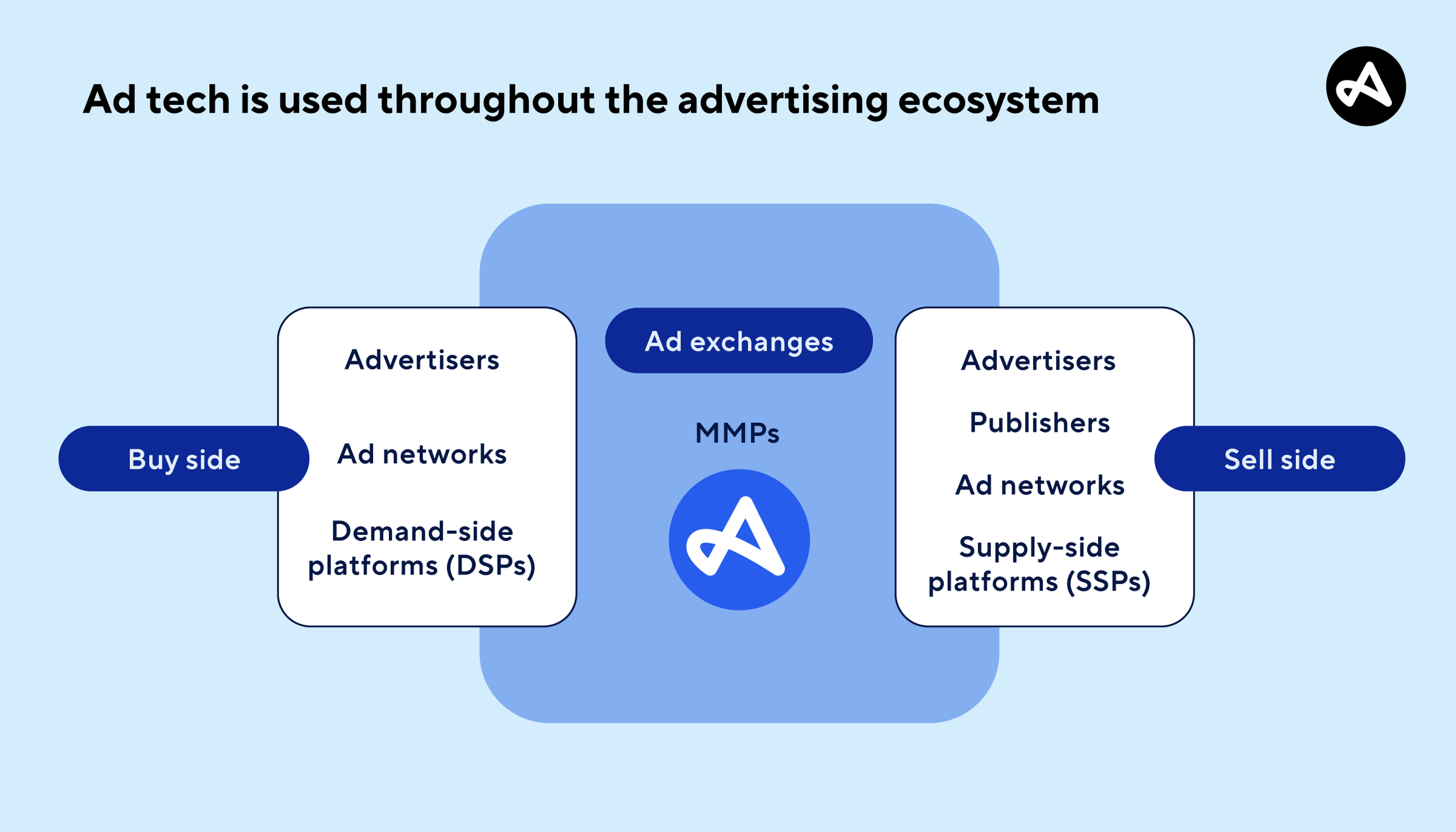
The ad tech landscape functions through a complex series of automated interactions between two primary sides: the demand side and the supply side. Understanding these roles is essential for navigating how digital inventory is monetized and how brand awareness is achieved at scale.
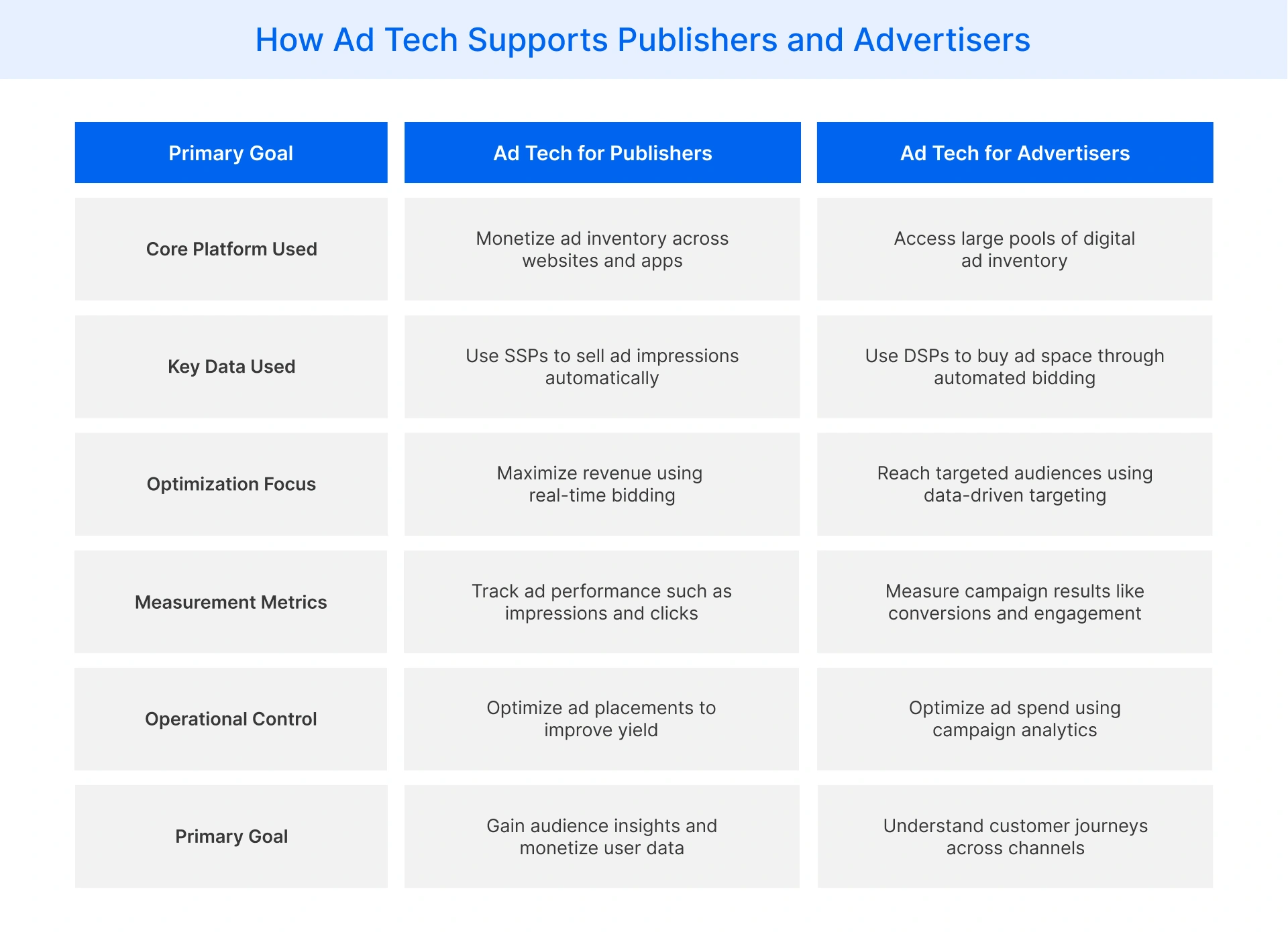
On the demand side, advertisers and agencies use Demand-Side Platforms (DSPs). A DSP is a software system that allows advertisers to purchase digital advertising inventory—such as display, video, mobile, and search ads—from a broad range of publishers through a single interface. By integrating with data management platforms, DSPs enable precise audience targeting based on demographics, browsing behavior, and purchase intent.
Conversely, publishers manage their available ad space through Supply-Side Platforms (SSPs). An SSP allows publishers to automate the process of selling their digital inventory. By connecting to multiple ad exchanges and demand sources, the SSP seeks to maximize the revenue (yield) for each ad impression. The primary objective for the publisher is to ensure that their inventory is filled with the highest-bidding relevant advertisement at any given moment.
How Programmatic Advertising Works
The core of modern ad tech is programmatic advertising, the automated process of buying and selling digital ad space. Unlike traditional ad buying, which often involved manual insertion orders and negotiation, programmatic relies on sophisticated algorithms and real-time bidding (RTB) to execute transactions.
When a user visits a website or opens an application, an ad request is generated. This request travels through the SSP to an ad exchange, which acts as a digital marketplace. Within milliseconds, the ad exchange auctions the impression to the highest bidder from the various DSPs connected to the system. Once the winning bid is determined, the ad creative is served to the user's browser or device.
This process occurs in the time it takes for a page to load, allowing for hyper-efficient allocation of advertising budgets. The technical precision required for this exchange relies on cookies, device IDs, and other identifiers that help the system match the user with the most relevant brand message, provided these identifiers are available under current data privacy frameworks.
Key Stakeholders and Their Functions
The ecosystem is not limited to DSPs and publishers. Several intermediary services provide the data and verification required to maintain market integrity.
- Ad Exchanges: These are the technology platforms that facilitate the bidding process between DSPs and SSPs. They act as the neutral ground where the auction happens.
- Ad Servers: These are the repositories for ad creatives. They store the actual image, video, or script files and deliver them to the publisher's site upon command from the exchange.
- Data Management Platforms (DMPs): These platforms aggregate and organize first-party and third-party data, allowing advertisers to build specific audience segments.
- Verification and Safety Tools: These services scan ad environments to ensure brand safety, verifying that ads do not appear alongside inappropriate content or within fraudulent traffic streams.
| Component | Primary Function | Primary User |
|---|---|---|
| DSP | Automates the buying of ad inventory | Advertisers / Agencies |
| SSP | Automates the selling of ad inventory | Publishers |
| Ad Exchange | Facilitates the real-time auction | Tech Intermediaries |
| Ad Server | Manages ad creative storage and delivery | Advertisers & Publishers |
| DMP | Organizes audience data for targeting | Marketing Teams |
Navigating Challenges in Modern Ad Tech
While ad tech offers unprecedented scale and efficiency, the industry faces significant hurdles regarding data privacy and transparency. In 2026, advertisers must navigate an increasingly complex regulatory landscape, including global requirements for user consent and the management of sensitive personal information.
Data privacy initiatives have limited the reliance on third-party tracking, compelling the industry to pivot toward first-party data strategies. This shift requires advertisers to build direct relationships with their audiences through owned channels, such as email lists, loyalty programs, and gated content. Companies that fail to adapt their technical infrastructure to handle consent-based data gathering risk reduced targeting accuracy and lower return on investment.
Furthermore, technical transparency remains a focus for stakeholders. Issues such as "ad fraud"—where automated bots mimic human traffic to drain advertising budgets—and supply chain complexity require the use of robust verification technology. Advertisers are increasingly demanding clearer paths between their spend and the actual media placement to ensure budget efficiency.
Infrastructure Requirements for Advertisers
Before launching a programmatic strategy, organizations must ensure their internal technical readiness. This involves selecting a tech stack that aligns with the organization's business goals. Small to mid-sized businesses might prefer "all-in-one" marketing suites that offer basic ad management, while large enterprises often require specialized, standalone DSPs that allow for granular control over bidding strategies and data integration.
A foundational step in deployment is the implementation of a site-wide tagging strategy. Tags—small snippets of code—are necessary to collect data on user interactions, which then feeds the optimization algorithms of the chosen platforms. Managing these tags efficiently is often handled through a Tag Management System (TMS), which prevents site performance issues by organizing and loading these scripts asynchronously.
Troubleshooting Common Operational Issues
Ad tech campaigns occasionally suffer from under-delivery or unexpected performance drops. Troubleshooting these issues typically begins with verifying the integration between the ad server and the DSP. A common point of failure is an incorrectly configured "pixels" or "trackers," which prevents the system from reporting back on campaign success.
If impressions are not delivering, investigate the following:
- Bid Floor Configuration: If the minimum bid requested by the publisher is higher than the advertiser's bid, the impression will not be secured.
- Frequency Capping: Over-restrictive limits on how many times a single user sees an ad can prevent a campaign from meeting volume targets.
- Audience Breadth: Excessively narrow targeting parameters may limit the pool of available inventory, causing the campaign to stall.
- Content Categorization: Ensure the ad creative matches the content categories defined in the campaign settings, as many publishers restrict certain ad types from specific sections of their site.
Strategic Next Steps for Ad Tech Implementation
To effectively leverage ad tech, start by auditing your existing data assets. Identify where your first-party data resides and determine if your current analytics tools can export that data into a format compatible with your chosen demand-side platform. Prioritize brand safety by working with established verification partners who provide clear, auditable reports on where your advertisements appear.
Finally, maintain a balanced approach between automated optimization and human oversight. While machine learning and artificial intelligence drive the efficiency of these systems, human strategic input is required to set objectives, establish brand identity, and interpret performance metrics in the context of broader organizational goals. By focusing on transparent supply paths and robust first-party data foundations, organizations can build a resilient digital advertising strategy.