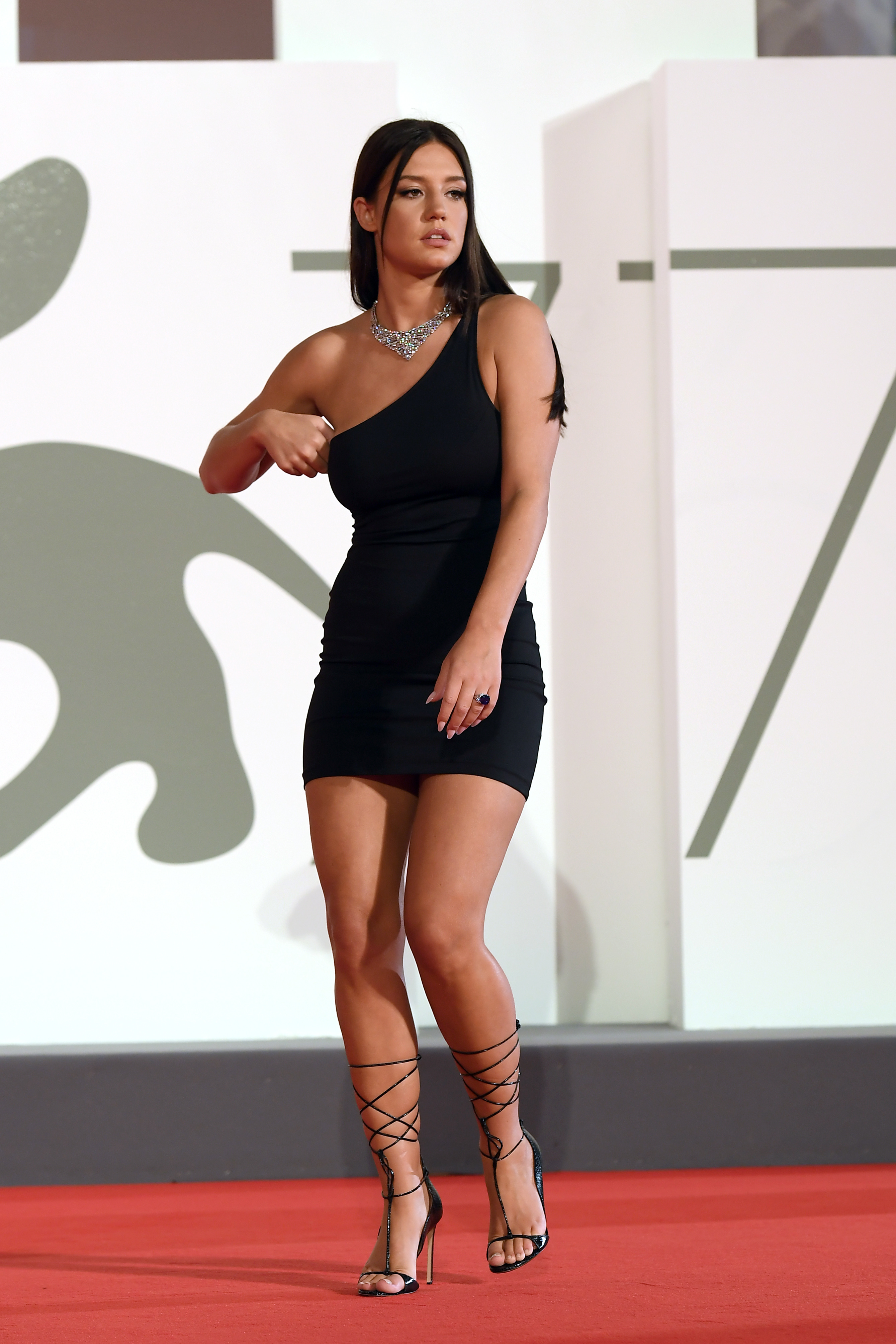
Adèle Exarchopoulos is a critically acclaimed French actress who rose to international prominence for her breakthrough performance in the 2013 film Blue Is the Warmest Colour. Renowned for her naturalistic acting style and emotional depth, she has established herself as one of the most significant figures in contemporary European cinema, consistently delivering complex performances across both independent and mainstream productions.
Early Life and Artistic Foundations
Born in Paris in 1993, Adèle Exarchopoulos demonstrated an early inclination toward the performing arts. Her formal training began during her childhood, providing her with the foundational skills necessary to navigate the nuances of character-driven narratives. Unlike many actors who transition through traditional stage training, Exarchopoulos entered the film industry through a combination of early on-screen exposure and an innate ability to convey internal states through subtle physical and emotional cues.
Her entry into the professional industry was marked by early roles in French television and cinema throughout the late 2000s. These formative years allowed her to refine her craft in a collaborative environment, observing seasoned directors and peers. This period was essential for developing the professional discipline that would later allow her to handle the intense, long-form shooting schedules that characterize her most demanding projects.
The Breakthrough: Blue Is the Warmest Colour
The defining moment of Exarchopoulos's career occurred with her lead role as Adèle in Abdellatif Kechiche’s Blue Is the Warmest Colour (La Vie d'Adèle). The film, which explores the profound emotional and physical connection between two women, required a level of vulnerability that remains rare in mainstream filmmaking. Her performance was noted for its raw honesty, capturing the trajectory of a young woman's self-discovery and the painful realities of a dissolving relationship.
The critical reception was historic. At the 2013 Cannes Film Festival, the film was awarded the Palme d'Or. In an unprecedented move, the jury—led by Steven Spielberg—awarded the prize to both the director and the two lead actresses, Exarchopoulos and Léa Seydoux. This recognized that the film's success relied as much on the actresses' improvisation and endurance as it did on the directorial vision. Exarchopoulos became the youngest person to ever receive this honor, solidifying her status as a global talent overnight.
Evolution of Her Acting Style and Range
Following her success in 2013, Exarchopoulos avoided the trap of being typecast in similar romantic dramas. Instead, she consciously pursued a diverse range of roles, often choosing projects that challenged her comfort zone. Her filmography reveals a preference for scripts that prioritize psychological complexity over conventional narrative tropes.
Her work often involves a high degree of "naturalism," a stylistic choice that relies on minimizing theatrical gestures in favor of authentic emotional expression. Whether playing a woman struggling with identity in contemporary France or taking on roles in higher-budget international productions, her approach remains consistent: she builds characters from the inside out, often utilizing silences and non-verbal reactions as much as dialogue to communicate character growth. This focus on "less is more" has made her a favorite among auteur directors who value authenticity above spectacle.
Comparative Analysis: Select Major Performances
To understand the breadth of her career, it is helpful to analyze the distinct types of roles she has undertaken. The table below outlines several key project types that define her professional trajectory as of 2026.
| Project Type | Focus Area | Character Dynamics | Industry Impact |
|---|---|---|---|
| Coming-of-Age Drama | Emotional growth | Vulnerable, raw, transformative | Established global acclaim |
| Psychological Thriller | Suspense and internal conflict | Stoic, observant, guarded | Demonstrated versatility |
| Ensemble Dramedy | Social interactions | Multifaceted, witty, grounded | Proved mainstream appeal |
| International Co-production | Cross-cultural themes | Nuanced, adaptable, professional | Expanded global presence |
Collaborative Philosophy and On-Set Methodology
The process of working with Adèle Exarchopoulos is frequently cited by filmmakers as a collaborative experience rather than a one-way directive. She is known for her collaborative approach to script development, often suggesting refinements to dialogue to ensure that the character's voice sounds authentic to the specific setting and emotional state. This requires a high degree of trust between the actor and the director, a hallmark of her professional reputation.
Her preparation often involves significant periods of observation and research, tailored to the specific demands of the film. For projects requiring specific dialects or professional skills, she integrates these elements early in the pre-production phase to ensure that they become muscle memory by the time shooting begins. This technical rigor allows her to focus entirely on the emotional arc of the character while under the scrutiny of the camera lens.
Navigating the 2026 Film Landscape
As of 2026, the film industry has shifted toward a more hybrid model, where actors are expected to bridge the gap between traditional theatrical releases and high-quality streaming narratives. Exarchopoulos has navigated this transition by maintaining a presence in both arenas. Her ability to anchor a film, regardless of the distribution platform, has made her an asset for production companies looking to balance artistic merit with broad audience reach.
The current climate demands that performers be increasingly aware of the global impact of their work. Exarchopoulos has utilized her platform to participate in projects that highlight social issues, focusing on narratives that resonate with younger demographics while maintaining the critical integrity expected by the cinephile community. Her career trajectory suggests a continued focus on prestige projects that challenge the audience's perceptions of identity, love, and social structure.
Frequently Asked Questions
What was the significance of the 2013 Cannes Film Festival for Adèle Exarchopoulos?
Winning the Palme d'Or for Blue Is the Warmest Colour alongside director Abdellatif Kechiche and co-star Léa Seydoux marked a historic moment, as she became the youngest recipient of this award. It served as her international debut and established her as a preeminent talent in contemporary world cinema.
How does Exarchopoulos prepare for physically demanding roles?
She focuses on long-term preparation that emphasizes character motivation and psychological grounding. By integrating external requirements—such as specialized skills or language changes—into her preparation well before production starts, she ensures that these elements do not interfere with the emotional authenticity required during filming.
Is Adèle Exarchopoulos primarily a French-language actress?
While the majority of her filmography is in French, she has appeared in international productions and co-productions. Her work has consistently garnered global recognition, making her a bridge between European arthouse cinema and broader international audiences.
What kind of characters does she typically choose?
She consistently gravitates toward complex, multi-dimensional characters that allow for significant emotional range. She avoids formulaic scripts, opting instead for roles that prioritize psychological depth, subtle character growth, and authentic interpersonal relationships over standard genre archetypes.
How has her approach to acting changed since her early career?
While she has always relied on a naturalistic style, her recent work displays a greater command of technical precision. She has moved from highly improvised, long-form shooting environments to a more refined process that balances raw emotional expression with the requirements of tightly paced, professional production schedules.
Next Actions for Enthusiasts and Researchers
For those looking to explore her filmography, it is recommended to begin with the seminal Blue Is the Warmest Colour to understand the baseline of her style. Following this, viewers should examine her later works in psychological dramas to witness how her approach has evolved in maturity and technical execution. Industry researchers should focus on her interviews, which often provide granular detail into her collaborative process and her views on the evolving state of European film production. Keeping track of her upcoming project announcements through official studio releases or reputable film industry databases will provide the most accurate insight into her ongoing career progression.