The primary difference between actors and crew members lies in their visibility and function: actors are the on-screen performers who interpret scripts and embody characters, while the crew consists of the technical and creative professionals behind the camera who manage lighting, sound, logistics, and physical production to make the performance possible.
In the film and television industry of 2026, the collaboration between these two groups remains the foundation of all visual storytelling. While a single person may occasionally wear both hats—especially in independent or digital content creation—the professional industry maintains a strict division of labor. This division is not merely about who stands in front of the lens; it encompasses different career trajectories, union protections, daily schedules, and psychological demands. Understanding the nuances of "actor vs crew" is essential for anyone looking to enter the industry or for stakeholders managing a production budget.
The Core Distinction: Above-the-Line vs. Below-the-Line
In production accounting and industry hierarchy, the distinction between actor and crew is often framed through the lens of "Above-the-Line" (ATL) and "Below-the-Line" (BTL) categories. This terminology stems from the actual line on a production budget that separates the primary creative elements from the technical execution.
Actors, particularly lead and supporting performers, are classified as Above-the-Line. This group also includes producers, directors, and writers. Their compensation is often negotiated as a flat fee or a "guarantee" for the project, and in high-level cases, it may include a percentage of the film's back-end profits. The actor’s role is considered "transformative"; they are the faces that market the film and the emotional vessels for the audience.
Conversely, the vast majority of the crew is classified as Below-the-Line. These are the individuals who perform the technical work required to execute the director's vision. From the Director of Photography (DP) and the Gaffer to the Production Assistants (PAs) and the Caterers, the crew provides the infrastructure. Unlike actors, crew members are typically paid via day rates or hourly wages, with strict overtime rules governed by their respective unions. While the actor provides the performance, the crew provides the light, the sound, the space, and the organization that allows that performance to be captured.
The Actor’s Journey: Performance, Persona, and Vulnerability
The role of an actor is defined by the interpretation of a character. Their work begins long before the "call time" on set. In 2026, the preparation for a professional actor involves intensive script analysis, physical training, and often, the navigation of a complex digital presence that helps secure roles.
On a typical shoot day, an actor’s experience is one of "hurry up and wait." They may arrive early for "hair and makeup," which can take anywhere from thirty minutes to several hours for period pieces or prosthetic-heavy roles. Once prepared, the actor must remain "in the zone," maintaining the emotional state of their character while the crew adjusts lighting or moves camera tracks. This requires a unique form of psychological stamina; an actor might spend six hours in a trailer only to be called to set to perform a high-intensity crying scene for ten minutes before returning to their trailer.
The actor’s career is also marked by a high degree of instability and public scrutiny. Their "product" is themselves—their face, their voice, and their emotions. This leads to a different type of professional pressure compared to the crew. An actor’s job security is often tied to "bankability" and casting trends, making the profession one of extreme peaks and valleys.
The Crew’s Spectrum: Technical Mastery and Physical Labor
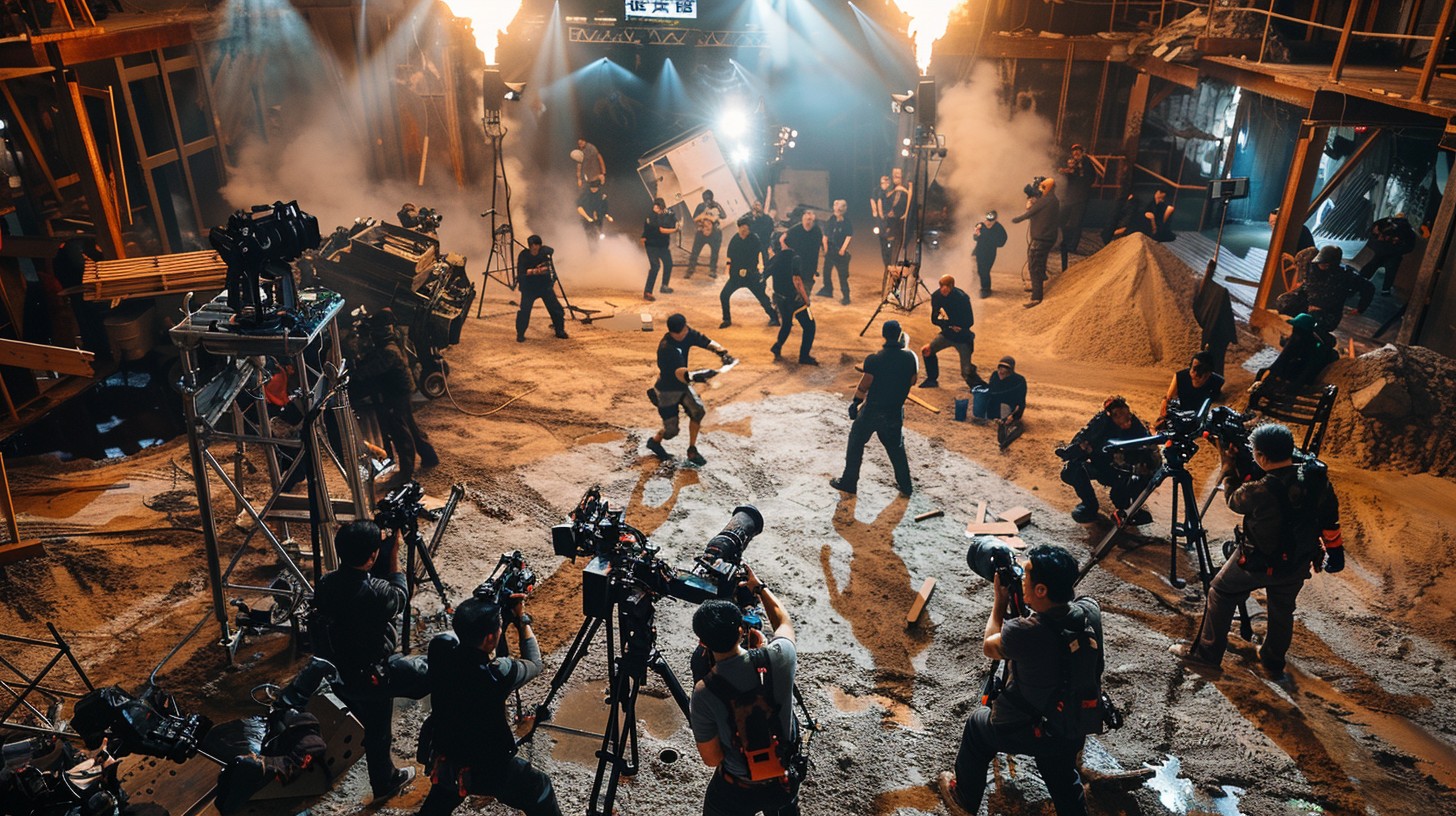
While the actor focuses on the internal world of the character, the crew is focused on the external world of the set. The crew is divided into various departments, each with its own hierarchy and specialized skill set.
- Camera and Lighting: Led by the DP, this group handles the visual capture. The Gaffer (head of electric) and Key Grip (head of rigging) work to shape light and move equipment.
- Sound: The Sound Mixer and Boom Operator ensure that dialogue is captured cleanly, often fighting against ambient noise and technical interference.
- Art Department: This includes Production Designers, Set Decorators, and Props. They create the physical environment the actors inhabit.
- Wardrobe, Hair, and Makeup: While these departments work directly on the actors, they are considered crew. They maintain the visual continuity of the characters across different shooting days.
- Production Office and ADs: The Assistant Directors (ADs) are the "engines" of the set. They manage the schedule, keep the crew on track, and ensure safety.
The crew’s work is physically demanding and technically precise. A "day" for a crew member in 2026 is rarely less than 12 hours, and "Fraturdays"—working through Friday night into Saturday morning—remain a common industry challenge. Crew members must have a deep understanding of their equipment and the ability to troubleshoot under intense time pressure. If a light breaks or a camera glitches, the crew must fix it immediately to prevent the production from losing thousands of dollars per minute.
Comparing Actor and Crew Roles
| Feature | Actors (Performers) | Crew (Production Staff) |
|---|---|---|
| Primary Goal | Character interpretation and emotional delivery. | Technical execution and logistical management. |
| Visibility | High; they are the faces seen by the audience. | Low; they remain behind the scenes. |
| Compensation | Flat fees, daily rates, or residuals (royalties). | Hourly wages, day rates, and overtime pay. |
| Union Representation | Primarily SAG-AFTRA. | IATSE, Teamsters, or DGA (for ADs). |
| Daily Schedule | Intermittent; intensive bursts followed by waiting. | Constant; "first in, last out" presence on set. |
| Entry Requirements | Auditions, headshots, and talent/training. | Technical certifications, apprenticeships, and P.A. work. |
| Primary Tools | Voice, body, script, and emotional memory. | Cameras, lights, software, tools, and schedules. |
Career Path and Entry Points: How to Choose
The path to becoming a professional actor is fundamentally different from the path to becoming a professional crew member. For actors, the journey usually involves years of acting classes, performing in local theater, and building a "reel" of footage from student or independent films. Success is often non-linear; an actor might struggle for a decade before a single breakout role changes their career trajectory.
For the crew, the path is often more vocational. Many begin as Production Assistants (PAs), the entry-level role that involves doing whatever is necessary to keep the set running—from blocking traffic to getting coffee. From there, individuals "specialize" into a department. A camera PA might become a 2nd Assistant Camera (AC), then a 1st AC, and eventually a Director of Photography. This path is more linear and relies heavily on technical competency, reliability, and "who you know" within the specific department.
In 2026, many crew members also pursue specialized certifications for new technologies, such as Volume (LED wall) operation, drone cinematography, or AI-integrated post-production workflows. While an actor’s marketability is subjective, a crew member’s marketability is often objective: can you operate this specific piece of gear safely and efficiently?
Financial Realities and Labor Unions
The financial landscape of "actor vs crew" is defined by union protections. In the United States and many international hubs, SAG-AFTRA represents actors, while IATSE (International Alliance of Theatrical Stage Employees) represents the technical crew.
The 2023 strikes—which have set the tone for the industry standards seen in 2026—highlighted the differing needs of these groups. Actors fought for protections against AI likeness replacement and better residual structures in the streaming era. Crew members, through IATSE, have historically focused on "quality of life" issues: mandatory rest periods between shifts (turnaround time), meal breaks, and sustainable pension and health plans.
While a "star" actor can earn millions, the average working actor often struggles to meet the annual income threshold required for union health insurance. Crew members, if they are consistent and reliable, can often earn a very stable, middle-class to upper-class living due to the sheer volume of hours and the demand for skilled labor. However, they do not receive the "residuals" (long-term royalties) that actors do, meaning they only get paid when they are actively working on a set.
FAQ
Can you be both an actor and a crew member on the same project?
Yes, particularly in independent film. Directors often act in their own films, and many producers take on small roles. However, on large-scale union productions, "dual-hatting" is rare because the workload for each role is so demanding that doing both simultaneously can compromise the quality and safety of the production.
Who has the longer work day on a film set?
Generally, the crew has a significantly longer work day. The "call time" for the crew is often an hour or more before the actors arrive to set up equipment. Similarly, after the actors are "wrapped" (finished for the day), the crew must "strike" the set, which involves breaking down equipment and packing it away, often adding two or more hours to their day.
Is it easier to get a job as an actor or a crew member?
Statistically, there are more jobs available for crew members than for actors. A single film might have a cast of 10-20 actors but a crew of 200-500 people. While the "barrier to entry" for acting is low (anyone can audition), the "barrier to success" is incredibly high. For the crew, the barrier to entry is higher (you need specific skills or the willingness to do grueling PA work), but the path to a consistent career is often more predictable.
Do crew members ever transition into acting?
It is possible, but they are very different disciplines. Some crew members, such as stunt performers or stand-ins, eventually move into acting roles. Similarly, many actors develop an interest in the technical side and eventually move "behind the lens" to direct or produce. However, the technical skills of a Gaffer do not inherently translate to the performance skills of an actor.
Which role is more impacted by AI in 2026?
Both are impacted, but in different ways. Actors face challenges regarding digital likeness and "voice cloning." Crew members, particularly in post-production, concept art, and even lighting (through automated systems), use AI as a tool to speed up workflows. While AI can simulate an actor’s face, it cannot yet replace the human ingenuity required to rig a complex light fixture on a physical location.
Identifying Your Professional Fit
Choosing between a career as an actor or a crew member requires an honest assessment of your personality and professional goals. If you are driven by the need for creative expression through performance, can handle the psychological toll of frequent rejection, and enjoy the spotlight, acting may be your calling. It is a path of high risk and potentially high reward, requiring a deep commitment to the craft of storytelling.
However, if you are mechanically minded, enjoy collaborative problem-solving, and prefer the satisfaction of seeing a tangible product (a well-lit scene, a perfectly recorded sound bite) created through hard work, the crew path offers a more stable and technically fulfilling career. The industry depends on the synergy between these two groups. Success on a film set is never the result of one person's effort; it is the result of the actor’s vulnerability being captured through the crew’s technical precision. For those entering the field in 2026, the best first step is to spend time on a set in any capacity—even as an extra or a volunteer PA—to observe the distinct rhythms and requirements of both worlds before committing to a specialty.