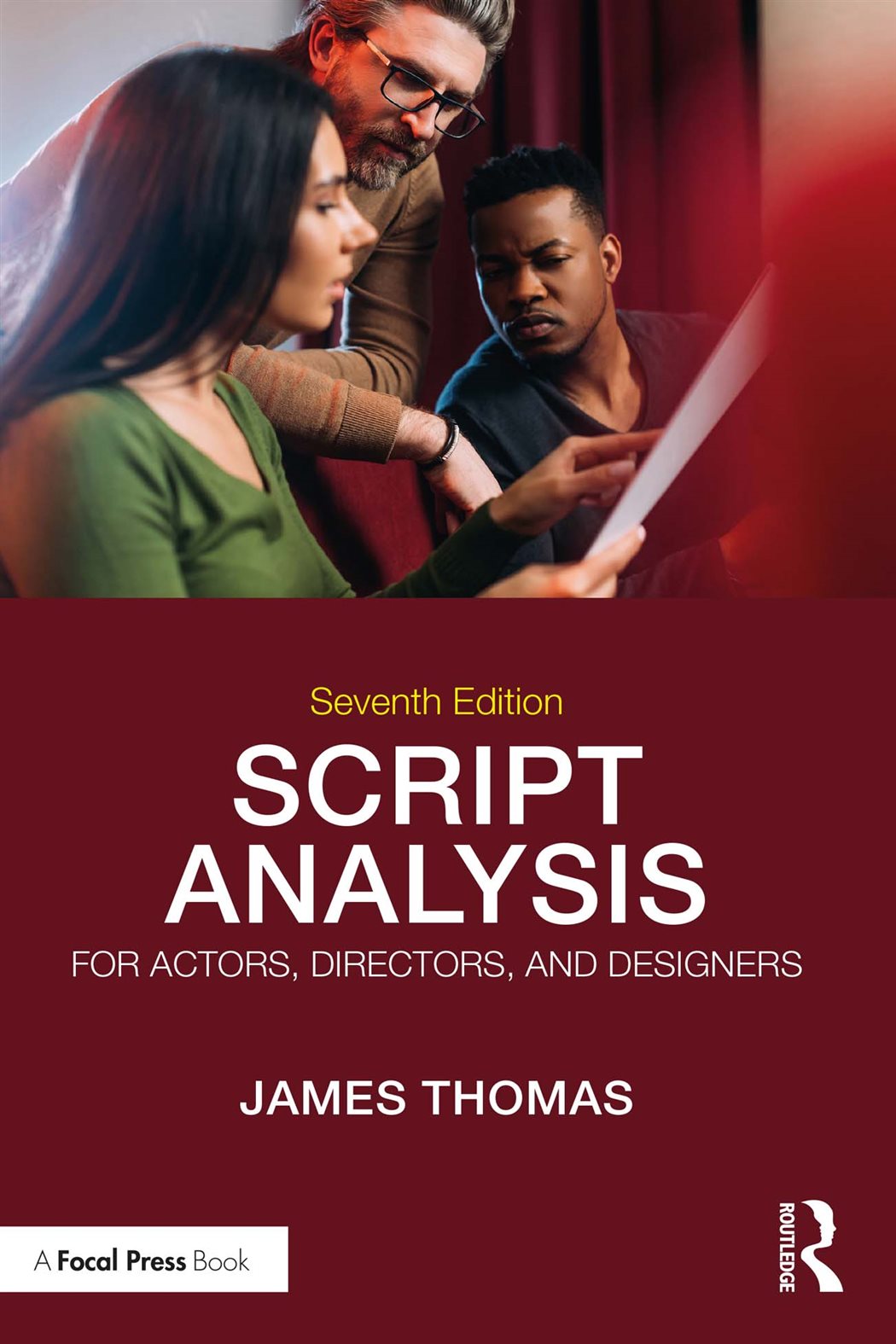
Actor role analysis is the systematic process of dissecting a script to uncover a character's history, motivations, psychological drivers, and social functions. This analytical framework serves as the foundation for a believable performance, moving beyond the literal text to explore subtext, objectives, and the "given circumstances" that dictate how a character navigates their world. In 2026, this process remains the essential bridge between a writer’s ink and an actor’s embodiment.
The Foundational Pillars of Actor Role Analysis
The primary objective of role analysis is to move an actor from a general understanding of a scene to a specific, visceral connection with the character. In the current professional landscape, casting directors and showrunners prioritize "specificity" over "general emotion." To achieve this, an actor must first understand the hierarchy of needs within a script. This begins with the "Super-Objective"—the overarching desire that drives a character throughout the entire story—and breaks down into "Scene Objectives," which are smaller goals pursued in individual moments.
To perform a successful analysis, one must look at the character through three distinct lenses: the internal, the external, and the relational. The internal lens examines the character’s psyche, fears, and secrets. The external lens focuses on physical traits, social status, and environmental influences. The relational lens analyzes how the character interacts with others, noting how their behavior shifts depending on who they are speaking to. This multi-dimensional approach ensures that the resulting performance is not a monolith but a living, breathing entity capable of surprise and nuance.
In 2026, while technology and performance capture have advanced, the intellectual rigor required for role analysis has not changed. Whether an actor is preparing for a Broadway stage, a streaming series, or a high-fidelity motion-capture environment, the requirement to "justify" every line of dialogue and every silence remains the gold standard of the craft.
The Script as a Living Document: The Three-Read Method
Analysis begins with the script, but many actors make the mistake of looking for "their" character too early. A professional role analysis requires a disciplined approach to reading the material. The "Three-Read Method" is a standard practice used by experienced performers to ensure they don't miss crucial context.
- The Objective Read: The first read-through should be for the story as a whole. The actor must understand the themes, the genre, and the overall arc of the narrative without focusing solely on their specific role. This prevents the actor from playing the character in a vacuum and helps them understand their "function" in the story—are they the protagonist, the foil, the comic relief, or the catalyst for change?
- The Fact-Finding Read: During the second read, the actor highlights every "fact" provided by the playwright or screenwriter. This includes stage directions, descriptions of the character by others, and explicit statements made by the character themselves. It is vital to distinguish between what a character says (which might be a lie) and what the script proves to be true.
- The Subtextual Read: The final read focuses on the gaps between the lines. This is where the actor asks, "Why is the character saying this now?" and "What are they trying to avoid?" By 2026, the industry has seen a massive shift toward "active" subtext, where actors are encouraged to choose transitive verbs (to provoke, to soothe, to interrogate) for every line of dialogue to keep the performance dynamic.
Deciphering the Given Circumstances
The "Given Circumstances" are the facts of the character's life provided by the writer. These are non-negotiable boundaries within which the actor must operate. Analyzing these circumstances provides the "Why" behind the character's behavior. If a character grew up in extreme poverty (a given circumstance), their relationship with money or food in the present day will be colored by that history.
Key elements of given circumstances include:
- Environmental Factors: The physical world, including climate, geography, and the specific architecture of the scene’s location.
- Social and Political Context: The laws of the world, the character's social standing, and the prevailing cultural norms of the era.
- Chronological Factors: The time of day, the season, and the specific year. An actor's energy levels and urgency change significantly if a scene takes place at 4:00 AM versus noon.
- Previous Action: What happened one minute before the scene started? This "moment before" is perhaps the most critical part of role analysis for maintaining continuity and emotional stakes.
By meticulously cataloging these details, the actor creates a "safety net" of reality. When they step onto a set or stage, they are not pretending to be someone else; they are living within a set of circumstances that naturally dictate their reactions.
Technical Frameworks for Character Analysis
Different acting methodologies offer various toolsets for role analysis. While some actors prefer the psychological depth of the Stanislavski System, others may lean toward the physical impulses of the Chekhov technique. In the modern industry, most professionals use a "hybrid" approach, selecting the tools that best fit the specific demands of the script.
| Analysis Method | Core Philosophy | Primary Tool | Best For |
|---|---|---|---|
| Stanislavski | Psychological Realism | The "Magic If" | Naturalistic Drama |
| Uta Hagen | Substitution | Six Steps of Analysis | Contemporary Realism |
| Michael Chekhov | Psychophysical | Psychological Gesture | Expressionism / High Stakes |
| Chubbuck Technique | Personal Empowerment | The 12-Step Tool | High-Octane Film/TV |
| Practical Aesthetics | Action-Based | The "Essential Action" | Fast-Paced Procedurals |
For example, The Stanislavski Centre provides extensive resources on how these classical methods have evolved to meet the needs of modern cinematic storytelling. Utilizing these frameworks allows an actor to move past "feeling" the role and toward "doing" the role, which is far more sustainable over a long shooting schedule or an extended theatrical run.
Physicality and Vocal Identity: Externalizing the Analysis
Role analysis is not purely an intellectual exercise; it must eventually manifest in the actor's body and voice. Once the internal world is established, the actor must determine how that world affects their physical presence. A character who is constantly "on guard" may have a tight core and shallow breathing. A character who is high-status may take up more physical space and speak with a more resonant, lower register.
In 2026, many actors use Laban Movement Analysis to categorize character movement into "Efforts" like gliding, punching, or dabbing. This adds a layer of technical precision to the character's physicality. Similarly, vocal analysis involves looking at the rhythm and tempo of the dialogue. Is the character's speech staccato and interrupted, or do they speak in long, flowery monologues? These choices are not arbitrary; they are direct results of the role analysis. If the analysis reveals a character who is hiding a secret, their vocal patterns might be hesitant or overly controlled to avoid "slipping up."
Common Pitfalls in Role Analysis
Even seasoned professionals can fall into traps during the analysis phase. One of the most common mistakes is over-intellectualization. It is possible to spend so much time writing "character biographies" that the actor becomes stuck in their head, unable to react spontaneously to their scene partner. The goal of analysis is to inform the subconscious, not to create a rigid script that must be followed regardless of what the other actors are doing.
Another pitfall is playing the "end of the story". If a character dies at the end of the play, the actor should not play them as "tragic" or "doomed" in the first act unless the character specifically knows their fate. Role analysis must preserve the character’s ignorance of the future to maintain tension and realism. Finally, actors often forget to look for contradictions. Real people are messy and inconsistent; a character who is brave might have one specific, irrational fear. Finding these contradictions makes a character feel human rather than like a trope.
Frequently Asked Questions
How long should I spend on role analysis before a rehearsal?
Ideally, the core analysis should be completed before the first rehearsal. This allows you to enter the space with a solid "point of view." However, analysis is an ongoing process. You should remain open to new discoveries that happen once you are on your feet and interacting with other performers.
What is the difference between a "Beat" and an "Objective"?
An Objective is what you want (e.g., "to get her to sign the papers"). A Beat is a unit of action that represents a single thought or tactic used to achieve that objective. When a character changes their tactic or a new piece of information enters the scene, a "Beat Change" occurs.
Can role analysis be used for voice acting or animation?
Absolutely. In fact, because voice actors lack the visual component of a physical performance, their role analysis must be even more robust. They must convey the character's physicality, environment, and internal state entirely through vocal choices, which requires a deep understanding of the subtext and given circumstances.
Should I write a "Character Biography" for every role?
While not mandatory, writing a biography helps fill in the gaps not covered by the script. If the script doesn't mention your character's childhood, inventing those details (based on clues in the text) can provide a stronger emotional foundation. The key is to ensure your inventions don't contradict the actual script.
How do I analyze a role with very little dialogue?
For "under-written" roles, you must look at the character's actions and the reactions of others toward them. Why are they in the room? What is their relationship to the protagonist? Even a character with zero lines has an objective—they are there for a reason, and your job is to find the most interesting reason that serves the story.
Moving from Analysis to Performance
The final stage of actor role analysis is the "integration" phase. Once the research is done, the facts are gathered, and the objectives are set, the actor must "forget" the homework. The analysis serves as the invisible scaffolding for the performance. In 2026, the mark of a truly great actor is the ability to do the deep work and then show up on set with a sense of "play" and "readiness."
The ultimate test of your analysis is whether it makes you more present. If your analysis gives you a clear reason to look your partner in the eye and fight for what you want, it has been a success. If it makes you feel restricted or worried about "getting it right," you may need to simplify your approach. Start with the most basic truth: "Who am I, what do I want, and what is stopping me?" Everything else is an expansion of those three essential questions.