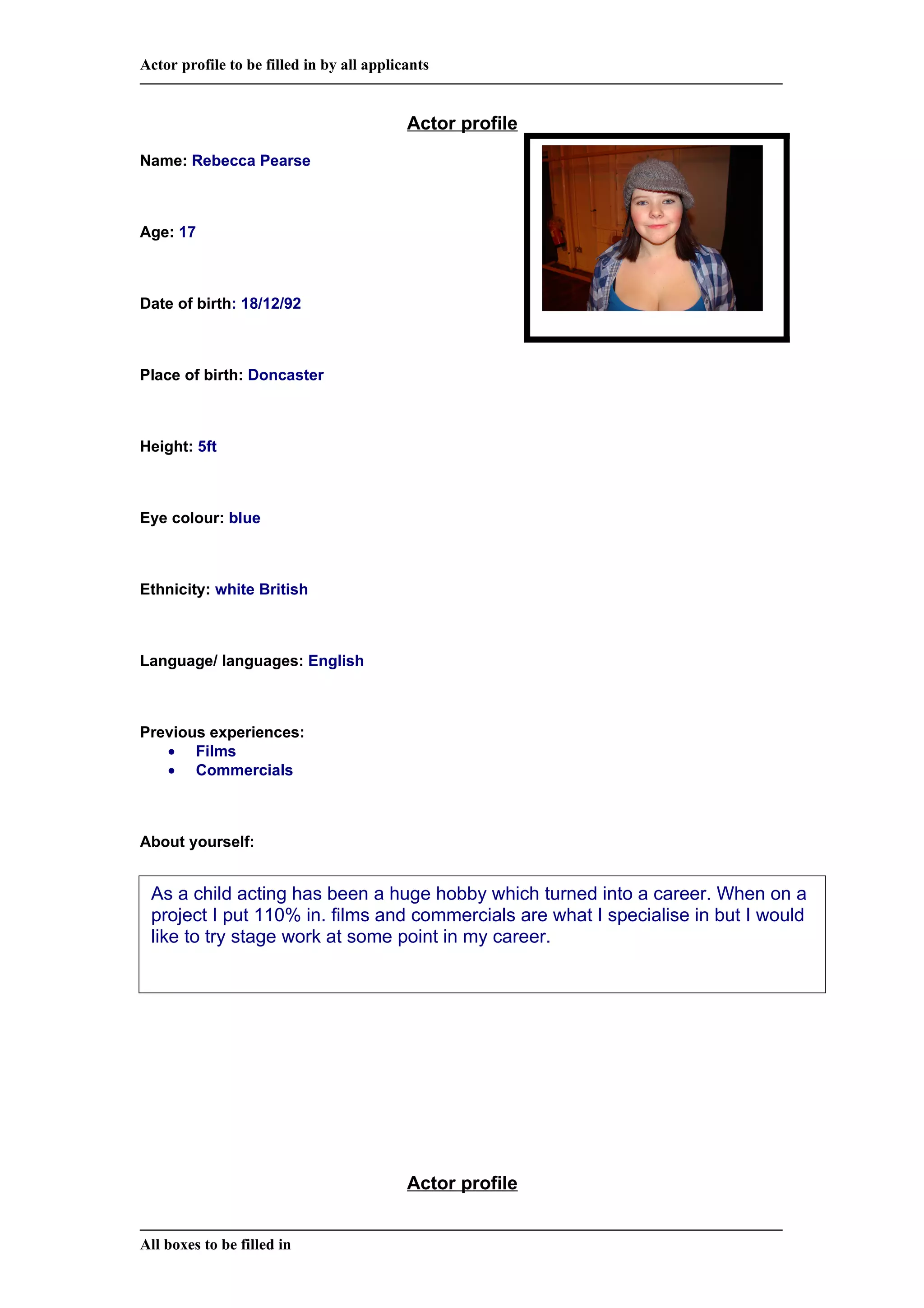
Professional actor profiles are the essential digital resumes used by performers to secure auditions and by casting directors to discover talent. These comprehensive portfolios centralize verified credits, high-resolution media, and physical statistics. In 2026, maintaining an optimized presence on platforms like IMDbPro and Actors Access is a mandatory prerequisite for any professional acting career.
The Evolution and Significance of the Digital Actor Profile
In the modern entertainment landscape of 2026, the traditional paper headshot and resume have been almost entirely supplanted by the dynamic digital profile. This shift is not merely a change in medium but a fundamental transformation in how talent is sourced. A digital profile serves as a live, 24/7 marketing tool that allows casting directors (CDs) to filter for specific traits—such as fluency in a language, a specific height, or a unique skill like horseback riding—within seconds.
For the actor, the profile is the primary point of contact with the industry. It houses the "holy trinity" of casting: the headshot, the showreel, and the resume. However, as of 2026, the scope has expanded to include "slate shots" (brief video introductions), voiceover demos, and links to verified social media footprints. The significance of these profiles lies in their ability to bridge geographical gaps, allowing an actor in Atlanta to be considered for a production in London or Vancouver without the initial cost of travel. Without a meticulously maintained profile, a performer remains invisible to the automated search algorithms and manual databases used by top-tier casting offices.
Primary Casting Platforms and Repositories
The industry remains fragmented into several key ecosystems. While an actor might be tempted to join every available site, focusing on the most authoritative platforms ensures that professional credits remain verified and visible to legitimate industry stakeholders.
IMDbPro: The Industry Standard for Verification
IMDbPro continues to be the definitive source for credit verification. In 2026, it is used by agents, producers, and directors to research an actor’s track record. Unlike other platforms, IMDbPro focuses on "hard" data—the specific productions an actor has been a part of and their professional network. The STARmeter remains a controversial but widely watched metric that tracks search frequency and profile views, often influencing "bankability" discussions in independent film financing.
Actors Access and Breakdown Services
Managed by Breakdown Services, Actors Access is the primary portal for theatrical (film and television) casting in North America. Its strength lies in its direct integration with the software casting directors use to post "breakdowns" (casting notices). When an agent submits an actor for a role, the CD sees the Actors Access profile. Key features in 2026 include the ability to upload unlimited "Eco Cast" self-tapes directly to specific submissions, ensuring that media is high-quality and correctly formatted for professional viewing.
Spotlight and Casting Networks
For those working in the United Kingdom and Europe, Spotlight is the undisputed gatekeeper. Its strict entry requirements—requiring professional training or a certain number of credits—ensure a high standard of talent. Meanwhile, Casting Networks (formerly LA Casting) remains the dominant force in commercial and high-volume background casting. By 2026, Casting Networks has refined its "Talent Scout" AI features, which suggest actors to CDs based on historical booking data and physical matches.
Essential Components of a High-Conversion Profile
An actor profile is only as effective as the data it contains. Each component must meet specific industry standards to prevent a profile from being ignored or filtered out of search results.
Professional Headshots
In 2026, the standard for headshots emphasizes "naturalism" over heavy retouching. A profile should typically feature 3–5 distinct looks: a "theatrical" shot (serious/dramatic), a "commercial" shot (warm/friendly), and specific character types the actor is frequently cast in (e.g., the corporate professional, the gritty antagonist). Technical requirements demand high-resolution JPEGs with a file size optimized for fast loading. Photos should be updated at least every 12 to 18 months, or immediately following a significant change in physical appearance, such as a haircut or change in weight.
Showreels and Video Clips
The showreel is the most critical piece of media. In 2026, the trend has moved away from long, three-minute montages toward short, high-impact clips categorized by genre. CDs prefer to see a 30-second "Dramatic Clip" and a separate 30-second "Comedy Clip" rather than one long reel. The first 10 seconds of any video are vital; if the actor does not appear or speak within that window, the viewer is likely to skip to the next candidate. Audio quality is now considered more important than visual resolution; poor sound is the fastest way to have a reel dismissed as unprofessional.
The Standardized Resume
The resume section must follow the industry-standard layout:
- Production Name: The title of the film, show, or play.
- Role: Whether it was a Lead, Supporting, Guest Star, or Recurring role.
- Director/Production Company: Who was responsible for the project.
Avoid including "Extra" or "Background" work on a principal acting resume unless specifically asked. By 2026, most platforms have automated the formatting of these sections to ensure consistency across the database.
Technical Specifications and Platform Comparison
Navigating the costs and features of these platforms requires a strategic approach. The following table compares the primary global casting platforms as they stand in 2026.
| Platform | Primary Region | Key Feature | 2026 Annual Est. Cost | Membership Type |
|---|---|---|---|---|
| IMDbPro | Global | Credit Verification / STARmeter | $149 - $170 | Subscription |
| Actors Access | North America | Direct CD Submissions | $68 (Plus) | Per-submission or Plus |
| Spotlight | UK / Europe | High Entry Standards | £110 - £160 | Annual Membership |
| Casting Networks | Global | Commercial/Background | $200 - $300 | Premium/Tiered |
| Backstage | US / UK | Independent/Student Film | $150 - $190 | Subscription |
Optimization Strategies for the Modern Actor
Simply having a profile is insufficient; it must be optimized for the search algorithms used by talent scouts. This is known as "Actor SEO."
- Keyword Integration: Platforms often have a "Special Skills" section. Instead of generic terms, use specific keywords that CDs search for, such as "Dialects: RP English," "Combat: Stage Fencing," or "Fluent: Mandarin."
- Media Tagging: When uploading photos or videos, ensure they are correctly tagged with the "Look" or "Genre." If a CD filters for "Blue Eyes" and "Doctor Type," and your photo isn't tagged correctly, you won't appear in the results.
- The "Active" Signal: Profiles that are updated frequently often rank higher in search results. Log in at least once a week to ensure all information is current and to signal to the platform that the profile is active and monitored.
- Union Status: Ensure your SAG-AFTRA or Equity status is verified. Many professional projects are "Union Only," and an unverified status will automatically exclude you from these high-paying opportunities.
Security, Privacy, and Verification
As actor profiles contain sensitive personal information, security is a paramount concern in 2026. Profiles should never list a home address or a personal phone number. Instead, all contact information should point to a talent agent or a professional management company.
Verification is also a two-way street. Actors must be wary of "scam" casting sites that charge high fees with no connection to actual production offices. Legitimate platforms like IMDbPro and Spotlight have rigorous verification processes. If a site asks for a significant "registration fee" but has no history of casting major projects, it should be avoided. Furthermore, in 2026, actors are increasingly using digital watermarks on their headshots and reels to prevent unauthorized AI training or deepfake manipulation of their likeness.
Managing Agency Relationships
If you are represented, your profile should be linked to your agency’s "Company Account." This allows your agent to submit you for "Breakdowns" that are not visible to the public. In 2026, the synchronization between an actor’s profile and their agent’s database is seamless. Any update you make should be approved by your agent to ensure it aligns with your current branding and career strategy.
Frequently Asked Questions
Should I have a profile on every platform?
Not necessarily. It is better to have one or two highly optimized, high-quality profiles on the platforms most relevant to your market (e.g., Actors Access for LA/NY, Spotlight for London) than five mediocre profiles across secondary sites. Focus your budget and time where the major casting directors in your region spend their time.
How often should I update my showreel?
Your showreel should be updated as soon as you have new, high-quality footage that exceeds the quality of your current clips. In 2026, the trend is "quality over quantity." If you have one spectacular 20-second clip from a major TV show, it is often better than a two-minute reel of student film footage.
What are "Slate Shots" and are they necessary?
A Slate Shot is a 5-to-7-second video clip attached to a specific headshot on Actors Access. It shows the actor looking into the camera, stating their name and perhaps their height or location. It is highly recommended because it allows CDs to see how the actor moves and speaks naturally, providing a "3D" view that a static photo cannot.
Can I manage my own profile if I don't have an agent?
Yes. Platforms like Actors Access and Backstage allow "unrepresented" actors to view public breakdowns and submit themselves. However, "pro-tier" breakdowns are often only visible to franchised agents. Managing your own profile is a great way to build the initial credits required to attract agency representation.
Does my social media count as an actor profile?
While Instagram and TikTok are used for "influencer" casting or specific "type" searches, they are not professional actor profiles. They lack the standardized data fields (union status, physical stats, formal resume) that CDs need to make legal and logistical casting decisions. Use social media as a secondary marketing tool, but keep your professional profile as the primary source of truth.
Initial Steps for Profile Professionalism
The first action any actor should take in 2026 is to conduct a "Digital Audit." Start by searching for your name on Google and major casting databases to see what a CD sees. Ensure that your IMDbPro page is linked to your primary casting profiles and that your headshots are consistent across all platforms. If a profile has not been updated in six months, it is effectively obsolete.
Schedule a recurring quarterly review to refresh your skills list, upload any new clips, and ensure your representation's contact information is accurate. This consistent maintenance ensures that when the right role is posted, your profile is not only visible but also presents you as a prepared, professional performer.