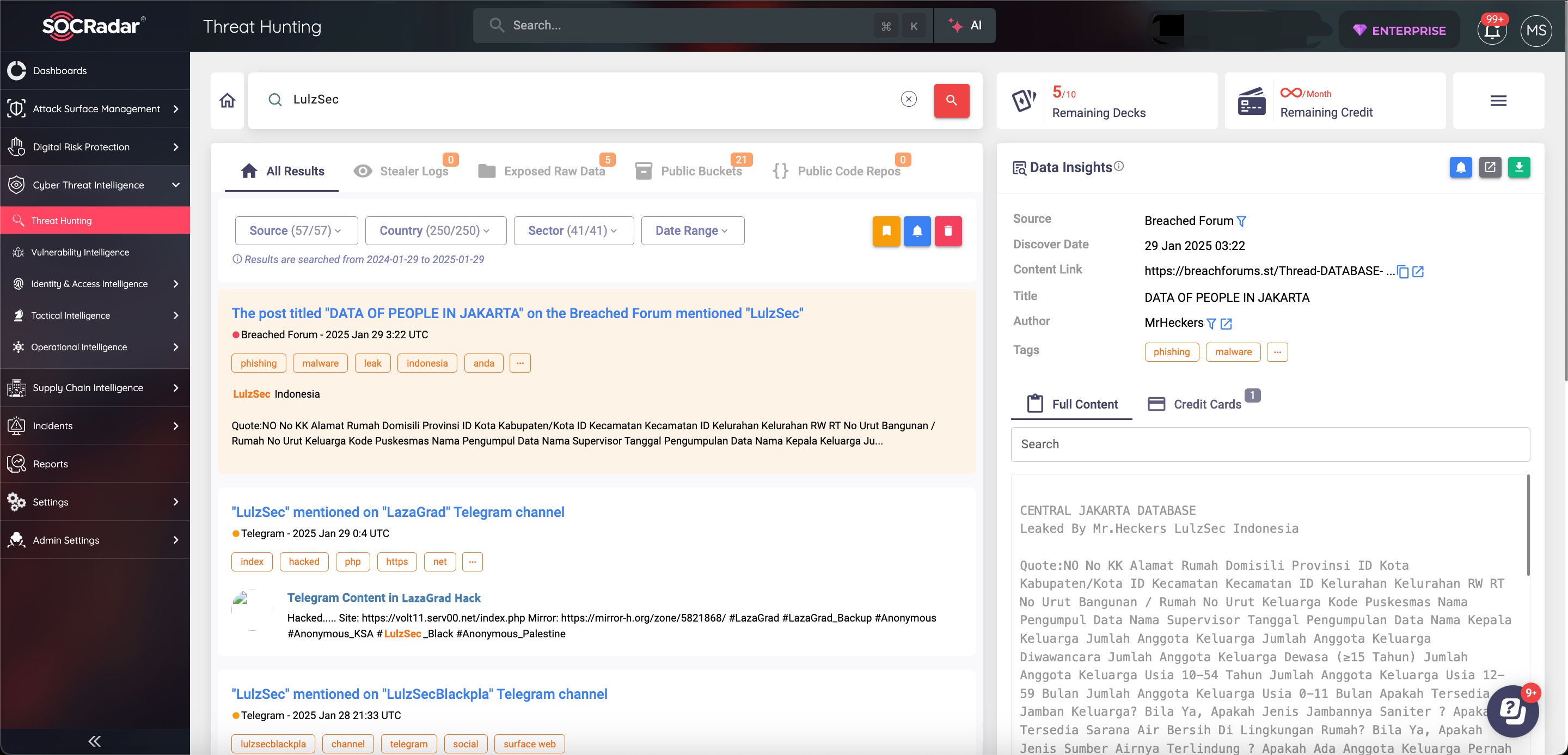
Actor identification is the process of attributing malicious cyber activity to a specific entity, ranging from individual hackers to state-sponsored Advanced Persistent Threats (APTs). By analyzing digital artifacts, behavioral patterns, and infrastructure, security teams can move beyond simple detection to understand the "who" and "why" behind an attack, enabling more strategic defense responses.
In the landscape of 2026, the ability to accurately identify actors has become the cornerstone of proactive cyber defense. While the technical perimeter remains important, knowing the identity of an adversary allows organizations to predict future moves based on historical campaigns, allocate resources effectively, and, in some cases, support legal or geopolitical repercussions. This article focuses on the methodologies, technical frameworks, and operational challenges of threat actor identification.
The Framework of Attribution: The Diamond Model
To perform systematic actor identification, security researchers often rely on the Diamond Model of Intrusion Analysis. This model provides a structured way to map the relationship between four core features of any cyber event: the Adversary, the Capability, the Infrastructure, and the Victim.
The Adversary Vertex
The ultimate goal of actor identification is to populate the "Adversary" vertex of the diamond. This vertex is often the most difficult to define with certainty. It distinguishes between the Adversary Operator (the person sitting at the keyboard) and the Adversary Customer (the entity, such as a foreign intelligence service or a criminal syndicate, that benefits from the activity). In 2026, identifying the customer is often more critical for risk management than identifying the specific operator, as it reveals the strategic intent behind the breach.
Capabilities and Infrastructure
The connection between capabilities (the malware, tools, and exploits used) and infrastructure (the IP addresses, domain names, and command-and-control servers) creates a "thread" that researchers follow. When a specific custom malware variant is used exclusively by one group, that capability becomes a primary identifier. Similarly, when infrastructure overlaps—such as using the same SSH keys or registrar accounts—it provides a technical link that anchors the identification process.
The Victim and Social-Political Axis
The "who" is often revealed by the "to whom." By analyzing the industry, geography, and data type of the victim, researchers can infer the actor’s motivations. For example, if the victims are consistently high-tech manufacturing firms in Western Europe, the actor is likely seeking intellectual property for economic gain, which narrows the list of suspected entities significantly.
Tactical vs. Strategic Actor Identification
Identification occurs at different layers of the security stack. Understanding the difference between tactical and strategic identification is essential for prioritizing response efforts.
Tactical Identification: Indicators of Compromise (IoCs)
Tactical identification is the most immediate form of recognition. It relies on Indicators of Compromise (IoCs) such as file hashes, specific IP addresses, or domain names. While these are useful for immediate blocking and containment, they are "brittle" identifiers. Sophisticated actors can change their IPs and recompile their malware in seconds, rendering tactical identification obsolete.
Strategic Identification: TTPs and the Pyramid of Pain
Strategic identification focuses on Tactics, Techniques, and Procedures (TTPs). This is best represented by David Bianco’s "Pyramid of Pain." At the base of the pyramid are easy-to-change indicators like hashes; at the top are the TTPs. Identifying an actor by their TTPs—such as how they move laterally through a network or their specific preference for Living off the Land (LotL) binaries—is much more valuable. Because TTPs represent the actor's ingrained habits and training, they are difficult for the adversary to change without significant effort.
The Role of MITRE ATT&CK in Actor Mapping
The MITRE ATT&CK framework has become the global standard for actor identification by providing a common taxonomy for adversary behavior. By mapping observed behaviors during an incident to the ATT&CK matrix, security teams can create a "fingerprint" of the attack.
| Feature | Cybercriminal Groups | Nation-State (APT) Groups | Hacktivist Collectives |
|---|---|---|---|
| Primary Motivation | Financial gain (Ransomware, theft) | Espionage, sabotage, influence | Social or political change |
| Targeting Scope | Opportunistic or wide-net | Highly targeted and persistent | High-profile symbolic targets |
| Tooling | Commercial kits or leaked code | Custom, zero-day vulnerabilities | Open-source or DDoS tools |
| Infrastructure | Bulletproof hosting, botnets | Sophisticated proxies, compromised servers | Public clouds, VPNs |
| Persistence | Medium (Until payout) | Very High (Years of access) | Low (Short-term disruption) |
By comparing the observed TTPs against the known profiles of established groups maintained in the MITRE ATT&CK Groups database, analysts can determine with varying levels of confidence which actor is responsible for the intrusion.
Technical Methods for Deep Identification
Beyond high-level behavioral mapping, deep actor identification requires forensic analysis of the digital artifacts left behind. This involves a combination of binary analysis and network telemetry.
Malware Code Stylometry
Just as writers have a unique voice, malware authors have unique coding styles. Code stylometry analyzes the nuances in binary files, such as the choice of specific libraries, the way error messages are phrased, and even the "compilation timestamp" (which can reveal the time zone of the developer). In 2026, AI-driven stylometry tools can detect subtle similarities between new malware and known historical samples even when the code has been obfuscated.
Infrastructure Fingerprinting
Actor identification often succeeds by finding mistakes in the adversary’s setup. Researchers use tools like Censys or Shodan to fingerprint Command and Control (C2) servers. If an actor uses a specific, non-standard configuration for their Nginx servers or a unique SSL certificate across multiple campaigns, these become permanent identifiers that link disparate attacks to a single entity.
Traffic Pattern Analysis
Even when traffic is encrypted, the "shape" of the communication can identify the actor. Machine learning models can analyze the packet sizes, timing intervals, and volume of data transferred to identify the specific C2 framework being used (e.g., Cobalt Strike, Brute Ratel, or custom-built tools). This behavioral fingerprinting is often the only way to identify an actor when the payloads themselves are never recovered from memory.
The Challenge of False Flags and Obfuscation
A major hurdle in actor identification is the use of false flags. Sophisticated actors purposefully plant artifacts associated with other groups to mislead investigators.
For example, a Russian-based group might use Chinese-language strings in their code or adopt TTPs famously used by North Korean actors. This "deception by design" is intended to trigger incorrect geopolitical responses or lead security teams to look for the wrong indicators. Identifying false flags requires looking for "incongruities"—moments where the skill level or infrastructure of the attack doesn't match the sophistication of the planted artifacts.
Furthermore, the rise of "Cybercrime-as-a-Service" (CaaS) has blurred the lines of identification. When a nation-state buys access to a network from an initial access broker (IAB) who also sells to ransomware gangs, identifying the "primary actor" becomes a complex task of untangling a supply chain of malicious actors.
Legal and Geopolitical Implications
Actor identification is not merely an academic exercise; it has real-world consequences in the legal and diplomatic spheres.
- Sanctions and Indictments: When government agencies like the FBI or the UK's NCSC identify a state-sponsored actor, it can lead to economic sanctions against individuals or organizations. Accurate identification is a prerequisite for "naming and shaming" campaigns.
- Insurance and Legal Liability: Many cyber insurance policies in 2026 include "Act of War" exclusions. If an attack is identified as being perpetrated by a nation-state, it can lead to complex legal disputes regarding whether the insurance company is required to pay for the damages.
- Active Defense and Countermeasures: While controversial, some jurisdictions allow for "hack back" or active defense measures. These are strictly regulated and require near-certain actor identification to ensure that countermeasures are directed at the correct entity and not an innocent proxy.
Given these stakes, most professional threat intelligence firms use a Level of Confidence rating (Low, Medium, or High) when identifying an actor, acknowledging that 100% certainty is rarely achievable in a digital environment built on anonymity.
Who is responsible for actor identification in a corporate setting?
Actor identification is typically performed by the Threat Intelligence (TI) team or a specialized Incident Response (IR) firm. While the Security Operations Center (SOC) focuses on the immediate "what" and "where" of an alert, the TI team investigates the "who" by correlating the incident with global threat databases and historical data.
Can an actor be identified if they use a VPN or Tor?
Yes. While a VPN or Tor hides the actor's immediate IP address, it does not hide their TTPs, malware signatures, or the timing of their activity. Most successful actor identifications are based on a "preponderance of evidence" across multiple layers, rather than just a single IP address.
Is actor identification relevant for small businesses?
While a small business may not have the resources to track APTs, understanding the type of actor (e.g., a "spray-and-pray" ransomware group versus a targeted attacker) is crucial. It helps the business determine if they were a target of opportunity or if they have something specific that an adversary will continue to pursue, which dictates the level of cleanup required.
How has AI changed actor identification in 2026?
By 2026, AI has significantly accelerated the "correlation" phase of identification. Automated systems can now compare billions of log entries and malware samples across the globe in real-time, identifying overlaps in infrastructure or code that would take human analysts weeks to find. However, AI also helps actors generate "unique" code for every victim, making traditional signature-based identification more difficult.
Recommendations for Developing Identification Capabilities
To effectively leverage actor identification, organizations should transition from a reactive stance to an intelligence-led security model.
First, integrate threat intelligence feeds directly into your SIEM (Security Information and Event Management) and SOAR (Security Orchestration, Automation, and Response) platforms. This allows for automated tagging of alerts with known actor names and TTPs the moment they occur. Second, prioritize the collection and retention of telemetry data—specifically EDR (Endpoint Detection and Response) logs—which are essential for the retrospective analysis required to identify a sophisticated actor who may have been in the network for months. Finally, participate in Information Sharing and Analysis Centers (ISACs) within your industry. Actor identification is a collaborative effort; the patterns you see in your network may be the final piece of the puzzle needed to identify an actor targeting your entire sector.