Action Park in Vernon, New Jersey, was a revolutionary yet infamous water and amusement park known for its experimental rides and relaxed safety standards. While the original park closed in 1996, it lives on today as Mountain Creek Waterpark, offering a safer, professional environment that honors its adventurous roots.
The Origins of Action Park: A Lawless Legacy
The story of Action Park begins in the late 1970s, spearheaded by Gene Mulvihill and his company, Great American Recreation (GAR). Opened in 1978 on the grounds of the Vernon Valley/优质 Ski Area, the park was born from a philosophy of "personal responsibility." Mulvihill envisioned a place where guests were the masters of their own thrills, controlling their own speed and direction—a concept that fundamentally differed from the passive experiences found at Disney or Six Flags.
During the 1980s, Action Park became a cultural phenomenon in the Tri-State area. It was divided into three main sections: the Alpine Center, Motor World, and Waterworld. At its peak, the park attracted over one million visitors annually. However, the lack of oversight and the experimental nature of the attractions earned it nicknames like "Traction Park," "Accident Park," and "Class Action Park." The staff mostly consisted of teenagers who were often undertrained and overwhelmed by the sheer volume of chaotic activity.
The park's downfall was a combination of rising insurance costs, legal battles, and the financial instability of Great American Recreation. By the mid-1990s, the mounting debt and the park’s reputation for danger led to its closure in 1996. Shortly after, the property was purchased by the Canadian firm Intrawest, which overhauled the safety protocols and rebranded the facility as Mountain Creek Waterpark. Although there was a brief marketing-driven return to the "Action Park" name between 2014 and 2016, the facility remains Mountain Creek today, prioritizing guest safety while maintaining its unique mountainside terrain.
Iconic and Infamous Rides: From Cannonball Loop to the Alpine Slide
Action Park's reputation was built on rides that pushed the boundaries of physics and common sense. These attractions were often designed in-house without the rigorous engineering standards expected of modern theme parks.
The Cannonball Loop
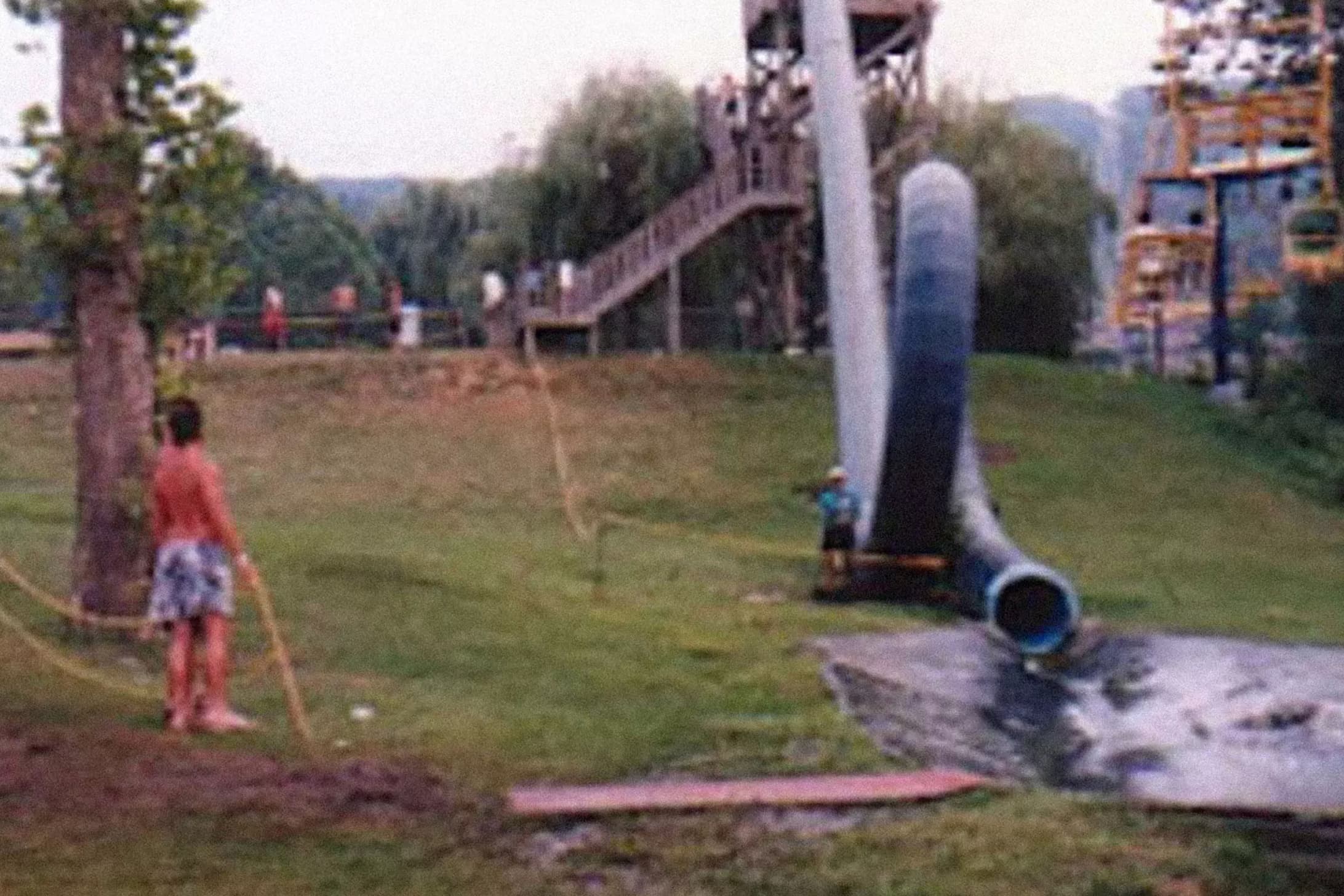
Perhaps the most legendary ride in theme park history, the Cannonball Loop was an enclosed water slide that featured a complete vertical loop. It was only open for a short period in the mid-1980s. Legends suggest that early test subjects (often employees offered $100) emerged with bruises and missing teeth. The centrifugal force required to clear the loop was immense, and if a rider didn't have enough momentum, they would fall back down to the bottom of the loop, requiring a specialized hatch for extraction. It stands as a symbol of the park’s "try anything" era.
The Alpine Slide
The Alpine Slide was a 2,700-foot track made of concrete and fiberglass. Riders sat on small sleds with a handbrake that rarely worked effectively. The slide was notorious for causing "road rash"—severe friction burns—when riders flew off the track onto the abrasive surface. Despite the high injury rate, it remained one of the park's most popular attractions because it epitomized the "control your own destiny" mantra of the founders.
The Wave Pool (The Grave Pool)
Action Park’s wave pool was one of the first of its kind in the United States. However, the intensity of the waves, combined with the number of inexperienced swimmers and the high altitude of the Vernon mountainside, made it incredibly dangerous. At times, life-guards were performing dozens of rescues a day. The pool was deep and the freshwater lacked the buoyancy of salt water, leading to its morbid nickname, "The Grave Pool," following three fatalities at that specific attraction during the park's original run.
Safety, Regulation, and the Evolution of Oversight
The original Action Park operated in a "Wild West" era of amusement park regulation. In the 1980s, New Jersey’s state oversight of such parks was minimal compared to modern standards. The park often self-insured through a captive insurance company based in the Cayman Islands (London International Quality Assurance), which allowed it to bypass traditional insurance requirements for years.
The safety record of the original park included six confirmed fatalities between 1978 and 1996. These incidents ranged from drownings in the wave pool and kayak course to a heart attack triggered by the "Tarzan Swing’s" cold water and a mechanical failure on the Alpine Slide. These tragedies eventually forced the state of New Jersey to implement stricter amusement ride regulations, many of which are still in place today under the New Jersey Department of Community Affairs (DCA).
Today, Mountain Creek Waterpark operates under a completely different paradigm. Every ride undergoes rigorous daily inspections, and lifeguards receive world-class training through programs like Ellis & Associates. The "danger" associated with the park is now largely a matter of nostalgia and marketing, as the physical infrastructure has been modernized to meet 2026 safety expectations.
Action Park vs. Mountain Creek: The Modern Experience in 2026
For those visiting in 2026, it is important to distinguish between the historical Action Park and the current Mountain Creek. While the location is the same, the experience has been professionalized. Most of the original "dangerous" rides have been removed or completely rebuilt.
| Feature | Original Action Park (Pre-1996) | Mountain Creek Waterpark (2026) |
|---|---|---|
| Safety Oversight | Self-insured, minimal state interference | NJ DCA regulated, rigorous inspections |
| Primary Attraction | Experimental, high-risk slides | Modern, high-capacity water attractions |
| Staffing | Mostly untrained teenagers | Certified lifeguards and professional management |
| Iconic Ride | Cannonball Loop (Closed) | Bombs Away / Zero-G (Modern vertical drops) |
| Environment | "Wild West" atmosphere | Family-friendly resort environment |
| Ownership | Great American Recreation (GAR) | SNOW Partners |
The current park still utilizes the unique mountain terrain, which sets it apart from "flat" waterparks. Rides like the Colorado River (a mountain whitewater rafting experience) and Bombs Away provide the thrills that Action Park fans crave but with the engineering and safety backups required in the modern era.
Essential Visitor Information for Mountain Creek Waterpark
If you are planning a visit to the site of the former Action Park in Vernon, NJ, during the 2026 season, keep the following logistical details in mind.
Location and Accessibility
Mountain Creek is located at 200 Route 94, Vernon, NJ 07462. It is approximately a 1.5-hour drive from New York City. While there is no direct train service to the mountain, many visitors use ride-share services from nearby transit hubs like Warwick, NY, or utilize seasonal bus excursions from Manhattan.
2026 Pricing and Ticketing
As of 2026, Mountain Creek has moved toward a dynamic pricing model.
- General Admission: Usually ranges from $49 to $79 depending on the day of the week and how far in advance you purchase.
- Season Passes: Often the best value for locals, providing access to both the waterpark and mountain biking trails.
- Parking: Expect to pay a daily parking fee (standard for most NJ resorts).
Best Practices for Visitors
- Arrive Early: The park is built on a mountain, and moving between sections takes time. Arriving at opening ensures you get a locker and a good "base camp" spot.
- Footwear is Mandatory: Unlike flat waterparks, you will be walking on mountain paths and hot pavement. Sturdy water shoes are highly recommended.
- Check Height Requirements: Modern safety means strict enforcement. Ensure children meet the requirements for the more intense slides like H-2-Oh-No.
- Weather Policy: Being in the mountains, weather can change quickly. Mountain Creek typically has a "Rain Check" policy if the park closes due to lightning for an extended period.
Modern Attractions to Seek Out
- Zero-G: A trap-door start slide that sends riders into a double-loop. It is the spiritual successor to the Cannonball Loop but with modern engineering.
- The Colorado River: A classic mountain ride that has survived since the Action Park days, though it has been significantly renovated for safety.
- High Anxiety: A giant funnel ride that provides a weightless sensation.
FAQ: Common Questions About Action Park NJ
Is the original Action Park still open?
No, the original Action Park closed in 1996. The facility was rebranded as Mountain Creek Waterpark. While there was a short-lived rebranding back to the name "Action Park" from 2014 to 2016 for marketing purposes, the park currently operates as Mountain Creek Waterpark and is managed by SNOW Partners.
How many people died at Action Park?
There were six documented fatalities at the original Action Park between 1978 and 1996. These included three drownings in the Wave Pool, one drowning in the Kayak Experience, one heart attack on the Tarzan Swing, and one fatality involving a guest on the Alpine Slide. These incidents led to significant changes in amusement park safety laws in New Jersey.
Can you still ride the Cannonball Loop?
No, the Cannonball Loop was dismantled shortly after its brief trial run in the 1980s. It never gained a permanent operating permit due to safety concerns and its tendency to cause minor injuries to riders. However, Mountain Creek features several modern vertical drop slides that offer similar thrills with much higher safety standards.
Is Mountain Creek safe for children?
Yes, Mountain Creek is significantly safer than the original Action Park. It features dedicated children’s areas like "Lil' Dippers" and "Sprayground." All rides are strictly monitored by certified lifeguards, and the park must comply with the New Jersey Carnival-Amusement Ride Safety Act.
Why was Action Park so dangerous?
The park's danger stemmed from a combination of factors: experimental ride designs that weren't tested by outside engineers, a corporate culture that prioritized "thrills" over safety, and a workforce of mostly unsupervised teenagers. Additionally, many rides required the guest to control their own speed, which often led to collisions or wipeouts.
Planning Your Trip to Vernon
Whether you are a history buff fascinated by the "Class Action Park" documentaries or a thrill-seeker looking for a summer getaway, Vernon, NJ, remains a premier destination for outdoor adventure in 2026. Beyond the waterpark, the area offers world-class mountain biking, golf at the Crystal Springs Resort, and hiking along the Appalachian Trail.
When visiting the waterpark, remember that while the "danger" is gone, the physical demands of the mountain remain. Proper hydration, sun protection, and appropriate footwear will ensure your visit to the site of the world’s most infamous amusement park is memorable for the right reasons. For the most current operational updates, always check the official Mountain Creek website before departing.