Action Comics 1, released in June 1938 by National Allied Publications (the precursor to DC Comics), is the most significant single issue in the history of the comic book medium. It serves as the inaugural appearance of Superman, a character created by Jerry Siegel and Joe Shuster, effectively launching the Golden Age of Comic Books and establishing the template for the superhero archetype that continues to dominate popular culture in 2026.
The Historical Context of the 1938 Launch
In the late 1930s, the American comic book industry was in its infancy, primarily functioning as a reprint medium for newspaper comic strips. National Allied Publications, under the leadership of Major Malcolm Wheeler-Nicholson and later Harry Donenfeld and Jack Liebowitz, sought original content to fill their new anthology title. Action Comics 1 was an experimental project, featuring a variety of adventure, mystery, and humor stories.
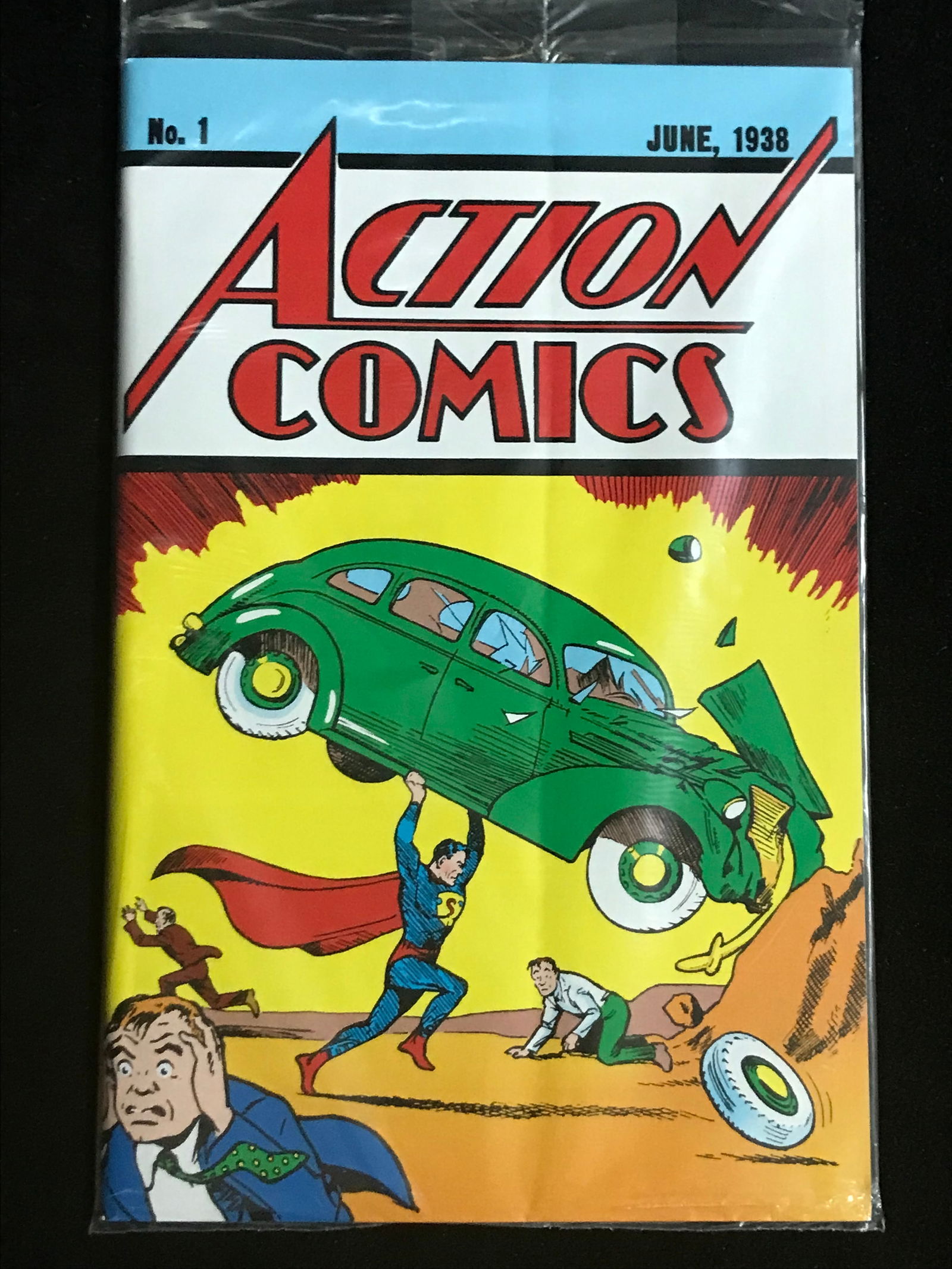
The decision to feature the Superman character on the cover—depicting him lifting a green car—was a gamble. At the time, editors were largely unimpressed by the concept of a caped, super-powered individual. However, the immediate sell-out of the issue and the subsequent surge in interest confirmed the viability of the superhero genre. This singular event shifted the economic focus of the publishing industry, leading to a decade of rapid expansion characterized by the creation of hundreds of costumed heroes.
Physical Characteristics and Identification
For collectors and historians, identifying an original copy of Action Comics 1 is a matter of verifying specific technical specifications. The issue was printed on standard pulp-grade newsprint, which is highly acidic and susceptible to browning and brittleness.
Key markers include:
- Cover Price: 10 cents.
- Publication Date: June 1938.
- Cover Art: Jerry Siegel and Joe Shuster, famously featuring Superman destroying a car against a yellow and red background.
- Contents: The issue is an anthology containing multiple stories, with the Superman segment occupying the lead position.
Due to the scarcity of the issue, counterfeit copies and high-quality reprints exist. Authentic copies exhibit the distinct "offset lithography" printing techniques of the era, which can be verified under magnification. In the current market, provenance is the primary indicator of authenticity, with certified third-party grading being the industry standard for verification.
Market Valuation and Collectibility
As of 2026, Action Comics 1 represents the "Holy Grail" of comic book collecting. Its value is driven not by current entertainment trends but by its status as a historical artifact. Because of this, it is treated as a high-asset commodity rather than a mere hobbyist item.
Values for Action Comics 1 are determined by the "CGC" (Certified Guaranty Company) numerical grade, which assesses the physical condition of the paper, the integrity of the staples, and the vibrancy of the colors.
| Condition Grade | Market Dynamics |
|---|---|
| High Grade (9.0+) | Extremely rare; often resides in private portfolios. |
| Mid Grade (5.0–7.0) | Highly liquid; frequent subject of major auction houses. |
| Low Grade (0.5–2.0) | Accessible only to high-net-worth investors and institutions. |
| Restored Copies | Significant value reduction; requires professional disclosure. |
Investors should note that the market for high-grade copies is remarkably stable, as the asset is largely decoupled from the short-term fluctuations of the comic book industry. When purchasing or evaluating an asset of this caliber, it is essential to consult with specialized archival experts to ensure that preservation requirements—such as acid-free storage and climate control—are strictly maintained.
Technical Preservation and Asset Management
Preserving an original copy of Action Comics 1 requires a specialized environment. The newsprint used in 1938 was not archival-quality; it contains high levels of lignin, which causes the paper to yellow and degrade when exposed to light or fluctuating humidity.
To maintain the physical integrity of the issue:
- Climate Control: The environment must be kept at a consistent temperature (typically 65-70°F) and a relative humidity level of 45-50%.
- Light Exposure: The comic must be shielded from all ultraviolet (UV) light, which accelerates ink fading and paper oxidation.
- Encapsulation: Industry-standard hard-shell archival holders are necessary to prevent mechanical damage, such as corner creases or spine splits, during handling.
Professional collectors often treat these issues as "static assets," meaning they are rarely handled or displayed outside of secure, controlled environments. If you are in possession of a potential copy, it is strongly advised to avoid attempting any form of cleaning or "pressing" yourself, as improper technique can permanently reduce the value of the issue by 50% or more.
Common Misconceptions Regarding Availability
A frequent point of confusion is the number of existing copies. While anecdotal reports often cite "dozens" of copies, the verified census data provided by grading services suggests a much smaller number of high-quality, unrestored survivors. Many copies that were purchased in 1938 were discarded or destroyed during World War II paper drives, making the current population of the book a statistically small fraction of the original print run.
Furthermore, there is a recurring confusion between original 1938 copies and the "Famous First Edition" reprints released in the 1970s. While these reprints are valuable in their own right for historical study, they do not hold the investment status of the original newsprint edition. Always verify the inner indicia and physical dimensions before assuming an issue is an original.
Frequently Asked Questions
How many copies of Action Comics 1 are known to exist in 2026?
While exact numbers fluctuate as previously undiscovered copies surface, there are approximately 50 to 100 known surviving copies of varying quality. Only a handful of these are in the highest states of preservation, and the vast majority are held in private collections or institutional archives.
Does the condition of the staples impact the value?
Yes, the condition of the staples is a critical factor in the valuation of Action Comics 1. Because the book is center-stapled, any rust or migration of the metal into the paper causes "staple stress" and chemical degradation. Even minor rust can significantly impact the grade assigned by professional evaluators.
Can an amateur identify an authentic Action Comics 1?
While an amateur can look for obvious signs of age, the prevalence of sophisticated, high-end facsimiles makes professional authentication mandatory. A professional grader will use spectral analysis and paper testing to determine if the document originates from 1938 or is a later reproduction.
Why is Action Comics 1 considered more valuable than other 1938 comics?
Action Comics 1 is the genesis of the superhero genre. While other comics were published in 1938, they generally featured pulp-style detectives or humor strips. The introduction of a character with superhuman abilities and a moral mission created a new literary archetype that changed the direction of global storytelling.
Next Steps for Collectors and Investors
If you are looking to acquire or manage an interest in Action Comics 1, your primary focus should be on verified documentation and market intelligence. Do not attempt to participate in the market through unverified secondary sellers.
- Authentication: If you believe you have discovered a copy, contact a globally recognized comic book authentication firm immediately. Do not attempt to clean or store it in unverified materials.
- Valuation: Monitor the results of major historical document and comic auctions. These public records provide the only reliable price index for such a rare asset.
- Legal and Insurance: Treat the acquisition as you would a significant art purchase. Ensure the asset is appraised for insurance purposes and included in your estate planning, as the market value necessitates specific riders in standard insurance policies.