The creative and logistical partnership between acting and production forms the operational backbone of film, television, and digital media. Effective collaboration ensures that artistic intent translates successfully to the screen while respecting budgetary, scheduling, and technical constraints.
Understanding the symbiotic relationship between performers and production teams is essential for anyone entering the entertainment industry. Acting and production represent two distinct yet deeply interdependent pillars of filmmaking. While actors breathe life into characters, interpret scripts, and deliver emotional resonance, the production team—encompassing producers, line managers, directors, and crew members—establishes the infrastructure required to capture, refine, and distribute those performances. Recognizing how these roles intersect helps bridge the gap between creative expression and physical execution, leading to smoother shoots and higher-quality final media.
The Foundations of the Actor-Producer Partnership
The working relationship between an actor and a producer begins long before cameras roll on set. For actors, preparation involves character analysis, emotional mapping, and physical conditioning. For producers, the preparation centers on resource allocation, scheduling, contract negotiation, and risk management. When these two forces align, production operates efficiently, allowing performers to focus entirely on their creative output without administrative distractions.
Producers act as the administrative and financial architects of a project. They secure financing, hire key department heads, manage legal compliance, and oversee the daily shooting schedule. Actors rely on producers to create a safe, legally compliant, and organized workplace where they can take creative risks. Conversely, producers rely on actors to arrive prepared, respect call times, and deliver consistent performances that keep the production on schedule.
A breakdown in this partnership can result in costly delays. For instance, if an actor lacks clarity regarding contract riders, dressing room specifications, or rehearsal expectations, tension can disrupt the mood on set. Similarly, if a producer fails to communicate schedule shifts or technical limitations clearly, an actor may struggle to adjust their performance pacing. Establishing open communication channels early in pre-production prevents these misalignments.
Pre-Production Responsibilities and Casting Mechanics
Pre-production is the critical planning phase where acting and production officially intersect through casting, script breakdowns, and scheduling. Producers and casting directors evaluate actors not only on their artistic suitability for a role but also on their reliability, professionalism, and marketability.
During the casting process, actors participate in auditions, chemistry reads, and callback sessions. Production teams analyze actor availability, SAG-AFTRA or equivalent union status, and salary requirements. Once an actor is cast, the production department drafts and executes talent agreements, which outline compensation, billing, image rights, and working conditions.
| Stage | Key Production Focus | Key Acting Focus | Primary Deliverable |
|---|---|---|---|
| Pre-Production | Budgeting, casting, scheduling, contract negotiation | Auditioning, script analysis, character development | Signed talent agreements, production schedule |
| Principal Photography | Managing daily operations, crew coordination, set safety | Memorization, emotional delivery, blocking execution | Raw footage (visuals and audio) |
| Post-Production | Editing, sound design, color grading, marketing | ADR (Automated Dialogue Replacement), promotional appearances | Final cut, trailer, deliverables package |
Beyond contracting, pre-production involves wardrobe fittings, camera tests, and table reads. These sessions allow actors to familiarize themselves with the production team and technical crew. Producers use this time to ensure that the physical needs of the actors—such as specialized wardrobe, stunt training, or intimacy coordination—are fully integrated into the master shooting schedule.
On-Set Dynamics and Technical Constraints
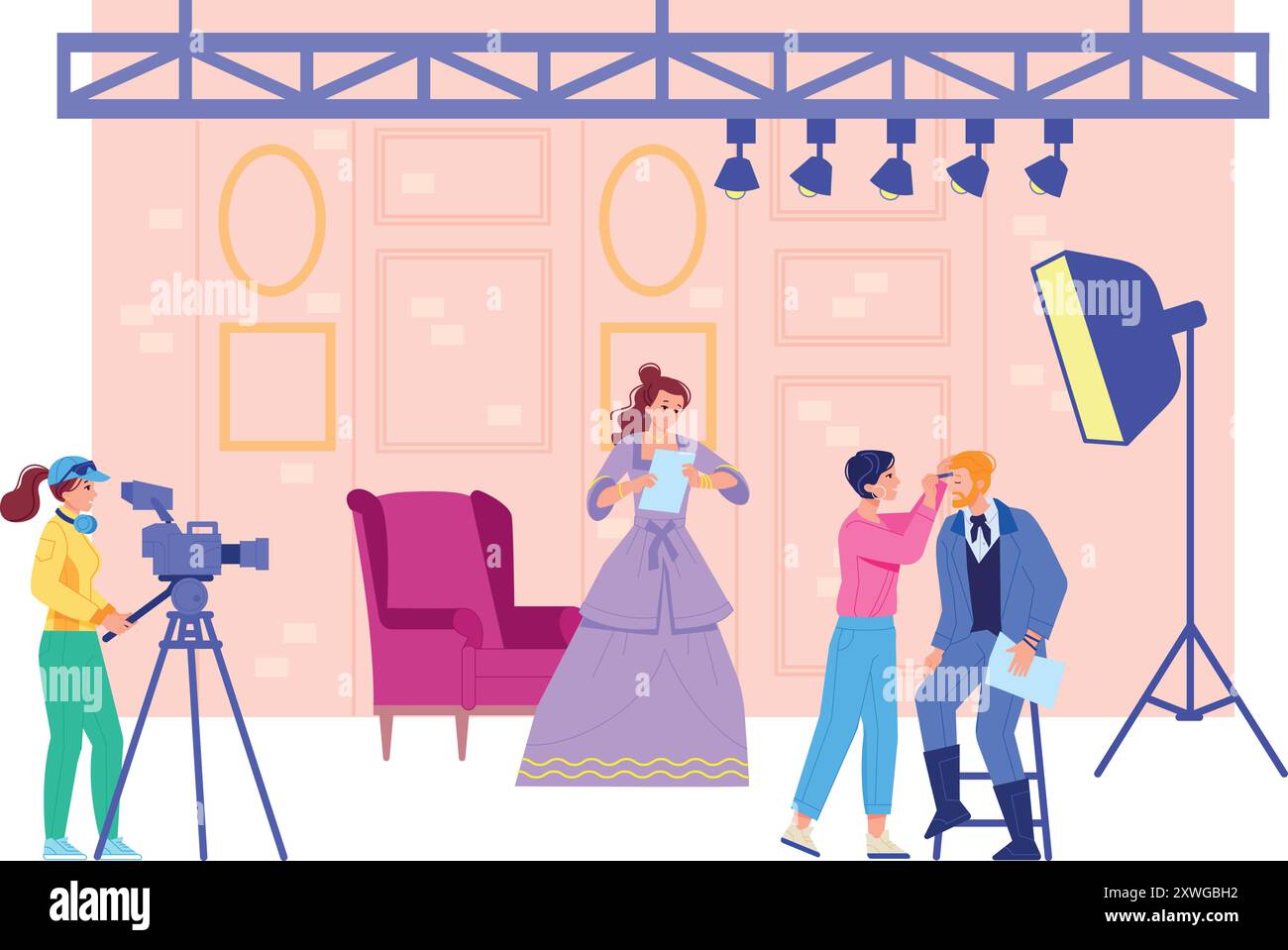
When principal photography begins, the daily realities of production directly shape the actor's environment. Sets are busy, high-pressure environments where dozens of technicians operate complex machinery, lighting rigs, and audio equipment. Actors must learn to deliver emotionally vulnerable performances amidst technical interruptions.
Technical constraints often dictate how a scene is performed. For example, continuity demands that an actor replicate exact physical movements, line readings, and emotional intensities across multiple camera setups and angles. If a wide shot is filmed in the morning and a close-up is captured hours later, the actor must maintain absolute emotional consistency.
Production teams support this process by maintaining a quiet, focused set during emotional scenes and providing necessary comforts between setups. Assistant directors (ADs) manage the floor schedule, calling out quiet on set and ensuring actors are brought from hair, makeup, and wardrobe to the camera blocking area on time. Understanding the hierarchy and rhythm of the set allows actors to navigate these technical demands smoothly.
Post-Production Engagement and Performance Preservation
The collaboration between acting and production does not end when the director yells "that's a wrap." Post-production is where raw footage is shaped into a cohesive narrative, and actors frequently play an active role in this final phase.
One common post-production requirement is Automated Dialogue Replacement (ADR). If on-set audio is compromised by environmental noise, wind, or equipment interference, actors re-record their lines in a sound booth, matching their lip movements and emotional cadence to the visual footage. Producers coordinate these ADR sessions, booking studio time and sound engineers.
Additionally, actors often participate in promotional campaigns, press junkets, and festival screenings organized by the production's marketing and PR teams. This promotional phase requires actors to represent the project publicly, balancing their artistic perspective with the commercial goals of the production company.
Common Friction Points and Troubleshooting Strategies
Even on well-run professional sets, friction can occur between creative impulses and production logistics. Recognizing these common pain points helps teams resolve issues before they escalate into costly delays.
- Schedule Overruns: When a scene takes longer to film than anticipated, actors may experience fatigue, leading to diminished performance quality. Producers must balance the desire for perfection with mandatory turnaround times and union rest-period rules.
- Communication Breakdowns: Misunderstandings regarding script revisions or blocking changes can frustrate performers. Implementing a clear chain of command through script supervisors and second ADs ensures updates reach the actor promptly.
- Safety and Comfort Concerns: Stunts, intimate scenes, and extreme weather conditions require rigorous safety protocols. The presence of certified stunt coordinators and intimacy directors is a production necessity that protects actors and safeguards the production from liability.
Proactive troubleshooting relies on transparency. When producers keep actors informed of logistical challenges, performers are generally more willing to adapt their creative approach to meet the realities of the shoot schedule.
Frequently Asked Questions
What is the main difference between acting and production roles?
Acting focuses on the creative embodiment and emotional interpretation of a character within a story. Production focuses on the business, logistical, and technical management required to finance, organize, and capture that performance on film or digital media.
Why do actors need to understand production timelines?
Understanding production timelines helps actors anticipate schedule shifts, respect strict turnaround times, and prepare efficiently for changing technical requirements on set, ultimately contributing to a smoother workflow for the entire crew.
How do union regulations impact acting and production?
Union rules, such as those established by SAG-AFTRA, dictate minimum compensation, mandatory rest periods, meal breaks, and strict safety standards. Both producers and actors must adhere to these agreements to maintain legal compliance and workplace safety.
What happens during the post-production phase for an actor?
In post-production, actors may be called in for Automated Dialogue Replacement (ADR) to fix audio issues, and they frequently participate in marketing, press interviews, and promotional events to support the release of the project.
How can actors and producers improve collaboration on independent projects?
Independent projects benefit from early, transparent communication, realistic scheduling, clear contracting, and mutual respect for both the creative pressures of performance and the financial limitations of low-budget filmmaking.
Optimizing the Collaborative Workflow
Achieving seamless execution in media projects requires mutual respect between the artistic vision of the performer and the practical constraints managed by the production team. By establishing clear communication protocols during pre-production, maintaining professionalism and safety during principal photography, and cooperating through post-production deliverables, actors and producers can elevate the final product. Prioritizing organization alongside creativity ensures that artistic goals are met efficiently and sustainably.